One of my favorite philosophers, Jimmy Buffett, titled one of his early albums, Living and Dying in ¾ Time. There is a rhythm to life and there a rhythm to death. This is the chorus of his song Nautical Wheelers sung in ¾ time.
And it’s dance with me, dance with me, Nautical Wheelers
Take me to stars that you know
Come on and dance with me, dance with me, Nautical Wheelers
I want so badly to go.
In the 1970s, the Nautical Wheelers were a square dance group in the Florida Keys who danced the nights away under a tent. The song is about living life to the fullest, embracing the present with spontaneity, celebrating with people who live in joy.

These days, with news of friends and family dying, I’ve been thinking a lot about death. I am in the time of life when expiration dates are imminent. Baby Boomers are at the edge of eternity, and even those much younger reached the finish line ahead of me. The number of goodbyes has increased at a startling rate lately.
The first death I recall was my grandfather, Jesse Pottle Davis, 1888-1952, at the age of sixty-four, when I was six. I knew him, spent time with him, and loved him but was too young to understand death. It wasn’t until my father got down on his knees to hug me as close and hard as he could, crying, that I understood the depth and meaning of grandpa’s loss. My dad was my strength, and to see him so wretched was a life lesson. Dad died eleven years later at the age of fifty-two and my heartbroken reaction was much the same as his had been. The deepest sense of loss and agony. After several years of cardiac illness, his death from a massive heart attack was sudden and, I’m sure, painful
We are all living and dying. It is a fact. I recently started a journal titled 4,000 Days, not about counting forward days but counting backward from 4,000. I gave myself four thousand days to live, with a caveat for bonus days should I live past ninety-one, which is entirely possible. I did it after reading a poem by a friend titled Happy Birthday in which he comments that birthdays are not about accumulating years, but ticking them off toward the inevitable. Some people I shared the poem with found it a depressing thought. I found it to be funny and comforting in an odd way. The point is to make the most of each day as you count them down. A reminder to live each day. No one is given a timeline, a date certain. Even cancer patients are given hope and a range of time to look ahead. Our appointment to meet the hereafter remains a mystery to us. Thank heaven.
Many years ago, a psychic told me I’d live to be one hundred thirteen. At the time, I thought that sounded great. There is a definite difference between being alive and living. As I age, I’m experiencing losses I didn’t anticipate then. The loss of friends and loved ones. The loss of physical stamina. The lessening of my senses. I’m wearing out. If I lived to be one hundred thirteen with all the pieces and parts intact and all the energy of a forty-year-old, that would be great. But I discovered that isn’t in the plan. An old saying I read once said, “I prayed to live a long life, but I forgot to pray for good knees and a sound mind”. My full-time job now is to stay as healthy and active as possible so my long life (it is already pretty long) is not as a suffering, doddering vegetable in a wheelchair, but as a lively, engaged human who still enjoys each day.
My grandmother, Mabel, 1891-1977, lived to be eighty-six. The day she died she had driven one of her “old people” to their doctor appointment and to run errands. Her “old people” were ten or so years younger than she, but needed help. Grandma was there to help church friends and neighbors whenever she could. After Grandma was widowed, she lived with and cared for her parents until their deaths. When her two sisters and brother were widowed or divorced, they returned home, one by one, to all live together once again. It was a circus of the elderly who acted like teenage siblings most of the time. Grandma went home that day after taking her friend out and told her sisters she didn’t want dinner. She was feeling punk. She went to her room, laid on her bed, and died. Death came in its own time with no announcement.
My great aunt Molly, 1902-1999, told me something shocking on her 90th birthday. I was at her birthday party in Cheyenne, Wyoming. The house was full of friends and neighbors who came to celebrate her. She was very active in her church and community and in good health. She was on a bowling team and enjoyed going out for beer and pizza. As I was leaving, I told her I’d try to be there to celebrate her ninety-first.
She took my hand in both of hers, looked into my eyes, and said, “I hope I’m not here.”
I was astonished. “What do you mean?” I asked.
“Everyone I care about is gone. I have been left behind, and I want to go,” she said.
Here she was surrounded by people who cared about her, and she didn’t want to live. Her husband had died. Her only child had died, and all of her lifelong friends had died. Even in the midst of a loving community, she felt alone. She didn’t get her wish; she lived to be ninety-seven.
Now that eighty is upon me, I understand what she meant. Not that I’m anxious to die. I have lots of things I want to do yet, and I have the health to keep going. But I understand her perspective. It seems that every month I hear of another one, two, or three friends or acquaintances who passed over. I have no fear of death but a little of dying. I don’t want pain to be part of the process, and I know that is possible.
I’ve come to equate dying with being born. Both are struggles, voyages into the unknown. Both make major changes in existence. First you are in your mother’s warm dark comfortable womb with all your needs met instantly. Then you are pushed and shoved through a narrow opening into the light, bright, noisy, world with strangers around you, hands moving over you and a sense of loss of your warm safe world. It is a violent change. There is nothing smooth or easy about birth either from the baby’s or the mother’s perspective. It is a struggle to become a physical human. Slowly your soul must learn how to inhabit this new form with its new demands. Your brain must reach for new understanding. Your body needs to learn to be autonomous.
Touch can be painful, sound can be painful, sight can be painful at first. It takes some getting used to. Then you live a life of ups and downs as you learn to navigate our world and stretch to learn what “being” means. It takes a while. For some more time than others. We all learn through experiences, the trauma, the pitfalls, physically as well as emotionally of being a person. That is balanced by the highs, the joys, and the pleasures of our body’s sensual life, along with the spiritual and intellectual journey our worldly life demands – it’s a big undertaking.
The body contracts illness or is broken, there is heartbreak, your spirit suffers on your journey through life. If you are lucky, plucky, and resilient, your life is relatively smooth. Then there are those who go through agony in their earthly existence. Who is to say which path you will be on? Which tune will lead your dance?
And then we die. We all die, no matter if we’ve enjoyed the journey or experienced hell along the way. I’ve heard firsthand stories of those who died and returned to the living. I’ve read stories of people who are pulled toward the hereafter and are given the choice to come back to our world. All the descriptions I’ve heard or read make the passage into death seem a lot like the passage into life. Being drawn into an unknown world.
My mother told me that she experienced something like that shortly after I was born. Her appendix ruptured, and they rushed her into emergency for an appendectomy. She was given an anesthetic and left her body. She said she floated above the doctors, looked down at her body and watched them operate. Then all went quiet again, and she knew she had to come back to her life, so she returned to her body and her brand-new baby girl.
Before she died at the age of eighty-four, Mom expressed to me on more than one occasion that she had a beautiful life, a fulfilling life. I was with her when she received her diagnosis of colon cancer. She chose not to take treatment. The doctors said she would live four to six months without it.
She thanked them and said, “I’ve been given my ticket home and I’m ready to go. All I ask is to be kept as comfortable as possible until the end.”
My mouth was dry. My eyes were dry. My heart overflowed with love and the painful knowledge of her impending death. When we got back to the car, it was hard to speak, but I had to acknowledge Mom’s courage. I told her I was grateful to her for making the decision so willingly and quickly. Then the tears began to flow. I said I believed she saved herself and the entire family the stress, the anxiety of watching her go through painful treatments. She was always gracious, thoughtful, and above all, decisive in her life, and she continued that to the end.
She lived four months. She made a list of “last things to do” (Mom was a list maker). The list included going to her favorite restaurant for a margarita, having a ham sandwich from Honeybaked Ham, seeing the movie “Chicago”, and spending time with her granddaughter, who flew in from Seattle. She wanted to see the new office my husband and I moved our company into (even if it meant going upstairs, which was very hard for her), and about ten more things I’ve forgotten.
Mom resided in an assisted living complex, in a one-bedroom apartment about one mile from our house. I went there every morning before work and in the evening after work to visit and comfort her. I spent more time on weekends. She didn’t want to come to our house, but wanted me to stay with her and talk, mostly about my life. I had a friend interview her and write some of Mom’s memories down. We had talked a lot about her life and memories, but I wanted her to speak without me in the room to see if any new memories were triggered by new questions from a stranger. My friend, Linda, gave me a lovely transcript of their two meetings.
I have a friend, had a friend, Diane, who died with ALS. I cannot think of a crueler way to die, inch by bodily inch, with your mind and will still intact, watching yourself diminish. Diane took tap dance lessons at forty. She learned to play the piano at the age of fifty. She played everything from classical masterpieces to show tunes to Christmas carols. She hiked, traveled the world, and threw wonderful parties. Her annual Christmas party had a guest list that grew each year because people she knew clambered to listen to her play carols and sing along. For two years after her diagnosis, she made every effort to continue all that until her body no longer responded to her will. She put everything she had into those last years. Her greatest pleasure, she said, toward the end, was being with her friends.
She embodied the joyful rhythms of life for seventy years. Eventually, every part of her body was disabled, only her eyes moved. Her mind never dimmed. She communicated by a computer that she directed with her eyes. She was loved by many. A four-foot-ten dynamo, she was engaged in living and loving life until she was stopped by the ugly shadow of ALS threw its shade over her. Finally, she made the decision to pull the plug on her oxygen machine and gave her husband the day and time. Family gathered around her at home to say goodbye and express their love. Her beloved chocolate lab, Diamond, was there.
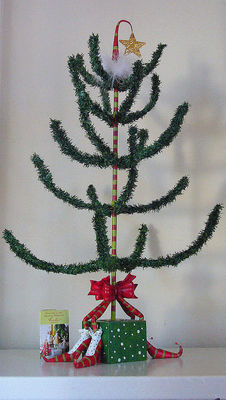
I miss her, her energy, her laugh, her brightness. I mourn that her light was extinguished too soon. She is with me in memory. Photos of us on trips, golfing, rooting on the UW Huskie football team at stadiums across the country, spa vacations, and things we bought on shopping trips together are part of my everyday life. The big copper coyote she bought as a housewarming gift when we moved to Arizona hangs on the guestroom wall; the crazy Christmas tree that sits on high-heel shoes that I decorate each year; the matching raincoats we bought in San Francisco (hers was hunter green, mine red). We were supposed to go to the football game in the rain, but decided to stay in the hotel to watch it on TV, and didn’t wear the coats at all on the trip. (Our husbands braved the game wearing big green trash bags.) So many reminders of her and our friendship are sprinkled like glowing stardust through my life.
Everyone has a different reason for wanting to be alive or allowing death to come on its own terms. I want to live with as much umphh as my friend, Diane, and with as much purpose as my grandmother, Mabel; then I’ll die with no regrets, and hopefully, with as much grace as my mother.
 wonkagranny
This is a beautiful essay.
LikeLike