
This headline popped up on my phone and caught my attention.
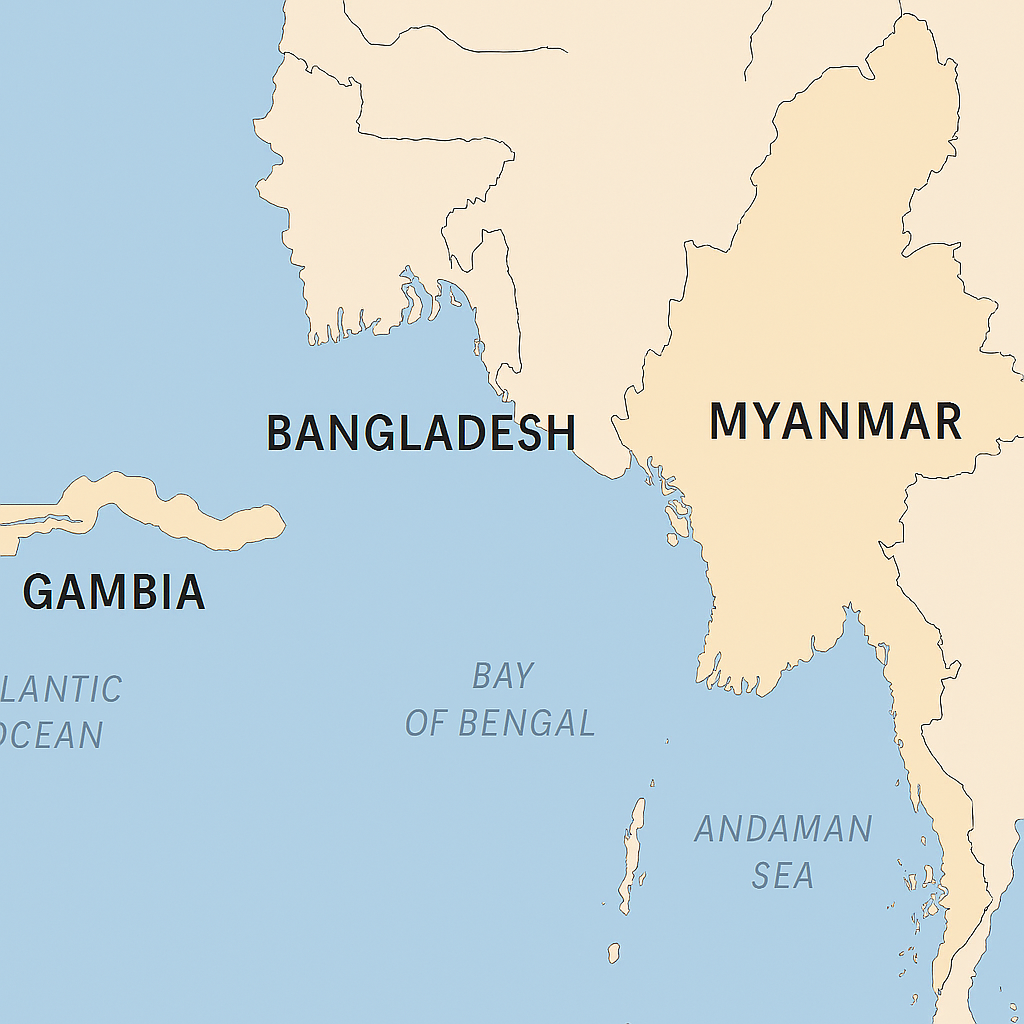
The UN’s top court has opened a landmark case against Myanmar, accusing the country of committing genocide against its Rohingya (Muslim) minority. The case, filed by Gambia, alleges that Myanmar’s military launched a campaign of violence in 2017 that forced over 700,000 Rohingya to flee to neighboring Bangladesh. The population of Myanmar is predominantly Buddhist, with 90% Buddhist, 6% Christian, 4% Islam, and less than 1% Hindu.
The International Court of Justice (ICJ) in The Hague has begun the hearings, marking the first full genocide case it has taken up in over a decade. The hearings will span three weeks and will include oral arguments, witness testimony, and expert examinations. Gambia alleges the Rohingya community has been subjected to horrific violence and destruction, including atrocities such as gang rape, sexual mutilation and infanticide. The case is significant as it could set precedents for how genocide is defined and proven, and how violations can be remedied. The outcome of the case is expected to have broader implications, including potential repercussions for other genocide cases, such as South Africa’s petition against Israel over its war in Gaza.
Usually, I avoid political news, domestic and international, because it is painfully negative. But this headline stopped me cold because Myanmar is a Buddhist country being charged with genocide. That seems like a huge oxymoron, incompatible, incongruous. Buddhism is considered the most peaceful religion worldwide with its emphasis on non-violence, inner peace, kindness, and respect for nature. This doesn’t even seem real.
What is happening in our world? Riots in Persia, riots in Venezuela, riots in the U.S., riots in Uganda. Can’t we all get along? Give Peace a chance? I have a hard time believing the rioting is the fault of the religions because all the major religions preach peace. The scriptures of Islam, Christianity, and Judaism, all Abrahamic faiths, share messages that encourage unity and peace.
So, it means that bad actors in these countries are ginning up revolts based on criteria that they know will cause division within the population. I can’t say this is new news. It has happened over and over for centuries. Sometimes the issue is real, such as slavery in the U.S. Sometimes it is fabricated by lies like those that were the prelude to the hatred of Jews by a segment of the German population. How do we differentiate the real problems from those that are manufactured intentionally to cause internal strife within a country? What are the power struggles that motivate? Is it money, resources? I believe, more likely, it is an effort to consolidate power among the few to subjugate the many.
I don’t have answers. Just questions.
 wonkagranny
This is so sad. It doesn’t feel like Buddhism to me either.
LikeLiked by 1 person
I really don’t believe it can be attached to their religion. I think it is a sinister group that are agitating the population. So sad.
LikeLike