Writing IS rewriting and rewriting and rewriting…ad nauseum. When I have put a story on paper, I put it away for a day or two, even a year or two, then go back to reread it to see if it makes sense. I inevitably find a different word or phrase I think works better in a sentence, a description that can be sharpened. It is a never-ending process. I have spoken to real authors, writers of dozens of books, and they say the same thing. At some point you have to STOP writing. It is hard to say it is finished because you know there is something that could be illustrated better or you change your mind on the purpose of the story, even the plot. A new character pops up and works their way into the story. On and on it goes.
I recently read a book, Writing with the Master, by Anthony Vanderwarker, in which he described how he wrote his novel under the gentle and not-so-gentle guidance of his friend John Grisham. He worked for years writing his novel, Sleeping Dogs. During that time, John Grisham pointed out the weaknesses and gave him tips to make the story better. It took a full year for him just to get his outline right. Then he outlined each chapter and finally started the novel. The process was arduous, and he never gave up. After writing five or six novels over a period of time and shoving them into the back drawers of file folders, he finally had a novel that was worthy of publication.
Not since I was thirty have I thought of writing a novel. I just don’t have the patience for a long storyline. I love writing short stories and poems. They may be shorter, but it does take the same kind of effort to make a story coherent and interesting – just not the same amount of time. I have too many stories to tell to spend that much time on just one.
Characters develop from people I know or hear about. Sometimes a character in my head wants to have their story told. Often, from observation, I see or hear something that catches my attention and wants to become a story. Inspiration is all around. I live in an inspiration stew.
Finding time to write is always the challenge. I can go to my writing room, sit in a chair with pencil and paper, or at my computer, and be lost in a different world, consumed by a character, for hours on end. At least until my husband comes in to see if I’m still breathing. The cats, Sadie and Oliver, find me to remind me when it is dinnertime. Thank heaven I have them. Without my family, I can imagine I’d be a shrunken mummy sitting in a chair, poised with pencil in hand after leaving this earth without notice. Time totally disappears. Ahhh – I just thought of a story. A woman starts to write and disappears into her story, never to be found again. Well, I’ll work on it.
A continuation of the story of my trip to Europe in 1999 with my daughter, Shari. The first part was Adventure in Avignon, published in September 2024. We decided that carousels would be the focus of our adventure through the rest of Provence and the Côte d’Azur.
Carousels were conceived from tragedy. Jousting, initially a tournament sport in medieval times that tested skill and horsemanship among the nobility, began in the 11th century. It became a fixture at festivals throughout France and England. A jousting accident killed French King Henri II, Catherine de Medici’s husband, in 1559. She prohibited further jousts, compelling knights to create a safer alternative to these tournaments. They began riding a circular course, spearing suspended rings with their lances.
By the end of England’s Queen Elizabeth I’s reign in 1558, jousting was a thing of the past. Carousels powered by humans or animals took the place of that military exercise, becoming a family-friendly entertainment that spread throughout Europe and eventually the world. Many carousels are very elaborate and considered to be an art form. They were later mechanized and powered by steam, then by electricity.
Avignon Carousel
Avignon
Avignon was once the seat of the Catholic papacy. The Palais des Papes was the residence of seven Catholic popes in the 1300s. It is a very short walk from the Palais des Papes to St. Pierre’s square outside the Basilica St. Pierre. And there is the lovely Avignon carousel.
After leaving Avignon in our tiny rental KA, we drove zigzag across the south of France, stopping to explore Nimes, Aix, Arles, Palavas-les-Flots, Carcassonne, and Perpignon headed to my niece’s house outside Barcelona, Spain. We took delight in searching for the carousels in each town. Not every town had a carousel.
Aix
Aix-en-Provence Carousel
One of the things I love about traveling in Europe is I feel I can step back in time. Roads, buildings, and bridges have withstood the ages, and even in the 21st Century, I sense the ancient history around me. Aix is no exception. It was founded by the Romans in the century before Christ and has been inhabited for all this time. Paul Cézanne was born in Aix, and many of his dreamy landscape paintings depict his hometown and the surrounding area.
Nimes
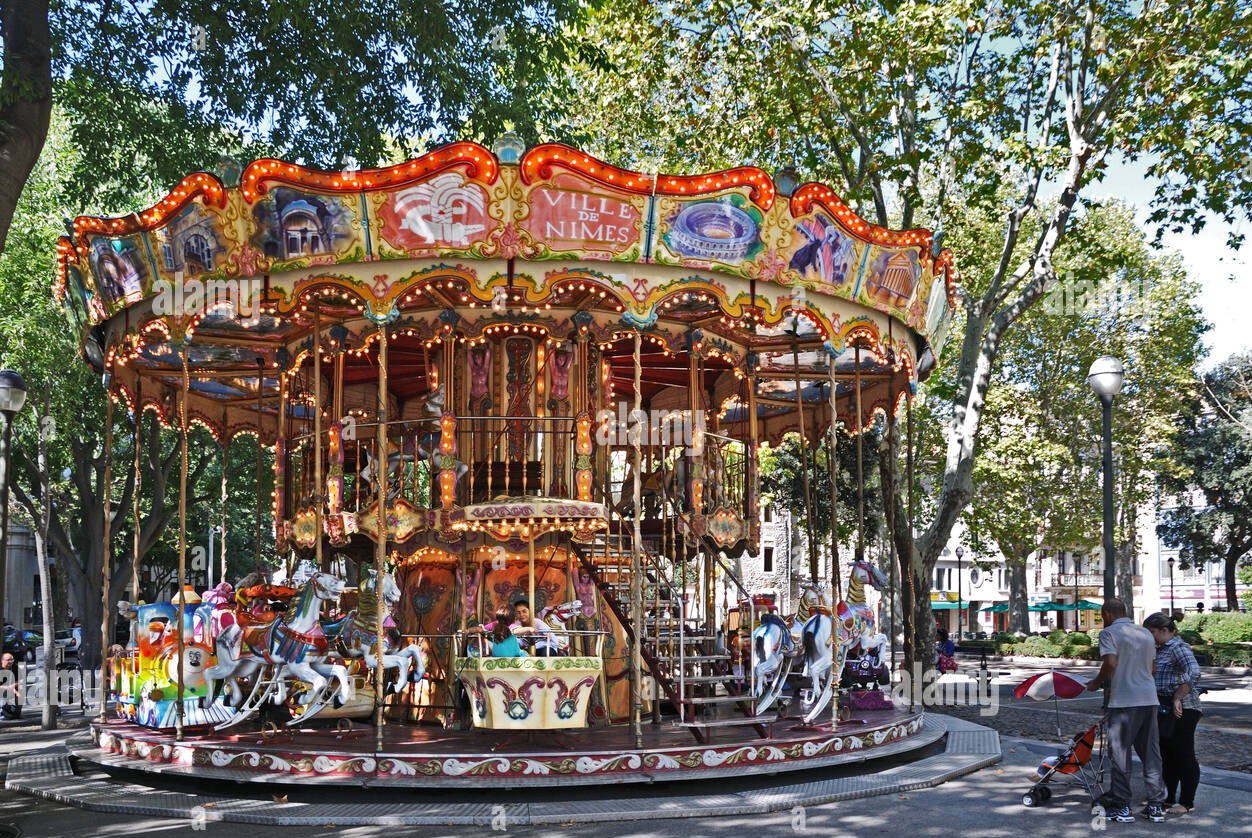
Carousel – Nimes
The Romans left significant evidence of their culture throughout France. Nimes is considered the Rome of France. There are the remains of a Roman aqueduct, an amphitheater still used today, and a Roman temple that date back before the birth of Christ. There is the cathedral of Notre Dame and Saint Castor that we briefly visited before our search for the carousel located near the center of town in the Esplanade de Charles de Gaul. The cathedral didn’t compare to so many of the magnificent churches in France, but the carousel did not disappoint.
Arles
Carousel Arles France
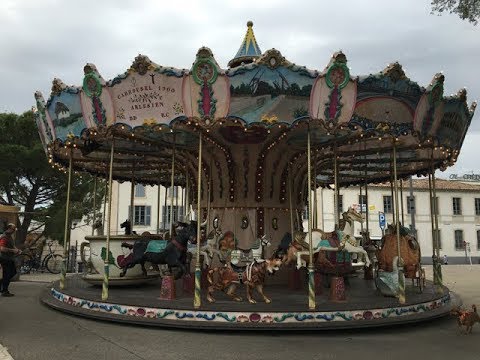
As Aix is associated with Paul Cézanne, so Arles is linked with Vincent van Gogh. Among the Van Gogh paintings representative of Arles are “Starry Starry Night” and “The Old Mill”. The city was an important Phoenician trading port hundreds of years before the Romans took over. There are many reminders of Roman culture, including a Roman amphitheater. They still conduct bullfights in the amphitheater, but the bull is not killed. Instead, a team of men tries to remove tassels from the bull’s horn without being injured. Arles once boasted a floating bridge, a pontoon type supported by boats that were secured in place by anchors and tethered to towers on the two riverbanks. It has been replaced in modern times. A short walk from the Amphitheater is the carousel called Le Manege d’Autrefois, which means Old Fashioned Merry-Go-Round.
Palavas-les-Flots
Grand Large Hotel – Palavas
We drove into Palavas, a very small fishing village with a few hotels along the beach. Sand dunes separate two lakes along a canal with the Gulf of Lion and the Mediterranean right there. (The movie The Triplets of Belleville, a feature-length animated movie with lovely music, has a song about Palavas in it.) It was dusk approaching dark, and I didn’t want to drive in the dark. Things looked very quiet. We stopped at Le Grand Large Hotel to get a room for one night. We went into the big lobby, again remarking at how quiet it was. A man came to the front desk. In my very best Frenglish, I asked for one room with two beds for one night.
“Non, madame,” he replied with a sad face. His name was Gabriel. “Nous sommes fermé pour la saison, nous sommes désolés.” (No, madame, we are closed for the season, we’re very sorry.)
I continued in my butchered mongrelled language to inquire if other hotels were open. He, so politely and sadly, responded that they were all closed until Spring.
Palavas beach
This little fishing village only had a few hotels to accommodate French vacationers during the summer. They received very few non-European tourists. August is the biggest month for European vacations, and we missed it by two weeks. The hotel had a skeleton staff, no rooms available, and no services. I told him that Shari and I were traveling through the south of France to see the beautiful countryside and that our destination was Barcelona to visit family. I explained how we had been in Avignon and had my purse stolen, but still rented a car, and wanted to see the carousels in southern France, and wanted to stay one night on the Cote d’Azur. He laughed at the way I told my story with one French word, then one English word, then a lot of gestures. I asked how far it would be to find a hotel open.
“Vous devrez retourner à Montpellier, une plus grande ville, pour trouver des hotels à cette période de l’année.” (You will have to drive back to Montpellier, a larger city, to find a hotel at this time of the year.)
It was now dark outside. I sighed. OK. I told Shari to get back in the car, and we’d drive to Montpellier, about a thirty-minute drive.
“Un moment,” he said and left the desk to go into a small office at the side of the lobby.
He came back. “Je peux vous proposer une chambre pour ce soir. Un lit. Mais il n’y a pas de services ici.” (I will offer you one room, one bed for tonight. But there are no services.) They offered no food services. We had no access to the spa or swimming pools, and we only had one towel each.
Super duper great, said I. No translation needed.
Shari and I got our small bags from the car. I parked where Gabriel indicated. We wondered if all the restaurants were closed too. Shari asked if there was a restaurant open nearby.
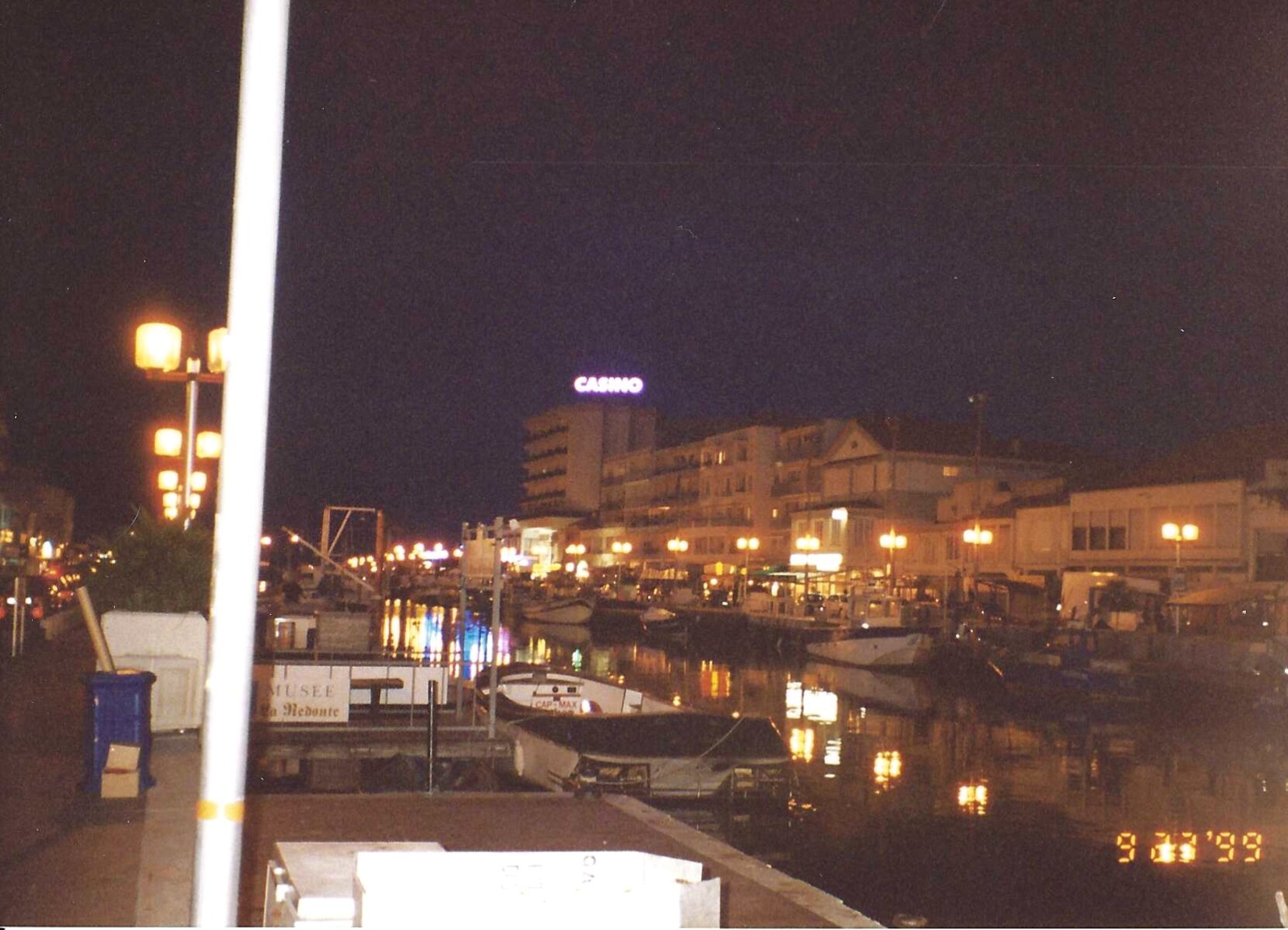
Palavas Quay at night
“Oui. Un excellent restaurant de fruits de mer au quai.” Gabriel pointed out the front door toward the beach. (Yes, an excellent seafood restaurant on the pier.) He said restaurants didn’t close for the season, just scaled back hours.
We trotted off across the beach to a long jetty along a canal. There were several restaurants open. La Marine Du Pêcheure was the one Gabriel suggested so we had a nice dinner there outside by the water. Shari is not a fan of seafood, but she found something she would eat on the menu. We were both ravenous and very relieved to have a place to stay. The next morning, we left to continue our journey after many declarations of gratitude to Gabriel. Un Grand Merci!!! There was no carousel in Palavas.
Carcassonne
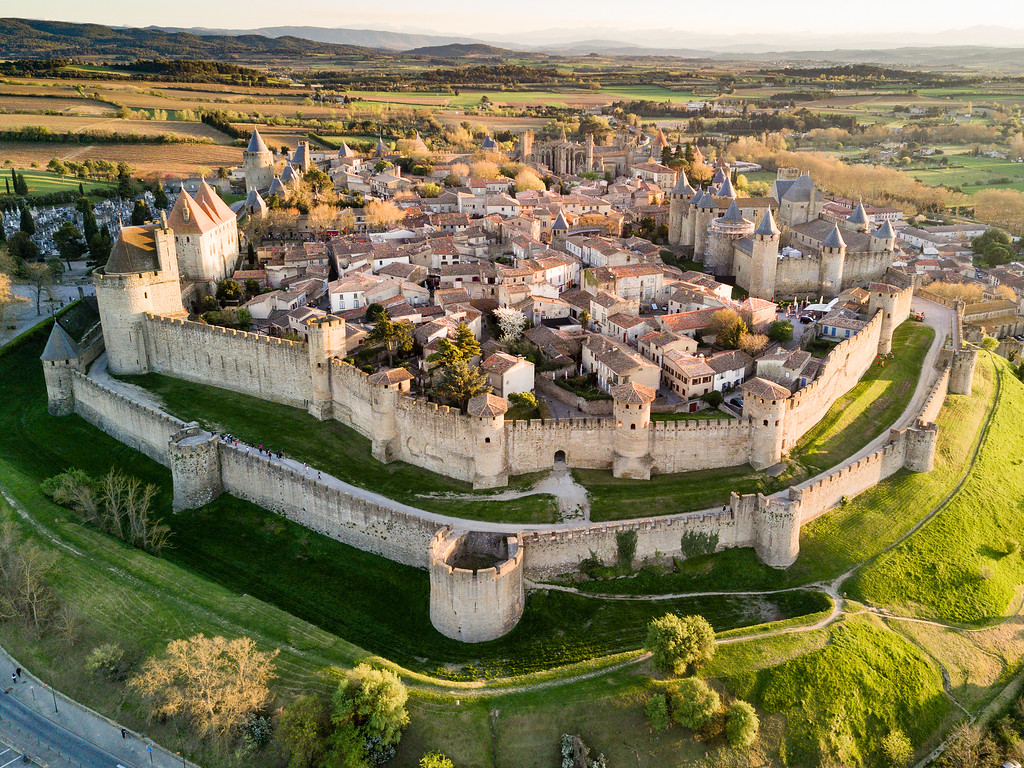
Walled City of Carcassonne, France
The ancient town of Carcassonne has a fascinating legend. Carcassonne was founded in the 3rd century by the Gauls and turned into a fortified town by the Romans. The legend takes place in the 8th century, during the wars between Christians and Muslims in the southwest of Europe. At the time, Carcassonne was under Saracen rule, and Charlemagne’s army was at the gates to reconquer the city for the French. A Saracen princess named Carcas ruled the city after the death of her husband. The siege lasted for five years with French forces surrounding the town. Charlemagne’s tactic was to starve the population into submission. Early in the sixth year, food and water were running out. Lady Carcas made an inventory of all remaining reserves. Then she demanded that the villagers bring her the last pig and the last sack of wheat. She force fed the wheat to the pig and then threw it from the highest tower of the city walls. Upon landing, it split open, and the invading soldiers could see it was stuffed with food. Charlemagne lifted the siege, believing that the city had enough food to the point of wasting pigs fed with wheat. Overjoyed by the success of her plan, Lady Carcas decided to sound all the bells in the city. One of Charlemagne’s men then exclaimed: “Carcas sonne!” (which means “Carcas rings”). Hence the name of the city.
Carcassonne Carousel
I wish we had had more time to meander through the south of France, but we were on a timeline to get to Barcelona. It was like drinking through a firehose, gorging on everything we saw with thirsty eyes. We gulped as much of the countryside and towns as we could, hoping to return someday and spend more time.
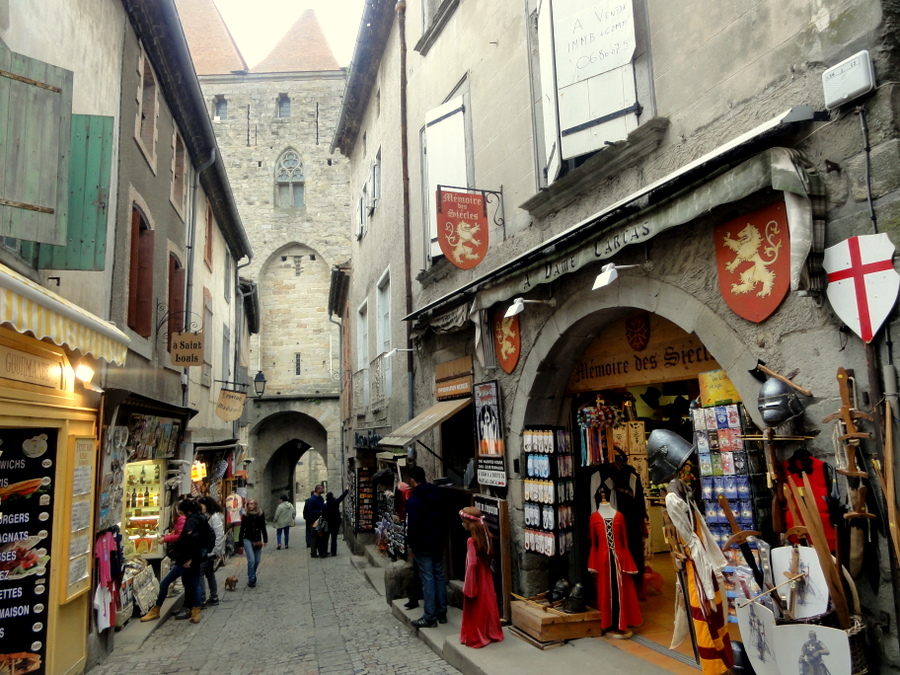
Carcassonne markets
We walked through the tiny winding streets, looking into shops. We had a quick bite at a bistro as we browsed the markets. We bought a beautiful blue and yellow bowl, the colors of Provence, to take back as a gift to Karen, my oldest daughter. We found the carousel. Then got back into the car and headed for Spain, a three-hour drive.
Pérignon
We stopped briefly in Pérignon for ice cream, but we missed all the historical attractions and didn’t find a carousel. We were in a hurry to meet my niece in Barcelona. We cruised on to the border of Spain.
Our book club read The Gift of Rain by Tan Twan Eng earlier this year. In our discussion, the subject of the three Eastern religions arose, specifically Buddhism, Taoism, and Confucianism. All three philosophies are represented in the story. In Buddhism, a primary tenet is reincarnation. In the story, the sensei, Endo-San, tells his pupil that they were connected in past lives and will be in future lives.
There were differing views on the idea of reincarnation in our book group. I volunteered my experience with our daughter, Shari, as an example of how spirits may be connected over and over across time.
In 1971, when Shari was three, she was watching out of our living room window as her friend, our six-year-old neighbor, Glenny, learned to ride his new Christmas bike on the street in front of our house.
She turned to me and said, “I used to have a bike just like that.”
“No, sweetie. You’ve never had a bike. We’ll get you one when you are a little bit older.”
“I did have a bike when I was a boy,” she said emphatically.
That took me back. What?
“But you’re a girl,” I countered. “You aren’t a boy.”
“Mommy”, she said with an exasperated tone. “No, when I WAS a boy. Then I fell out of a tree and died.”
Now, the concepts of being dead or a different gender were not subjects that ever came up in any of our discussions or games. I was a stay-at-home mom with three children, so I spent hours and hours with my kids. Nothing remotely close had ever been touched on in our play or conversations.
I asked her to tell me more, but she just shrugged and turned to watch Glenny again. It was the end of the conversation.
Later in the spring, she and I were in her room cleaning out her toy box to give away some old, used toys.
She stopped with a reflective look on her face. “Mommy, do you remember when we were Indians?”
I searched my memory for a time when we played Indian and couldn’t come up with anything.
“No, honey, I don’t. When did we play that?”
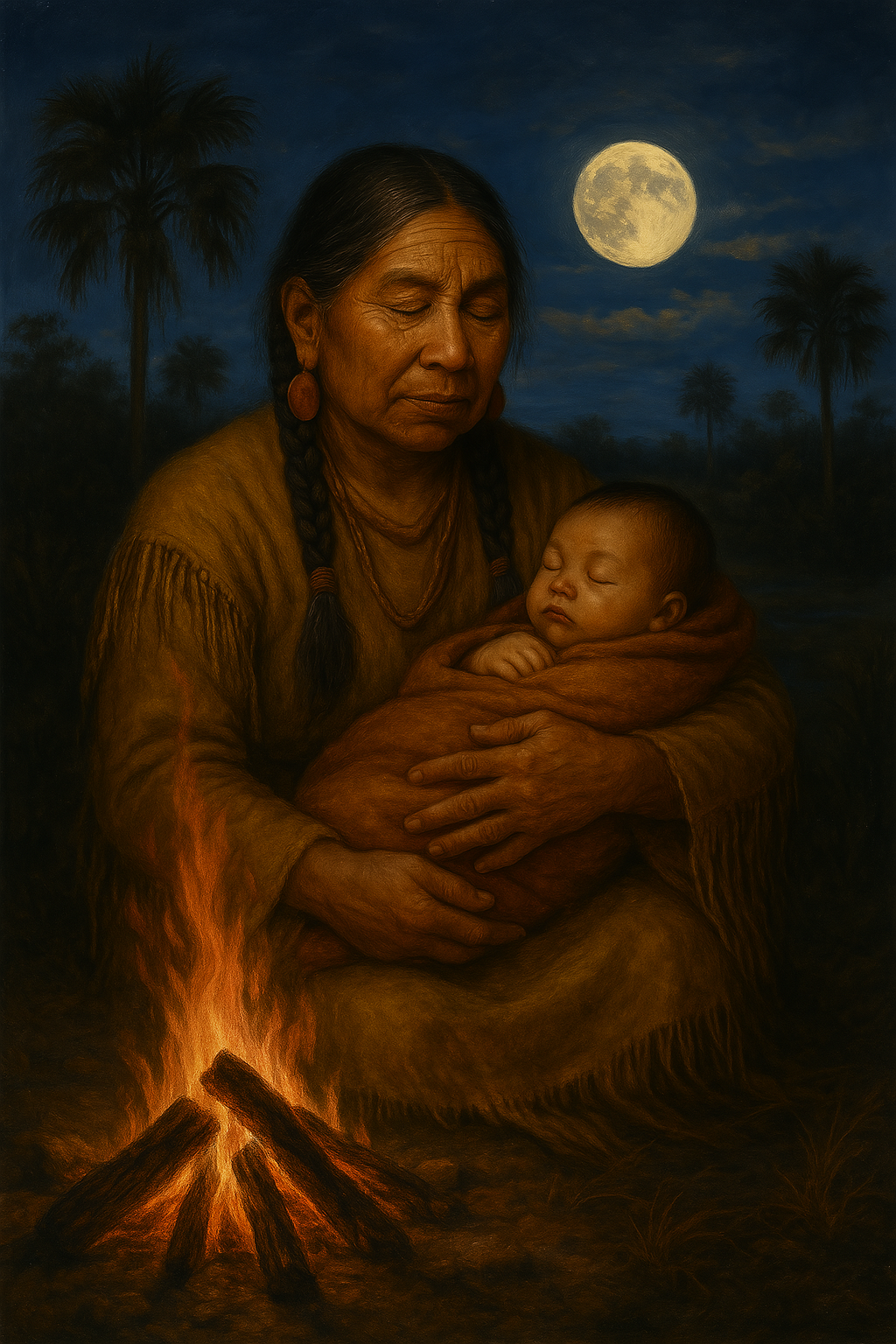
“We didn’t play it. I was the grandmother, and you were the baby, and I rocked you in my arms outside by the fire.”
Prickles ran up my arms. Again, she was telling me about an experience that she believed happened. She had changed our roles. She was the ancient one, and I, a baby. We were connected, but in different roles.
“When did that happen?” I asked. “Were we playing a game? Did you have a dream?”
“No.”
And that was the end of the memory. She had nothing more to add. She changed the subject to talk about the toys we were sorting. She lost the thought and didn’t want to explain more. It didn’t sound like a dream.
Shari was a very chatty child. She had a lot to say about everything and had an advanced vocabulary for her age. The concepts of death, gender, and role reversal in the extreme were not topics we ever talked about, except for those two instances. She seemed to wander into a reverie, then snap back to the present quickly and didn’t reconnect to the memory at all. When she was eleven or twelve, I asked her about those memories or if they were dreams, and she had no recollection of anything connected to it.
Those two experiences made me question the idea of reincarnation, and I did some research. Psychologists and researchers have documented children who spontaneously reveal memories from past lives. It happens from the age of two when speech is beginning, until about six, when children go to school and are infused with the day-to-day reality of this life. Many recorded cases have been detailed in books, magazine articles, and research papers. They can be ascribed to a rich fantasy imagination. My experience didn’t feel like imagination – it felt like Shari was telling me of real, very specific memories.
A few years ago, we were the caretakers of our grandson, Henry, from the age of one until he started school, while his mom worked weekdays. When he was three, he and a friend were playing in his room, building Lego forts, then bombing them with little rubber balls. He told his playmate that he had been in WWII and died.
From the time he was two, he had an uncommon attraction to guns. When he learned to draw, he drew gun-like figures. When I was teaching him the geography of the U.S., he picked out Florida as his favorite state because it looked like a gun. He bit his cheese sandwich into the shape of a gun. We never had guns or been around them, and certainly never talked about them. I asked my daughter if she had talked about war or guns with him, and she said no, but that he did talk about it when he was home too.
We took Henry to story hour at the library every week, and afterward, we would look for books to check out. He only wanted to pick out books in the history section about WWII or any war. We checked out big volumes. At home, he sat and looked at the pictures and asked me to read parts of the books related to those pictures.
Henry earned TV time by doing small tasks around the house. Usually, he watched old TV shows like Mayberry RFD or a science kid show. One day he watched a documentary about Churchill and war strategy on the History channel. He never took his eyes off of it for the entire hour. He asked me to find war documentaries when he had TV time, not cartoons or kid shows. He wanted to talk about wars, WWI, WWII, and the Civil War. They fascinated him. All that disappeared when he got to school, and it hasn’t been part of his life since.
I certainly learned a lot about wars while I was attempting to satisfy his curiosity. It is a mystery to me how a very young child can connect to experiences they didn’t have in their three or four years on the planet but are able to make them seem real. Could they have been here before? Is it totally imagination? It is a mystery.
PS: I recommend The Gift of Rain. It is about Malaysia during WWII, an area of the world I knew little about. It is the coming-of-age story of a young man, half-English, half-Chinese, with a Japanese teacher. All three cultures collide in his story during the turbulence of war. The concepts in the story are interesting, even if the main character is a bit flat. Questions of loyalty and betrayal are examined.
If you are interested in a recent report regarding children with past life memories, this is a link to a study reported by the University of Virginia, School of Medicine.
My title may have oversold the train trip Ken and I had to San Antonio. Although all those elements were part of the trip, they were not the focus. I just liked the sound of the title.
If I had a bucket list, it would include more train travel. I received a surprise from my husband for Mother’s Day – a train trip! We took our excursion the first week of June. Of course, when he mentioned a train trip my imagination immediately flew to the movie, North by Northwest, with Cary Grant and Eva Marie Saint. I could see us having a white tablecloth dinner in the dining car and retiring to our intimate compartment for a romantic evening. Well, not so much. The dining room did indeed have white tables (uncovered) with blue cloth napkins and courteous service. The food was above average. But the intimate compartments cost three times as much as the reclinable coach seats, and we are not in that class. The seats are very cushy and comfortable, and Ken was able to stretch out his 6’1” frame easily, but we did not have the privacy of a separate room. Oh well, we’re not driven by our hormones so much anymore after sixty-one years together.
Our destination was San Antonio, a nineteen-hour trip starting at 8:00 am MST and ending in San Antonio at 5:00am CDT. Not my idea of convenient departure and arrival times. We lost two hours en route due to time zone changes. Our train originated in L.A., and we joined the train in Tucson with eight more stops before it reached San Antonio.
I made sure we were in an IM-level train car. IM stands for Impaired Mobility, assuring we were close to a restroom. Ken’s Parkinson’s makes it hard for him to walk distances and navigate stairs.
We were indeed located in the IM car, which is the restroom car. There are only twelve seats, along with seven restroom cubicles in that car. Most of the seating is up a three-tiered flight of stairs above us. Everyone in the upper-level seating had to descend the stairs to our car for bathroom necessities. Our seating area was separated by a door, so we were not bothered by the coming and going of others using the restrooms. All seemed to be as planned.
Seats, arranged two by two, were staggered so that we were not directly across the aisle from another pair of seats, providing a bit more privacy to each pair. The woman who sat across the aisle and slightly in front of us was coughing. She and her companion had been on the train before our stop in Tucson and looked settled in with their carry-ons around their feet. The coughing continued after the train resumed its eastward journey. In fact, the coughing did not let up through nineteen hours of the trip. She would have a break of five or ten minutes every hour or so, but it was incessant for the whole trip. At first, I was annoyed, then mad, then I realized she had no control. She coughed into her shawl, and when it was soaked, she changed to tissues that piled high in a bag at her feet. Her companion coughed now and then also. After a couple of hours, I realized the woman must have asthma, or COPD, or something of that sort. She had no control over her heaving body. She couldn’t sleep because it didn’t let up and, if she dozed, she woke whimpering. Her companion got up a few times to bring water, snacks, and coffee to the afflicted woman.
Others in the car were obviously very ill in one way or another and immobilized. One woman was in a fetal position under blankets and barely moved the entire trip. Her husband got up and walked around a few times for only five minutes, but she didn’t wake to go to the bathroom or drink water or anything. If she hadn’t moved occasionally, I would have thought she was a cadaver. Ken was not at all like any of them. We escaped our ‘car of agony’ to go upstairs to the lounge area to get away from the coughing. We could see out the big windows as we crossed the Texas plains. Later, we went up the stairs to the dining car and had a great dinner. That was when we realized that we didn’t need the IM car because even though Ken had to go up some stairs, it was not an impossible task. The train was packed, and changing seats at that point was not an option. We endured our torment, knowing it was nothing compared to what the coughing woman was experiencing. We could move about and leave the car at will.
We were seated at dinner with a sweet lady, Leesie, 75 years old, she told us. She had just come from LA, staying for six months with her son, who has MS. She lamented the care he was getting and wished she could have stayed longer. A very sad mama. She was on her way back to her home in North Carolina. A retired registered nurse, she spent twenty years as the night nurse in New York’s Sing Sing prison. She was the lone nurse every night. Lots of stories there. Dinner was too short to get her entire history, but she was a very interesting dinner companion.
Our dinner included three courses, an appetizer, a main course, and dessert. I had a salad, NY steak with potato and green beans, and chocolate cake. Ken had shrimp scampi, a pasta dish, and chocolate cake. We each had a complimentary glass of red wine. The steak was the best I’d had in a long time, very tender and flavorful. Our waitress and waiter were very attentive.
Night fell, lights were extinguished except for guide lights along the floor of the car, so passengers could sleep. I am generally lulled to sleep by rolling wheels. I fall asleep within 30 minutes at the start of a journey, when Ken and I go on road trips. There is something about the motion that puts my brain on snooze. This night, however, sleep was impossible for us with our coughing neighbor. The coughing was so steady, it became background noise after a while, and we were able to get a few winks here and there.
Then, in the pitch dark, around 1:00am, the train slowed and came to a full stop. The intercom communications between the conductor and passengers had been silenced at 10:00pm, so passengers could sleep. We received no information as to why we stopped. We sat on the rails in total darkness and silence for over an hour. Of course, my overactive imagination worked at creating scenarios of Comanches galloping over the hills to attack the train, robbers in masks boarding the train to rob and kill us, and all sorts of dramatic reasons why we were dead stopped in the middle of the night. I wasn’t really scared. I was intrigued. Ken and I whispered our concerns. The coughing didn’t let up. Then the train slowly began to gather momentum again, and the steady clackity clack was reinstated.
An hour or so later, the train came to an abrupt, shuddering stop. Again, all the lights went out, the air conditioning stopped, and the engine was quashed. No sound, no explanation, just darkness and silence, except for the unrelenting cough. Hmmm. I peered out the window but could only make out a rock wall close to our side of the train. After thirty minutes, the train resumed its trek.
Dawn began to lighten the sky. Shapes appeared on the prairie, mostly cows and a few scrub trees. The lights came on, and the conductor resumed communication. He told us the train had encountered a flash flood that sidelined us the first time. Then, it hit a cow on the tracks that had to be cleared before we could continue. No Comanches or train robbers after all, just flood water and one hapless cow. The poor cow must have been caught on the tracks in a narrow place where rock walls closely bordered the rails and had no way out.
We were two hours late getting to San Antonio. When I made our hotel reservations, I was told they had a shuttle service to the train station, which was only about four or five blocks away, across a freeway. It was 7:00am. I called the hotel. No, they answered, they did not have shuttle service, nor had they ever had shuttle service. I was misinformed. What? I was tired, sleepy, and discombobulated. Now what? They gave me the number of a cab company. I called. $25, they said, for the five-minute ride to the hotel. Not happening, I told them.
I remembered our daughter told me to download the Uber App for the trip. I had done as directed, but still had no idea what to do with it. I was not in the frame of mind to develop a new skill. Ken was dead on his feet, standing in the parking lot of the train station, exhausted from lack of sleep. I noticed a car pulling in to pick up a passenger from the train. I went to him and asked if he was Uber. Yes. I asked how I could get him to take us to the hotel. He said he could be back in 30 minutes if I used the Uber App. Not what I wanted to hear. Deep frustration was beginning to well up. The woman who was his passenger asked, “Haven’t you used Uber before?” I answered in the negative. She said, “Let me see your phone a minute.” I gave it to her, and she quickly connected me to Uber and showed me how to order a ride. I did, and a lovely man named Jacob was there in five minutes, charging $7 for our ride to the hotel. Now I’m an Uberite with 5 stars!
You’ve heard of sea legs after a long boat ride; well, we had train legs for hours after we departed Amtrak. It is a strange sensation that you are in motion when you are standing still. It affected our walking, creating a rolling motion for a little while.
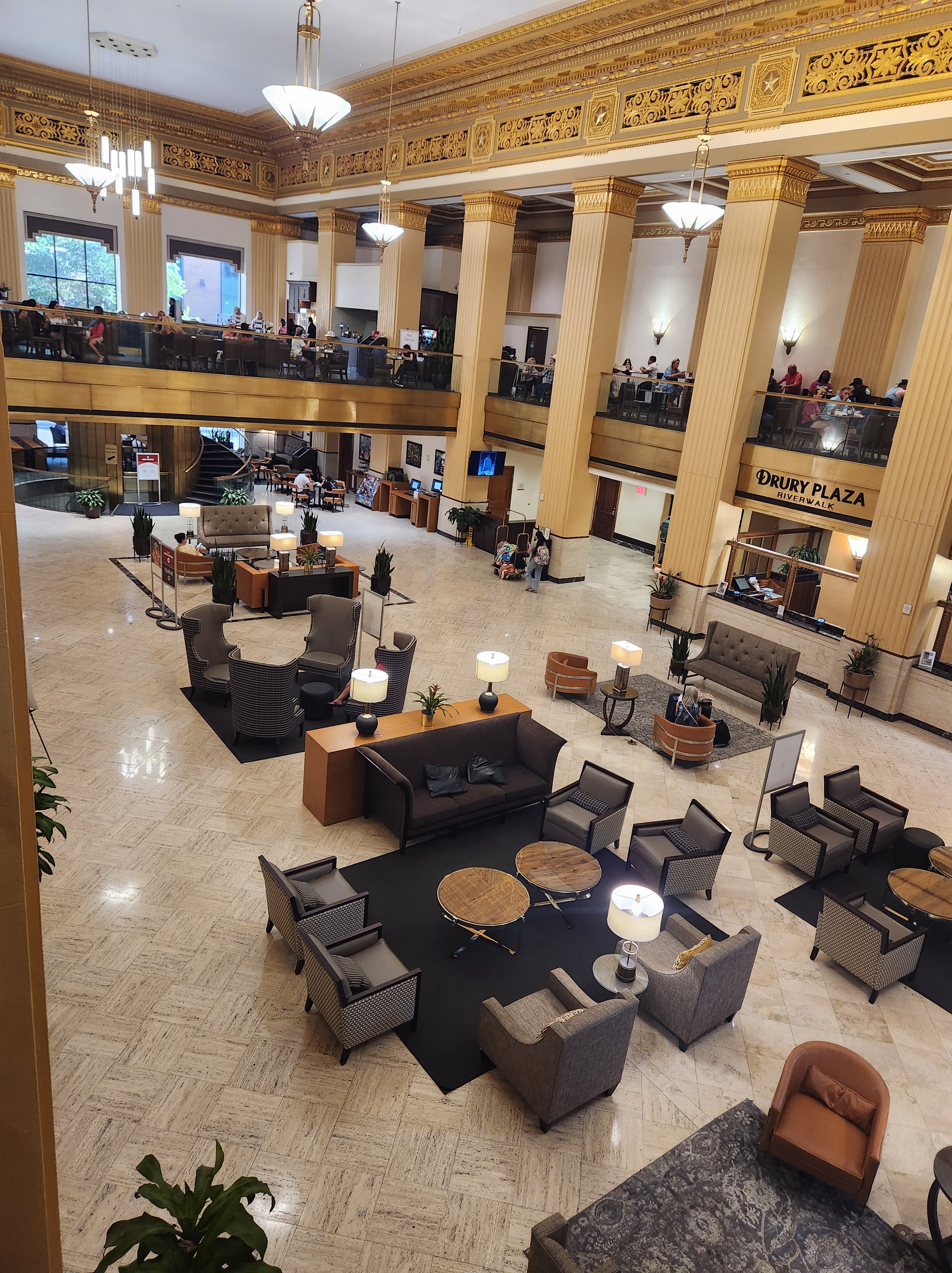
Drury lobby with dining mezzanine above
Despite the lie told by someone representing the hotel, we had a wonderful stay. The Drury Plaza on the Riverwalk is an excellent place in the heart of San Antonio to spend a few days. I explained to the manager my disappointment and frustration about the shuttle confusion, saying it put a blot on the hotel’s name to have people lying about their services. The names I was given over the phone were not people who worked at the hotel, so it must have been a third-party reservation, even though they answered the phone,“Drury Plaza at the Riverwalk”. Grrrr. Traveler Beware! There are so many things to watch out for when traveling.
The hotel served free breakfast from 7 to 9, so we dropped our bags in the room and went to breakfast. Both of us were as hungry as sleepy. The buffet-style breakfast was served on the huge mezzanine above the hotel lobby. Everything ‘Breakfast’ you could think of. We had our fill, then hit the bed as soon as we got to our room. Sleep. That was all we could think of. We both disappeared soundly into slumber for three hours.
Ken stayed in the room to rest, and I went out to explore the Riverwalk and see what I could see. We had been to San Antonio once before at Christmastime in 1984. We watched Santa being escorted by boat down the river, waving at everyone and throwing candy to the kids. The area has grown and changed since then. The Riverwalk, with its trees and flowering gardens, was extended. I walked a 1-1/2 mile loop, glancing into shops and restaurants along the way. I talked with some of the sidewalk marketeers and a couple of the boatmen who shuttle people around the Riverwalk to get insights on the area. The total Walk is fifteen miles, and 4-1/2 miles are in the downtown area of San Antonio. The Alamo was within walking distance, but I’d been there before, and it was hot, so I skipped it. Hot is different in San Antonio – it’s humid hot and wraps around you like a blanket, making it hard to move. You feel lethargic. I’ll take Tucson’s 100° dry heat any day.
The hotel itself is a fun place to explore on an air-conditioned ramble. It was originally the Alamo National Bank that opened in 1929. The décor throughout reflects that era. In 2007, it was reimagined as a 24-story hotel with two towers, balconies overlooking the city and Riverwalk, a large workout room, outdoor and indoor swimming pools, and all the amenities of modern hotels. The lobby is magnificent and harkens back to the building’s original purpose as a bank. The building is on the National Register of Historic Places, and many of its original fixtures are still in place. The original chandeliers hang from the fifty-foot lobby ceiling. The stained-glass window, bronze framework, marble walls, and travertine floors are also original.
Ken in the lobby of Drury Plaza, a 1930 Ford on the right and the original entrance on the left
Our stay included free breakfast and free happy hour with three free adult beverages each day. Happy hour offered a full meal of options served buffet style like the breakfast, Mexican, and Italian entrees, plus pulled pork sandwiches, hot dogs, soups, and salads.
Our day was spent recovering from the sleepless night before. At 5:00, we went to the Mezzanine for Happy Hour and met a nice couple, Paul and Kim, from New Hampshire. We sat with them, chatting about a variety of subjects as we had our cocktails. We found common ground on every subject. They left to have dinner at a restaurant, and we contented ourselves with the wide assortment of dinner items at the buffet.
The next day, we arranged to meet the Jensens, our relatives, at lunchtime. They moved to San Antonio in January and live within thirty minutes of downtown. Charlene, our niece, and Al, her husband, met in college at Texas Lutheran University near San Antonio in 1986. Al is a Lutheran pastor. His calling led them to live all over the western states, raising their kids mainly in Oregon and Arizona. They had been at a church in Montana for a few years and were happy to get back to the warmth of Texas, where their love story began. Mary, Al’s mother, was with them. They treated us to a nice lunch at Rita’s on the Riverwalk. Afterward, we showed them around the hotel, stopping for a while at a large balcony on the eighth floor overlooking the Riverwalk and downtown. When they left, we went back to our room.
Remains of Texas Heroes of the Alamo
Ken needed to rest. I wanted to see the historic San Fernando Cathedral near our hotel. It is the oldest functioning Catholic Cathedral in the U.S., founded in 1736. I walked a couple of blocks to the Cathedral, where the ashes of the Texas Alamo heroes, Bowie, Crockett, and Travis, are interred in a chapel at the front of the church. I walked inside to get a look at the sanctuary and found that I was at a wedding, Karolina and Bryce’s wedding, to be exact. A chamber orchestra began playing a beautiful piece of sacred music as the wedding procession came into the cathedral. I sat in a seat at the side of the sanctuary and listened to the music and the introduction of the bride, groom, and family members. Before the mass began, I quietly slipped out the side door.
I decided to walk across the street to the historic Spanish Governor’s Palace to take a peek through it. It is now the Bexar County courthouse and houses a history museum. I walked in the front doors. I looked back and there was a wedding party assembling on the steps of the courthouse. I watched as a few pictures were taken, then the wedding party came into the building. I was informed that the courthouse was officially closed on Saturday, and only the wedding party was allowed in. I left without seeing any of the museum. I don’t understand why a history museum would be closed on Saturdays, but it was.
I think that is a record, crashing TWO weddings in less than an hour.
I returned to the hotel. We went down to Happy Hour. We had our cocktails and just before we went to get our meal, Kim and Paul showed up. They had been on the opposite side of the mezzanine and saw us across the lobby and wanted to say hello again. They were leaving the next day for a hike and knew we were leaving for home. It was nice to reconnect. Traveling is a great way of making new friends.
Our train back to Tucson left San Antonio at 2:45 am. Again, not a great schedule, forcing us to try to sleep by 7 that evening. We got up at 12:30, gathered our stuff, and went to meet our Uber. I made arrangements, in advance this time, so Lorenzo was there to meet us for the five-minute drive back to Amtrak.
Another five-star ride! I’m a veteran now.
I asked to have our seats moved to the upper level. We didn’t need or want the IM anymore. The train was not as full this time, so they accommodated our change. We hiked up the stairs to nice seats above the rail line. The difference came when the train started. We noticed there is a lot more movement on the upper level. The train sways around turns in the rail, feeling a little top-heavy. It was like riding atop an elephant in one of those big chairs that rock back and forth with each step. The train was dark and quiet. Because of the early hour and my proclivity of falling asleep with motion, I conked out. But I woke up when breakfast was announced.
We had another nice meal in the dining car. This time we were seated with Craig, who was traveling back home to L.A. after working in New Orleans. That is a 45-hour trip, and I thought 19 hours was a long trip. Oh my. He was not as chatty as Leesie, so we didn’t learn much of his story.
George, on the other hand, the snack bar attendant was a wealth of information. I went down to the snack bar to get a Coke, and he and I had a chin wag for nearly twenty minutes. He has been with the railroad for thirty-two years and plans to retire next May. He had lots of stories to share of his thirty-two years. He loves his job but said his wife has the beginnings of Alzheimer’s and he needs to be home more to take care of her. His current schedule is sixteen days on the train and sixteen days home. Other than the route from LA to New Orleans and back, he hasn’t ridden a train. When he retires, he’ll have a lifetime pass and said he would like to ride the East Coast route.
Reclining man boxcar sculpture
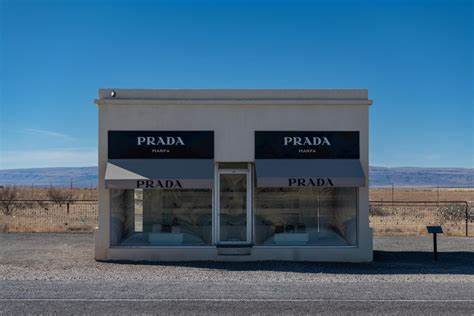
It was so pleasant to be in the upper-level car. We could see across the landscape rather than at the ground level. Our trip back to Tucson was uneventful – cough-free, flood-free, and cow-free, a real blessing. We saw a box-car sculpture set on the open plains and a Prada store in the middle of nowhere next to the tracks with no town in sight. A blimp was tied down in an empty area of the sweeping prairie. We assume it was a weather blimp, but there was nothing around it.
Prada store near Marfa, Texas
Train travel in the US is so much different than in Europe. More expensive for one thing. The sheer expanse of the US makes most trips longer than any in Europe. East coast travel would be more like European travel because up and down the East coast population centers are closer together.
Our daughter, Karen, was there to meet us when we pulled into Tucson station only fifteen minutes behind schedule at 7:15. She escorted us home, safe and sound and we fell into our comfy bed by 9:00. I felt the motion of the train when I woke up in the night, but went quickly back to sleep when I realized I was in my own bed. Now that I’m a seasoned train traveler, I look forward to another ride to a different destination.
Happy Father’s Day to all those great men who shepherd their progeny through the formative years and beyond. Your influence on your children is enormous and felt throughout their lifetimes. Thank you. You are, in many ways, the architects of the future, helping to mold young minds and hearts to take their places in our human society.
Happy Father’s Day to my husband, who has stayed the course with our three children, all adults now. He was there for every school event, every teacher conference, recital, and concert, every soccer and baseball game, even coaching for many years. He takes seriously his role, his responsibility of being a dad beyond providing for the essential physical needs, food, shelter, and clothes. He extended that fidelity to our grandson, who grew up in a one-parent home. Our daughter does an amazing job being the all-around parent, but Henry appreciates having a Grandpa to help guide him, talk about guy things, and give him tips on golf and baseball. Thank you, Ken.
I had a friend who was a jet fighter pilot. As needed in his profession, he had a strong ego, a decisive personality, and many stories to tell about daring deeds. Once, when I asked him what he valued most in all his experiences, he said, “Making memories with my kids. Every day, I try to make at least one memory with each one of them.” He recognized the impact he had on the future and took it seriously. I admire him more for that than any of his brave military exploits. Thank you, Rick.
I’ve written many times of my relationship with my father. It was never expressed during his lifetime, overtly, effusively, or loudly. He was my friend without making a big deal of it. He was my counselor without lectures or making it obvious. He was my dad in every way. A witty, happy-go-lucky guy on the outside, he had lots of demons on the inside. He was powerfully affected by his service as a gunner on a bomber in the European theater of WWII. He received shock treatments for depression when he returned from overseas. He told my mother the only thing he wanted when he was well was to have a baby girl. Mom obliged. I fulfilled his wish.
To my recollection, he never discussed the war in any way. I didn’t learn about his part in the war until after he was dead. Mom said he told her that he wanted to see Germany from the ground someday. He flew many missions over that country, dropping bombs of destruction. He saw how beautiful the country was from the heights of an airplane and, after the war, wanted to visit it in peace. He never did. However, in 1978, ten years after he died, Mom and I went to Germany in his place to witness the peace and beauty of the country. We took a cruise down the Rhine River from Koblenz to Rudesheim, paying homage to my father’s memory.
I remember one day in May, when I was seven, I took home a fancy Mother’s Day card that I made at school. My mom showed it to Dad. When my dad thought I was out of earshot, he said, “I wonder why she never makes me a Father’s Day card?” That hit me hard. We didn’t make Father’s Day cards at school. I’m not sure why. But from that day on, I made sure he had a Father’s Day card, created by me each year. I knew it was important to him.
I was horse-obsessed as a child. I had books and books filled with horse stories, The Black Stallion, Misty of Chincoteague, Marguerite Henry’s Book of Horses, to name a few that I remember. I dreamed horses. My dad bought me countless statues of horses, plastic ones, china ones, carved wooden ones, and cloth ones. When he went on business trips, he always brought back a horse or two for me. I remember a gorgeous pair of china horses, cream colored with gold manes and tails, that he brought to me from a trip to the East Coast. He named them Prince and Grace because it was the year Grace Kelly married the Prince of Monaco. My collection grew and grew with each Christmas and birthday. I played with farm sets like most girls played with dolls. My mother loved dolls and couldn’t understand why the dolls she bought for me were abandoned and unloved. They kept my attention for maybe an hour, then back to my farm animals, fences, barns, and especially horses.
Dad promised to buy me a horse someday. He was raised on a farm and had Old Nobby, but we always lived in suburban environments with no place for a horse. He made sure I got my horse fix. My parents leased horses from stables and individuals for me to ride. I had riding lessons and as much horse time as they could squeeze into their busy lives.
After I was married and had a baby, my father called one evening to say he had bought a horse for me, just as he had promised so many years earlier. My husband and I lived in a small house on an acre of property that we rented from his parents. We had minimal room for a horse, but horses were allowed on acre properties within the town limits. The horse was a Palouse Welsh pony. Every few years, when the wild horse herds became overpopulated, the State of Washington rounded up dozens and sold them at auction. Dandy, a lively brown and white gelding, was delivered to my door. He was housed in the shed area beside the garage and had full use of the acre. He had been tamed but not broken to ride. I started the process and taught him to take me bareback, but not with a saddle. I put our seven-month-old daughter on his back and led him around the property with no problem. He loved to follow me, like a dog, around the yard. The next step was to teach him saddle manners.
Then I found out I was pregnant again. No more riding or breaking horses. With a new baby coming in January, we decided that we needed a bigger house. We had to move and couldn’t afford acreage. I found a good home for Dandy with a local riding stable that needed a small horse for children’s lessons. Dandy was a perfect fit. I was sad to let my horse go after waiting all that time, but my life was taking a different course. My father understood why I had to sell Dandy, but he was happy that he had bought a horse for me as he promised. Dad died suddenly the following February at the age of 52, a little more than a year after he delivered on his promise. Promise made, promise kept. Thank you, Dad.
I do not appreciate jewelry, new clothes, furniture, cars, etc. I love to travel. I like to look at those beautiful things, but I don’t want to own them. I would much rather spend a dollar on an experience than on acquisitions. Well, books may be the exception. Give me a trip to someplace, anyplace, and I’m a happy woman. I’ve been fortunate to have traveled a bit in my life, and it is never enough. I want to go, go, go, see, see, see, learn, learn, learn.
One of my earliest memories is a plane trip from Wichita to Denver when I was five years old. Back in those glory days, shortly after the dinosaurs disappeared, a plane trip was fun. Today, I think of it as a laborious task and a necessity in some instances. In 1950, my parents walked me out across the tarmac to the plane, and I was handed over to a gracious stewardess (flight attendant, before the term “flight attendant” was coined) in full uniform and high heels, who treated me like a visiting princess. I was safely delivered to my grandparents at the end of the trip in Denver. Plastic flight wings were awarded to me on each flight, and once I was taken to the cockpit to sit on the captain’s lap and pretend I was flying the plane. There were no lines, no TSA, no restrictions on preflight parental supervision at the departure lounge. I was offered food appropriate for a child, coloring books, and small toys to keep me entertained. The stewardesses were all very kind (no stewards in those days). I was showered with attention. I was usually the only kid on the plane, and for sure, the only solo kid. Unimaginable today – a five-year-old flying alone with no worries. I spent four summers with my grandparents from age five to eight, and all but one of those round trips were by plane.
I learned to love flying then and continued to love it until about twenty years ago. The rigmarole, the security checks, and the hassles, plus the too-small seating, make flying uncomfortable and tedious. Don’t get me wrong, after 9-11, I’m happy there are some rules in place now to prevent disasters. I question, however, the efficacy of TSA after reading some of the reports.
My father was in the Army Air Corps during WWII, and maybe my love of flying was transferred from him. He certainly endorsed my trips by air to visit my grandparents. I’m sure his experiences as a gunner on a B-24 Bomber were not nearly as pleasant as mine on Continental Airlines as a child.
During one of my summers in Colorado, my grandmother and I rode a train from Denver to Cheyenne, Wyoming, to visit some old friends of my grandparents. My grandfather was on the train too, but he was working. He was a brakeman for the Union Pacific. I remember the gold UP pin on the lapel of his jacket. I’m not sure what he did, but he was very impressive in his wool uniform and his flat-top, squared UP cap with Brakeman on it. I felt very special when Grandpa came through the cars to visit with Grandma and me. As I recall, he rode in the caboose of the train, and his job was considered dangerous. His best friend, the one we visited in Wyoming, was also a brakeman and was killed a few years later. Then my grandfather retired.
Since then, I have traveled by train, short distances between European cities and the U.K., never overnight. Even the Eurostar trip through the Chunnel, UNDER the English Channel, from London to Paris was interesting. I was skeptical at first, but it turned out to be enjoyable. We were underwater for less than twenty minutes. Who can’t hold their breath that long?
My three children and I took a train trip from L.A. to San Diego in 1977. Our family rode the Durango–Silverton narrow-gauge train in the Colorado Rockies in 1984. All are very pleasant memories. I’ve longed to take a trip by rail to see parts of our country.
We love road trips. Ken and I will get in the car for a day trip at the drop of a hat. We are not opposed to weeklong trips either. I’ve written before of our family’s fourteen-month 1984-1985 odyssey through the continental United States by van, when we went to every contiguous state at least once, also visiting parts of Canada and Mexico. That is a highlight of my entire life, the trip of a lifetime. We did that before cell phones and Google Maps. All communication was by payphone, and we navigated with AAA TripTiks. Two adults, three kids, and two dogs – we were off the grid. And some prophesied, out of our minds.
Finally, I love boat trips. One of the side excursions during our U.S. odyssey was a 7-day Caribbean cruise. We went to Cozumel, Grand Cayman, and Jamaica. We had a ball. I love ferry rides from Seattle to Victoria or the surrounding islands in Puget Sound.
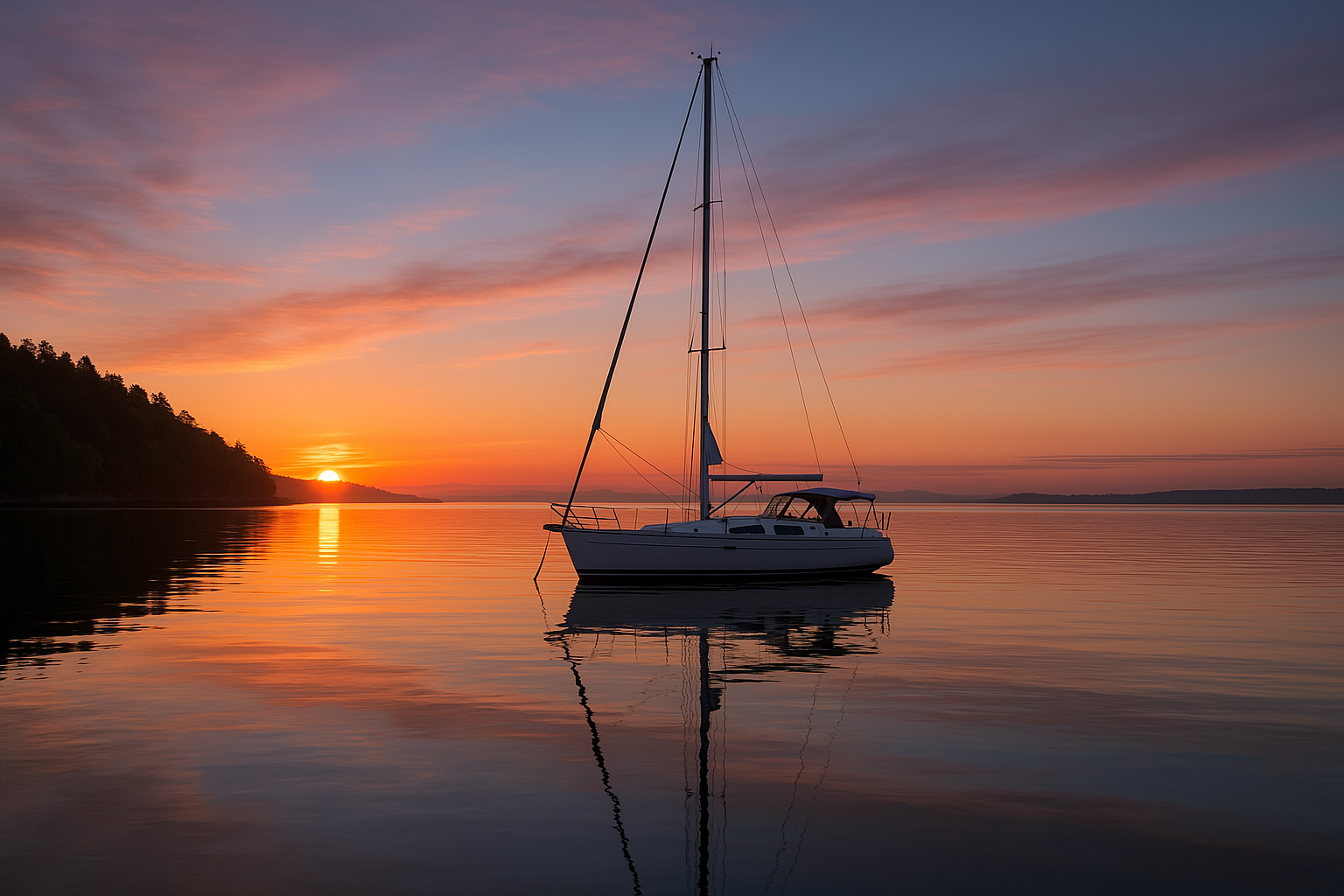
Later, Ken and I invested in a sailboat and cruised for several years around Puget Sound and the Canadian Gulf Islands. My mother once remarked, “Why are you buying a sailboat? You hate being in water.” My reply was, “That is WHY we’re buying a boat, so I don’t have to be IN the water, I’ll be on it.”
I guess I can throw parasailing, white-water rafting, and skydiving into the travel bucket. Bottom line is, travel, in whatever form, is my go-to expense when I have an extra buck or two. Put me on wheels, wings, or waves, and I’m happy.
Winston kicked loose rocks into the slow-breaking waves, his sandaled foot making soft plops in the water. Sand crabs skittered away at his approach across the rocky beach. Cold, briny air blowing steadily against his face ruffled his dark hair and brought the scent of faraway adventure back to him. His forty-three-foot sloop, Bequia, bobbed at anchor sixty feet offshore where the shelf dropped to deep, near ebony waters. Uneasiness haunted this return to his boat, hiding behind his sense of liberation. It had been a tense week on the island.
He untied his dark gold, black streaked, rubber dinghy from a large driftwood log and pulled it out into the surf. Slick clumps of seaweed made walking on the rocks like skating in slug slime. He grounded the dinghy with one foot and shoved off with the other until it floated on its own. The halo line of the rising sun on the east horizon above the hill cast faint magenta fingers into the morning-tinted sky. When he lifted anchor, he would say goodbye to Orcas Island forever. The only witnesses to his departure were three seagulls hanging sideways to the wind.
It was one of those rare early fall days in the San Juans, portending sunshine at the crack of dawn, no cloudy onshore flow, and a bit breezy. Holly, the waitress at the Swing Inn Café, wiped the crusty pink and gray marbled countertop. Marla never seemed to get it clean before she left at night. She inserted the “daily specials” card into each menu on the stack. The little bell at the door announced morning customers when they arrived. That jangling bell at the door was her starting gun for the day. She watched for regulars – Ted, when he was in town, and Paulus, the Greek.
Then there was the dark-haired stranger who showed up at five am every day for the past week. She still didn’t know his name. That was unusual because, if anyone could charm customers, it was blue-eyed Holly. She hadn’t been successful in finding out where he was staying or why he was in their small town. He came in, ordered the breakfast special without even looking to see what Marty had on the menu, drank two and a half cups of coffee, left a $3 tip, and nodded goodbye. Other than his order and curt answers to polite questions, he didn’t utter a syllable. He was civil, but barely, a real challenge for the gregarious waitress.
Holly tucked her summer-streaked brown hair behind her ears and watched out the window as dawn slowly lit the street in front. The smell of biscuits and coffee filled the small café with a tantalizing good morning aroma. Soon, slices of ham, sausage patties, and strips of bacon would sizzle on the grill.
Ting-a-ling.
“Hey, Holly. How’s tricks?” Old Paulus was always jaunty in the morning. He was a retired fisherman whose wife died four years ago. It became his habit to spend an hour each morning at the Swing Inn. He slid into his customary seat, third from the left end at the counter, and opened his paper, keeping an eye on Holly as she poured him a cup of coffee and put the brown cow pitcher of cream beside it. It made him feel almost married again to have his breakfast with a pretty woman.
“You want the special or just eggs and biscuits this morning?”
“Mmmm. Today’s Friday. Crab omelet, right?”
“You got it.”
“Okay, the special. Did you hear the fireworks last night?”
“What fireworks?” Holly called over her shoulder, “Marty, one special for the Greek.”
“Evidently, someone started a fight at the Razmataz, complete with gunfire, squealing tires, police lights, and sirens. No one got hurt or arrested. The guy who started it got away. Some stranger in town. A couple of fellas went to the station for questioning. I heard ‘bout it on the radio before I walked over here.”
“It must have happened after I went home,” said Holly. “I was out at Gull’s Wing until the band quit about 1:30 and didn’t notice anything on my way home. I drove right past Razmataz.”
“How d’you do it? Out dancin’ at night and perky in the morning.”
“I’m not telling my secrets, Paulus. I might want to sell them one day on QVC.”
“Youth, it’s all about youth.”
“I’ve been around awhile. I know what winds my stem. I figured out how to fit the rest of my day around dancing.”
“Maybe I should try it. These old bones might like to jig.”
“Come out with me tonight. I’m probably going back to Gull’s Wing. Colin Wilson’s band is playing. Good dance tunes, some country two-step, some swing, some salsa. There’s always a lively crowd when he plays. Plenty of singles. You’ll have your pick of partners, and I’ll certainly dance with you.”
The door chimes rang again.
“Mornin’ Sunshine, mornin’ Greek.” Ted took off his cowboy hat and swung his lanky frame onto the stool two down from Paulus. Ted did long-distance trucking. When he was in town, he was always at Swing Inn first thing each day. His wife, Tina, was the kindergarten teacher at the local elementary. She was a vegetarian and liked slow, quiet mornings with yoga and soft classical music, so rain or shine, he walked to the café for conversation and meat.
Holly poured his coffee in a big mug – black, no anything.
“Order up.” Marty hollered.
Holly pulled the warm plate from the serving shelf and put it in front of Paulus, and warmed up his coffee.
“What’ll it be, Ted?”
Holly turned at the sound of the bell at the door to welcome the dark-haired new guy, but found her smile greeting an elderly couple who sat themselves in the middle booth of three next to the window.
“Be right with you folks. Special is crab omelet.”
The elderly lady, slightly stooped with her green coat pulled close, her gray bob snug in a scarf, nodded back to Holly. “No hurry, dear, but bring tea when you come.”
“I’ll have double ham, side of bacon, sausage, and two eggs easy over, and a handful of those biscuits,” Ted said as he gulped most of his first mug of coffee. “Do you have grape jelly this morning?”
“I’ll check. I’m pretty sure a delivery came yesterday afternoon,” she answered and poured more coffee into Ted’s mug.
“Double ham, jacked, and two easy, Marty,” she called to the cook.
Holly filled two aluminum pots with steaming hot water, grabbed tea bags, put teacups, two napkin-wrapped bundles of silverware on her tray, and two menus under her arm, and went to the couple in the booth.
“You folks are sure up and out early this morning? Welcome to our little town. Staying at the hotel?” Holly handed them the menus and set out the tea, silverware, and napkins.
“Did you hear the commotion last night?” Paulus addressed Ted.
“Lights out for me at 10:00. What happened?”
“Don’t know exactly, but there was a ruckus at Razmataz sometime after closing. Reports say no one was hurt, but the fella who started it got away.”
“We’re here visiting our daughter and her husband, the Jamisons. Do you know them?” the elderly man answered Holly.
“Sure do. Millie Jamison clerks at First American Bank on the corner, and Conner works at the auto shop, right? Nice people. Going to stay long?”
“Body was found out behind Razmataz, in the woods,” Marty called through the serving window. “I’ve been listening to KRG, local news. They just found it. Don’t know who yet.”
The halyard clanged against the mast on the swaying boat as Winston stepped from the dinghy onto the swim deck of Bequia. He pulled the dinghy aboard and closed the swim deck. After securing the small boat on the foredeck, he started the electric windlass to raise the anchor and prepared to unfurl the jib. Wind quickly filled the sail, propelling Bequia on its north heading. Revenge left a gnawing hole in his gut, not at all the relief he expected. He set the tiller and slipped below to grab a bite to eat before setting the mainsail. It had been a long night. After he abandoned the rental car, he had walked the rough terrain in dim moonlight nearly 10 miles through part of Moran Park from Doe Bay on the southeast side of the island. He wanted to be in Canadian waters as soon as possible.
A short post to acknowledge all who died in service to our country. God Bless. Not a holiday to say “happy”, but a day to remember those who protected us. They gave their lives so we could live ours in peace.
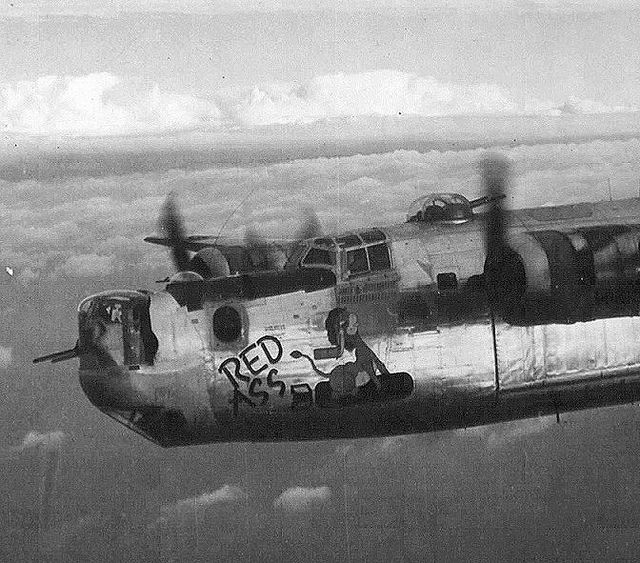
Red Ass, B24 Liberator
I especially want to thank my father, Jesse Dale Davis who served honorably in WWII as a gunner aboard B-24 Liberator bombers, especially The Red Ass that led the entire 8th Air Force from England to Normandy, France on the D-Day invasion. He was wounded during his twenty-eight bombing raids across Germany, and occupied France, and Holland. He recovered from the physical wounds. The emotional scars remained for his entire life. He provided a comfortable life for his family until his death at age 52. He covered the trauma left in his psyche with wit and humor and never talked about his wartime experiences. Thank you, Dad. I miss you daily and wish we could have talked about your war experiences.
I also want to remember and honor contemporaries who gave their lives in Vietnam – their destiny cut short. They served our country with an innocence of belief in what our leaders said was important. Both were barely 21.
Paul Michael Gregovich DOB: 6/16/46. He died on July 15, 1967, in Vietnam Quang Tin province.
Dennis Quentin Zambano DOB: 10/14/46. He died on October 15, 1967, in South Vietnam Bing Dinh Province.
And to the thousands of others who we don’t call by name, Thank You for your sacrifice.
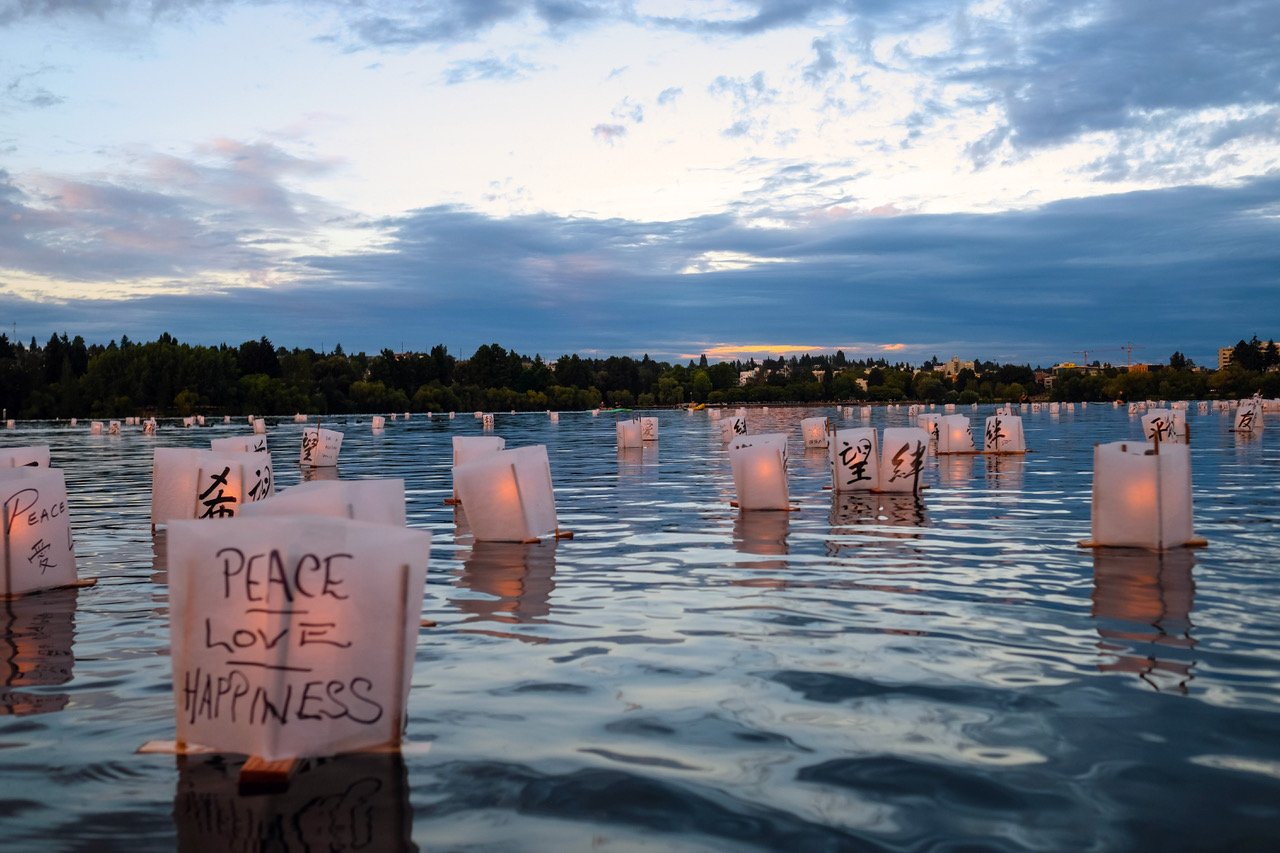
Green Lake Memorial Lantern Float photo by Vuong Vu
As a final episode in our tour of Seattle, I will take you to the Green Lake neighborhood. It is a quiet neighborhood that I love to walk around. Green Lake is 259 surface acres and was named because of the algae that formed, causing the lake to turn green. At times, it produced noxious odors. The algae caused rashes for many who tried to swim there. Attempts to clear the lake were unsuccessful until about twenty years ago. Now people can swim in it. Motorized boats are banned on the lake, but people still splash around in kayaks, canoes, and on paddleboards. There is a large open area for picnicking and nearly three miles of paved paths around the lake. Every year since 1984, a memorial lantern float is held to memorialize the victims of the Nagasaki and Hiroshima bombings.
At some point in the 1920s, a bathhouse with changing rooms and showers for bathers was built at the edge of the lake. That building now houses the Public Bathhouse Theater, one of the many public theaters in Seattle. It offers a wide variety of entertainments and is a starting place for actors.
Green Lake had an aquatic theater in the 1950s, where the Aqua Follies were produced. It was the site of concerts and live entertainment by some of the pros, such as Bob Hope, Led Zeppelin, and the Grateful Dead, among others.
Woodland Park Zoo is at the edge of the Green Lake neighborhood and connects through the park. It is over ninety acres of animals, exhibits, and family fun. When our kids were young, we spent many hours at the zoo and the children’s theater.
While a student at the University of Washington, our son lived in the attic of an old home just up the hill from Green Lake. Then he moved for a time to the Wallingford neighborhood across the I-5 from the University District. His house was actually tucked in under the edge of the elevated freeway. He and his buddies started a raucous rock band called Legacy. It quietly ended shortly after graduation.
Of course, the University District and The Ave hold a myriad of adventures and students who are in the active process of becoming. I spent many hours exploring my favorite emporium, The University Book Store on the Ave. On a couple of occasions, when my husband wanted to WOW me, he gave me a large dollar gift certificate to “the bookstore”, where I escaped into other worlds for hours in distracted bliss. The downside for him was that I came home laden with books that he then had to move from house to house each time we moved. He said he’s not moving them again, so I guess we’re here for the duration. Love me, love my books.
There is the Ravenna neighborhood that we bypassed, and the International District with great dim sum. You can lose yourself in the culinary delights from around the world. There are Rainier Beach and Sodo (South of Downtown) areas. There are the Roosevelt and Sand Point districts, Montlake, Phinney Ridge, toney Madison Park, and the exclusive, completely walled-in and gated neighborhood of Broadmoor. I went to a party in Broadmoor once, a political do as I recall, but the memory is vague – it must have been a very “good” party.
We passed by Beacon Hill in the southeast section of the city. It is the original headquarters of Amazon.com. Beacon Hill is primarily an Asian neighborhood, mostly residential. We sometimes shopped at an Asian import store on Beacon Hill. I brought a three-foot-tall laughing Buddha to Tucson with me as a reminder of that neighborhood. He happily reigns over our backyard in the desert.
We didn’t spend much time in downtown Seattle, the mega-mecca of everything big city. For a while, our eldest daughter lived on the eighth floor of a thirty-two-floor building in the high-rise forest of the mid-town business district within walking distance of her office and her place of worship, Nordstrom. Nordstrom began in Seattle as a family-owned shoe store in the 1920s. It transitioned to a big-time department store in the 1960s, expanding far beyond Seattle. I think its growth was financed, in large part, by our shoe-addicted daughter.
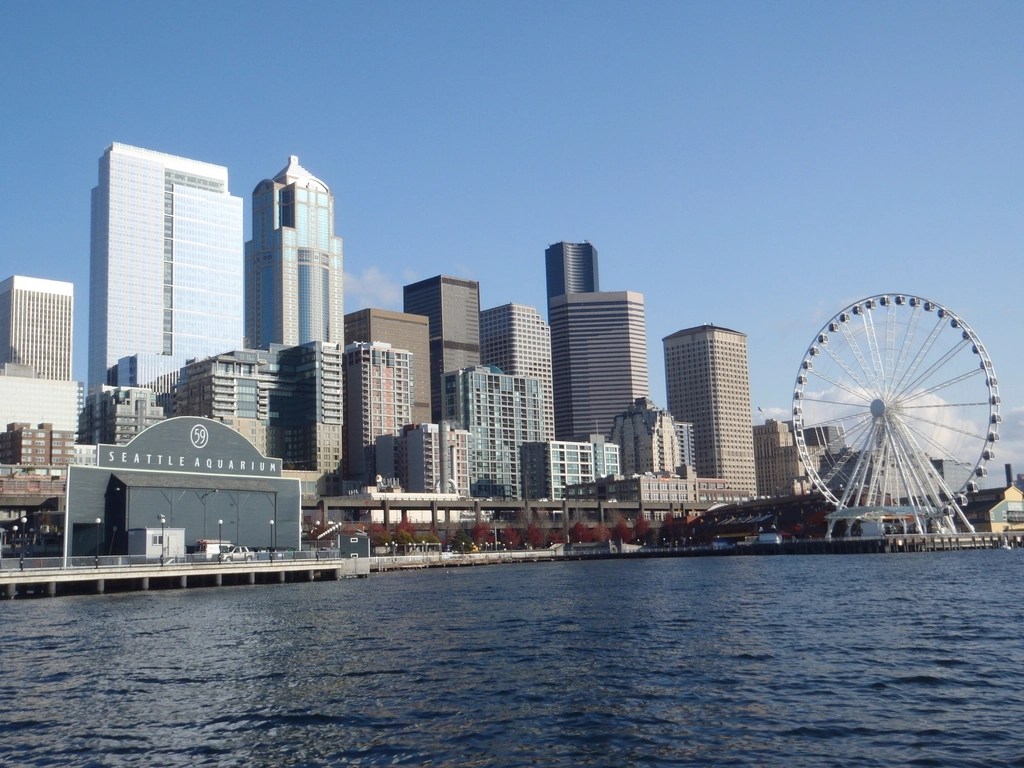
We’ve missed a significant portion of the waterfront where ferries ply their way across the Bay and Puget Sound to various islands and Victoria, Canada. Pier 56 is known as Fisherman’s Wharf. It is full of shops and entertainment opportunities. The Seattle Aquarium is underwhelming compared to other city aquariums we’ve visited. Not worth the money.
The Great Wheel – Seattle
The Great Wheel is interesting. A Ferris wheel that is 175 feet high and extends 40 feet out over Elliott Bay has views of Seattle, the Olympics, and Puget Sound (on a clear day). They have a spectacular light show. Each of the forty-two climate-controlled gondolas holds eight passengers. There is one VIP gondola with special appointments that holds four passengers. The Wheel revolves three times in the twelve-minute ride. It doesn’t compare to the London Eye, which is 445 feet high, anchored in the Thames, but it is worth the $13 to experience, and you don’t have a twelve-hour flight to get there.
We bypassed the industrial part at the south end of Elliott Bay, where big tanker ships and commercial barges load and unload from ports around the world. It is less than elegant, but it does provide a comfortable living for those working the docks.
At various times, Seattle was named the most educated city in the US and the most literate city. But then, it has also been named the most livable city, and I’m sure whoever came up with that was smoking something stinky and missed all the suicides. It is a city of eclectic neighborhoods, each a little world unto itself. Some began as immigrant enclaves but changed in character as Seattle grew. When you travel around Seattle, it is like taking a trip to different lands, different customs, and cultures without needing a passport. You will have to come back with me again sometime and explore the places we missed.
In future posts, I will share some of our sailing experiences in the Puget Sound area. I will take you to Friday Harbor on San Juan Island during the Jazz festival, to the Victorian town of Port Townsend, harboring at Orcas Island, and the legendary Fluffy Duck cocktail, visits to Stuart and Sucia Islands, going through seaside customs on our way to the Gulf Islands of Canada. Killer whales played with our sailboat as we cruised the Strait of Juan de Fuca.
I’m not sure how Seattle informed me as a person during my 40 years of incarceration. I spent so much time resenting it that I really didn’t let Seattle in. My interior barriers blocked any positive influence that threatened my bias. I took a cue from my adorable little grandmother when she came from Kansas to visit for the first time. We took her up in the Space Needle. Her comment was, “Yes, it is beautiful from up here, but you can’t see anything when you’re down there because of those damn trees.” To each his own. To some, trees provide a beautiful landscape; to others, they are an impediment to seeing the horizon.
I enjoy going back to embrace Seattle for all its gifts, now that I know I can return to Tucson’s blue skies. My children, all born with gills and webbed feet, love Seattle and always have. They thought we lost our minds when, through my insistence, we made our escape to the desert twenty-eight years ago. Two of those Seattle-loving children presently live in sunshine, one in Texas and one in Tucson. Only one stubbornly remains in Seattle, her little webbed feet firmly planted in the muck. Seattle is a very watery, water-oriented place. Water – everywhere.
No more clammy feet, soggy clothes, frizzy Bozo hair and gray skies for me. If nothing else, Seattle taught me to appreciate blue sky, clear air, stars, and yes, even the heat, it’s a dry heat. I love Tucson. I will live 40 years in the desert to dry out and make up for all the years I endured Seattle…then, on to somewhere else, preferably Paris. I know the weather in Paris is not ideal either, but it is PARIS.
Discovery Park takes up a major part of the land on Magnolia Bluff. It is the largest park in Seattle with trails, forest, meadow, and beaches for a diverse outdoor experience. Magnolia was misnamed by a military surveyor back in the 1800s because he thought that the red-barked Madrona trees that cover the hill were Magnolias.
A caveat of the Treaty was the promise that any surplus military land would be returned to the original owners. Following the Korean War, Fort Lawton was considered surplus land. In 1970, there was a nonviolent demonstration for four months by indigenous peoples led by Bernie Whitebear with supporters such as Jane Fonda and the Black Panthers to increase national attention to the cause. The result of the negotiation was that the Fort would be turned over to the City of Seattle for a public park, and the United Indians People’s Council would receive a ninety-nine-year lease for twenty acres to become a cultural center. The Daybreak Star Indian Cultural Center was completed in 1977 and is a cultural and educational magnet for visitors.
Like every piece of land in Seattle, Magnolia belonged for eons to Native Americans. The native Americans considered themselves custodians of the land. A gathering place for possibly 10,000 years. Archaeological evidence shows sustained settlements in the area with tools, homes, canoes, etc. The Euro-white invaders forced the indigenous population to reservations by the 1855 Treaty of Point Elliott with promises (still not kept) regarding healthcare and economic opportunities. The land was turned over to the military and became Fort Lawton until the 1970s.
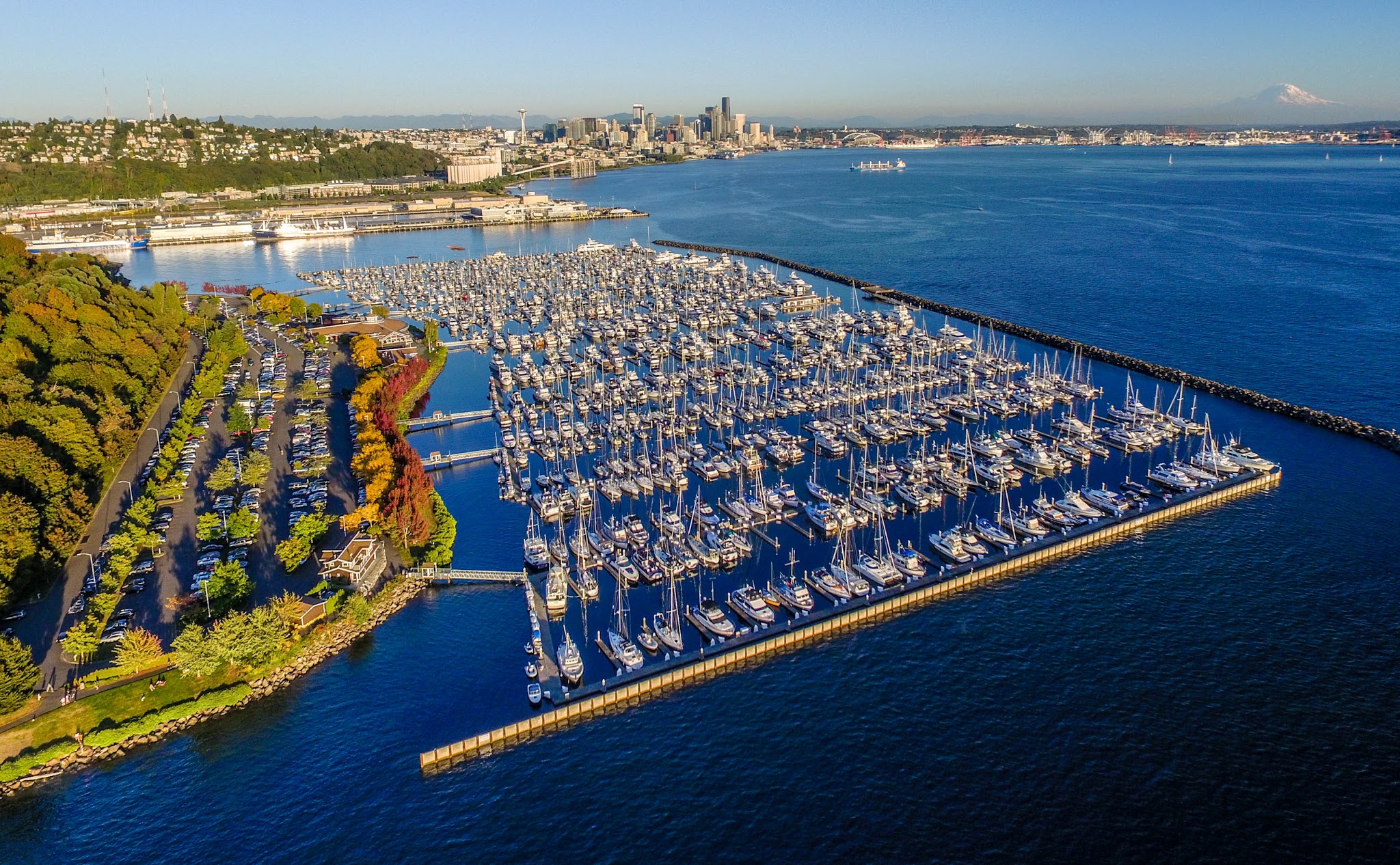
At the base of Magnolia Hill is Elliot Bay Marina where we moored our sailboat for years. It has a magnificent view to the east of downtown Seattle across the Bay, spectacular views of Puget Sound to the west, and Mount Rainier to the South. We lived aboard our boat for part of a summer while we had our house remodeled – a six-week project became three months. I remember sitting on the aft deck with a glass of wine in the evenings, the boat swaying gently with the tide, puffs of crisp sea air coming off the Sound, watching the moon rise over the Cascade Mountains and Seattle, thinking there couldn’t be a prettier sight – one of my Stockholm hostage moments. Reflection of the setting sun on windows in the city made a warm copper glow emanate from some of the buildings. Lights in the skyscrapers cast multicolored rippled beams across the water of the Bay as the sky grew darker and darker. Adorable harbor seals swam into the marina and barked at each other and boat dwellers. They are creative beggars, slapping the water to get attention and rolling on their backs, inviting gifts of food. Eagles swooped down over our boat from the tops of the madrona trees on their way hunting or fishing. Idyllic. Inner city peaceful.
Elliott Bay Marina
Palisades restaurant at the marina is one of my favorites in the city, and their Mangorita is the best. Maggie Bluffs Café is unmatched for Sunday brunch. The king crab Benedict is unbeatable. Fisherman’s Terminal is another great spot for dining on the freshest fish. One undeniable benefit of Seattle is the fresh seafood, especially my favorite, crab. From our earliest days in Seattle, a friend of ours gave us crab that he caught near his house north of Seattle. We had mountains of crab and salmon in the refrigerator and freezer all the time. I took it for granted, even said I was tired of it. Now I crave it. I must stop the restaurant tour because I’m making myself too hungry.
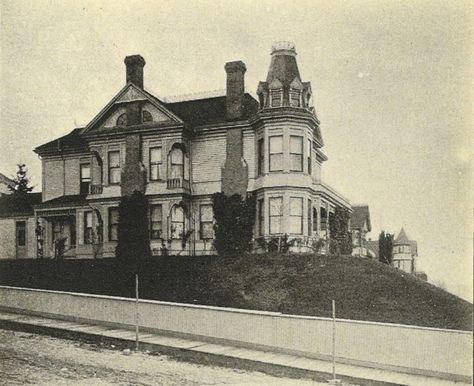
From Magnolia, we drive back southeast to Queen Anne Hill, the grand dame that looks down over Seattle and the Bay. Queen Anne is the highest hill (but not the steepest slopes) and has many of the earliest mansions built by Seattle pioneers. Lavish old homes perch on hillside lots with rounded tourettes, bric-a-brac details, and gingerbread that place them in a bygone era. Even newer built homes echo some of those details. At the base of Queen Anne to the east is Lake Union. Lake Union is lined with restaurants (which we will not visit on this trip due to hunger concerns) and nautical businesses. It is the freshwater mid-point on the canal between the Sound and Lake Washington.
A friend of ours rehabbed an old Conoco gas station into a lovely two-story home on Westlake Avenue on the hill above Lake Union with views up and down the Lake. She was one of the most creative, imaginative people I’ve known. She was also a gourmet cook and owned a restaurant in Seattle. I would extoll her varied and unique menu, but sadly, her restaurant is no more. Besides lovely lake views and boat watching, she had a view of the floating houses moored on the west edge of Lake Union. They are a unique living concept and, I’ve heard, some can be rented for a Sleepless in Seattle experience.
Lower Queen Anne on the south side of the hill is the location of the Seattle Center, the Opera House, the Seattle Repertory Theater, the Pacific Science Center, sports arenas, a live theater district, and the famous Space Needle. Ken took me to the revolving restaurant atop the Space Needle for my eighteenth birthday, and gave me a diamond and pearl ring – a promise to get engaged. And here we are sixty-two years later.
Our younger daughter lived in an apartment on Upper Queen Anne for several years. It is a distinguished neighborhood with a significant part of cultural Seattle at your feet within walking distance. I loved her apartment, embedded in an old mansion that had been rehabbed into a multiple dwelling building. It had character and charm, a perfect setting for a young writer of romance novels. Alas, she didn’t write romance novels.
Lower Queen Anne, on the south side of the hill, is the location of the Seattle Center, the Opera House, the Seattle Repertory Theater, the Space Needle, the Pacific Science Center, sports arenas, and the live theater district. It was the site of the 1962 Seattle World’s Fair. Elvis fans will remember he made a movie there…sigh. Kurt Russell was in the film, It Happened at the World’s Fair, as a little boy who kicked Elvis in the shin. Not to be missed is the Chihuly Glasshouse. If you haven’t seen the genius of Dale Chihuly glass, this is the place to explore. The Center holds so much magic it takes days to explore it all. At the edge of the Center is the Experience Music Project, now called MoPop, a spectacularly ugly structure originally dedicated to music, mostly rock and roll, but now includes symbols of modern pop culture. A monorail connects the Center to the main part of downtown. It is the location each year of the Bumbershoot Festival and Taste of Seattle. I could go on for pages about The Center. It takes days to explore it all.
Time is short, and the pages are long, so we’ll leave now. We’ve missed West Seattle and Alki Point, where our best friends lived, and the actual birthplace of Seattle. We passed by Ballard, the Scandinavian part of town, where Shilshol Bay is. Ballard is the home of all the fishermen in Seattle, and they have funny accents. Maybe that’s a little stereotyped, but it’s true, ya sure, you betcha. I’ve skipped Belltown, a waterfront neighborhood just north of Pike Place Market with lots of good restaurants and nightspots. Belltown is also the home of the P-Patch, where public gardening is offered. The next post is the last in the tour. We will visit Green Lake and the University District, and I’ll tell a smidge about our sailboat life. There will probably be other posts in the meantime. Lots of things swirling in my mind.









 wonkagranny