My Night in Jail

In 1990, we had our house remodeled. The kids were all off on their own. To avoid staying in the mess during a six-week remodel, Ken and I decided to live aboard our sailboat Wind Dancer, which we moored at the Elliot Bay Marina in Seattle. We commuted from there during the week to our jobs in Bellevue. It was truly a wonderful summer. The remodel ended up being closer to three months – as remodels are wont to do. Sitting on the aft deck of the boat in the evening with a glass of wine, watching the lights come on all over the city, reflecting squiggly colored lights in the inky waters, was a magical experience. All was well and we were content.

My cousin came to town, her first time in Seattle. She stayed with my brother’s family since we obviously couldn’t accommodate her and her two kids on our boat. I wanted to show her around when I could, so we made a date for the weekend to go out to dinner and a little tour of the city.

We went out to a nice dinner, then I drove her to see some of the interesting sights and viewpoints. Summer evenings in Seattle are light until very late. Afterward, I was going to take her back to Bellevue to my brother’s house.

It was 11:00, night had come, and the streets of Bellevue were dark and empty. We came to a stop sign at the intersection where I would turn from the right lane to go to my brother’s, but I decided to turn left to show her something of interest that I had forgotten. I turned left from the wrong lane just as a police car drove over the hill behind us, and I knew they spotted my illegal turn. Again, there were NO other cars on the road in any direction, and I didn’t see the police car because it didn’t come over the rise of the hill until I was halfway through my turn. I knew they would stop me, so I immediately pulled over to the side of the street after completing the turn. Sure enough, the lights went on, and the police car pulled up behind me. A young female officer got out and came to my window with her flashlight.

“You made an illegal left turn. Let me see your license and registration.”

I pulled my driver’s license from my purse, got the registration from the console, and handed them to her.

“Have you been drinking?”

“Yes, I had a glass of wine with dinner an hour or so ago.”

“Ok. Get out of the car and take a breathalyzer.”

Now this is where things went wonky. Not more than a month before, Ken and I had dinner with an attorney friend of ours, and he mentioned apropos to nothing, “Don’t ever take a field sobriety test. They aren’t reliable. Go to the police station if they insist on a breathalyzer.”

“No”, says I. “I won’t take a field sobriety test.”

She was visibly surprised that I refused.

“Just wait in the car, I’ll be right back.”

She went to her car and was on the phone. Within two minutes, three other police cars appeared. My car was surrounded, one behind me, one in front of me, turned to face me, one beside me blocking the street, faced the side of my car, and a fourth on the other side drove into the parking lot of the business next to where I parked on the street and faced my car. All their bright headlights were trained on me, and their roof lights rotated a merry spectacle. It looked like we were in a concert venue, and I was the star attraction. Again, I emphasize, there were no other cars on the street during this time.

The officer came back to my car. “Get out. You’re going to do a sobriety test.”

“Fine,” I said, knowing I wasn’t the least bit inebriated.

“Take off your shoes. Walk a line heel to toe with one foot in front of the other. Touch your nose with your finger.” Etc. etc. I took off my high heels, and I really don’t remember all her directions, but my nylons were being shredded. I did as I was told. Meanwhile, six other police officers were standing around me and my car. My poor cousin was stuck inside, wondering what was going on. I surmised that I somehow had been misidentified as a serial killer or terrorist. I was mildly amused by all the attention, but tried to keep a straight face, figuring humor at this juncture would not be well received.

After the drunk test, the officer said, “You are under arrest.”

“Why?”

“You didn’t follow orders, you were unbalanced, I think you’re drunk.”

There were six other policemen around me, and not one of them objected or said anything. I knew I’d done exactly what she asked. Now I was surprised.

“What am I supposed to do with my car?”

“The woman in your car can drive it to your house.”

“No, she can’t. Our house is under construction. I live on a sailboat in Elliot Bay. She is visiting from Kansas and doesn’t know the area. I was taking her to stay with my brother when I made the bad decision to turn from the wrong lane.”

“Okay, she can follow us to the station, and your brother can pick her up. She can leave your car there.”

It was beginning to feel surreal, but I had no choice with seven police persons surrounding me. The police station was only two blocks from where I was stopped. No big deal for my cousin to follow them to the station. I was handcuffed and put in the back of the patrol car. The seat was a molded bench with a back, not anything like a normal car backseat. Wow, you do have to duck your head to avoid getting bonked when you get in the backseat. Another learning experience. All their cars made a U-turn in the middle of the street (definitely an illegal maneuver), and my cousin followed. I reiterate – there were NO other cars on the street. During the entire thirty or forty-minute procedure, only three cars came to that stop sign intersection. They could see the street was blocked by police action and quickly turned in the opposite direction from our circus.

My cousin called my brother from the station, and he came to get her. I was detained in the back and didn’t see him, so I couldn’t explain.  I was photographed, fingerprinted, and all my personal information was taken before I was ushered to a straight-backed chair against the wall. Two other people were sitting there in chairs. One by one, they were taken out. I don’t know why or where they went. Again, I was asked to take the breathalyzer. Now my stubborn streak kicked in. I declined the offer. Three or four police quietly conversed behind the desk with the arresting officer. I watched the goings-on with interest. They were obviously prepping her. Meanwhile, two drunks were brought in separately – two obviously drunk men weaving their way with officers holding them up. I watched as they were booked, etc. Couldn’t they see the observable difference between those drunks and sober me? An administrator type came over to me with a piece of paper.

“Sign this,” he said.

“Ok. Let me read it first.” I read it, and it had to do with agreeing to the charges and waiving my rights. After over a thirty years passage of time, I don’t remember exactly what the document was, but upon reading it, I knew it wouldn’t be a good idea to sign.

“Sorry,” I said. “I’m not drunk, and this doesn’t appear to be something I want to sign. Can I make a phone call?”

“Do you have an attorney?”

“Yes, I’ll call him.”  At that time, we didn’t have cell phones, so I could not reach my husband on the boat for advice. I called our attorney friend, the one who told us not to do a field sobriety test. Unfortunately, he was asleep as it was about 1:30 am, so he didn’t answer his phone. On top of that, Bob is a real estate attorney, not a criminal defense attorney, so he probably wouldn’t have been much help.

“Well, I guess I don’t have an attorney.”

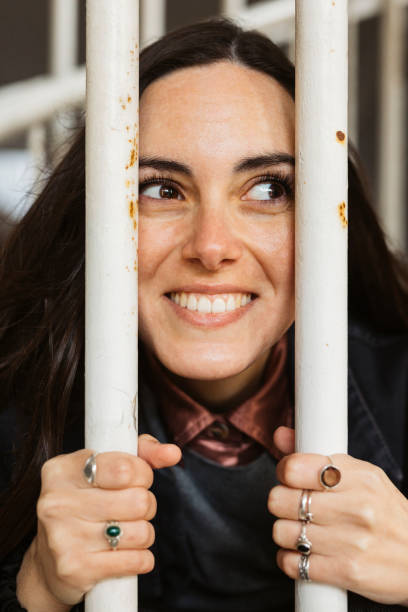
“We’re going to put you in a cell, now.” Two officers walked me down a hall to a nice, clean beige cement room with a sink, toilet, and bench-like cement ledge on the wall. They took off my handcuffs. The front of the cell was bars, just like on TV.  I wasn’t upset by the turn of the evening events, secure in the knowledge that I was not drunk. I was more curious and mildly amused. What would be next on the menu of procedural absurdities? Would I be strung up by my manacled hands like a ham with a lash applied to my naked back until I confessed to treason?  Ah, maybe a bit too dramatic.

I was in the cell for a while. Time was a blur. There were no clocks visible, and I don’t wear a watch. I was sleepy, but the concrete ledge didn’t invite sleep, so I sat on it leaning against the corner of the wall. Finally, an officer came to my little room and told me he would take me to the phone; they had the name of a public defender who would talk to me. I followed him and called the number he gave me.  The officer never left my side. The public defender (I’m sure awakened from his sleep and not in the best mood) said I was obligated to take the breathalyzer test and that I could call him the next day, and he would explain everything to me.

I took the breathalyzer, and they put me back in my cell.  An unknown amount of time again went by before they came to get me. The officer said, “Here are your keys, your car is by the front door. We will contact you about your trial.”

“What trial? I’m not guilty of drunk driving, only an illegal turn. Can’t I pay the ticket and go home?”

“No, you are charged with drunk driving, and you refused to sign the charge document, so it has to go to a judge.”

“What did my breathalyzer show?”

“You blew .01, that is why we are letting you drive home.”

“But I’m still charged with drunk driving?”

“That was what you were arrested for; now it has to be adjudicated.”

By that time, the sun was up. I drove to the marina and told Ken the whole story. He was surprised, but relieved to know I had been in a safe place staying out all night. I went instantly to sleep. Rocked by the boat’s gentle motion, I slept about four hours.

My trial was set for several weeks from that night. In the meantime, I met with the attorney who said I wouldn’t be found guilty of drunk driving but of reckless driving. It was the harshest thing they could legally charge me with, instead of a simple illegal turn. The police were unhappy with my attitude. The arresting officer was a rookie, and I had made her first arrest a nightmare.

By the time of the trial, we were back in our beautiful newly remodeled home. The night before my trial, I decided to dye my hair. I don’t remember the exact reason, but I did try to dye my hair. The next day, my hair was pink. I called my daughter and said, “Help, I have to go to court, and they’ll probably rearrest me for some obscure infraction if I show up with pink hair.” She called her good friend, who was a hair stylist, and together they got my hair back to a reasonable hue.

At the trial, the six policemen sat directly behind me as I waited for my case to be brought up. I waved and smiled at them. They didn’t respond. Were they trying to be intimidating? Why would all six men take time from their real work to watch my trial? The arresting officer testified with untruths. She indicated I got my registration out of the glove box, but I kept it in the console between the front seats. She said I was wobbly when I did the drunk test, I wasn’t. I finally got the clue about one of the reasons she thought I was drunk. She said my eyes were red and weepy. That was true. I had been with my cousin for several hours, and she was a smoker. She smoked in my car while we drove around, and my eyes burned from the cigarette fumes. I was called to testify and pointed out the officer’s mistakes about where the registration was, and that she said I was wobbly when I knew I was steady, and my eyes were red, but it was from cigarette smoke, not alcohol. I added that I blew a .01 on the breathalyzer, so I couldn’t have been drunk anyway. The judge said I had to pay a fine for reckless driving, but it wouldn’t stay on my record if I didn’t get any moving violations for a year. Then I had to pay the attorney a ridiculous amount to represent me with a pro forma script he could have recited in his sleep. Theater of the Absurd.

And that is the story of my night in jail.

Jazz Hands – an essay on six degrees of separation

I lived most of my life in Bellevue, Washington, a suburb of Seattle. I met my husband while still in high school. Ken was a senior at Bellevue HS, a rival high school. I went to Sammamish HS across town.

In the 1962 Senior Class at Bellevue, two men touched our lives in the six degrees of separation way. One was Peter Vall-Spinosa, whose father, Arthur, was one of the priests who officiated at my wedding to Ken in 1964.

Father Vall, as he was known to my family, was the priest at St. Thomas Episcopal Church, where my family attended from the time we moved to Bellevue in 1956. In the 60s, a new Episcopal church was founded in our neighborhood of Lake Hills on Bellevue’s east side. Our priest was Father MacMurtry, known as Father Mac. Father Mac and his family, a wife and two small daughters, lived across the street from us. On occasion, Father Mac would come to our house, where he and my dad would share a bourbon or two while discussing how to change the world.

I wanted to be married at St. Thomas, a beautiful Gothic-modern stone church, instead of the new church that was temporarily housed in an old school building until construction could be financed. Father Mac had to get permission from Father Vall, and both men officiated at our wedding.

The next connection was through Richard Reinking, a good friend of Peter Vall-Spinosa. Dick became a psychotherapist and treated Ken’s older sister during a troubling time in her life. In the 1970s, Dick’s sister, Ann, became famous on Broadway as an actor-dancer-choreographer. She came to the attention of Bob Fosse, a renowned theatrical choreographer and producer. She was his protege/lover. She was in productions of Pippin, A Chorus Line, Cabaret, and Chicago, among others. Ann then starred in the movie All That Jazz, based on Bob Fosse’s life, his marriage to Gwen Verdon, and his six-year affair with Ann. Ann and Gwen became good friends, and they collaborated in the development and production of the Tony Award-winning musical Fosse about his life and work. One of the dance moves used prevalently by and associated with Fosse is his stylized, energetic version of Jazz Hands.

Here are my six degrees of separation to Jazz Hands. I personally knew Arthur Vall-Spinosa, so it starts with him, then to his son Peter Vall-Spinosa, then to Peter’s friend and my sister-in-law’s therapist, Dick Reinking, then to Dick’s sister, Ann Reinking, then to Bob Fosse, who was known for Jazz Hands. TA_DA!

This is a fun exercise for a prompt – pick a person or thing and find a way to relate to them or it through six connections.

Mother’s Last Nerve

I was an only child for eight years until my baby brother joined the family. I was a sweet little girl with big blue eyes and curly brown hair. I was the fairy dust of my father’s dreams and the sunshine in my grandparents’ and great-grandparents’ world; the first grandchild in my Mom’s family and the first girl grandchild in my Dad’s family. My aunts and uncles thought I was adorable. In short, I was spoiled.

And then there was the other me. I was contrary when confronted with chores I didn’t want to do; “forgetting” or ignoring them. I filched small items from the neighborhood grocery store and drug store. My mother made me return with her to the store, apologise, then she paid for the item, and made me give it back. Never could I enjoy the plunder from my piracy if my mother found out. I told whopper lies – stories I believed enhanced my ordinary existence. I cheated my younger cousins at games. I had a big imagination and lived in my own world. My mother knew that side of me, and she did her best to curb my larcenous tendencies and squelch my imaginative versions of reality. She made me account for the misdeeds she discovered. I learned to be devious, so some were undiscoverable.

I was a tomboy who climbed trees and made mudpies with the boys in the neighborhood. I didn’t play with girls. No matter how hard Mom tried to make me a girly girl, I couldn’t find fun in role-playing with dolls and paper dolls. I preferred action, playing cowboys and Indians, kick the can, and hide and seek with the neighborhood boys. I rode my imaginary horse up and down the street and groomed him in our garage. Those were the roles that shaped my days.

Mom was tolerant to a point and tried to keep the tornado in bounds. Once however, I stretched her last nerve to the breaking point. We lived in a small house with a living room, dining room, and kitchen, as well as two bedrooms and a bathroom in between.

 One Saturday afternoon, in my fourth year on the planet, Mom called me in from playing in our backyard. I had been strictly told to stay clean for dinner because my aunt and uncle were coming. I was covered head to toe with dirt. Exasperated, Mom wanted to give me a bath before dinner. She ran a tub of warm water with bubbles, then had to attend to something on the stove in the kitchen. I stripped down, ready to get in the tub. Then I thought of a plan to liven up bathtime. I went to my room, got my goldfish bowl down from the dresser, and took it into the bathroom, where I dumped the three fish, their castle, and plastic greenery into my bathwater and climbed in.

Mother came in and exclaimed in horror, “Diana, you can’t put goldfish in a bubble bath. You can’t bathe with fish.”

“Yes, I can. See.” I responded.

Mom pulled me out of the tub, scooped up the goldfish, and put them back in their bowl with cool water. I pitched a fit with muddy tears running down my cheeks. Mom cleaned me off and wrapped me in a towel. She stood with her hands on her hips, shaking her head, her bosom rising and falling rapidly, making the bright red flowers on her dress dance before my eyes while I awaited my sentencing. In the hall next to the bathroom was an alcove where the telephone, a black rotary dial affair, stood like a black Madonna in its dark green niche. Mom turned to the alcove, picked up the phone receiver, and spoke with harsh authority.

“Give me the number for the Indian Reservation,” she said in her harshest voice.

Standing before her, in a towel with water streaming from my little body, my knees shook and felt jello-like. “What are you doing? Who are you calling?” I inquired.

It sounded ominous. The Indian Reservation? What did they have to do with getting a bath? From Saturday serial movies, I knew that Indians were a fierce band of people who had bows and arrows and scalped little children. Family legend had it that there was Indian blood on my father’s side. My mother had accused me more than once of being as wild as one of those Indians.

With a dark look, phone still in hand, my mother said to me, “I give up. I’m done with your mischief.  I’m sending you back to the Indians. Maybe that’s where you belong. They’ll come pick you up.”

“No, mommy, please. Don’t send me back to the Indians,” I pleaded.

I sensed a hesitation on her part.

I continued, “I’ll be good. I’m sorry. I won’t put goldfish in my bath again.”

“You promise? You’ll behave? You’ll mind me?” She took the phone away from her ear.

“Yes. I’ll try my bestest.” However, sensing her willingness to give in, my fervor began to dissipate.  I saw her anger subside when she thought her threat worked.  I began thinking, mmm, Indians do have horses, and I always wanted my own horse.

It was certainly not the last time I created havoc, caused her frustration, consternation, and aggravation. She maintained her vigilance, but my father was always ready to redeem me. I didn’t feel I was doing wrong. It was my natural inclination to color outside the lines. I resisted rules, but stayed within barely acceptable boundaries. I make this confession because I mended my ways, reviewed my sins, contritely and retroactively asked for forgiveness.

Unfortunately, the goldfish didn’t survive the night, a weight my soul has to bear.

Our 122nd Wedding Anniversary

This morning, as we took our slow walk around the neighborhood, Ken mentioned that he thinks he can make it to our anniversary later this week. He has been a warrior for ten years in a battle with Parkinson’s, a movement disorder that takes his mobility away piece by piece. He is doing a heroic job of staving off the predicted progression, or should I say regression, of the disorder. We celebrate each and every milestone.

This week will be our 122nd anniversary. Yes. We have had 121 anniversaries so far. We were married sixty-one years ago – twice. Our first marriage, in January, was an elopement before Ken left for spring training in Lakeland, Florida, as a Detroit Tiger rookie. Then, eight months later, in September, when he returned from the baseball season, we were married in church with friends and family as witnesses. We have celebrated twice a year since; thus, it will be our 122nd anniversary. We kept our first wedding a secret until twenty years ago, and that’s another story.

Of course, we went through years of thick and thin, bounty and scarcity, as all long-term relationships do. We raised three kids and countless pets. We were on the brink of divorce at one point, separated for several months. The divorce was unsuccessful; we stayed married another forty-eight years (96 anniversaries) so far.

Chocolate cake with butter cream frosting and peanut butter roses

When first married, we lived simply. I remember peanut butter sandwiches (no jelly) were my lunches at work, sometimes they were dinner too. We lived in apartments in Washington, Florida, and California. Between baseball seasons, we took whatever jobs we could find. Minor league baseball players were only paid during the season, and it was a minimal wage not meant to get one through a year until the next season.

One apartment had a bedroom so small that only a twin-size bed fit. We both slept in that bed, me in the crack next to the wall. Ken was a 200 lb., six-foot-one strapping young fella whose feet hung over the end. He barely fit the bed at all, but we couldn’t imagine sleeping separately. At one time, we lived in a trailer in Florida that had been modified to add bathroom fixtures with a toilet in the living room and a shower in the kitchen. Oh, well – young love doesn’t make note of such inconveniences. We were happy to be together.

In 1966, we would walk with our new baby in a stroller down the hill into town from our suburban apartment to spend $.50 for two ice cream cones. It was an extravagance. We couldn’t drive to town because we couldn’t afford to use the gas in the car that Ken needed to go to work. At that time, gasoline cost less than $.50/gallon. Our two cones were the price of a whole gallon of gas. (Today, gas costs around $3.00/gal, and so does just one ice cream cone – inflation?)

We continued in the American dream to acquire a house with a mortgage and two cars – actually moving in the same city five times. Over the years, the houses became bigger and the cars nicer. Our kids thrived through school and sports, left home for college and lives of their own, and we became empty nesters. During those years, we lived in Bellevue, Washington.

Ken had a career in the home building industry, and after the kids were all in school, I took jobs doing admin work in a variety of companies, including our own. My jobs were mostly time fillers with no career aspirations – a way to make extra money for fun stuff.

One year, we left our jobs, sold our house and furniture, took our kids out of school, and went on a road trip through forty-eight states as well as a few provinces of Canada and Mexican states near the border of the United States. A challenge full of memories I wouldn’t trade for any amount of money.

We had friends, threw great parties, traveled extensively, and did everything we wanted to do. We had a sailboat and cruised the waters and islands of the Pacific Northwest alone together and with friends. We led a very privileged life and still do, but in a more modest way. We are back to simplicity, not quite the peanut butter lunches variety. We moved to Arizona nearly thirty years ago. Our lives are circumscribed by age and lesser abilities, but still full of friends and family. We have an abundance of gratitude for the abundance of our memories and each day we are given.

Happy One-Hundred-Twenty-Second Anniversary, Ken. I love you.

Living and Dying in 3/4 Time

One of my favorite philosophers, Jimmy Buffett, titled one of his early albums, Living and Dying in ¾ Time. There is a rhythm to life and there a rhythm to death. This is the chorus of his song Nautical Wheelers sung in ¾ time.

And it’s dance with me, dance with me, Nautical Wheelers

Take me to stars that you know

Come on and dance with me, dance with me, Nautical Wheelers

I want so badly to go.

In the 1970s, the Nautical Wheelers were a square dance group in the Florida Keys who danced the nights away under a tent. The song is about living life to the fullest, embracing the present with spontaneity, celebrating with people who live in joy.

These days, with news of friends and family dying, I’ve been thinking a lot about death. I am in the time of life when expiration dates are imminent. Baby Boomers are at the edge of eternity, and even those much younger reached the finish line ahead of me. The number of goodbyes has increased at a startling rate lately.

The first death I recall was my grandfather, Jesse Pottle Davis, 1888-1952, at the age of sixty-four, when I was six. I knew him, spent time with him, and loved him but was too young to understand death. It wasn’t until my father got down on his knees to hug me as close and hard as he could, crying, that I understood the depth and meaning of grandpa’s loss. My dad was my strength, and to see him so wretched was a life lesson. Dad died eleven years later at the age of fifty-two and my heartbroken reaction was much the same as his had been. The deepest sense of loss and agony. After several years of cardiac illness, his death from a massive heart attack was sudden and, I’m sure, painful

We are all living and dying. It is a fact. I recently started a journal titled 4,000 Days, not about counting forward days but counting backward from 4,000. I gave myself four thousand days to live, with a caveat for bonus days should I live past ninety-one, which is entirely possible. I did it after reading a poem by a friend titled Happy Birthday in which he comments that birthdays are not about accumulating years, but ticking them off toward the inevitable. Some people I shared the poem with found it a depressing thought. I found it to be funny and comforting in an odd way. The point is to make the most of each day as you count them down. A reminder to live each day. No one is given a timeline, a date certain. Even cancer patients are given hope and a range of time to look ahead. Our appointment to meet the hereafter remains a mystery to us. Thank heaven.

Many years ago, a psychic told me I’d live to be one hundred thirteen. At the time, I thought that sounded great. There is a definite difference between being alive and living. As I age, I’m experiencing losses I didn’t anticipate then. The loss of friends and loved ones. The loss of physical stamina. The lessening of my senses. I’m wearing out. If I lived to be one hundred thirteen with all the pieces and parts intact and all the energy of a forty-year-old, that would be great. But I discovered that isn’t in the plan. An old saying I read once said, “I prayed to live a long life, but I forgot to pray for good knees and a sound mind”. My full-time job now is to stay as healthy and active as possible so my long life (it is already pretty long) is not as a suffering, doddering vegetable in a wheelchair, but as a lively, engaged human who still enjoys each day.

My grandmother, Mabel, 1891-1977, lived to be eighty-six. The day she died she had driven one of her “old people” to their doctor appointment and to run errands. Her “old people” were ten or so years younger than she, but needed help. Grandma was there to help church friends and neighbors whenever she could. After Grandma was widowed, she lived with and cared for her parents until their deaths. When her two sisters and brother were widowed or divorced, they returned home, one by one, to all live together once again. It was a circus of the elderly who acted like teenage siblings most of the time. Grandma went home that day after taking her friend out and told her sisters she didn’t want dinner. She was feeling punk. She went to her room, laid on her bed, and died. Death came in its own time with no announcement.

My great aunt Molly, 1902-1999, told me something shocking on her 90th birthday. I was at her birthday party in Cheyenne, Wyoming. The house was full of friends and neighbors who came to celebrate her. She was very active in her church and community and in good health. She was on a bowling team and enjoyed going out for beer and pizza. As I was leaving, I told her I’d try to be there to celebrate her ninety-first. 

She took my hand in both of hers, looked into my eyes, and said, “I hope I’m not here.”

I was astonished. “What do you mean?” I asked.

“Everyone I care about is gone. I have been left behind, and I want to go,” she said.

Here she was surrounded by people who cared about her, and she didn’t want to live. Her husband had died. Her only child had died, and all of her lifelong friends had died. Even in the midst of a loving community, she felt alone. She didn’t get her wish; she lived to be ninety-seven.

 Now that eighty is upon me, I understand what she meant. Not that I’m anxious to die. I have lots of things I want to do yet, and I have the health to keep going. But I understand her perspective. It seems that every month I hear of another one, two, or three friends or acquaintances who passed over. I have no fear of death but a little of dying. I don’t want pain to be part of the process, and I know that is possible.

I’ve come to equate dying with being born. Both are struggles, voyages into the unknown. Both make major changes in existence. First you are in your mother’s warm dark comfortable womb with all your needs met instantly. Then you are pushed and shoved through a narrow opening into the light, bright, noisy, world with strangers around you, hands moving over you and a sense of loss of your warm safe world. It is a violent change. There is nothing smooth or easy about birth either from the baby’s or the mother’s perspective. It is a struggle to become a physical human. Slowly your soul must learn how to inhabit this new form with its new demands. Your brain must reach for new understanding. Your body needs to learn to be autonomous. 

Touch can be painful, sound can be painful, sight can be painful at first. It takes some getting used to. Then you live a life of ups and downs as you learn to navigate our world and stretch to learn what “being” means. It takes a while. For some more time than others. We all learn through experiences, the trauma, the pitfalls, physically as well as emotionally of being a person. That is balanced by the highs, the joys, and the pleasures of our body’s sensual life, along with the spiritual and intellectual journey our worldly life demands – it’s a big undertaking.

The body contracts illness or is broken, there is heartbreak, your spirit suffers on your journey through life. If you are lucky, plucky, and resilient, your life is relatively smooth. Then there are those who go through agony in their earthly existence. Who is to say which path you will be on? Which tune will lead your dance?

And then we die. We all die, no matter if we’ve enjoyed the journey or experienced hell along the way. I’ve heard firsthand stories of those who died and returned to the living. I’ve read stories of people who are pulled toward the hereafter and are given the choice to come back to our world. All the descriptions I’ve heard or read make the passage into death seem a lot like the passage into life. Being drawn into an unknown world.

My mother told me that she experienced something like that shortly after I was born. Her appendix ruptured, and they rushed her into emergency for an appendectomy. She was given an anesthetic and left her body. She said she floated above the doctors, looked down at her body and watched them operate. Then all went quiet again, and she knew she had to come back to her life, so she returned to her body and her brand-new baby girl.

Before she died at the age of eighty-four, Mom expressed to me on more than one occasion that she had a beautiful life, a fulfilling life. I was with her when she received her diagnosis of colon cancer. She chose not to take treatment. The doctors said she would live four to six months without it.

She thanked them and said, “I’ve been given my ticket home and I’m ready to go. All I ask is to be kept as comfortable as possible until the end.” 

My mouth was dry. My eyes were dry. My heart overflowed with love and the painful knowledge of her impending death. When we got back to the car, it was hard to speak, but I had to acknowledge Mom’s courage. I told her I was grateful to her for making the decision so willingly and quickly. Then the tears began to flow. I said I believed she saved herself and the entire family the stress, the anxiety of watching her go through painful treatments. She was always gracious, thoughtful, and above all, decisive in her life, and she continued that to the end.

She lived four months. She made a list of “last things to do” (Mom was a list maker). The list included going to her favorite restaurant for a margarita, having a ham sandwich from Honeybaked Ham, seeing the movie “Chicago”, and spending time with her granddaughter, who flew in from Seattle. She wanted to see the new office my husband and I moved our company into (even if it meant going upstairs, which was very hard for her), and about ten more things I’ve forgotten.

Mom resided in an assisted living complex, in a one-bedroom apartment about one mile from our house. I went there every morning before work and in the evening after work to visit and comfort her. I spent more time on weekends. She didn’t want to come to our house, but wanted me to stay with her and talk, mostly about my life. I had a friend interview her and write some of Mom’s memories down. We had talked a lot about her life and memories, but I wanted her to speak without me in the room to see if any new memories were triggered by new questions from a stranger. My friend, Linda, gave me a lovely transcript of their two meetings.

I have a friend, had a friend, Diane, who died with ALS. I cannot think of a crueler way to die, inch by bodily inch, with your mind and will still intact, watching yourself diminish. Diane took tap dance lessons at forty. She learned to play the piano at the age of fifty. She played everything from classical masterpieces to show tunes to Christmas carols. She hiked, traveled the world, and threw wonderful parties. Her annual Christmas party had a guest list that grew each year because people she knew clambered to listen to her play carols and sing along.  For two years after her diagnosis, she made every effort to continue all that until her body no longer responded to her will. She put everything she had into those last years. Her greatest pleasure, she said, toward the end, was being with her friends. 

She embodied the joyful rhythms of life for seventy years. Eventually, every part of her body was disabled, only her eyes moved. Her mind never dimmed. She communicated by a computer that she directed with her eyes. She was loved by many. A four-foot-ten dynamo, she was engaged in living and loving life until she was stopped by the ugly shadow of ALS threw its shade over her. Finally, she made the decision to pull the plug on her oxygen machine and gave her husband the day and time. Family gathered around her at home to say goodbye and express their love. Her beloved chocolate lab, Diamond, was there.

I miss her, her energy, her laugh, her brightness. I mourn that her light was extinguished too soon. She is with me in memory. Photos of us on trips, golfing, rooting on the UW Huskie football team at stadiums across the country, spa vacations, and things we bought on shopping trips together are part of my everyday life. The big copper coyote she bought as a housewarming gift when we moved to Arizona hangs on the guestroom wall; the crazy Christmas tree that sits on high-heel shoes that I decorate each year; the matching raincoats we bought in San Francisco (hers was hunter green, mine red). We were supposed to go to the football game in the rain, but decided to stay in the hotel to watch it on TV, and didn’t wear the coats at all on the trip. (Our husbands braved the game wearing big green trash bags.) So many reminders of her and our friendship are sprinkled like glowing stardust through my life.

Everyone has a different reason for wanting to be alive or allowing death to come on its own terms. I want to live with as much umphh as my friend, Diane, and with as much purpose as my grandmother, Mabel; then I’ll die with no regrets, and hopefully, with as much grace as my mother.

A Fish Named Walter

The secret sauce of a long marriage is the memories that connect two hearts and minds. Such is the case when Ken and I watched a TV show last evening. We mostly watch British TV because we find the stories and series more interesting. Less about shoot-em-ups and car chases – more about relationship building among characters and good writing. BBC, Acorn, and BritBox are our go-to platforms. Ken mentioned that we don’t have to visit England because it is in our home every day. It feels so familiar.

The title of one episode in the series, Professor T., was A Fish Named Walter. When the name came up on the TV, we looked at each other and started laughing. Not because it is a funny name, which it is, but because it relates to a dog who once upon a time adopted us.  Is that a stretch? Not really. This is the story.

In 1982, we went to see the movie On Golden Pond.  Norman Thayer, played by Henry Fonda, fished the pond near their summer home in search of the large fish he named Walter, that evaded being caught by him for years. One summer, he took a young boy, Billy, with him fishing, and they finally caught Walter. Norman insisted they throw him back. 

The day after we saw the movie, we took a walk to our Medina neighborhood park and were talking about the film as we walked around its shallow pond. Engrossed in conversation, we were surprised when a small golden retriever popped up from the middle of the pond, swam toward us, shook itself off, and followed us around the path. We hadn’t seen the dog enter the pond, just pop up and swim out of it. We looked at each other and, laughing, said, “That must be Walter.” 

We tried to discourage the dog, thinking it must belong to someone near the park, but it followed us all the way home. It didn’t have an identity tag or collar, so we couldn’t contact an owner. At that time, we had a six-year-old black lab, Quincey, but decided to allow the dog to stay with us, half expecting it would return to its home. Quincey and the new dog managed a friendly connection.

We continued to call her Walter even after we realized she was a she. Her name probably should have been Zsa Zsa or Marilyn. She was a stereotypical ditsy blonde, sweet and friendly, with soft brown eyes, golden locks, and a constant wag. The vet said she was a mature two or three-year-old mixed breed, mostly retriever, with no evidence of abuse or starvation, and she had been spayed. Someone had taken care of her. She had good manners. She didn’t jump on people, bark, or bite. She was house-trained. Our three kids instantly loved her, and she returned their affection.

She hung around the house, never leaving the yard, for weeks. Our yard wasn’t fenced. Our lab never left the property, and Walter seemed to like being there. We thought that if she had another home, she would eventually go back to it. After a couple of months, I bought a collar for her with a tag that read,’ Hi I’m Walter. If I am lost, please call Diana or Ken at 744-3374′.

Walter began to explore the neighborhood, always returning by dinnertime. I received calls occasionally from nearby people and some as far away as two miles, asking me to pick up our Walter. They usually had a chuckle in their voice when they said her name. We were trying to figure out how to keep her home. Our property was fairly large, and we didn’t like the idea of a fence, but we thought about making a dog run.

One Saturday afternoon, as I was getting ready for a party we were hosting, I received a call from a neighbor who lived around the corner. “Come get Walter,” she said. “She was hit by a car.” Ken went to pick her up to take her to the vet, but she had died. The end of our sweet Walter.

A sad story, but one that nonetheless makes us smile. Walter adopted us, lived with us, and loved us for a little over a year, until her wanderlust took her into danger.  

As it happens, we watched On Golden Pond for the second time on TV just a few weeks ago. Seeing the title of the Britbox series’ episode made it all fresh in our minds. It was an emotional movie that had a very different meaning for us as 80-year-olds than it did as 30-somethings. We are both older now than the actors were when they played the old couple. Katharine Hepburn was 75 and Henry Fonda, 77.

The Power of Words

Words have consequences.

Just as I wrote in my blog post about Captain Hershey on January 29, 2024, words have consequences. I had three interactions with then Officer Hershey in a two-year period. The first contact was the most impactful. He was the epitome of what a policeman is. He understood in the deepest way what it means to serve and protect, and the power he had to serve with his words, not with physical interactions.

If Officer Hershey had given me a speeding ticket and sent me on my way that morning, I would have paid the ticket, cursed under my breath, forgotten him, and probably sped down the hill again. Instead, he told me with his words that I mattered, that my speeding had consequences beyond the law. In short, he said, “Do you love your husband? Call him and take him to lunch. It will cost what this ticket should cost. Tell him you are sorry for endangering yourself.” I was immediately taken from the momentary annoyance of getting a traffic ticket to the bigger picture. My speeding on a hazardous road had consequences for someone other than me. I was endangering myself and impacting my husband. His words made a huge difference. I never went down that hill again (safely, I might add) without thinking of Officer Hershey and his words.

As a young mother, I occasionally told my kids exaggerated stories to make a point. One day, when they were about five, seven, and nine, I was talking about being self-sufficient. I think I was trying to show them how to make their own lunches. I said in an offhand way that when they turned twelve, they would be out of the house and had to prepare for it. I said they would be on their own. Our oldest understood the hyperbole, our youngest didn’t really care and blew it off, but our sensitive middle child took it to heart. Days and years passed, and on our eldest daughter’s eleventh birthday, I found Shari in her room crying.

“What’s the matter? Aren’t you going to help me get ready for Karen’s birthday party?”

“I feel so bad,” she said.

“Why?”

“She only has one more year to live with us.”

“What?”

“She has to leave when she is twelve. That’s what you told us.”

Click click click went my brain. I very vaguely remembered saying something like that. I never thought any of them would take it seriously, and think we would really kick them out of the house. At first, I thought it was funny that she believed me, then I realized she had lived with the burden of my words for two years. What kind of monster would hurt their own child with that kind of threat? Shari was devastated, and so was I. It took a lot of hugs and reassurances from both my husband and me to let her know she would determine when she wanted to move out at some point in the future. She said she would NEVER leave us. A smile returned to her pretty face, and her heart was lighter. The birthday party was on, and everyone was happy.

It is critical for all of us to choose our words, whether written or spoken, with care. We can impact someone for good or ill. That’s not to say you can never be critical, but there are words that can help even when you have a negative message. 

Wonkagranny Blog Post January 29, 2024, Officer Hershey

Listen, if you have a moment, to the Toastmasters Winning Talk by Mohammed Qahtani about the power of words.

The Power of Words by Mohammed Qahtani

And read the short story based on a childhood memory on Tom Chester’s blog Turn-Stone.

A Sack of Frogs

The Carousels of France – further travels with Shari

A continuation of the story of my trip to Europe in 1999 with my daughter, Shari. The first part was Adventure in Avignon, published in September 2024. We decided that carousels would be the focus of our adventure through the rest of Provence and the Côte d’Azur.

Carousels were conceived from tragedy. Jousting, initially a tournament sport in medieval times that tested skill and horsemanship among the nobility, began in the 11th century. It became a fixture at festivals throughout France and England.  A jousting accident killed French King Henri II, Catherine de Medici’s husband, in 1559. She prohibited further jousts, compelling knights to create a safer alternative to these tournaments. They began riding a circular course, spearing suspended rings with their lances.

By the end of England’s Queen Elizabeth I’s reign in 1558, jousting was a thing of the past. Carousels powered by humans or animals took the place of that military exercise, becoming a family-friendly entertainment that spread throughout Europe and eventually the world. Many carousels are very elaborate and considered to be an art form. They were later mechanized and powered by steam, then by electricity.

Avignon Carousel

Avignon

Avignon was once the seat of the Catholic papacy. The Palais des Papes was the residence of seven Catholic popes in the 1300s.  It is a very short walk from the Palais des Papes to St. Pierre’s square outside the Basilica St. Pierre. And there is the lovely Avignon carousel.

After leaving Avignon in our tiny rental KA, we drove zigzag across the south of France, stopping to explore Nimes, Aix, Arles, Palavas-les-Flots,  Carcassonne, and Perpignon headed to my niece’s house outside Barcelona, Spain.  We took delight in searching for the carousels in each town. Not every town had a carousel.

Aix

Aix-en-Provence Carousel

One of the things I love about traveling in Europe is I feel I can step back in time. Roads, buildings, and bridges have withstood the ages, and even in the 21st Century, I sense the ancient history around me. Aix is no exception. It was founded by the Romans in the century before Christ and has been inhabited for all this time. Paul Cézanne was born in Aix, and many of his dreamy landscape paintings depict his hometown and the surrounding area.

Nimes

Carousel – Nimes

The Romans left significant evidence of their culture throughout France. Nimes is considered the Rome of France. There are the remains of a Roman aqueduct, an amphitheater still used today, and a Roman temple that date back before the birth of Christ. There is the cathedral of Notre Dame and Saint Castor that we briefly visited before our search for the carousel located near the center of town in the Esplanade de Charles de Gaul. The cathedral didn’t compare to so many of the magnificent churches in France, but the carousel did not disappoint.

Arles                                                                                                  

Carousel Arles France

As Aix is associated with Paul Cézanne, so Arles is linked with Vincent van Gogh. Among the Van Gogh paintings representative of Arles are “Starry Starry Night” and “The Old Mill”. The city was an important Phoenician trading port hundreds of years before the Romans took over. There are many reminders of Roman culture, including a Roman amphitheater. They still conduct bullfights in the amphitheater, but the bull is not killed. Instead, a team of men tries to remove tassels from the bull’s horn without being injured. Arles once boasted a floating bridge, a pontoon type supported by boats that were secured in place by anchors and tethered to towers on the two riverbanks. It has been replaced in modern times. A short walk from the Amphitheater is the carousel called Le Manege d’Autrefois, which means Old Fashioned Merry-Go-Round.

Palavas-les-Flots

Grand Large Hotel – Palavas

We drove into Palavas, a very small fishing village with a few hotels along the beach. Sand dunes separate two lakes along a canal with the Gulf of Lion and the Mediterranean right there. (The movie The Triplets of Belleville, a feature-length animated movie with lovely music, has a song about Palavas in it.)  It was dusk approaching dark, and I didn’t want to drive in the dark. Things looked very quiet. We stopped at Le Grand Large Hotel to get a room for one night. We went into the big lobby, again remarking at how quiet it was. A man came to the front desk. In my very best Frenglish, I asked for one room with two beds for one night.

“Non, madame,” he replied with a sad face. His name was Gabriel.  “Nous sommes fermé pour la saison, nous sommes désolés.” (No, madame, we are closed for the season, we’re very sorry.)

I continued in my butchered mongrelled language to inquire if other hotels were open. He, so politely and sadly, responded that they were all closed until Spring.

Palavas beach

This little fishing village only had a few hotels to accommodate French vacationers during the summer. They received very few non-European tourists. August is the biggest month for European vacations, and we missed it by two weeks. The hotel had a skeleton staff, no rooms available, and no services. I told him that Shari and I were traveling through the south of France to see the beautiful countryside and that our destination was Barcelona to visit family. I explained how we had been in Avignon and had my purse stolen, but still rented a car, and wanted to see the carousels in southern France, and wanted to stay one night on the Cote d’Azur. He laughed at the way I told my story with one French word, then one English word, then a lot of gestures.  I asked how far it would be to find a hotel open.

                “Vous devrez retourner à Montpellier, une plus grande ville, pour trouver des hotels à cette période de l’année.”  (You will have to drive back to Montpellier, a larger city, to find a hotel at this time of the year.)

                It was now dark outside. I sighed. OK. I told Shari to get back in the car, and we’d drive to Montpellier, about a thirty-minute drive.

                “Un moment,” he said and left the desk to go into a small office at the side of the lobby.

He came back. “Je peux vous proposer une chambre pour ce soir. Un lit. Mais il n’y a pas de services ici.” (I will offer you one room, one bed for tonight. But there are no services.) They offered no food services. We had no access to the spa or swimming pools, and we only had one towel each.

Super duper great, said I. No translation needed.

Shari and I got our small bags from the car. I parked where Gabriel indicated. We wondered if all the restaurants were closed too.  Shari asked if there was a restaurant open nearby.

Palavas Quay at night

 “Oui. Un excellent restaurant de fruits de mer au quai.” Gabriel pointed out the front door toward the beach.  (Yes, an excellent seafood restaurant on the pier.) He said restaurants didn’t close for the season, just scaled back hours.

We trotted off across the beach to a long jetty along a canal. There were several restaurants open. La Marine Du Pêcheure was the one Gabriel suggested so we had a nice dinner there outside by the water. Shari is not a fan of seafood, but she found something she would eat on the menu. We were both ravenous and very relieved to have a place to stay. The next morning, we left to continue our journey after many declarations of gratitude to Gabriel. Un Grand Merci!!! There was no carousel in Palavas.

Carcassonne

Walled City of Carcassonne, France

The ancient town of Carcassonne has a fascinating legend. Carcassonne was founded in the 3rd century by the Gauls and turned into a fortified town by the Romans. The legend takes place in the 8th century, during the wars between Christians and Muslims in the southwest of Europe. At the time, Carcassonne was under Saracen rule, and Charlemagne’s army was at the gates to reconquer the city for the French. A Saracen princess named Carcas ruled the city after the death of her husband. The siege lasted for five years with French forces surrounding the town. Charlemagne’s tactic was to starve the population into submission. Early in the sixth year, food and water were running out. Lady Carcas made an inventory of all remaining reserves. Then she demanded that the villagers bring her the last pig and the last sack of wheat. She force fed the wheat to the pig and then threw it from the highest tower of the city walls. Upon landing, it split open, and the invading soldiers could see it was stuffed with food.  Charlemagne lifted the siege, believing that the city had enough food to the point of wasting pigs fed with wheat. Overjoyed by the success of her plan, Lady Carcas decided to sound all the bells in the city. One of Charlemagne’s men then exclaimed: “Carcas sonne!” (which means “Carcas rings”). Hence the name of the city.

Carcassonne Carousel

I wish we had had more time to meander through the south of France, but we were on a timeline to get to Barcelona. It was like drinking through a firehose, gorging on everything we saw with thirsty eyes. We gulped as much of the countryside and towns as we could, hoping to return someday and spend more time.

Carcassonne markets

We walked through the tiny winding streets, looking into shops. We had a quick bite at a bistro as we browsed the markets. We bought a beautiful blue and yellow bowl, the colors of Provence, to take back as a gift to Karen, my oldest daughter. We found the carousel. Then got back into the car and headed for Spain, a three-hour drive.

Pérignon

We stopped briefly in Pérignon for ice cream, but we missed all the historical attractions and didn’t find a carousel. We were in a hurry to meet my niece in Barcelona. We cruised on to the border of Spain.

Reincarnation – a mystery

Our book club read The Gift of Rain by Tan Twan Eng earlier this year. In our discussion, the subject of the three Eastern religions arose, specifically Buddhism, Taoism, and Confucianism. All three philosophies are represented in the story. In Buddhism, a primary tenet is reincarnation. In the story, the sensei, Endo-San, tells his pupil that they were connected in past lives and will be in future lives. 

There were differing views on the idea of reincarnation in our book group. I volunteered my experience with our daughter, Shari, as an example of how spirits may be connected over and over across time.

In 1971, when Shari was three, she was watching out of our living room window as her friend, our six-year-old neighbor, Glenny, learned to ride his new Christmas bike on the street in front of our house.

She turned to me and said, “I used to have a bike just like that.”

“No, sweetie. You’ve never had a bike. We’ll get you one when you are a little bit older.”

“I did have a bike when I was a boy,” she said emphatically.

That took me back. What?

“But you’re a girl,” I countered. “You aren’t a boy.”

“Mommy”, she said with an exasperated tone. “No, when I WAS a boy. Then I fell out of a tree and died.”

Now, the concepts of being dead or a different gender were not subjects that ever came up in any of our discussions or games. I was a stay-at-home mom with three children, so I spent hours and hours with my kids. Nothing remotely close had ever been touched on in our play or conversations.

I asked her to tell me more, but she just shrugged and turned to watch Glenny again. It was the end of the conversation.

Later in the spring, she and I were in her room cleaning out her toy box to give away some old, used toys.

She stopped with a reflective look on her face. “Mommy, do you remember when we were Indians?”

I searched my memory for a time when we played Indian and couldn’t come up with anything.

“No, honey, I don’t. When did we play that?”

“We didn’t play it. I was the grandmother, and you were the baby, and I rocked you in my arms outside by the fire.”

Prickles ran up my arms. Again, she was telling me about an experience that she believed happened. She had changed our roles. She was the ancient one, and I, a baby. We were connected, but in different roles.

“When did that happen?” I asked. “Were we playing a game? Did you have a dream?”

“No.”

And that was the end of the memory. She had nothing more to add. She changed the subject to talk about the toys we were sorting. She lost the thought and didn’t want to explain more. It didn’t sound like a dream.

Shari was a very chatty child. She had a lot to say about everything and had an advanced vocabulary for her age. The concepts of death, gender, and role reversal in the extreme were not topics we ever talked about, except for those two instances. She seemed to wander into a reverie, then snap back to the present quickly and didn’t reconnect to the memory at all. When she was eleven or twelve, I asked her about those memories or if they were dreams, and she had no recollection of anything connected to it.

Those two experiences made me question the idea of reincarnation, and I did some research. Psychologists and researchers have documented children who spontaneously reveal memories from past lives. It happens from the age of two when speech is beginning, until about six, when children go to school and are infused with the day-to-day reality of this life. Many recorded cases have been detailed in books, magazine articles, and research papers. They can be ascribed to a rich fantasy imagination. My experience didn’t feel like imagination – it felt like Shari was telling me of real, very specific memories.

A few years ago, we were the caretakers of our grandson, Henry, from the age of one until he started school, while his mom worked weekdays. When he was three, he and a friend were playing in his room, building Lego forts, then bombing them with little rubber balls. He told his playmate that he had been in WWII and died.

From the time he was two, he had an uncommon attraction to guns. When he learned to draw, he drew gun-like figures. When I was teaching him the geography of the U.S., he picked out Florida as his favorite state because it looked like a gun. He bit his cheese sandwich into the shape of a gun. We never had guns or been around them, and certainly never talked about them. I asked my daughter if she had talked about war or guns with him, and she said no, but that he did talk about it when he was home too.

We took Henry to story hour at the library every week, and afterward, we would look for books to check out. He only wanted to pick out books in the history section about WWII or any war.  We checked out big volumes. At home, he sat and looked at the pictures and asked me to read parts of the books related to those pictures.

Henry earned TV time by doing small tasks around the house. Usually, he watched old TV shows like Mayberry RFD or a science kid show.  One day he watched a documentary about Churchill and war strategy on the History channel. He never took his eyes off of it for the entire hour. He asked me to find war documentaries when he had TV time, not cartoons or kid shows. He wanted to talk about wars, WWI, WWII, and the Civil War. They fascinated him. All that disappeared when he got to school, and it hasn’t been part of his life since.

I certainly learned a lot about wars while I was attempting to satisfy his curiosity. It is a mystery to me how a very young child can connect to experiences they didn’t have in their three or four years on the planet but are able to make them seem real. Could they have been here before? Is it totally imagination? It is a mystery.

PS: I recommend The Gift of Rain. It is about Malaysia during WWII, an area of the world I knew little about. It is the coming-of-age story of a young man, half-English, half-Chinese, with a Japanese teacher. All three cultures collide in his story during the turbulence of war. The concepts in the story are interesting, even if the main character is a bit flat. Questions of loyalty and betrayal are examined.

If you are interested in a recent report regarding children with past life memories, this is a link to a study reported by the University of Virginia, School of Medicine.

https://med.virginia.edu/perceptual-studies/our-research/children-who-report-memories-of-previous-lives/

A cow, a flood, and two weddings

My title may have oversold the train trip Ken and I had to San Antonio. Although all those elements were part of the trip, they were not the focus. I just liked the sound of the title.

If I had a bucket list, it would include more train travel. I received a surprise from my husband for Mother’s Day – a train trip! We took our excursion the first week of June. Of course, when he mentioned a train trip my imagination immediately flew to the movie, North by Northwest, with Cary Grant and Eva Marie Saint. I could see us having a white tablecloth dinner in the dining car and retiring to our intimate compartment for a romantic evening. Well, not so much. The dining room did indeed have white tables (uncovered) with blue cloth napkins and courteous service. The food was above average. But the intimate compartments cost three times as much as the reclinable coach seats, and we are not in that class. The seats are very cushy and comfortable, and Ken was able to stretch out his 6’1” frame easily, but we did not have the privacy of a separate room. Oh well, we’re not driven by our hormones so much anymore after sixty-one years together.

Our destination was San Antonio, a nineteen-hour trip starting at 8:00 am MST and ending in San Antonio at 5:00am CDT. Not my idea of convenient departure and arrival times. We lost two hours en route due to time zone changes. Our train originated in L.A., and we joined the train in Tucson with eight more stops before it reached San Antonio.

 I made sure we were in an IM-level train car. IM stands for Impaired Mobility, assuring we were close to a restroom. Ken’s Parkinson’s makes it hard for him to walk distances and navigate stairs.

We were indeed located in the IM car, which is the restroom car. There are only twelve seats, along with seven restroom cubicles in that car. Most of the seating is up a three-tiered flight of stairs above us. Everyone in the upper-level seating had to descend the stairs to our car for bathroom necessities. Our seating area was separated by a door, so we were not bothered by the coming and going of others using the restrooms. All seemed to be as planned.

Seats, arranged two by two, were staggered so that we were not directly across the aisle from another pair of seats, providing a bit more privacy to each pair. The woman who sat across the aisle and slightly in front of us was coughing. She and her companion had been on the train before our stop in Tucson and looked settled in with their carry-ons around their feet. The coughing continued after the train resumed its eastward journey. In fact, the coughing did not let up through nineteen hours of the trip. She would have a break of five or ten minutes every hour or so, but it was incessant for the whole trip. At first, I was annoyed, then mad, then I realized she had no control. She coughed into her shawl, and when it was soaked, she changed to tissues that piled high in a bag at her feet. Her companion coughed now and then also. After a couple of hours, I realized the woman must have asthma, or COPD, or something of that sort. She had no control over her heaving body. She couldn’t sleep because it didn’t let up and, if she dozed, she woke whimpering. Her companion got up a few times to bring water, snacks, and coffee to the afflicted woman.

Others in the car were obviously very ill in one way or another and immobilized. One woman was in a fetal position under blankets and barely moved the entire trip. Her husband got up and walked around a few times for only five minutes, but she didn’t wake to go to the bathroom or drink water or anything. If she hadn’t moved occasionally, I would have thought she was a cadaver. Ken was not at all like any of them. We escaped our ‘car of agony’ to go upstairs to the lounge area to get away from the coughing.  We could see out the big windows as we crossed the Texas plains. Later, we went up the stairs to the dining car and had a great dinner. That was when we realized that we didn’t need the IM car because even though Ken had to go up some stairs, it was not an impossible task.  The train was packed, and changing seats at that point was not an option. We endured our torment, knowing it was nothing compared to what the coughing woman was experiencing. We could move about and leave the car at will.

We were seated at dinner with a sweet lady, Leesie, 75 years old, she told us. She had just come from LA, staying for six months with her son, who has MS. She lamented the care he was getting and wished she could have stayed longer. A very sad mama. She was on her way back to her home in North Carolina. A retired registered nurse, she spent twenty years as the night nurse in New York’s Sing Sing prison. She was the lone nurse every night. Lots of stories there. Dinner was too short to get her entire history, but she was a very interesting dinner companion.

Our dinner included three courses, an appetizer, a main course, and dessert. I had a salad, NY steak with potato and green beans, and chocolate cake. Ken had shrimp scampi, a pasta dish, and chocolate cake. We each had a complimentary glass of red wine. The steak was the best I’d had in a long time, very tender and flavorful. Our waitress and waiter were very attentive.

Night fell, lights were extinguished except for guide lights along the floor of the car, so passengers could sleep. I am generally lulled to sleep by rolling wheels. I fall asleep within 30 minutes at the start of a journey, when Ken and I go on road trips. There is something about the motion that puts my brain on snooze. This night, however, sleep was impossible for us with our coughing neighbor. The coughing was so steady, it became background noise after a while, and we were able to get a few winks here and there.

Then, in the pitch dark, around 1:00am, the train slowed and came to a full stop. The intercom communications between the conductor and passengers had been silenced at 10:00pm, so passengers could sleep. We received no information as to why we stopped. We sat on the rails in total darkness and silence for over an hour. Of course, my overactive imagination worked at creating scenarios of Comanches galloping over the hills to attack the train, robbers in masks boarding the train to rob and kill us, and all sorts of dramatic reasons why we were dead stopped in the middle of the night. I wasn’t really scared. I was intrigued. Ken and I whispered our concerns. The coughing didn’t let up. Then the train slowly began to gather momentum again, and the steady clackity clack was reinstated.

An hour or so later, the train came to an abrupt, shuddering stop. Again, all the lights went out, the air conditioning stopped, and the engine was quashed. No sound, no explanation, just darkness and silence, except for the unrelenting cough. Hmmm. I peered out the window but could only make out a rock wall close to our side of the train. After thirty minutes, the train resumed its trek.

 Dawn began to lighten the sky. Shapes appeared on the prairie, mostly cows and a few scrub trees. The lights came on, and the conductor resumed communication. He told us the train had encountered a flash flood that sidelined us the first time. Then, it hit a cow on the tracks that had to be cleared before we could continue. No Comanches or train robbers after all, just flood water and one hapless cow. The poor cow must have been caught on the tracks in a narrow place where rock walls closely bordered the rails and had no way out.

We were two hours late getting to San Antonio. When I made our hotel reservations, I was told they had a shuttle service to the train station, which was only about four or five blocks away, across a freeway. It was 7:00am. I called the hotel. No, they answered, they did not have shuttle service, nor had they ever had shuttle service. I was misinformed. What?  I was tired, sleepy, and discombobulated. Now what? They gave me the number of a cab company. I called. $25, they said, for the five-minute ride to the hotel. Not happening, I told them.

I remembered our daughter told me to download the Uber App for the trip. I had done as directed, but still had no idea what to do with it. I was not in the frame of mind to develop a new skill. Ken was dead on his feet, standing in the parking lot of the train station, exhausted from lack of sleep. I noticed a car pulling in to pick up a passenger from the train. I went to him and asked if he was Uber. Yes. I asked how I could get him to take us to the hotel. He said he could be back in 30 minutes if I used the Uber App. Not what I wanted to hear. Deep frustration was beginning to well up. The woman who was his passenger asked, “Haven’t you used Uber before?”  I answered in the negative. She said, “Let me see your phone a minute.” I gave it to her, and she quickly connected me to Uber and showed me how to order a ride. I did, and a lovely man named Jacob was there in five minutes, charging $7 for our ride to the hotel. Now I’m an Uberite with 5 stars!

You’ve heard of sea legs after a long boat ride; well, we had train legs for hours after we departed Amtrak. It is a strange sensation that you are in motion when you are standing still. It affected our walking, creating a rolling motion for a little while.

Drury lobby with dining mezzanine above

Despite the lie told by someone representing the hotel, we had a wonderful stay. The Drury Plaza on the Riverwalk is an excellent place in the heart of San Antonio to spend a few days. I explained to the manager my disappointment and frustration about the shuttle confusion, saying it put a blot on the hotel’s name to have people lying about their services. The names I was given over the phone were not people who worked at the hotel, so it must have been a third-party reservation, even though they answered the phone,“Drury Plaza at the Riverwalk”.  Grrrr. Traveler Beware! There are so many things to watch out for when traveling.

The hotel served free breakfast from 7 to 9, so we dropped our bags in the room and went to breakfast. Both of us were as hungry as sleepy. The buffet-style breakfast was served on the huge mezzanine above the hotel lobby. Everything ‘Breakfast’ you could think of. We had our fill, then hit the bed as soon as we got to our room. Sleep. That was all we could think of. We both disappeared soundly into slumber for three hours.   

Ken stayed in the room to rest, and I went out to explore the Riverwalk and see what I could see. We had been to San Antonio once before at Christmastime in 1984. We watched Santa being escorted by boat down the river, waving at everyone and throwing candy to the kids. The area has grown and changed since then. The Riverwalk, with its trees and flowering gardens, was extended. I walked a 1-1/2 mile loop, glancing into shops and restaurants along the way. I talked with some of the sidewalk marketeers and a couple of the boatmen who shuttle people around the Riverwalk to get insights on the area. The total Walk is fifteen miles, and 4-1/2 miles are in the downtown area of San Antonio. The Alamo was within walking distance, but I’d been there before, and it was hot, so I skipped it. Hot is different in San Antonio – it’s humid hot and wraps around you like a blanket, making it hard to move.  You feel lethargic. I’ll take Tucson’s 100° dry heat any day.

The hotel itself is a fun place to explore on an air-conditioned ramble. It was originally the Alamo National Bank that opened in 1929. The décor throughout reflects that era. In 2007, it was reimagined as a 24-story hotel with two towers, balconies overlooking the city and Riverwalk, a large workout room, outdoor and indoor swimming pools, and all the amenities of modern hotels. The lobby is magnificent and harkens back to the building’s original purpose as a bank. The building is on the National Register of Historic Places, and many of its original fixtures are still in place. The original chandeliers hang from the fifty-foot lobby ceiling. The stained-glass window, bronze framework, marble walls, and travertine floors are also original.

Ken in the lobby of Drury Plaza, a 1930 Ford on the right and the original entrance on the left

Our stay included free breakfast and free happy hour with three free adult beverages each day. Happy hour offered a full meal of options served buffet style like the breakfast, Mexican, and Italian entrees, plus pulled pork sandwiches, hot dogs, soups, and salads.

Our day was spent recovering from the sleepless night before. At 5:00, we went to the Mezzanine for Happy Hour and met a nice couple, Paul and Kim, from New Hampshire. We sat with them, chatting about a variety of subjects as we had our cocktails. We found common ground on every subject. They left to have dinner at a restaurant, and we contented ourselves with the wide assortment of dinner items at the buffet.

The next day, we arranged to meet the Jensens, our relatives, at lunchtime. They moved to San Antonio in January and live within thirty minutes of downtown. Charlene, our niece, and Al, her husband, met in college at Texas Lutheran University near San Antonio in 1986. Al is a Lutheran pastor. His calling led them to live all over the western states, raising their kids mainly in Oregon and Arizona. They had been at a church in Montana for a few years and were happy to get back to the warmth of Texas, where their love story began. Mary, Al’s mother, was with them. They treated us to a nice lunch at Rita’s on the Riverwalk. Afterward, we showed them around the hotel, stopping for a while at a large balcony on the eighth floor overlooking the Riverwalk and downtown. When they left, we went back to our room.

Remains of Texas Heroes of the Alamo

Ken needed to rest. I wanted to see the historic San Fernando Cathedral near our hotel. It is the oldest functioning Catholic Cathedral in the U.S., founded in 1736. I walked a couple of blocks to the Cathedral, where the ashes of the Texas Alamo heroes, Bowie, Crockett, and Travis, are interred in a chapel at the front of the church. I walked inside to get a look at the sanctuary and found that I was at a wedding, Karolina and Bryce’s wedding, to be exact. A chamber orchestra began playing a beautiful piece of sacred music as the wedding procession came into the cathedral. I sat in a seat at the side of the sanctuary and listened to the music and the introduction of the bride, groom, and family members. Before the mass began, I quietly slipped out the side door.

I decided to walk across the street to the historic Spanish Governor’s Palace to take a peek through it. It is now the Bexar County courthouse and houses a history museum. I walked in the front doors. I looked back and there was a wedding party assembling on the steps of the courthouse. I watched as a few pictures were taken, then the wedding party came into the building. I was informed that the courthouse was officially closed on Saturday, and only the wedding party was allowed in. I left without seeing any of the museum. I don’t understand why a history museum would be closed on Saturdays, but it was.

I think that is a record, crashing TWO weddings in less than an hour.

I returned to the hotel. We went down to Happy Hour. We had our cocktails and just before we went to get our meal, Kim and Paul showed up. They had been on the opposite side of the mezzanine and saw us across the lobby and wanted to say hello again. They were leaving the next day for a hike and knew we were leaving for home. It was nice to reconnect. Traveling is a great way of making new friends.

Our train back to Tucson left San Antonio at 2:45 am. Again, not a great schedule, forcing us to try to sleep by 7 that evening. We got up at 12:30, gathered our stuff, and went to meet our Uber. I made arrangements, in advance this time, so Lorenzo was there to meet us for the five-minute drive back to Amtrak.

Another five-star ride! I’m a veteran now.

I asked to have our seats moved to the upper level. We didn’t need or want the IM anymore. The train was not as full this time, so they accommodated our change. We hiked up the stairs to nice seats above the rail line. The difference came when the train started. We noticed there is a lot more movement on the upper level. The train sways around turns in the rail, feeling a little top-heavy. It was like riding atop an elephant in one of those big chairs that rock back and forth with each step. The train was dark and quiet. Because of the early hour and my proclivity of falling asleep with motion, I conked out. But I woke up when breakfast was announced.

We had another nice meal in the dining car. This time we were seated with Craig, who was traveling back home to L.A. after working in New Orleans. That is a 45-hour trip, and I thought 19 hours was a long trip. Oh my. He was not as chatty as Leesie, so we didn’t learn much of his story.

George, on the other hand, the snack bar attendant was a wealth of information. I went down to the snack bar to get a Coke, and he and I had a chin wag for nearly twenty minutes. He has been with the railroad for thirty-two years and plans to retire next May. He had lots of stories to share of his thirty-two years. He loves his job but said his wife has the beginnings of Alzheimer’s and he needs to be home more to take care of her. His current schedule is sixteen days on the train and sixteen days home. Other than the route from LA to New Orleans and back, he hasn’t ridden a train. When he retires, he’ll have a lifetime pass and said he would like to ride the East Coast route.

Reclining man boxcar sculpture

It was so pleasant to be in the upper-level car. We could see across the landscape rather than at the ground level. Our trip back to Tucson was uneventful – cough-free, flood-free, and cow-free, a real blessing. We saw a box-car sculpture set on the open plains and a Prada store in the middle of nowhere next to the tracks with no town in sight. A blimp was tied down in an empty area of the sweeping prairie. We assume it was a weather blimp, but there was nothing around it.

Prada store near Marfa, Texas

Train travel in the US is so much different than in Europe. More expensive for one thing. The sheer expanse of the US makes most trips longer than any in Europe. East coast travel would be more like European travel because up and down the East coast population centers are closer together.

Our daughter, Karen, was there to meet us when we pulled into Tucson station only fifteen minutes behind schedule at 7:15. She escorted us home, safe and sound and we fell into our comfy bed by 9:00. I felt the motion of the train when I woke up in the night, but went quickly back to sleep when I realized I was in my own bed. Now that I’m a seasoned train traveler, I look forward to another ride to a different destination.