Seven

I remember the old woman in black, a raggedy gray shawl with long purple fringe pulled close around her straight shoulders the only color on her. A dusty gray cloche hat pulled down so low that only dark circles suggested her eyes. Her long dress was patched. I remember her smell, sweet and strong like incense. I remember her smile, sad. I remember the spell.

I was on my way to meet a friend, Shelby, at Starbucks. The strange woman stood, a black crow in a hummingbird aviary, on the sidewalk near the store. She didn’t fit into my safe suburban world. As I neared the crone, I looked into her weathered face, eyes set deeply. One eye was sharp, black, and shining; the other was silvered. The silver one fixed my attention.

“You are not loved at home.” Her voice was soft but clearly directed at me. The back of my neck bore a thousand tiny charges. Was it a kind of recognition of her or of her words? Her thin hand reached to pull at my arm. I paused, recoiling slightly.

“Excuse me?” I queried.

She took my hand in hers and smoothed the palm, holding my fingers straight, but kept her eye on my face.  I remained mesmerized.

“Yes,” she said. “But love is there. Remember seven.” Then she dropped my hand, still looking at me unsmiling.

I glanced down the sidewalk to see if anyone was watching us. Was this a prank? Three teen girls approached; their overlapping staccato phrases punctuated the air. They flowed around us like water around a rock and walked into Starbucks. I looked into the Starbucks window where Shelby waved and motioned me to come in.

The enigmatic woman peered past me as if I were invisible and shook her head.

“Remember seven,” she repeated. “A dark eye and long stride.”

I went into the coffee shop and joined Shelby.

“That was creepy,” I said after Shelby and I exchanged hugs.

“What?”

“That old woman stopped me, and I think she said Luke didn’t love me.” I had a strong urge to have someone affirm his affection for me. Hal and Shelby were our oldest, dearest friends and knew how solid our marriage was.

“Do you know her?”

“I’ve never seen her before. She certainly doesn’t look very ‘our town’.”

“That’s for sure. What are you going to order? I’ve only got thirty minutes before I have to pick up Karri after cheer practice.”

“Mmmm. Double shot mocha, venti, with cream.”

Two years later, I was in Great Falls, Montana with my friend, Kate, at the Great Western Art Show. I accompanied Kate to five of her last six shows. This year her husband, Sam, was coming along. I missed last year when Luke and I separated. Hal and Shelby dissolved their marriage, too. A coincidence?  Luke and Shelby married within two months of our final decree. I was in divorce and best-friend-betrayal recovery, grateful to have this trip as a distraction.

We were setting up Kate’s exhibit in a gallery room of the hotel when I looked across the room and my neck tingled with those tiny charges again.

“Kate, do you see that old woman?” I nodded my head in a direction across the room.

“The one in black? What about her? She stands out in this crowd, ominous looking.”

“I swear I’ve seen her before, back home, a couple of years ago.”

“Lots of people follow artists shows around the country.”

“She wasn’t at a gallery. She was on the street.”

“How do you remember someone you saw on the street two years ago?”

“Because she stopped me and predicted my divorce.”

“What? That’s crazy.”

“I know. And I didn’t remember it until I saw her just now.”

“I didn’t know you frequented fortune tellers.”

“I don’t. She was just standing on the street outside Starbucks on Main and stopped me to tell me I was not loved at home.”  I couldn’t shake the perplexing feeling.

“That’s eerie. Come on, let’s get this finished. I want to get ready for the dance tonight.”

The show opened the next day and, as a tradition, the sponsors threw a party for the artists and spouses the night before with food, drinks and a country band.

Dance music drifted across the open field. The bandstand threw light out over the dancers as they gyrated in the grass near it. More dancers further away were lit by the full moon. Kate and Sam invited me to accompany them to the dance. They saved me from spending a dull evening on my own in the hotel. Sam, Kate, and I swirled around each other in our own dance form. We laughed, giddy and happy. A hand tapped my shoulder.

“Would you like to dance?” he said.

“I am dancing.” Keeping the rhythm, I turned to face him.

“Maybe a different dance?” He cocked his head and smiled. Dark brown eyes glinted in the lunar light.

I stopped. Kate and Sam became a couple and whirled away from me.

“A dark eye,” she had said, “and a long stride.” Those words from the crone came to my mind.

I sized him up. Long legs in Levis – maybe six foot two, definitely a long stride. Interesting.

“I’m with friends,” I said, looking over my shoulder to find them.

“They don’t seem to need your part in the dance. We’ll keep an eye out for them.” He took my hand and put his arm around my waist. When his hand met mine, an electrical shock consecrated the connection. I was immediately at attention. I looked around not for Kate, but for the crone.

A chance encounter on a hot September evening, or was it?

I was steered by a strong lead into the middle of the dance floor.  He put his face against my hair and the strong scent of musk and pine infused my senses.  The dance was effortless, like being guided by remote control.  I didn’t particularly like partner dancing but hey, this was great. We danced until the band began to pack up. We barely talked. I was swept into his realm unconsciously. The time flew by. I looked around for Kate or Sam. I didn’t see them. Sam told me they might leave early, but I could call if I needed a ride.  My dance partner asked if he could drive me back to my hotel.

“I don’t really know you.”

“You’ve spent two hours in my arms. What more do you need to know?”

“I mean…”

“Ok, call your friends and I’ll stay here with you until they come get you.”

I pulled my cell phone from my pocket and called Kate’s number. No answer. I called Sam’s. Same – no answer. That was strange. They knew they had to give me a ride back. I wondered where they were.

“Let’s go to the parking lot, maybe they are there waiting for me.”

“I am here with the Art Show, too. I’ll be happy to take you back to the hotel.”

“You’re an artist?”

“I’m a painter.”

“Where is your exhibit room?”

“Second floor, near the end of the atrium, where the sculpture exhibits are.”

“Kate’s a sculptor. Her room is on the first floor just below you.”

“I thought I recognized her. I’ve seen her work. She’s good. This is the first year I’ve been invited to participate in the Show.”

I was feeling a little more comfortable, but still wondering about Kate and Sam.

They were not in the parking lot. Their car was gone.

“Well, okay,” I said. “I guess I’ll go back with you.”

“Want to go to the bar for a drink before we go to our rooms?” He asked as we walked into the hotel lobby.

“No, I’m concerned about my friends. I’m going up to see if they are back. I need to turn in anyway. Tomorrow will be a busy day. Kate usually gets a lot of customers the first day of the show, sales and commissions.”

“Okay. I’m sure we’ll see each other again sometime this weekend. By the way, what’s your name?”

“Laura. What’s yours?”

“Septimo.”

“That’s unusual,” I said.

“I come from a large Italian family. I was the last child of many, and they ran out of names, so they gave me a number.”

“Number?”

“Yeah. Septimo means seventh.”

Dogs and Cats

“Please, please let’s go for a walk”. Her eyes fixed on mine, never wavered.

“But Sable, it’s nearly 90 degrees outside and the humidity is hovering around 70 percent. I don’t think it’s a good idea.”

“Please,” she repeated with those expressive eyes.

“Ok, a short walk. Go get your leash.” I gave in. It was early enough on a July Saturday that the pavement hadn’t become too hot for her paws. I pulled out of the drawer her soft, protective paw boots, which she doesn’t like but will accept if that is the price for a summer walk.

Sable pirouetted and ran to the laundry room, where her harness and leash are kept on a blue wooden peg, two feet from the floor, just the right height for her to reach.

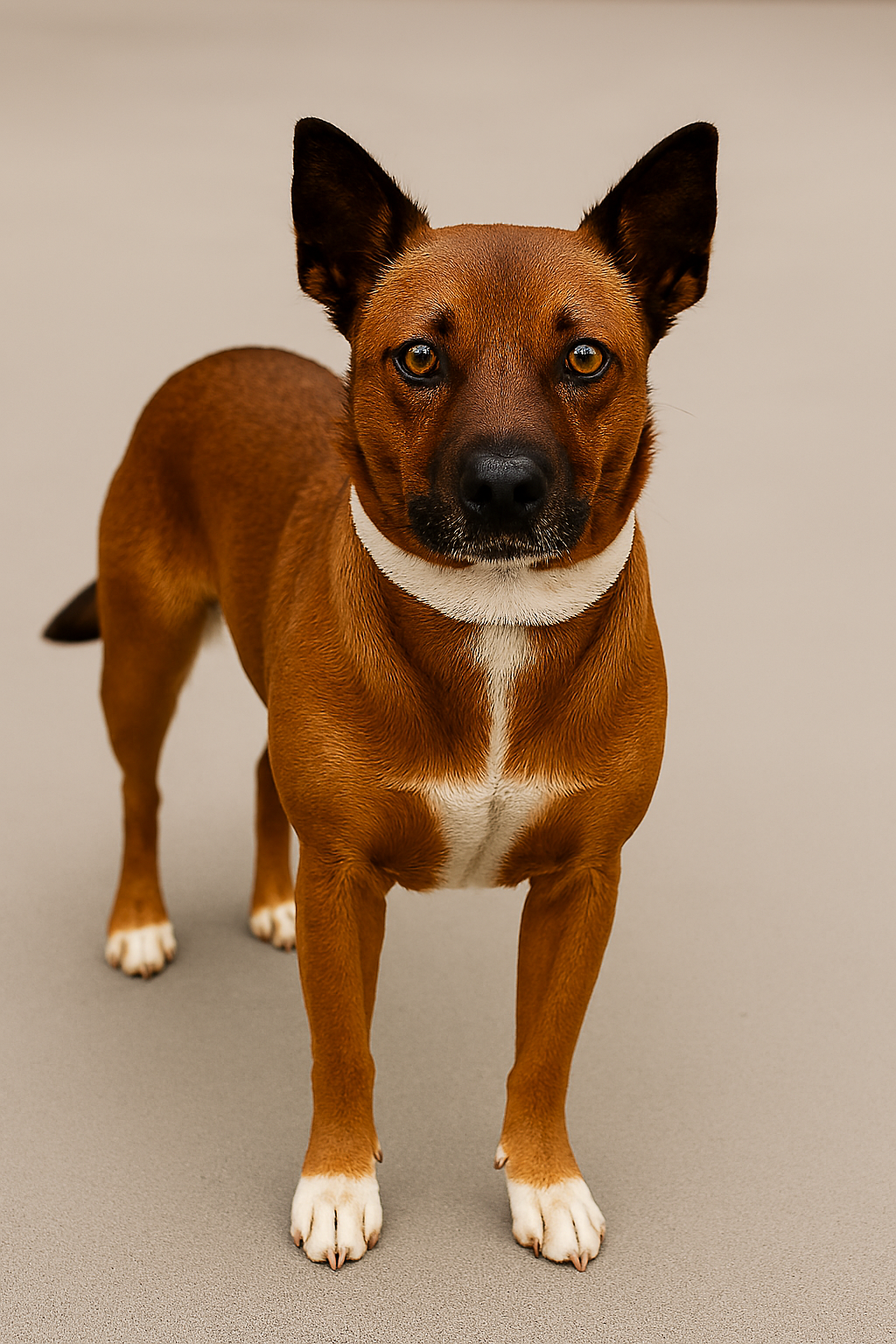
Sable is a dog of indeterminate ancestry. She is neither wolf nor shepherd, hound nor terrier. She is approximately 20 inches tall and weighs 25 pounds, with short fur of a rich, deep brown hue, hence her name. She has a narrow white collar that dips onto her chest like a small white pendant, and a short black velvet muzzle.  Her small black ears stand at attention as if waiting for a signal. The mold was definitely broken when she was born. I don’t think there can be a duplicate. I wish I could have her cloned because she is the most perfect companion ever, and I know she has an expiration date.

Her golden eyes are alive with the vocabulary of a college professor. They communicate very effectively, and what she can’t convey with her eyes she passes to her tail. If her tail can’t make you understand, then her whole body gets into the act, quivering, pointing, circling, or hopping foot to foot. Sable is an active listener and patiently absorbs any manner of conversation from religion to geology, movies to politics. She puts her paw on your leg in affirmation or her chin on your lap if you are sitting. She rarely disagrees, but can let you know if she is unhappy with a low guttural sound or quiet mewling.

Sable is a rescue. A real rescue. Three years ago, on my way home from a meeting across town, I drove past her little form sitting in a puddle in a vacant lot on the side of Tanque Verde Road during a monsoon. Abandoned. She couldn’t have been more than a few weeks old, too young to have run away from home on stubby little legs and too plump to have been a feral dog. She had been living in someone’s home, fed regularly, and then disposed of for an unknown reason.  How does a person abandon a helpless puppy near a busy street in a storm? She looked confused. I pulled over in the nearest safe spot, got out of the car, and walked back to her through the downpour. She was shivering, not from cold but from fright. Back in my car, I sat with her in my lap, giving her sips of water poured into my palm from a water bottle. She lapped it up little by little until nearly half the bottle was empty. She stopped shivering.  I put her in the passenger seat on an old towel that I had thrown into the car in case I was caught in the predicted downpour. She immediately curled up and went to sleep. She didn’t move for the thirty-minute trip home to a suburban community outside Tucson. Once in the house, she explored each nook and cranny and pronounced that she was indeed home by jumping into my lap, reaching up to lick my face, then jumping down and peeing on the floor in front of me. The deal was sealed.

As all pet parents know, the creatures have a way of creeping into our hearts and taking residence in our minds. They become a priority, especially for a single person. I know Sable will be there to greet me with enthusiasm each day when I return from work. She doesn’t care if it was a good day or not because, for her, my presence makes her day great. She doesn’t withdraw with silent moodiness like my ex-husband if I don’t read her mind. She accepts the attention I give her with total love. Sometimes, I become absorbed in the day-to-day demands of my job or social relationships. She is always there when I resurface to the moment, waiting patiently with full devotion.

Sable is small enough that I can take her with me when I run errands. She loves car rides. She hops into her booster seat and waits to be snapped into the harness. I am able to take her into most of the stores where I shop. She sits obediently in a cart or walks quietly by my side. She ignores entreaties to leave my side, but accepts friendly pats as her due. I can’t take her grocery shopping in the store, but I can do pick-up. She knows the delivery girls at Fry’s, eagerly anticipating their friendly greeting. She loves a stop at the bank, knowing as we approach the drive-up window that she will get a treat. She delights in her puppucino at Starbucks. She appreciates my Sirius XM music, especially the Elvis channel. Sometimes we go for a longer ride to the mountains or to visit friends in Carefree. She passively watches the scenery, but when she hears a big rig eighteen-wheeler approach, she gets all excited, stands up in her seat, and watches for it to pass, ears pricked forward and tail waving ninety knots to nothing. I think in a former life she was a long-haul trucker.

Recently, she has learned to tolerate my friend, Colin. He has become a regular visitor, and she was very stand-offish at first. Now she grudgingly makes a space for him next to me on the sofa if he stays after dinner. He knows she has first dibs on wherever she wants to lie. He learned very quickly that he needed to accommodate her preferences.

Luckily, he has Marcus, a big yellow tabby cat, at home, so he understands the pecking order for guests in an animal’s domain. I’ve met Marcus. He is very sweet in his catty way. His green eyes pierced me, searching the depths of my reliability. He sat out of arm’s length, assessing me and, I’m sure, questioning my motives for being in his house. He allowed me to stroke him on his terms. He walked away with a tail held high as if to say, “You’re ok, but don’t let this go to your head. It is a temporary situation.” He is the product of a broken home and a custody battle. He was shuffled from home to home for about six months until Colin’s ex decided she didn’t want the responsibility. According to Colin, Marcus is shy of any other commitment.

We anticipate the day when we might introduce Sable to Marcus. Sable loves everyone unless they demonstrate by action or harsh words that they are untrustworthy. I insist Sable is open to any relationship, and he claims Marcus would be okay when he gets to know me a little better. There is a hesitation about the right moment to make the introduction. If it doesn’t go well, what will it mean to OUR relationship? We are taking our friendship slowly toward a deeper connection out of deference to our four-legged roommates. It is probably a very good thing to move slowly since both of us were burned in the past. Basing a romantic life on the acceptance of our pets, maybe, not so much.

Butterfly Continued

Swallowtail: “In the East, adults fly primarily in late spring and summer, but this butterfly is more common in late summer and fall in the South and Southwest. Where lack of freezing temperatures permit, the female adult may fly continuously. In lowland tropical Mexico, they may be found in any month.” – Encarta

Emerging abruptly from a deep sleep to respond to the insistent tone of his phone, Michael heard, “I miss you, Michael.  I’m lonely for you.  I’m lonely for Moses.”  Her voice, a low purr, curled into his ear and sent blue electric currents crackling through his body. 

“No, Janie, not again,” Michael struggled to keep the groan out of his voice. He got up in the dark from the rumpled king-sized bed and walked into the living room, his phone to his ear.  He couldn’t bear to have her in his bedroom again, even on the phone.  He turned on the lamp and slumped onto the couch.  The cat followed him, stretching and yawning.

“What?  Not again, what?” she asked.

“Do you have any idea what time it is?”

“I don’t know what your clock says, but I know it’s time for me to hear your voice, smell your sweet sweat, touch your warm skin, and roll up next to you in bed.”

“It’s 5 AM.” 

“I want you here with me.  I need to be close to you.  Everything is good, but with you it would be great.”

“Funny, Moses and I had a long talk just last Sunday, and we decided to move on.  We took every trace of you to the dump.”  He reached across the coffee table and turned her smiling photograph onto its face. 

“We can start over.  I’m ready now.  I found the right place.”

“Where are you?”

“I’m in San Diego this week, but the place is Santa Lucia.  It’s a few kilometers south of Puerto Vallarta.

“You must be some kind of witch.  You call just when I’ve reclaimed my life; when I finally decided I can live without you.”

“Oh baby, that’s….”

“No, Janie, I mean it.  I’m not following you anywhere again.  You left Memphis for Canyon, Texas, and I followed. When you suddenly up and left Texas, I followed you to McCall.  When the tall pines of the Idaho woods smothered you, you took off again.  I followed you here to Tucson, and this is where I’m staying.  Trying to keep hold of you is like trying to catch mercury between your fingers.  It’s impossible not to mention dangerous.  I’m done.”

“Do you still have my paintings?”

Michael looked to both sides of the new tin mirror at the intensely colored acrylics. One was of a woman looking through an archway toward distant purple and rose-colored hills, stroking a green cat.  The other showed a naked woman with long black hair astride a vivid scarlet horse galloping across a field of bright orange and blue poppies.

“No,” Michael said.  “I replaced them with seascapes, the calm of crashing blue and gray waves.”

“My pictures might be worth something someday.  I wouldn’t throw them out just yet.  I’m in California for a one-woman show at the Smithson gallery in La Jolla.  I have an agent.  I’m selling prints to tourists in Mexico.  I mean, really selling.  I finally found the place I imagined and have been painting since I was twelve.”

“You found the place with purple mountains, red horses, and green cats?”

“Don’t be obtuse.  Mexico is bursting with colors. And smells and laughter and…I’m home now.  This is what I’ve searched for.  Now all I need is you.  You and Moses.”

Michael looked down at the big gray-striped tomcat that had been weaving in and out of his legs.   Moses sensed he was the topic and flopped down on the top of Michael’s bare feet, his white mittened paws around his ankle, looking up at Michael.

“Moses isn’t interested in more travel.  He told me he likes Tucson. I like Tucson. I’ve got a good job here.”

“You’re a poet, Michael.  You are a poet who writes stupid technical manuals for a company that produces war machines for an oversized, out-of-control fascist government.”

“How do you know I still work at Raytheon?”

“Did you quit?”

“No.”

“There.  Come to Santa Lucia with me.  Poetry will fair drip from your pen.  It’s magical.  It’s cheap to live.  And I’m making money now.  Bring the trailer down.  We’ll park it on the beach.  We’ll eat mangos and shrimp.  We’ll make love on the beach in the afternoon.  We’ll play in the surf.  We will…”

A momentary image of Jane, naked on a beach, nearly scuttled his resolve.  He pulled back with a snap.  “I don’t live in the trailer anymore.  I sold it.  I live in a real house.”

“You bought a house?”

“Well…lease-purchase.”  He squinted out the window to the backyard, where dawn was beginning to streak the sky with pink and gray.  “I have a yard, a saguaro, a lemon tree, and a brick wall.”

“Brick walls enclose tiny brick minds.”

Michael cringed a little.  “If just once you had told me you wanted to move, we could have discussed it.”

“I didn’t need a discussion.  I needed to leave.  You would have planned and plotted. You are so anal.  No sense of adventure.  That’s what’s wrong with your poetry, too.  You need Santa Lucia.  It will break down all that shit in you and set you free.  I was suffocating.  By the time you made an analysis of our situation, I would have been dead.  I didn’t know where I wanted to go…just away.  It took me a while to find Santa Lucia.”

“Two years.  Why did you call now?”

“It’s not two years.”

“Yes, Janie, it is.  You left three Augusts ago, and it’s now September.”

“Clocks and calendars, calendars and clocks, tick tock, tick tock,” she chanted.

“Real world stuff,” he replied.

“Please, please come see me in San Diego, just for a day or two.  I’ll be here this whole week and next weekend.  It’s only a few hours’ drive, or I could pick you up at the airport.”

“Are you still living in the goddess-mobile?”

“Umm-hmm, mostly.  But I have a studio on the second floor of a building in Santa Lucia.  Its balcony overlooks the street, and I can see the ocean.  Some days I paint outside, sometimes inside, depending on the light.  I walk everywhere, so my rig stays parked by the beach.  I’m sorry you sold the trailer.  It worked so well in my daydream.  We won’t both fit in the goddess-mobile long-term.  We need more room than that.  There’s a house not far up the beach from where I park that’s for sale.  I’ll look into it.”

“Don’t bother.  I’m not coming to Mexico.”

“I think you’re being too hasty.  You should at least come for a visit.  A teeny short visit.  Then if you loathe it, you…”

“Hear me out.  I’m not going to Mexico for a week, a day, or a minute.  You can sell any dream to me if I give you enough time.  Your time is up.  I’m staying here.  I’m happy, even proud, that you are selling your paintings.  But you broke that last little piece of my heart when you left this time.  I don’t have one to give you anymore.” 

“There’s a marina too.  We could buy another sailboat like we had on Payette Lake.  Only we’d be warm all the time and could sail every day.”

“You’re not listening.  I don’t care how beautiful it is.  I don’t care how much you want to be with me.  I don’t want to be with you anymore.  I’ve broken the habit.”

“What happened to soulmates and undying love?” Jane asked.  “You promised me you would forever be my family.  Remember all those nights when I had the nightmares without end about when my parents died.  You held me and told me you would never turn away.” 

“You left me, remember?  More than once.”  Michael started to pace the kitchen, dining room, and living room with the phone to his ear.

“I didn’t leave you. I went looking for me, and unfortunately, I was always out of town,” Jane said.  “But now I’m found.  I promise I can stay put now.”

“Your promises aren’t worth much anymore.  You promised that the desert would be your eternal home when you came to Tucson.  Now you’re by the ocean for Christ’s sake,” Michael paused.  “And I don’t speak Spanish.”

“You’ll pick it up.  I did.  It’s so musical, it’s easy.”

“The answer is still no,” Michael said.  “I’m going to hang up now.  Please don’t call me again.  Have a nice life and congratulations on your success.”

Michael ended the call.  He didn’t want it to ring again and, in his heart, prayed it would.

He couldn’t go back to sleep.  It was Saturday, and he planned to play golf with Keith at 10:00.  He fed Moses and let him out for his morning prowl.  He shaved, got into the shower, and washed his hair.  As hot water ran full force over his scalp down his back and legs, he let himself imagine lying beside Jane in the warm white sand with salty waves lapping over them, making love to her in the sunshine.  He thought he heard the phone ring but when he turned off the water, he heard silence.

“Get yourself together, man,” he said aloud.  She’s a figment of your imagination, a phantom.  Just when you think she’s there, she’s gone again.  It’s never going to work out. 
Butterfly

Swallowtail Butterfly: “In the East, adults fly primarily in late spring and summer, but this butterfly is more common in late summer and fall in the South and Southwest. Where lack of freezing temperatures permit, the female adult may fly continuously. In lowland tropical Mexico, they may be found in any month.” – Encarta

Michael remembered when he met Janie at a diner on a Memphis spring morning ten years ago.  She was 18 and he had just celebrated his 21st birthday the night before.  His head felt a little thick, and his eyesight and hearing were not too dependable. She offered him coffee, but he didn’t hear her the first time.

“Hi, I’m Janie. I say, you look like you could use a whole pot instead of a cup,” she said, bending down a little into his line of sight, her scoop-necked tee-shirt allowed a peek of her breasts.

“What?”  Oh, yeah.  Give me some coffee, please.”  There was a caring look in her gray-green eyes.

“I hope it was a good time you had, not a bad one,” she said over her shoulder as she went back to the kitchen.

He watched her sashay away, swinging her tightly jeaned bottom in a deliberate invitation.  His head hurt, but not too much to read the proposition.  It was 4 AM, and he hadn’t been to sleep all night.  His friend, Tim, brought him to Jim Bob’s All-Night Diner for a birthday breakfast, then left him in a booth while he sought out the facilities to relieve a churning stomach.  Tim, the sober one, the designated driver, had eaten something during their all-nighter that sent him into the bathroom every twenty minutes.  The other partygoers had been dropped at their homes to sleep off the celebration.  All five planned to meet again at the racetrack later that day.

“Here you go,” she said when she came back with a pot of coffee, two cups, and a bottle of aspirin.

“How do you want your eggs?  With eyes or without?”

“No eggs, just toast.”

“You need protein to sop up some of that barley pop.  How about scrambled and a side of country ham?” 

“No, I really don’t want eggs.  Thanks for the aspirin, though.”  He took two pills and swallowed them with some coffee.

“Is your friend coming back?”

“He’s feeling a little rough, but he’ll be back.”

“Shall I bring him eggs, too?”

“Just the toast, toast only.”  Michael looked around the restaurant.  He was the only customer.  He could see the cook through the pass-thru window at the kitchen.  A few minutes later, she was back with a plate of scrambled eggs, hash browns, ham, and two plates of toast.  She put them down in front of Michael and stood with her hands on her hips. 

“Now, you eat as much as you can.  The sooner you get something in your tummy, the faster you’ll feel human again.”

“What is your problem?  I said I just wanted toast.  Take the rest of this back.  I’m not paying for what I didn’t order.”  His head throbbed at the exertion of making this statement.

The girl slid into the booth across from him.  “It’s okay.  I paid for it.  Just eat what you can, I’ll eat the rest.  What’s your name?  I’m Janie. I don’t think you heard me when I told you the first time.”

She sat and watched him eat, taking bites off the hash browns herself.  The cook yelled at her once to get back to work, and she ignored him.  He said he’d call the manager, and she said that was fine. 

“You don’t want to lose your job, do you?” Michael asked.

“Not much of a job. I was just doing this until something better came along, and it has.”  She looked directly into his eyes and smiled.

Tim came out of the restroom, looking pale green, glistening with sick sweat. 

“I can’t drive, old buddy.  I’m too fucked up.  Can you get us both home?”

“Don’t worry.  I’ll take you home,” Janie said, taking the car keys Tim held out to Michael.  “Hey, Howie.  I quit.  See ya in the movies.”  She undid the apron and laid it on the counter. 

The cook came out sputtering oaths. “Damn it! You can’t just quit like that.  The breakfast crowd will be starting in a few minutes.”

“Call Shirley. She likes the overtime. Bye.”

She dropped Tim off at his apartment, then took Michael home to sleep off the beer.  She sent him out with his friends for the afternoon while she stayed at his apartment.  He figured she’d be gone when he got home and was surprised to find a birthday cake, ice cream, and a tiny gray and white kitten when he returned at 9:00 that night. 

“What’s with the cat?” asked Michael.

“He was hanging out in the parking lot at the grocery store when I walked over to get the cake mix and ice cream.  He said his name was Moses and he was wandering in the wilderness.  I decided to bring him home for your birthday.  He might not want to stay, but he’ll let us know later.”

They made first time love for hours that night, discovering the pleasures of each other’s bodies.

“Are you homeless?” he asked the next morning.

“Not entirely.  I could go back to my Uncle Bill’s, but I’d rather not.  His job is done now that I’ve graduated from high school.  He is the school drama teacher and a sweet old queen, who loves everything Elvis. But I’m tired of hanging out in fairy land.  You will find I’m very useful around the house, I can cook, and I don’t eat much.  I do think Moses is homeless, though, so why don’t we offer him a permanent gig?”

She and Moses stayed with him for the next year.  She exaggerated the ‘I can cook’ part of her resume.  She was good at boxed cakes and boiled hot dogs, but Michael decided to do most of the real cooking.  Nevertheless, she didn’t eat much, and she was handy around the house.  She could fix any appliance that got sideways, and she was fun between the sheets. 

Janie had no end of interesting stories to tell of her adventures as an orphan in the custody of various relatives and near-relatives. She was born in Texas but lived all over the U.S. Her parents were murdered in a home invasion when she was six. She witnessed it from a hiding place in a closet through the louvers on the door. The effects of that trauma were still showing up in her life, even though she had been cared for by a loving family.

“They all tell family stories from a different point of view, and the heroes and villains change depending on the narrator.  I’ve been shuffled around several states.  I have a very complex view of my family.”

Janie got a job at a craft store while he continued working at the local newspaper and finished his degree in creative writing.  She bought materials for painting and showed him on canvas the colorful world that was in her head. She said she had painted since she was a little girl, and it was as important to her as breathing.  He read her his poetry and introduced her to his parents. 

Then one day, he came home from work to find a note.

Gone Greyhound back to Texas, maybe, it read.  I’ll call when I find out where I am.  Moses will keep you company until then.  Love, Janie

That was the first of her escapes.

“I wasn’t abused or a sex slave or anything exotic,” she once told him.  “My relatives were good to me, but because of one circumstance or another, no one could give me a permanent home, so I was passed around.  I lived with five families until I stayed with Uncle Bill, who got me through high school. I’ve been on my own for a while now. Aunt Betty in Louisiana was my favorite.  She bought my first art supplies when I was ten and encouraged me to draw and paint.  She gave me my passion.”

Michael thought Janie would eventually settle, and they might even get married, but like a nomadic butterfly, she would only light for a short time, then fly off again.  They rarely fought, and she never left mad.  She seemed to have little capacity for anger.  He never knew why she left.  She just left. 

It was to Texas that he first followed her, a little town called Canyon. And it was in Texas that they acquired the goddess-mobile.  It started life as a used 1982 Toyota truck with a camper shell.  Inside the camper, Jane hung beaded curtains, made devotional alters for her Buddha, golden plastic Ganesh, serene Vishnu, and an eclectic collection of saints.  She was ready for any possibility, if the hereafter came calling.

Michael installed a foldout bed, camper-sized refrigerator, and a sink with a 50-gallon water tank.  He put in outlets for a microwave and hotplate.  In the cab, Janie glued statues of saints, Joseph and Francis, a St. Christopher medal, a plush Garfield with rosary beads around his neck, assorted rocks, leaves, and seeds she collected in her travels, on a piece of green faux fur that covered the dash.  She painted designs and quotes around the outside of the truck and camper:

“In Goddess We Trust”

“In the morning, I bathe my intellect in the stupendous and cosmogonal philosophy of the Bhagvat Geeta…Henry David Thoreau

“I’ve always wanted to be somebody, but now I see I should have been more specific.” — Lily Tomlin

“Mediocrity thrives on standardization.”
“The only difference between a rut and a grave is the depth.”
“A great many people think they are thinking when they are merely rearranging their prejudices.” — William James
“Reality is just one of my many options.”

They used the goddess-mobile for camping trips and inspirational journeys to cleanse their minds from everyday humdrum.  Michael drove the Camry his father bought him after college, and Janie had custody of the truck.  It amused him when curious strangers approached Janie when she parked her unique vehicle near a grocery store or in a shopping mall.  He knew she loved the attention.  

Michael got a job again with a small local newspaper, and Janie taught crafts at an elderly care center.  Moses kept his people supplied with affection and dead rodents. 

“Mrs. Whipple, our ninety-year-old Scrabble champion, has a sharp tongue on her,” said Janie one day after she came home from the center.  “She scolded me today in front of the entire ‘Natural Materials for Greeting Cards’ class for living in sin.  She said a woman’s only security is a good marriage, and why wouldn’t my young man commit to me?”

“And what did you tell her?” asked Michael.

“I said commitment is for institutions, and I wouldn’t put anyone I love in an institution.”

It felt like a normal life to Michael, and after nearly three years, he had begun thinking in terms of marriage. 

“Janie, why don’t we get married?”

“Is that a proposal or a real question?”

“Well.”

“Well.”

“Okay.  Janie, will you marry me?”

“Nope.  But I’ll love you to the end of my days on this planet and beyond.”

“I think we should get married.”

“I don’t.”

“What’s your reason?”

“No reason in particular, but ‘no’ wins the discussion – no marriage.  I don’t see the point.  People get married to please other people.  We’re happy just the way we are.  Aren’t we?”  She gave him a meaningful stare.

“I think people get married because they want to tell the world they promise to share the rest of their lives and love together.”

“Let’s hire a sky-writer.”

“Don’t be flip.  I’m serious.  I think we should consider the idea.  What about having children?  We’ve never talked about it before.  Do you want to have kids?”

“Maybe.  I don’t hear your parents clambering for an official ceremony and grandchildren from your loins.  I think they secretly hope that you will eventually find some nice girl and have a real family.”

“What makes you think they don’t like you?”

“Oh, I think they like me, okay.  But I don’t think I’m a prime prospect for official daughter-in-law.  I’m not like Judy or Helen, your brothers’ wives.  I’m a little too out there for them.”

“They treat you with the same respect as they treat Brad and Mark’s wives.  They love you.  They always talk about how clever you are, and talented.  They hung that huge picture you painted them for Christmas last year in the living room for all to see.  I think showing off a picture of persimmon, teal, and gold coyotes prowling a shopping mall is telling the world they approve of the painter.”

“It matched the throw pillows on their white leather couch.”

The next day, he came home to find the note. 

Need to see evergreen trees and mountains.  I’ll call you when I find them.  Love, Janie.

She took the goddess-mobile and left Moses.

This is part of a short story about Michael and his wandering love, Janie. The story continues in the next post.

A Writing Prompt for Point of View

In a recent Oro Valley Writers’ Forum meeting, we were given a prompt to write for five minutes from the point of view of an object. Prompts are always fun challenges for me, so I put pencil to paper and began. This is my short short story from the POV of an object.

As it happened, the last thing I did before leaving the house that morning was to turn on our dishwasher. It was the first thing I thought of when given this prompt. Try it yourself. Write a short essay or poem from the point of view of an inanimate object and see what happens.

A Dilly of a Dilemma

I love to write to prompts. Quick stories, handwritten in a limited amount of time, jump-start the right side of my brain. The windows to my imagination are flung open and words fly freely onto the page. They are untethered to logic, only conforming to the guidelines of the prompt. Often, I am taken by surprise at the words that leave my pencil and show up on the page. Most of the time, they are zany musings, sometimes the beginning of a story to develop later, and sometimes a dark force compels a tragedy. Occasionally, nonsense dribbles out, and I find it hard to follow the labyrinth of thoughts. I am always in awe of the process and its revelations. The following story popped up when given ten minutes to write a scene from three different points of view.

The Scene: A female hitchhiker is dropped off at an emergency room with a problem. Tell the scene from the POV of the nurse, the patient, and a hospital administrator.

Nurse POV:

A young miss came into the ER early this morning with a problem. One I haven’t seen in my twenty-four years of nursing. She had been hitchhiking along Highway I-10 from Mobile on her way to Jacksonville, Florida. Her thumb was the size and color of a pickle, not dill, more like a large sweet. She didn’t appear to be in pain, and the rest of her hand looked quite normal and pink, but she complained that since the weather had turned cold, it had been impossible to put on her gloves. I took her vitals, then sent for Dr. Shambala, who was on call. He came in and examined the majestic, inflated digit with no discernible dismay.

His only question to her was, “Is it easy to get rides with that thing?”

To which she replied, “Actually, it comes in handy.”

“Well then, no surgery,” he said. “I think the answer is to buy larger stretchy gloves. I wouldn’t want to inhibit your travels or your gardening.”

I discreetly took a photo of her thumb. I wanted to show it to Hiram, our hospital admin. We had a meeting just last week about the anomalies of the human body and how to address those issues.

Patient POV:

My thumb had been bothering me for several days. Snow and sleet had become an everyday occurrence, even though I had consciously chosen a southern route for my winter journeys. My gloves just didn’t fit anymore. My thumb was getting larger and was really, really cold. I hitched a ride on a pig wagon to the nearest ER. It was a twenty-mile ride, but the farmer was swell. He asked me about my thumb, and I told him it was the reason I needed to see a doctor.

“Going to have it cut off?” he asked.

“Heavens no,” I replied, “just wonder if it could be made a little smaller for my gloves.”

In the emergency room, the doctor asked the obvious question. “How did it happen?”

It’s not the first time that question has come up. I get tired of the same old answer, “I was born this way”, so I told him I was picking crops in Mexico and got a cut, and the juice from the pickles I was picking dripped in, and lo and behold, I woke up with a pickle-sized green thumb.

The nurse at the ER looked a little disconcerted, but kept her cool, and the doctor suggested I get larger gloves for my travels.

“We wouldn’t want to impede your traveling abilities. It clearly is a significant benefit to your lifestyle.

As I was leaving, a sour-looking gentleman, round as a wine keg, came up and asked that I go with him to his office. I did, thinking he might have a suggestion for my thumb. I found out he was a pervert with a title and a fancy office. He wanted to suck my pickle. I left without “goodbye.”

Hospital Administrator POV:

Nurse Nancy came to my office this morning with a photo she took of one of our ER patients. That’s strictly forbidden, but when I saw the photo, I understood her motivation. The girl had a thumb the size of a juicy green pickle. I had given a mini-seminar to the staff about physical anomalies and injuries they could encounter in a rural hospital; everything from nails in the head or hand, to animal parts embedded in human parts – enough said. The thumb picture triggered something in me, and I had to go down to see it in person. The young lady was just leaving the ER.  I asked her to come up to my office for a chat. She obliged, but when the door closed, a powerful urge overcame me. I just had to taste that thumb. I had been a thumb sucker up to the age of fifteen when the shame heaped upon me by my peers finally inhibited the craving, and I quit cold turkey. The girl was offended by my request to suck her thumb and left in a huff. I wished her well on her journey and hope she has a dilly of a life.

AI generated picture

Who Done It? – A very short mystery

Bequia at anchor in Doe Bay

Winston kicked loose rocks into the slow-breaking waves, his sandaled foot making soft plops in the water. Sand crabs skittered away at his approach across the rocky beach. Cold, briny air blowing steadily against his face ruffled his dark hair and brought the scent of faraway adventure back to him. His forty-three-foot sloop, Bequia, bobbed at anchor sixty feet offshore where the shelf dropped to deep, near ebony waters. Uneasiness haunted this return to his boat, hiding behind his sense of liberation. It had been a tense week on the island.

He untied his dark gold, black streaked, rubber dinghy from a large driftwood log and pulled it out into the surf. Slick clumps of seaweed made walking on the rocks like skating in slug slime. He grounded the dinghy with one foot and shoved off with the other until it floated on its own. The halo line of the rising sun on the east horizon above the hill cast faint magenta fingers into the morning-tinted sky. When he lifted anchor, he would say goodbye to Orcas Island forever. The only witnesses to his departure were three seagulls hanging sideways to the wind.

            It was one of those rare early fall days in the San Juans, portending sunshine at the crack of dawn, no cloudy onshore flow, and a bit breezy. Holly, the waitress at the Swing Inn Café, wiped the crusty pink and gray marbled countertop. Marla never seemed to get it clean before she left at night. She inserted the “daily specials” card into each menu on the stack. The little bell at the door announced morning customers when they arrived. That jangling bell at the door was her starting gun for the day. She watched for regulars – Ted, when he was in town, and Paulus, the Greek.

Then there was the dark-haired stranger who showed up at five am every day for the past week. She still didn’t know his name. That was unusual because, if anyone could charm customers, it was blue-eyed Holly. She hadn’t been successful in finding out where he was staying or why he was in their small town. He came in, ordered the breakfast special without even looking to see what Marty had on the menu, drank two and a half cups of coffee, left a $3 tip, and nodded goodbye. Other than his order and curt answers to polite questions, he didn’t utter a syllable. He was civil, but barely, a real challenge for the gregarious waitress.

Holly tucked her summer-streaked brown hair behind her ears and watched out the window as dawn slowly lit the street in front. The smell of biscuits and coffee filled the small café with a tantalizing good morning aroma. Soon, slices of ham, sausage patties, and strips of bacon would sizzle on the grill.

            Ting-a-ling.

            “Hey, Holly.  How’s tricks?” Old Paulus was always jaunty in the morning. He was a retired fisherman whose wife died four years ago. It became his habit to spend an hour each morning at the Swing Inn. He slid into his customary seat, third from the left end at the counter, and opened his paper, keeping an eye on Holly as she poured him a cup of coffee and put the brown cow pitcher of cream beside it. It made him feel almost married again to have his breakfast with a pretty woman. 

            “You want the special or just eggs and biscuits this morning?”

            “Mmmm.  Today’s Friday. Crab omelet, right?”

            “You got it.”

            “Okay, the special. Did you hear the fireworks last night?”

            “What fireworks?” Holly called over her shoulder, “Marty, one special for the Greek.”

            “Evidently, someone started a fight at the Razmataz, complete with gunfire, squealing tires, police lights, and sirens. No one got hurt or arrested. The guy who started it got away. Some stranger in town. A couple of fellas went to the station for questioning. I heard ‘bout it on the radio before I walked over here.” 

            “It must have happened after I went home,” said Holly. “I was out at Gull’s Wing until the band quit about 1:30 and didn’t notice anything on my way home. I drove right past Razmataz.”

            “How d’you do it? Out dancin’ at night and perky in the morning.”

            “I’m not telling my secrets, Paulus. I might want to sell them one day on QVC.”

            “Youth, it’s all about youth.”

            “I’ve been around awhile. I know what winds my stem. I figured out how to fit the rest of my day around dancing.”

            “Maybe I should try it. These old bones might like to jig.”

            “Come out with me tonight. I’m probably going back to Gull’s Wing. Colin Wilson’s band is playing. Good dance tunes, some country two-step, some swing, some salsa. There’s always a lively crowd when he plays. Plenty of singles. You’ll have your pick of partners, and I’ll certainly dance with you.”

            The door chimes rang again.

            “Mornin’ Sunshine, mornin’ Greek.” Ted took off his cowboy hat and swung his lanky frame onto the stool two down from Paulus. Ted did long-distance trucking. When he was in town, he was always at Swing Inn first thing each day. His wife, Tina, was the kindergarten teacher at the local elementary. She was a vegetarian and liked slow, quiet mornings with yoga and soft classical music, so rain or shine, he walked to the café for conversation and meat.

            Holly poured his coffee in a big mug – black, no anything. 

            “Order up.” Marty hollered.

            Holly pulled the warm plate from the serving shelf and put it in front of Paulus, and warmed up his coffee.

            “What’ll it be, Ted?”

Holly turned at the sound of the bell at the door to welcome the dark-haired new guy, but found her smile greeting an elderly couple who sat themselves in the middle booth of three next to the window.

            “Be right with you folks. Special is crab omelet.”

            The elderly lady, slightly stooped with her green coat pulled close, her gray bob snug in a scarf, nodded back to Holly. “No hurry, dear, but bring tea when you come.”

            “I’ll have double ham, side of bacon, sausage, and two eggs easy over, and a handful of those biscuits,” Ted said as he gulped most of his first mug of coffee. “Do you have grape jelly this morning?”

            “I’ll check. I’m pretty sure a delivery came yesterday afternoon,” she answered and poured more coffee into Ted’s mug.

“Double ham, jacked, and two easy, Marty,” she called to the cook.

            Holly filled two aluminum pots with steaming hot water, grabbed tea bags, put teacups, two napkin-wrapped bundles of silverware on her tray, and two menus under her arm, and went to the couple in the booth.

            “You folks are sure up and out early this morning? Welcome to our little town. Staying at the hotel?” Holly handed them the menus and set out the tea, silverware, and napkins.

            “Did you hear the commotion last night?” Paulus addressed Ted.

            “Lights out for me at 10:00. What happened?” 

            “Don’t know exactly, but there was a ruckus at Razmataz sometime after closing.  Reports say no one was hurt, but the fella who started it got away.”

            “We’re here visiting our daughter and her husband, the Jamisons. Do you know them?” the elderly man answered Holly.

            “Sure do. Millie Jamison clerks at First American Bank on the corner, and Conner works at the auto shop, right? Nice people. Going to stay long?”

            “Body was found out behind Razmataz, in the woods,” Marty called through the serving window. “I’ve been listening to KRG, local news. They just found it. Don’t know who yet.”

            The halyard clanged against the mast on the swaying boat as Winston stepped from the dinghy onto the swim deck of Bequia. He pulled the dinghy aboard and closed the swim deck.  After securing the small boat on the foredeck, he started the electric windlass to raise the anchor and prepared to unfurl the jib. Wind quickly filled the sail, propelling Bequia on its north heading. Revenge left a gnawing hole in his gut, not at all the relief he expected. He set the tiller and slipped below to grab a bite to eat before setting the mainsail. It had been a long night. After he abandoned the rental car, he had walked the rough terrain in dim moonlight nearly 10 miles through part of Moran Park from Doe Bay on the southeast side of the island. He wanted to be in Canadian waters as soon as possible.

What About Lunch?

It’s more fun to talk with someone who doesn’t use long, difficult words but rather short, easy words like “What about lunch?” – Winnie the Pooh

“What about lunch?” Jacob asked in a very low voice, looking straight ahead as we sat on the stone stoop in front of my cousin Maria’s apartment building trying to stay cool on a sizzling summer Saturday. Kids playing in the street were having water pistol fights dodging waves of heat with streams of water.

I wasn’t sure he wanted me to hear what he said. Maybe he was talking to his gurgling stomach.

“Huh? Did you just ask me to lunch or were you talking to someone else?”

“Aah, you, Valentina.” Jacob shifted a little closer. I got a heady waft of Old Spice Lime but I scooted away the same distance.

“You know I can’t be seen with you in public,” I tucked the skirt of my yellow sundress under my thigh just in case he might move closer again. One spaghetti strap slid off my shoulder and I quickly shoved it back up.

Jacob is my brother’s friend. He played basketball at Roosevelt High in Borough Park and my brother, of course, was the star forward on his basketball team at St. Francis in Crown Heights. Their teams competed throughout high school. Then, after graduation a couple of years ago, they became fast friends. Now they play together on an evening basketball team at the Brooklyn Youth Center in Bedford-Stuy. That’s how I met Jacob. We’ve been seeing each other on the sly for about six months.

“What’s not public about this? We’re not exactly hiding. Maria knows we’re here.” His voice got a little louder and his dark cocoa eyes looked directly into mine.

“Jacob! Have you lost your senses? My pop would have me go to confession every morning if he knew I had anything to do with you. You’re a a a – oh, I don’t remember the word he said. He thinks all you want is to get into my pants.”

“And I do. I love you, Val. I want you to be my girl, maybe even my wife,” he paused. “After you graduate.”

“Italians can’t love Jews.”

“Where’s that written?”

“It doesn’t have to be written. It’s just the way it is.”

“What about your brother? He’s married to Rachel, she’s Jewish.”

“Yeah, but she got pregnant and they had to get married. Besides, she was a Jew and now she’s a Delconti and she converted so, she’s Italian”.

“It doesn’t work that way.”

“If you love me, will you convert?” I was more than a little curious about his answer.

“Well, that’s something we’ll have to talk about. Maybe you might want to be Jewish… if you…”

“I don’t like the food.”

“Back to lunch. We could leave the neighborhood and walk to Koenig’s deli on Bedford Ave. They have the best knishes.”

“I just told you.  I don’t like Jewish food.”

“It’s not really about food. It’s about love. I know you love me.” He put his arm around my waist and drew me closer. I pretended to struggle but I knew he was going to kiss me and I didn’t really want to miss it so I gave in – a little.

Just as his warm lips touched mine soft as a feather, Maria shouted down from the third-floor window, “Hey Juliette, you and Romeo better hustle. My dad’s on his way home and you know he feels the same about Jacob as your pop does.”

I grabbed Jacob’s hand, scrambled down the steps and across the street dodging sprays of water. We started through an alley toward the next block, when Jacob suddenly stopped, pushed me against the brownstone building, his body smashed against mine, his hands against the wall on either side of my head, and kissed me full force like it was something he needed to keep breathing. My knees went wobbly.

“Ok,” I said in a husky voice as soon as I could catch my breath. “I’ll try the knishes”.

Little People – a nighttime revelry

Lola is one of the people who live rent-free in my mind. I am the happy repository of many stories from many characters. From time to time they insist that I write one of their stories. I don’t know a lot about Lola. She has not revealed herself personally so I don’t know how old she is, or how tall she is, or anything else about her. I believe she is Hispanic because some of her stories are flavored with Hispanic references but I’m not sure. I only know that she lives with a lot of fantasy. This is a story she wanted me to write a few months ago. I did. Since then I revised it a bit and offer it today.

Little People – a nighttime revelry

An unknown force tugged at Lola’s eyelids begging them to open. Her brain slowly began to surface from indigo slumber. She could hear the soft purr of her lover’s breath as he snored lightly on the pillow next to her. Still holding fast her eyelids, she listened for any other sounds. What had awakened her? The house kept its nighttime silence. Then.  What was that? She heard a splash, the sound of drops of water landing in water and, even yes, the sound of voices. It seemed distant but yet…she felt her ears expand in an effort to catch the slightest detail of sound. Again, a splash. She tried to sense the direction of the noise. It wasn’t in the house.

She opened her eyes to the blanket of darkness, then immediately closed them again. Through her closed eyelids, she sensed a hazy glow as if with open eyes she was looking through a thick cloth that filtered a bright illumination. When she opened her eyes again all she saw was inky nothing. She concentrated on picking out objects in the room. Through the curtained window she could make out an outline of moonlight. The mirror across the room received and reflected tiny fragments of light captured from the window. Slowly she began to see the outline of furniture in the room.

What was that? Another sound, unmistakably a tinkling voice, very high and gleeful, almost a laugh.

Her mind tried to bend around the sensory evidence it was collecting. Was she awake? Was she dreaming? Why did she see more light with her eyes closed than when they were open? Where was water being moved and splashed? And who was talking or laughing nearby? She was absolutely baffled. She lay rigid, not from fear, but straining every fiber to pick up more clues to the strangeness she perceived in the night. It seemed quiet now. Maybe just a dream.

Slowly Lola rolled her head to the side and looked at the clock. 4:00 in the morning. She groaned inwardly and involuntarily began to review the tasks before her for the day. She had to get up in an hour, an early meeting at the office. Then there was the council luncheon and her report. Her aunt was arriving from Texas later in the afternoon, and she had to pick her up at the airport. She needed every second of sleep she could squeeze from the night, so she rolled over to cuddle her sleeping partner who hadn’t stirred at all.

Mid-turn she heard the sound again of water being moved. Now she was sure she wasn’t asleep. She sat up, swung her legs over the edge of the bed, and pulled on her robe. She went to the window, pulled aside the curtain, and looked out, astonished by the brightness of milky moonlight. The backyard was bathed in a pearlescent glow and stars twinkled above in a black sky. Sounds rang out again and she knew they came from the backyard, but she couldn’t see all of it from the upstairs bedroom window. She slid her feet into her slippers and tiptoed quietly downstairs to the back door.

Lola peered through the window in the door that led out to the yard and the serenity pond surrounded by rocks and plants. It was her special quiet place, where she sat to reflect on nothing when all the something in life got to be too much. Her eyes widened. The moonlight made everything very clear, but her eyes wouldn’t believe what they saw. Six tiny people, pixies, elves, or something of the sort were cavorting around the edge of her pond. The entire pool was only six feet long and five feet wide with maybe a foot and a half of water, but the little people swam around like it was a full-size swimming pool. They couldn’t have been more than ten inches tall. They talked together in whispers except once in a while, one of them would laugh aloud, only to be hushed by the others. She was tempted to open the door and walk out onto the patio to see what they would do, but she didn’t want to disturb their happy revelry. She stood silently watching. They were dressed alike in costumes like old-fashioned bathing suits – knee-length pants, with a tunic top. She couldn’t tell if they were male or female. All had short shiny hair.

Lola watched for a while as daylight spread like a shawl over the mountaintop. Mistress Moon gave way, her glimmer fading into the stronger radiance of her Brother Sun. At the exchange of light, the little people faded along with the moonglow leaving Lola to wonder. Had they really been there? Was she still dreaming? What a start to a new day!

Winter Shamrocks – a lesson in prejudice

Our writers’ group often uses prompts to stimulate our imaginations. The prompt for this time was to write a morality tale using three words or phrases that came from the names on paint chips from Home Depot. My words were winter shamrock, roasted seeds, rumors. This is the short tale I wove.

Winter Shamrocks

There were rumors throughout town that the witch who lived in the old shack at the edge of the forest roasted seeds of the winter shamrock to make a powerful hypnotic potion that she gave to farmers so they would keep her supplied with food for the winter.

Of course, it was false.

Because the witch was different, an outsider, she became the fodder of gossip.  No one in town tried to know her; they rendered her a thing rather than a person. It is an unfortunate human tendency to reify the ineffable; to reduce it to a familiar or popular code with which to beat someone over the head.

The townspeople were completely ignorant of the commerce between the witch and the farmers.  They could only make up stories to fit what they saw happening.

The previous summer, the witch had come to town and moved into an unoccupied shack on its north side. Without obvious means of support, she managed to slowly reform the old shack into a lovely cottage. As winter approached and lingered, she was assisted with large baskets of food donated by the farmers.  Did she bewitch them?

In reality, the farmers recognized her horticultural and homeopathic skills and honored them. She collected all manner of herbs and plants in the woods for the entire summer, putting them to dry in bunches on lines stretched from the low corner of the cottage roof to a tree at the forest’s verge. She made elixirs for the common cold, headache potions, and ague therapies and gave them generously to whoever came to her door. The townspeople avoided her and codified her existence as dangerous, suspicious.  They made note that the farmers nearby regularly visited her cottage. They could only surmise that she had put a spell on them to make them do her bidding.

The lovely, mystical winter shamrock was one of her favorite plants. She made a tea from the leaves and flowers to help those with heart conditions.  Farmer Elmer O’Reilly, who had suffered from hypertension since his early 30s, swore that three cups of the witch’s shamrock tea each day had relieved his symptoms within two days.  She toasted the shamrock sprouts to add crunch to herbal salads like the one she made with fennel leaves, kale, spinach, and arugula with a little goat cheese and ripe pear.

The witch roasted the delicate seeds of the winter shamrock to make her special elixir that she sold to the farmer’s wives. It was the enlarging potion and it had many uses, among them: 

2 drops of the potion could double the size of the roast when unexpected company arrived;

1 drop in the wash water could make a child’s leggings or shirt expand to one size larger avoiding new clothes every season (that could be done twice without compromising the strength of the fabric);

1 drop each on vegetables growing in the garden would assure an extra-large pumpkin, tomato, potato, pepper, or ear of corn;

3 drops added to 1/8 cup of olive oil and massaged slowly onto the farmer’s member resulted in enlarged smiles for both the farmer and his wife.

This potion alone assured the witch a special and welcome place in the community. The townsfolk, however, because of their narrow-minded determination to keep outsiders outside, continued to shun the witch and never reaped the benefit of her wisdom and gifts.

Moral: Prejudice results in the shrinkage of rewards.