Odyssey of the Mind

Odyssey: A long and adventurous journey or experience.

Homer wrote the epic poem The Odyssey 700 years before Christ was born. Poor Odysseus is beset by many challenges as he wends his way home after the Trojan Wars. The theme of a hero’s homeward journey of discovery has been reimagined many times since Homer. James Joyce echoed the themes as his hero Ulysses negotiated life in Dublin at the turn of the 20th Century. The Cohen Brothers rewrote the story in their film O Brother Where Art Thou? in the year 2000. Themes from the story have been reworked many times.

Our family experienced an odyssey for fourteen months, driving across the U.S. in 1984-1985, an adventure of a lifetime. I wrote a little about that trip in my blog post Technology for the Baby Boomer. Our grandson, born twenty-three years later, led me into another Odyssey. He came home from kindergarten one day and told his mother he wanted to join a group called Odyssey of the Mind. She asked what it was, and he told her there was a meeting of parents to learn about it that he wanted her to attend. She enlisted Ken and I to go along. A teacher from school explained the program which is an annual international problem-solving tournament for kids from kindergarten through college. They compete according to grade level. At last count, twenty-five countries participate.

The motto of OM is that for every problem, there is a solution. They believe learning should be fun and that there are always new uses for old items. The idea is to encourage creative problem-solving. The simplest explanation of the program is that each year, there are five categories of challenges issued by the International Odyssey of the Mind Association. Within each category are six problems to be solved. A team of five to seven kids chooses their problem and they work from October to February to come up with a solution that is presented to judges in late February at the first of three competitions. Teams are created by an Odyssey coordinator at the school. Team meetings are as often as the coach and kids decide, generally starting at once a week and becoming almost daily toward the end of the five months. In that time the kids conceive a solution to the problem they choose, create a script/story to explain their solution, each team member assumes a role, makes their own costumes and props, create a set that can be constructed on stage within perimeters set by the rules, and present the solution to the judges in an eight-minute skit. Easy? Not so much.

Power tools

Adults are not allowed to assist in ANY portion of the process. Teams are penalized if a mom or coach even brushes someone’s hair before the performance. Any suggestion is automatically discarded if it comes from someone outside the team. The team takes great pride in not sharing their story or their work with anyone until the dress rehearsal when families are invited to preview their performance. In elementary school, the costumes were cobbled together with items found at Goodwill or in the back of closets. Tape, glue, and staples were used in the construction of costumes since none of the kids could sew. An adult is allowed to show the team how to use certain tools. Ken helped them learn how to use power tools safely, but we could only watch as they used them.

A coach’s job is to guide the kids, not with ideas, but with questions such as “what if…? How would you make or do that? How could you tell that story? How can you adapt an item or make something to do that job? How can you make that funny or more interesting?” The adult coach may NOT offer solutions during the creative process, only guidance in following the rules of the program. There is a whole book of rules aimed at keeping competition fair. As the team starts developing their solution, the coach asks if they are on track to answer the problem and if the plan can be performed on a stage twelve feet by fifteen feet.  As I said, this is an international competition. It is judged at a world final in March of each year. Each team enters a local competition, then if they are chosen first or second place, they enter a state competition and finally, if they win, they are invited to the world competition where they meet teams from all over the globe who have won their divisions. A spontaneous competition is held on the same day as the skit competition. Each team is taken into a room without their coach and given a problem they must solve in ten minutes. That instant problem-solving skill is practiced throughout the year as the team works on their big presentation. Creative thinking, team building, and cooperative problem solving are skills that people need throughout their lives. Odyssey of the Mind builds great problem solvers.

Since our daughter was a single mom and full-time breadwinner, she did not have time to be a coach. Henry turned to me. “Grandma”, says he, “will you be a coach?” Can I turn down any request by my grandson?  So I became a coach. I jumped in with both feet, having no idea what I was doing or what I would learn along the way. I fell in love with the competition and with each one of my team members. I coached four different teams in four years through four very different problems. It was a true odyssey – a journey of discovery. One year, Henry did not participate so I volunteered as a judge at the local competition. I learned how very inventive young minds are. If adults are not directing them, the sky is the limit. Adult minds can put brakes on imagination. The kids come up with amazing, creative solutions, costumes, props, and backdrops on their own – beyond anything I could imagine.

A month before competition each year I was sure my team would not be able to complete their task because something was missing in their presentation. I felt they were sailing their ship right off the edge of the earth. I racked my brain for strategies to help them find their way from the brink and stood helplessly watching the disaster unfold. I read and reread the rules to them, asking them to reevaluate their presentation. Each year they continued to work diligently toward the goal. They didn’t seem to feel the pressure. I didn’t sleep the whole week before the competition, knowing how disappointed they would be to not complete their task after all the time spent on it. I was riddled with anxiety, reevaluating each step in their progress. Each year, they proved me wrong. They found a way to make it happen every time. They always surprised me. At the end of each competition, I was in awe of my team’s abilities. By the fourth year, I learned to relax and have complete confidence in the team.
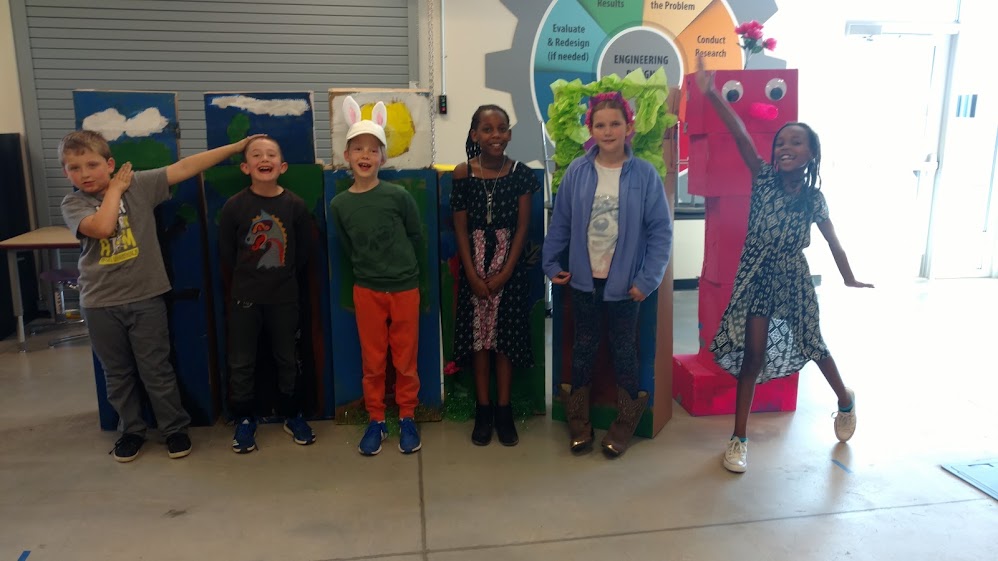
Wonder Newcast: Alex, Liam, Henry, Ava, Molly, & Addison

In 2018 the team, Team Wonder, did a presentation taking the Alice in Wonderland story in a new direction. They created a newscast that included an interview with the White Rabbit and the Cheshire Cat. The question was who stole the Queen’s tarts with the flamingo as the hidden camera. They had a news anchor, an interviewer, the White Rabbit and Cheshire Cat, a flamingo, and a commercial pitchman selling Wonka bars. It was hilarious.
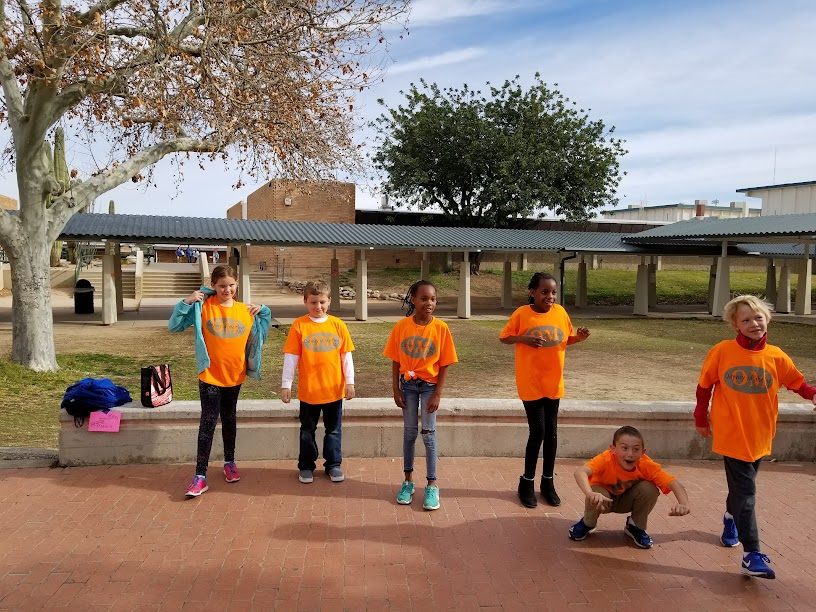
Team Wonder
Back: Coach Diana, Bethany Papajohn (Principal) Front: Emmy, Steven, Henry, Sierra, Zaylei and Peter

One year the team came in third in the OM local competition and didn’t get to go on to state. Their problem was to recreate Leonardo Da Vinci’s workshop and conceive a new invention Leonardo may have devised. Their story took place in two time periods, modern daand the 1400’s. They had so much fun with their skit they begged me to ask if they could present it to the school at an assembly. I asked the principal who said she would consider it. The auditorium had many uses. It was occupied most of each day. Assemblies were carefully scheduled, and it was near the end of the school year. Finally. the last week of school the principal agreed to let the team make the presentation. She said it would not be a mandatory assembly, so each teacher had discretion about bringing their classes. My team was over-the-moon excited. Ken and I hauled all the costumes, props, and set fixtures (mostly made of cardboard) to school. It had been two months since the OM competition, and they had not had a practice. We did one practice session before the assembly. I told them they might have only a few in the audience. As the auditorium began to fill we realized that most of the school came. I sat in the audience to watch not knowing how it would go after so much time passed. The team got on stage and recognized they were not bound by the eight-minute time limit. They began to riff and improvise on their skit. I looked at Ken in astonishment. They were having so much fun. The applause was loud, and the kids were in their glory. They may have been third in the official competition, but they won the hearts of their schoolmates.

Team Time Twister: Leonardo’s Workshop Emmy, Sierra, Zaylei, Steven, Henry, Oliver
Improv – creating the script
The Thinkerton Detective Agency

The last year that I coached, the team chose to solve the heretofore unsolved mystery of the Mary Celeste, a ship that was found in 1872 abandoned in the Atlantic without its crew, but otherwise intact with its cargo. What happened to the crew? They created the Thinkerton Detective Agency to investigate and find an answer. At the end of five months of hard work, the team presentation was timed at nine minutes. They tried and tried to do it faster, to get it shorter. No amount of magical thinking could change the clock. Teams are penalized for each second over eight minutes and it will generally take a team score out of contention. Dress rehearsal the night before competition was a calamity. My cousin, a school teacher, was visiting and watched the preview. She shook her head and looked at me. “How are they going to get this together?” I just smiled knowing that somehow they’d pull it off. I won’t say there weren’t tremors in my gut, but I had learned to ignore them. Early on the morning of competition, we gathered at the high school where judging took place, and they went over their skit in the parking lot – still over time. Right then and there they decided what to take out. They improvised a new script, they practiced twice, and it came in under eight minutes. They presented their improvised story at the competition. Of course, the judges would never know it was not the original script. At the beginning of their skit, a part of the backdrop/scenery broke, and they had to repair it on the fly. I caught my breath. They prepared in advance for mishaps by having extra parts, tape, scissors, and wire available on set. It was a true example of preparation and situational spontaneous problem solving just like MacGyver– exactly what Odyssey of the Mind teaches. Seamlessly, repairs were made and the skit continued without pause. They won the competition.

Our team was invited to the state competition. It was the beginning of covid and the tournament was in chaos because it is a hands-on, in-person event. Rules changed, everything changed, and the judging was to be by video. The team chose not to participate. They took their win and trophy for the school.

WINNERS! Back: Connor, Henry, Mandeep Front: Sierra, Emmy, Zaylei

I am forever grateful for the time I spent with all the children I coached in Odyssey of the Mind, they were my teachers.  I know each of them will be better equipped for their future after participating in OM, learning the tools of creative problem-solving.

I think of life as my soul’s odyssey through this earthly existence on its way home. We all have adventures and challenges along the way. At this point I can look back and see how very fortunate I am. My life has been fulfilling and good times are abundant, but I’ve come to realize that it is during the tumultuous times that the most valuable lessons are learned. No one gets out alive so enjoy the voyage and pay attention to the lighthouses along the way that guide you through rough seas and through the shoals.
Autumn – a seasonal complaint

I am the ONLY person I know who does not sing the praises of Autumn. All my friends look forward to the cessation of our desert heat when the humidity drops to single digits. They express endless gratitude for the crisp cool air and colors of fall. Me – not so much. Each season does have good points, but for me the darkening of days, the cooling air, the descent into winter does not herald a positive trend.

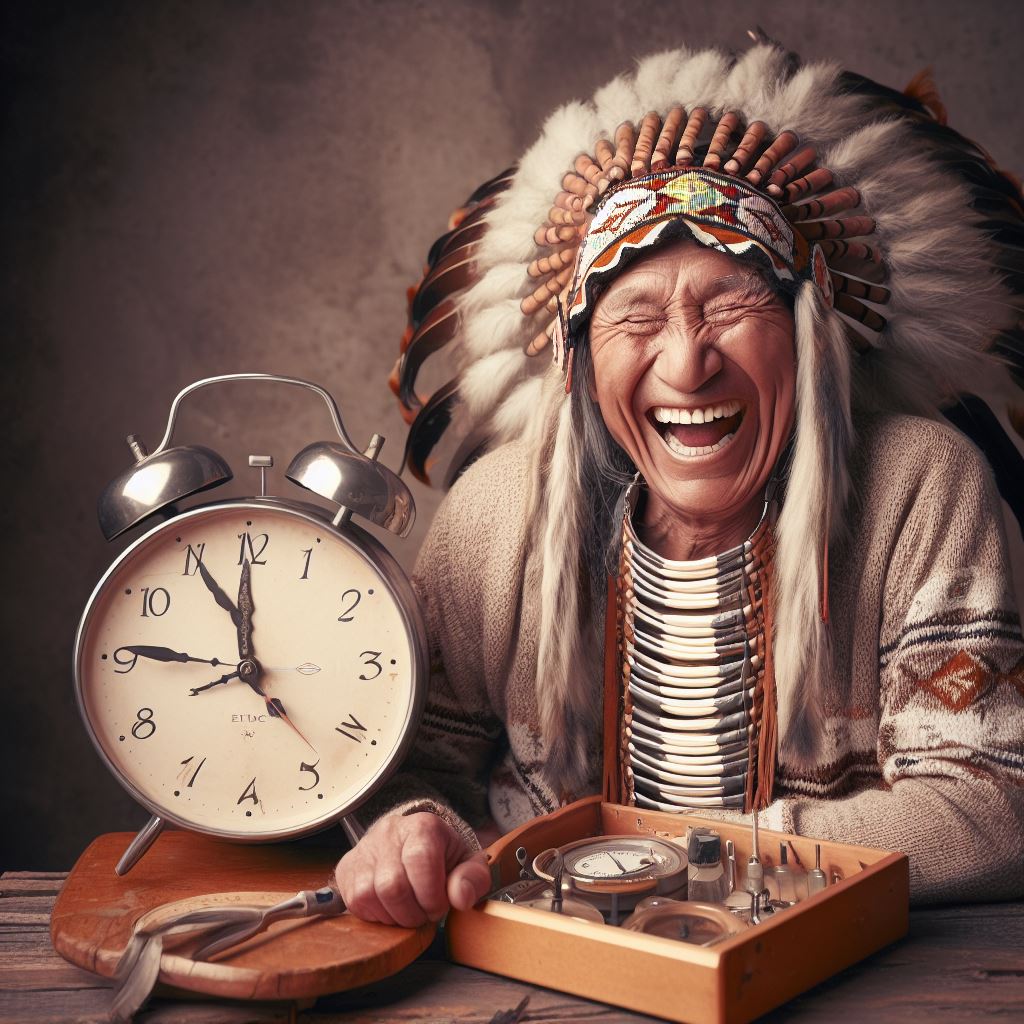
Along with this is the churning of time. I don’t mean the minutes that ebb from my life, a steady drip into the bucket of forever. I’m talking about the changing of clocks. One reason I love Arizona is that this state did not get sucked into the folly of daylight “savings” time. Our clocks remain the same through all the months of the year. However, because everyone else in the U.S. changes time, I must remember which time zone they have switched to. Annoying. I’m sure someone sometime had a savvy presentation with charts and graphs to justify the idea. But as a wise old Native American was once credited with saying: “Only a white man would cut two inches off the bottom of his blanket and sew it to the top and think the blanket is longer”. That sums up the ridiculousness of daylight-saving time. What are we saving? Which bank is it in? Can we spend it when we really need it? Daylight is one of nature’s gifts and follows the tilt of the sun and earth according to seasons, not a man-made device. No matter how you slice it we have the same amount of daylight. It is shorter in the winter in the northern hemisphere and longer in the summer, but the number of hours can’t be expanded by moving the hands of a clock.

I am a warm-weather sunshine person. My husband agreed to move to Tucson so I could warm up after living forty years in the Pacific Northwest in a constant state of chill and I don’t mean the trendy kind. We’ve lived here twenty-seven years so I’m beginning to thaw. However, when temperatures dip below 80°, I put on long underwear. No kidding, even in Tucson – you can ask my husband. I get frosty to the bone very easily. No, it is not a medical condition, it is a mental condition. Thankfully the sun shines here most of the time in all seasons thus providing us, the cold-blooded creatures, with a modicum of warmth during each day. Darkness does not overtake us as it did in Seattle.

In the Pacific Northwest, fall and winter are not only colder and wetter than summer, they are also darker. Daylight is barely nine hours. We got up in the dark and came home from work in the dark. Dull skies muffled in blankets of gray clouds during what was said to be daylight hours did not allow a smidge of sun to peek through. Sunshine was as rare as a Corbin Carroll home run in the 2023 World Series. Depression – your name is Seattle winter.  

Thanksgiving is my favorite holiday so that is the plus for Autumn.  In Tucson, we serve our big Thanksgiving meal about 4:00 on the patio. We usually have twelve or more family and friends join us. The doors stay open and people go in and out. Turkey is cooked on the barbeque and all the trimmings are set out on the counter so the hungry can help themselves. They choose to sit inside in the dining room or out on the patio tables. Most often outside is favored. After dinner (when the sun retires leaving a beautiful sunset) we put on a sweater or light jacket to sit outside with a glass of wine and good conversation and watch the stars blink on. We build a fire in the chimenea for atmosphere. It is a beautiful celebration with friends. The weather doesn’t cooperate one out of four years. Then we serve dinner inside just like those unfortunate people who don’t live in the Sonoran Desert.

When Will the World Be Finished?

I find a three-year-old to be the most interesting companion. They are full of curiosity and have learned the art of conversation. One morning my son and I were running errands around town, we passed through a construction zone with a crew of men digging a trench on the side of the road.

Casey asked, “What are those men doing?”

We had been through several areas with large machines and workers, and I had gone through explanations about making a ditch to put in sewage pipes, and preparing a new place to build houses for people. Each answer elicited another barrage of questions. What is sewage? Why do we need sewers? Why do people poop? Why do roads need to be fixed? How many houses are going to be built? Who will live in them? Can we meet them sometime? Do those men put their machines in their garage at night? Can we live in one of the new houses? Can Glenny and Johnny come live next door? Each question led to another. Most I could answer easily. We passed a new high-rise being constructed and a bridge being reinforced. Now we were detoured through lanes as a road was under repair. 

“Mommy, when will the world be finished?” That question put a pause on the talk, talk, talk.

What a concept – a finished world, a static world, a world without change. This was not a throwaway answer. I always welcomed his curiosity as he learned about the world around him. This question required more thought. Never – is the easy answer. But to a three-year-old that doesn’t cut it. Why? Why? Why? Are the follow-ups. As we paused in our journey delayed by the construction, we discussed how things like roads have a purpose and, when they are used, they wear out just like his beloved blanket that was now in shreds, even after many rebindings, but still a constant companion at bedtime. Sometimes buildings are made and then need to be changed for bigger or better buildings. We discussed the nature of change as the seasons change. How flowers bloom sometimes but not always, and leaves change colors. He was only old enough at that time to really have memory of one complete year of seasons. We talked about how he changed, learning to walk, learning to use the toilet, learning new songs and words. As a person he will change as he gets older. Someday he will be big like Daddy and have his own family. Because of all those things, the world will never be finished. It is always evolving/revolving.

I can liken that to my writing. When is a story finished? I spend hours writing only to find, after review, it needs to be changed. Even a short essay requires review and editing. I usually write something then put it away for a day or two and revisit. I wake from sleep with a brand new line for a story that was born in my unconscious. Many of my stories remain in my computer or, if handwritten, in my file cabinet. If they are to be published, they will be revised and revised before other eyes see them. I always think of different ways of saying something or other words to use to reveal a character or action.  I don’t believe I have ever reread a piece of my writing that I haven’t wanted to change something. Even in the book we published last year, I go back and find so many lines that need to be rewritten. I’ve talked to other writers who feel the same. There is a point when “it is good enough” is the only way to actually produce a “finished” story or poem.

Just like the world, my stories are never really finished. What you read is just the latest iteration.

Putting the english on English

I know I’m committed to positive posts and stories but…

Pet peeve:

I just got to say how much I dislike the word got. It is one of those words that is like fingernails on a blackboard for me when I hear it used, especially if it is uttered by professionals on TV or at a podium; not so much if it is part of the dialogue in storytelling. When a reporter, narrator, or commentator uses it, I wince and clench my teeth. It is a lazy word. It is an ugly word. Listen to it – got got got. Yuk. I hasten to add that I do not judge, nor do I want to be judged when that word is dropped into casual conversation. My husband and I make a game of catching each other when we say it. A reminder that we can do better.

Instead of saying: “I bought flowers at the store today”, we most often say, “I got flowers at the store today.” Either way, they smell sweet and brighten a room, but the word got demeans them. They deserve a prettier word for the pleasure they bring. Instead of received or acquired or obtained or purchased, the word got is a shortcut. There are many more pleasant sounds that communicate the very same action.

In place of “I got to have…” how about – I want, I desire, or I’m hot for

Instead of “I got it.”  how about – I understand, I catch your drift, or you’re coming in loud and clear

Then there is the egregious have got which really puts my whities in a twist.

Have/had are other words that I believe are overused in everyday language. “I have made plans” instead of “I made plans”. Often have/has is used as a helper verb when it is not needed. “He has seen the queen” instead of “He saw the queen”. Both mean the same thing but since the queen is dead, would make one question the sighting.

Have/had should be used as main verbs. “I have new shoes” or “I had a good time last night”. I know there are times when the helper verb adds emphasis and seems appropriate such as “He has not told me the secret to his success yet” or “I have been to that movie before”. “I’m lunching at noon” instead of “I’m having lunch at noon” is a little precious but it really sounds better.

English is the global language of commerce, aviation, and technology. It is not an especially melodious language. If you want music to the ears speak French, the language of love. Spanish and Italian have a lilt to them. English is birthed from German and had a Latin nanny.

English is a flexible language given to all sorts of twists with no tonal requirements like Chinese and other East Asian languages, even some Native American languages. The word “ma” in Chinese can mean six different things depending on how it is said.  Our grandson coached me in those sounds when he took Mandarin in kindergarten and first grade. It is a skill I did not master, but it made me aware of the complexity of some languages compared to English.

I studied French for seven years and do not speak it in any sensible way, but I love the sound. It is a sensual language. I am currently brushing up on French with the app Duolingo. Our nephew, who is a native of Spain, is coming for a visit. His English is marginal, my Spanish is non-existent, but he also speaks nearly fluent French. I’m aiming to communicate in that language which is foreign to both of us.  

In English, it is possible to use verbs as nouns and nouns as verbs and still be understood. A writer friend wrote a story in which the protagonist “bathroomed” in the woods and the meaning is clear, even though Mr. Webster does not recognize that word in his book. In English you can plan a table or table a plan.

There are words that sound alike but are spelled differently and have different meanings such as right and write, or tide and tied. There are words that are spelled alike but sound differently and have different meanings such as dove and dove. “The dove dove into the bushes when the hawk circled overhead.” That is a common occurrence in our backyard.

I am an English speaker and English writer, so I try to make my language as understandable and fluid as possible. Those are my minor quarrels with modern English. Being a person who loves words and searches out meaning with words, I am possibly more sensitive to how they resonate. Now, when you read my posts, you will see how many times I use these annoying words, but I try to ferret them out.

I don’t want to belabor this tiny grumble about personal bugaboos, so I have got to go for now.

Freedom! … or An Action-Adventure Weekend

I experienced an unbounded free feeling when jumping out of a perfectly good plane to freefall at 120 mph toward Earth that appeared to be but a distant patchwork of fields below. Falling like a rock.

I went to a skydiving center near Seattle, Washington. After a thirty-minute lesson on safety and what to expect, my fellow adventurers and I geared up and boarded a plane for a fifteen-minute flight to our designated altitude. We circled Mt. Rainier at 14,000 feet. From the plane, we could see the Cascade Mountain Range, Mt. Baker in the distance, Puget Sound, all of Seattle, the San Juan Islands, Vancouver Island, and the Olympic Mountain range. The signal was given to jump. I was fifth in line. I must say there was a moment of trepidation but not of hesitation. It was a tandem dive, so I was tethered to an experienced skydiver, and I knew I’d be going – fluttering butterflies in my stomach, be damned. Oh my, what a rush – an H-bomb of adrenalin. It felt like smacking face first into a swimming pool from the high dive. Instead of water rushing up, thrusting against me, it was a solid wall of air. I gasped at the impact. It took my breath away. Who knew air would feel like a hard slap in the face? I quickly gathered my wits so I could enjoy the ride.

When you are up so high, 12,000 feet was the jump altitude as I remember, you are not falling by anything. Unlike Alice in Wonderland tumbling down the rabbit hole sliding past cupboards, maps, and bookshelves, there is nothing around you by which to judge your rate of downward progress, so your senses don’t register a fall. It feels like air surfing. After a couple of minutes of that delicious sense of floating freedom, my skypartner gave the signal for me to pull the cord and release our parachute. Thunk. The freefall ended abruptly. We snapped to a much slower pace, 20 mph, as we glided slowly toward the target with our big sail unfurled. The entire jump lasted less than ten minutes. I experienced heart-pounding, joyful exhilaration.

This was several years ago. It was one of those things I promised myself I would do. A bucket list item of sorts even though I didn’t really have a bucket list at that time. My husband was out of town for a few days on a golf trip and I wanted an adventure. I knew he would not appreciate the idea of my jumping from a plane, so I didn’t tell him. I made a reservation for the dive and then on another whim, I made a reservation for the next day to go white water rafting on the Skagit River north of Seattle. A different kind of adventure he wouldn’t endorse. Both escapades were something I always wanted to do and that was my chance to do them. A few days before I left, I thought maybe I should tell someone where I was going just in case something happened. I knew I couldn’t tell my husband or mother because both would worry, and I didn’t want that. It would cloud my enjoyment of the adventure. I called our eldest daughter to let her know. She thought it was a grand idea and asked if she could join me. Of course! That would make it even better – a co-conspirator and fellow adventurer. We left early Saturday morning for the skydive, then returned home and left early Sunday morning for the river rafting trip.

Although I liked the white-water rafting episode, I’m not a big fan of water. It is a total body workout to guide a bouncing boat through rocks and waves of a swiftly moving river. Imagine riding a bucking bronco through high tide. It’s nothing like the calm peace of skydiving. It was rigorous and lasted for hours, not minutes. There were four boats in our group and six people, including a guide for each boat. One fellow on another boat didn’t follow the carefully explained instructions and flew out of his craft and had to be rescued. The professional guides smoothly navigated his retrieval. Their calm expertise soothed the panic that threatened me as he was tossed about in the pounding waves. All returned in good shape, and it was a fun experience. My entire body ached for days.

I was so happy to have our daughter join me to share the memory. I hired a photographer to video our skydive, but I never watched the recording. When my husband returned from his golf trip, I told him about our adventure. He wasn’t terribly surprised that I would do something like that. I think he was glad I didn’t tell him before, so he didn’t worry. We also told my mom. She was dismayed and also glad I hadn’t told her.

There are three things in my life that have given me that free feeling. First is riding a horse at a gallop, racing as if being chased by wolves. A horse’s hooves are all off the ground at the same time when they are full out running and the feeling of flying on the back of a powerful animal is awe-inspiring. The second is voyaging in a sailboat with the wind full in the sail, silently slicing through water at six or seven knots. It is a most peaceful feeling of not being earthbound. The third is skydiving. Humans throughout history have envied birds and attempted to defy gravity. In the 1480s Michelangelo observed and tried to replicate the freedom of avian flight as evidenced by his drawings and notes. I never repeated my skydiving experience. Had I started in my 20s, I may have become addicted. The life I lead has kept my feet on the ground, but my head still often floats in the clouds.

Friendship

Originally posted on A Way with Words blog

Linda – Sally – Diana – Jackie

A friend can tell you things you don’t want to tell yourself ~ Frances Ward Weller

Friendship isn’t one big thing. It’s a million little things ~ Anonymous.

Friendship is built on mutual respect and trust ~ Stieg Larsson

Working hard together on our book
Out to dinner in Steamboat

Strangers at first, we built a friendship word by word. Words we spoke and words we wrote. We learned about ourselves and each other over decades of sharing ideas, personal memories, and experiences. It did not happen immediately. It took time to build our relationship, a bond of trust. There were four of us, Sally, Linda, Jackie, and me, at the core of our writers’ group that lasted years. A few others joined for a brief time and left for a variety of reasons. The group has now run its course, but the friendship endures. Over the years we had many dinners, lunches, and breakfasts together. We shared millions of gut-busting laughs and quite a few tears. We had overnights and out-of-town trips together. We slept on the floor next to each other. We shared beds in unfamiliar cities. We explored cities, towns, and countries, attended workshops, and took classes together. The tapestry of respect and love is tightly woven thread by thread.

Ben’s Bells Logo

Two weeks ago, I wrote a post about a memory I have of a dinner celebration the three of us, Sally, Linda, and I, had together. We went to a restaurant and in the parking lot we found a token of kindness hanging from a tree, Ben’s Bells. I wrote that I retrieved the token from the tree and had it hanging above my desk as a reminder of that time together. Sally later reminded me that it was she who retrieved the bell from the tree and had it in her studio at home. The next week she gave each of us, Linda and me, a ceramic token in remembrance of that date. The token that hangs above my desk is even more precious to me because Sally wanted us to keep that memory as she did.

I have a great memory for experiences, but I do not necessarily get all the details right. I remember the sensory aspects, the emotions, like pictures in my head that can be easily misplaced in time and space. My husband and children often correct me when I tell a story. Yes, the event or experience happened but it happened in a different place at a different time. I’ve gone to other relatives to corroborate some of my earliest memories. I’m so happy to have witnesses to my life, but it does not preclude my enjoying memories in my own way.

Sally, being the chronicler of our group – she has a scrapbook of all our escapades and calendars kept over time – is the go-to person whenever I want to authenticate a memory. I love that about her. I treasure her ability and willingness to keep things straight. She knows me and laughed when she read the post, then reminded me of the facts. Thank you, Sally, for being my tolerant friend.

Things That Matter

Originally posted on A Way with Words blog

In the hustle bustle of our everyday life, we lose sight of things that matter, even if they are right in front of us.  I was attempting to clean up my office area in the library/cat grotto. It is one of those tasks that never really ends, just begins – again and again. I get it mostly done then find something I meant to read or something I want to ponder or write and there goes an hour or two. By the time I’ve come back to the task, I’ve lost momentum and the remaining mess is shuffled to a corner until tomorrow or mañana, whichever comes first.

Along the way, I rediscover treasures. They are treasures of the heart. Part of the beauty of having a special place of my own to write, read, and think is that I surround myself with what my husband calls stuff. Photos, cherished books, posters, artwork, and objets d’art that have meaning for me. If piled all together they wouldn’t have the market value of a head of lettuce.

On the wall above my desk is a homemade birthday card from my grandson when he was eight or nine. Homemade in every respect. He made the paper and then printed the greeting on it. It reads Happy Birthday Grandma. You have a heart of pure – there he glued some gold fragments in the middle of the paper. It is signed Love Henry. There is no currency that can equal the value of that piece of handmade paper.  

On the wall next to it is one of Ben’s Bells that I found one evening when I was out with friends. It is a pay-it-forward symbol of intentional kindness. The story behind it is of a two-year-old boy who died suddenly in 2002. His grieving mother and family began making ceramic wind chimes to heal their grief. They were joined by others who helped. Four hundred bells were made and distributed around Tucson in random places on the first anniversary of Ben’s death. The one I found was hanging on a tree branch in a restaurant parking lot – it says “Be Kind”. Thousands of people joined the effort to make and distribute the bells. The movement grew as a non-profit educational program of kindness in schools and businesses all over the world. Every school I’ve been to around Oro Valley has a kindness program with the Ben’s Bells logo at the center of it. The green Be Kind symbol is displayed on school walls as a reminder. Awards are given at the end of the year to students who have displayed kindness toward others.

Those are just a couple of items that make my fortune more valuable than gems, or gold, or silver.

We Must Risk Delight

Originally posted on A Way with Words blog

I read a lot, usually two or three books at a time. I’m now reading the Collected Poems of Jack Gilbert, The Phone Booth at the Edge of the World by Laura Imai Messina, and The Story of a Happy Marriage by Ann Patchett. I’m also rereading Rules of Civility by Amor Towles for book club. Prompted by the poetry of Jack Gilbert, I am finding much needed messages in each book. Our world is in turmoil. Human beings are being cheated, chained and tortured, enslaved and murdered, and there is still good in the world. We must celebrate those pockets of delight. It is not about denying the strife of living, it is about acknowledging the wonder of life. I am alive. I have pain, I am alive. I have problems, I am alive. There will always be human suffering, but even the poorest barefoot women at the public fountain in a war-torn country find occasion for laughter. Celebrate the wonder of being alive.

In Jack Gilbert’s poem A Brief for the Defense, he says, “We must risk delight. Not enjoyment. We must have the stubbornness to accept our gladness in the ruthless furnace of this world. To make injustice the only measure of our attention is to praise the Devil.”

I finished reading Demon Copperhead by Barbara Kingsolver. I was reluctant to start reading it after learning the topic, thinking it would be a complete downer. But it was for our book club, so I dove in. What made a story about the downtrodden and drug-addicted in Appalachia an enjoyable read was the resilience of Damon, the main character. No matter what life threw at him, he found a way to make lemonade from lemons – to survive, even thrive. A victory of the soul over circumstance.

The Phone Booth at the Edge of the World explores grief, seemingly unrelenting sorrow without being overly sentimental or self-pitying. It is about two survivors of the tsunami of March 2011 in Japan who lost their dearest loves and find hope and laughter in their memories and in their survival.

I finished rereading Rules of Civility by Amor Towles. In it the storyteller, Kate sees two photos of a former lover in a gallery. The first shows Tinker dressed in a suit looking very dapper and successful; the second is of Tinker in rags but with a light in his eyes. A glow that the first photo did not show. It was a riches-to-rags story. Kate explains to her husband that the second photo, taken years after the first, was of Tinker happy without the chains of society’s expectations dampening his spirit. Tinker’s character is summed up later by his brother Hank. “Wonder. Anyone can buy a car or a night on the town. Most of us shell our days like peanuts. One in a thousand can look at the world with amazement. I don’t mean gawking at the Chrysler Building. I’m talking about the wing of a dragonfly. The tale of the shoeshine. Walking through an unsullied hour with an unsullied heart.” Tinker rediscovered delight. I love Amor Towles’s way with words.

Another poem Falling and Failing by Jack Gilbert is about divorce. He opines that divorce should not be considered a failure. It is the memories of the love and time together that are celebrated in his poem. The first line reads, “Everyone forgets that Icarus also flew.” The last line is, “I believe Icarus was not failing as he fell, but just coming to the end of his triumph.”

“Life is just a bowl of cherries” as the song says. Some are sweet, some sour, and some have pits. “Don’t take it serious, life’s too mysterious.” Stubborn gladness is more than happiness. It is a choice, the decision to see the juicy wonder in life and toss the pits.

An Open Letter to Elected Officials

Originally posted on A Way with Words blog

I started to write about our magnificent monsoons that make life so wonderfully dramatic here in southern Arizona in the summer and tell of another visit by Miss Piggy and her family. Then I saw an open letter on the opinion page of the Arizona Daily Star and decided that even though it isn’t about nature, it is about human nature. I do not like to expound on things political or religious because I believe that, as important as they are in each individual’s life, they are personal. I prefer to relate to individuals as whole humans not as labels, colors, textures, or genders. I am bending slightly to recommend this article, which is political, but I believe written with common sense. Is common sense Idealistic? I think it is an important message to those to whom we have given the responsibility of leadership. We live in troubled times – troubled because of hubris and greed. It is the unfortunate story of humanity as far back as history itself. To paraphrase Spanish philosopher, George Santayana, – What we do not learn from history, we are doomed to repeat.

The author of this letter, Tom Chester, is a fellow member of the Oro Valley Writers’ Forum. I included a link to his blog page where you can read other essays and to the Arizona Daily Star Opinion Page. With permission, I am posting Tom’s letter.

From the Arizona Daily Star July 22, 2023

The following is the opinion and analysis of the writer:

An Open Letter to Our Elected Officials

Greetings:

I am writing about the responsibility that elected officials such as you have to the people, our system of government, and the rule of law.

That responsibility transcends personal ambition and political differences. It is antithetical to the churlish behavior so common in news stories of politicians and candidates for office who say and do outlandish things to gain attention of supporters and to vilify those with whom they disagree.

Your role is to govern and serve, not rule. Your primary obligation is to the common good and to the general welfare of the people. It is not to your own political aspirations, nor to your funders or supporters.

Your constituents are not just those who voted for you or who are members of your party, nor are they only the people in the jurisdiction from which you were elected. Your responsibility is much broader than that. It is also to others whom your votes and actions affect, and moreover, it extends to future generations whose well-being will be influenced by your actions.

There is much you can do to help bring civility and honor back to politics — and to set an example for your peers.

  • Shun tribalism. It is human nature to identify as a member of a group — not just Republican or Democrat, but other categories such as religion, race, ethnicity, or political orientation (liberal, conservative, libertarian, etc.). Despite our obvious differences, we as a people have much more in common, including our wellbeing and the wellbeing of our families, our friends, our communities and our country.
  • Avoid virulent partisanship. Political power follows cycles, and one party does not remain in power forever. If your party is now in the majority, it will not always be. If your party is in the minority, it will return to power sooner or later. As an elected official, you should serve with that in mind.
  • Be open to compromise with those with whom you disagree. Good government requires it. If it weren’t for compromise, the Constitution wouldn’t have been created. Even then, it wasn’t perfect, as evidenced by it being amended 27 times so far. Nevertheless, it was good enough to get this country launched.
  • Don’t sell your soul. In seeking financial support for your campaigns, you must be wary of the lure of money and the temptation to adapt your views to those who offer to open their wallets to you, including lobbyists and special-interest groups. As the famous California politician Jesse Unruh advised fellow members of the state legislature 40 years ago, “If you can’t eat their food, drink their booze, … and then vote against them, you have no business being up here.” The devil’s agents wear many disguises and are more than willing to give you financial support — for a price. Don’t bite.
  • Keep thy religion to thyself. Faith is each person’s own business. Most of us voters believe faith should be a private matter, not something to be proclaimed on the campaign trail or wielded like a truncheon in making legislation. Pharisees are bad enough in the temple much less in public office.
  • Don’t wrap yourself in the flag. While we expect our officials to be patriotic, real patriotism is not empty verbiage about the greatness of this country, but wise policies to help it fulfill the promise of the Preamble to the Constitution to “establish Justice, insure domestic Tranquility, provide for the common defense, promote the general Welfare, and secure the Blessings of Liberty to ourselves and our Posterity.”
  • Avoid name-calling and trying to smear your opponents with labels like fascist or socialist, or with gratuitous insults to their intelligence or morals. The body to which you were elected is not a middle school, so don’t act like an unruly teenager.
  • Be modest, admit your mistakes, question your beliefs, and be willing to change your mind.

Although my suggestions may seem too idealistic for the gritty world of politics, the country needs idealistic officials who listen to the better angels of their nature rather than solely to the cheers of their supporters and funders, who understand they have a higher obligation other than just to their party or the next election cycle, who follow the Golden Rule instead of the Lure of Power.

Tom Chester is a retired writer and ne’er-do-well who has lived in the West for 50 years, seven of which in Tucson.

TURN-STONE – Observations on life, society, and how to be human and humane in a complex world dominated by technology

Tucson Daily Star – Opinion – An Open Letter

July in the Desert

Originally posted on A Way with Words

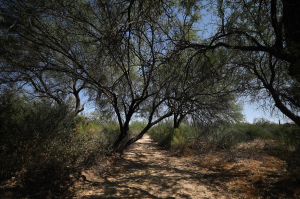
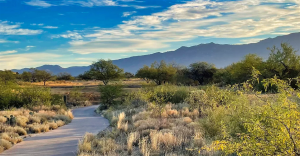
Saturday started in the usual way, up at 5 am as dawn cracked the horizon, then a walk through Vistoso Trails Nature Preserve, a 202-acre former golf course that backs to our property and connects with other open spaces in our town.

A rambling six-mile trail (former cart path) winds through open areas and trees offering beautiful vistas of the Catalina Mountains as well as local wildlife. Birds of all kinds chatter in the trees declaring the news of the day as we walk along. Roadrunners and rabbits skitter across the paths in a hurry to go to breakfast. Animals and humans stay a respectful distance from one another. The wildlife does not seem frightened or threatened by people passing through their home.

Yes, it is hot in southern Arizona in July, but not so hot that nature cannot be enjoyed in the early hours. We are lucky to live in this amazing environment. The trails are busy with walkers and a few bikers until about 9 am when temps start to climb and everyone retreats to air conditions homes. Monsoons are on the agenda for this month yet none have arrived. They will certainly be welcomed when they do. They bring drama to our Sonoran Desert and much needed rain.

Later in the morning, Sally and I met at our town’s newest bookshop, Stacks Book Club, a long-awaited addition to the Oro Valley Marketplace. Wow! We were impressed. The owners, Crispin and Lizzy, have done a great job creating a comfy ambiance, a gathering place. They are open from 7 am to 8 pm every day and offer a variety of coffee drinks, teas, energy drinks, beer, and wine – something for every time of day – plus an assortment of pastries and sandwiches, and BOOKS. Their opening weekend drew over 1,000 people. Crispin said it seriously reduced their inventory of books which they are busy upgrading. The bookshop is a real bonus for our community.  I’m sure they will do very well. We plan to visit often. It is a great place for a writers’ group to meet to discuss individual projects and have a cuppa.

Check out Stacks website: Stacks Book Club.

That was my day – from bobcats to books to baseball (on TV). Dodgers beat the Mets, Angels beat the Astros, and Tigers beat the Mariners. Then a happy hour hosted by our neighbors, Joyce and Rick. Perfect!