The “Little Woman” Steps Out

Courage is not the absence of fear but the action in the face of fear.

Courage is being the only one who knows you are afraid.

In the 1960s, the women’s movement was beginning to heat up again after a lull of about thirty years. During the 1880s women’s rights were asserted along with freedom for slaves. That resulted in legislation promoting the equality of women in society. There was a pause in progress during the Depression of the 1930s. Women were actually fired from jobs in order for men to have work. Men were deemed to be more important in the workforce and women were relegated to their “natural place” in the home, tending children and husbands. Then along came WWII, women again became essential in the workforce to keep our economy moving as men were shipped overseas to war. When men came back from war, women were reluctant to cede their place as wage earners. The war of the sexes ensued and the 60s were marked by legislative and social battles along with commentary from both sides staring into the gender gap. 

I, on the other hand, followed the path prescribed by society in those days, a homemaker. Being a mom was what I loved most. The role of stay-at-home wife and mother was the norm and the expectation of women. Married women who worked outside the home were still unusual. The only jobs offered were as teacher, nurse, store clerk, waitress, or secretary. Nothing much was required from me in the wide world except to keep a pleasant home for my husband and raise healthy children.

Where do I fit into the scenario of assertive women? It was accidental. I never considered myself a part of the feminist movement.

Ken worked two jobs for over a year to get the $900 downpayment for our house which cost $16,950. We had a monthly payment of $130 per month for principle, interest, taxes, and insurance – a third of his take-home pay after he quit the second job. It was our first home, a three-bedroom, one-bath, 1,000 sq. ft. mansion. We had two children, a baby and a 2-year-old, at that time. We moved into our house in a small community of Woodinville, Washington near Cottage Lake in December 1967, a neighborhood of one hundred very modest, indistinguishable homes. During the summer of 1968, I noticed some problems in our home. It was under warranty. I notified the builder, Miller Homes, and was virtually patted on the head and told, “There, there those are just normal things to deal with in a new home.” I did not believe them.

Ken said he didn’t believe it either. I called the Fire Department and asked for an inspection. They came out and found several code violations including that the vent over the stove was not connected to the outside. There were insulation, structural, and safety issues. I contacted the builder again with a request for someone to inspect the house and fix the problems. I was ignored. I ruminated on what I, a lowly 22-year-old housewife, could do to make the builder pay attention and fix our warranty problems.

I decided my lone voice was not enough. I typed up a petition of grievance, took the inspection report I had, and went door to door to each of the one hundred homes to ask people to check for problems and to sign the petition if they wanted warranty repairs done. I also told them I was going to picket the nearby new neighborhood where our builder planned a Grand Opening. I asked if anyone would like to go with me. I had 100% of the homeowners sign the petition and four people agreed to come with me on a Saturday to picket with our petitions.

I made signs out of butcher paper and markers for my car and the cars of the other volunteers. “DON’T BUY A LEMON.”  “BUYER BEWARE” “READ THE WARRANTY”. I wasn’t real sure of the law and I didn’t want any sign that named the builder or made direct reference because I didn’t want to be sued. I planned for us to park across the public street from the Grand Opening and stand by our cars with the signed petitions of grievance and the inspection report. I figured we’d attract enough attention that people would come over just to find out what we were complaining about. Maybe it would inform their decision to buy a Miller Home.

On the Saturday of the Grand Opening, all the people who said they’d go with me backed out. My husband was staying home with our two babies. A dilemma. Was I brave enough to go by myself and take the consequences alone? I decided I had to because I promised everyone who signed the petition that there would be action.

I did as planned. A little unsure of myself at first, I wondered what the reaction would be. Most of the people going into or out of the model homes walked across the street to hear what I had to say. I gathered courage from the response of prospective buyers thanking me for the information. After about thirty minutes, the sales manager came over and told me to leave. I declined. I was on a public street and told him he couldn’t make me leave. He said I would face legal action. I still declined, saying our next step was to complain to the State Association of Contractors. Finally, three men came over and said if I would leave, they would take a copy of the petition to the builder. I gave them a copy and left.

On Monday morning, my husband received a call at work. The builder told him to tell me to stop harassing their new home site. Imagine, telling a husband to silence “the little woman” who was making a nuisance of herself. Ken, my very strong, supportive husband, told them I was my own agent and he was not going to say any such thing. He said I had every right to do what I did and would continue until our demands were met. He went further to repeat we would report the builder violations to the State Association of Contractors if they didn’t comply.

The following day a representative of the builder came to our house and, sure enough, a swarm of construction workers went from house to house fixing the warranted problems that had cropped up in the homes. It took a few weeks to complete their tasks, but everyone was finally satisfied. I didn’t have to picket again. Once I knew I wasn’t going to be shot or sued, I enjoyed the attention and the hoopla created among the men. They took me seriously – no more dismissive attitudes.

DIANA – the magazine

I had so much fun with this idea, that I passed it on as a prompt to our writer’s group. The prompt was to envision yourself as something other than a person. Tell your story as if you were a building, a musical instrument, a machine, or any inanimate object. I chose a magazine.

Diana – the magazine

This magazine has been in print for seventy-eight years and witnessed many important events of the late twentieth and early twenty-first century. The slick glossy cover has transformed over the years. It has a more homey feel now.

The magazine has all the requisite sections including:

an Opinion Section where thoughts about current politics and local events are offered and discussions are welcome;

the Food Section offers luscious recipes of all kinds (the editor reserves the right to modify them at will);

the News Section where the daily events are downloaded and recorded for posterity;

the Puzzle Section where the conundrums of everyday life can be sorted and resolutions proffered;

the People Section is where relationships are explored and developed, gossip is encouraged if it has a positive vibe, and Grandson news is at the top of the page;

a write-in Advice column is active;

a Pet Section includes articles about cats, dogs, horses, guinea pigs, hamsters, rabbits, and bearded dragons. Recently added are articles about wildlife including javalina, coyotes, bobcats, deer, and a variety of birds. We may have to start a new section called Nature;

an Amusement Section contains articles full of unbounded happiness and optimism with lots of laughter and good humor;

during the 1980s and 1990s, the magazine had a robust Travel Section with mainly national and some international reporting. This section has been devoid of recent articles (travel having lost some of its former luster with delays, restrictions, and bullshit), but the management hopes to include more in the future;

the Sport Section contains sailing, skiing, horseback riding, and baseball articles with Baseball reporting the most invigorated at present (basketball news is rejected). Walking, as a sport, developed as physical limitations to the machinery producing the magazine became evident;

the Music Section explores popular music from the 1940s through 1990s, an emphasis on the 1980s, a modicum of present-day composers and singers, with a nod to the classical genre, especially Debussy and Vivaldi; Elvis, Sinatra, Alan Jackson, and Jimmy Buffett are prominent contributors;

a very active Literature Section features interviews with contemporary authors, along with reviews of books old and new, both fiction and nonfiction, and special interest in history. Stories and poems are published in this section;

a Wisdom Section was added in 2000 in acknowledgement of and engendering discussion of all things of a spiritual nature; a response to the natural facts of our human condition as we age;

a supplemental In Memoriam Section is published semi-annually in recognition and appreciation of those who made significant contributions to the magazine over the years but have moved on to a cosmos beyond this.

This magazine was initiated in Wichita, Kansas in 1945 and thrived there under loving development for about twelve years. Then the headquarters moved to Bellevue, Washington for a period of forty years. A co-editor was added in 1964. Then three satellite editors came on board in the late 1960s, adding extra depth and heart to all the articles produced.

When the machinery started locking up due to the cold and damp in the early 1990s, the magazine relocated to Tucson where it is currently ensconced in a more conducive environment. We plan to continue publication for the foreseeable future. The times they are a-changing, and we look forward to an interesting second quarter of the twenty-first century.

This magazine will no longer be featured at the front of the magazine section of the newsstand, taking a more unassuming place for discriminating clientele near the back.   

*photo is AI generated.

Living and Learning

Every day brings new opportunities to learn. Sometimes they come as bangs on the head, not literally but emotionally. Sometimes they are more gentle, as an answer to a question you didn’t know you had. These past few weeks have brought so many of both kinds that it has been difficult to keep up.

My husband went into the hospital for brain surgery in May. He has Parkinson’s disorder, a complicated and hard-to-diagnose movement and cognitive disorder that, once contracted, is a life-long companion. There are many approaches to living with Parkinson’s. Each person must research and decide what works for them in the daily battle to make life as normal as possible. It is an individual decision, and it is important that family members and others close can buy into the tactics.

Parkinson’s affects more than just its target human. It affects those around them. The natural reaction of a Parkinson’s sufferer is to withdraw. Withdraw from family and friends and the world at large. Not because it is embarrassing to tremble and shake and move like a sloth but because those outward physical symptoms make others uncomfortable. The uncontrollable shaking of limbs can, at first, look funny. Just stop it. The unnatural movement of the head can cause derision because in the world of normal movement, the head and mouth are controlled, and shaking only happens when someone is acting silly. Speech becomes faster, softer, and nearly unintelligible at times. It is as though the tongue swells, the vocal cords become slack, and the brain cannot moderate the pace of words. Communication is difficult. I, as a “second-degree” Parkinson’s sufferer, had a hard time accepting that my husband’s involuntary muscle contractions were going to be a part of everyday life. Ken is a lifelong athlete. From childhood into his 70’s, he participated in sports. Moving and controlling his body has been a hallmark of his existence. He was an elite athlete in school and signed a pro baseball contract with a bonus right after high school. After he was injured and could no longer play pro ball, he continued in amateur athletics, playing baseball, softball, basketball, tennis, golf, etc. He was always on the move, a big strong guy.

My husband lost the use of his right hand a few years ago. He is predominantly right-handed in everything. He couldn’t feed himself using his right hand. He couldn’t do the simplest of tasks, even blow his nose with a tissue, using his right hand. He learned to be more adept with his left hand and eventually that was affected. How is it that a simple task you never think about becomes impossible? Not just difficult, but impossible. His right hand might as well have been cut off. It was useless. More than that it was annoying, moving uncontrolled. The disorder enlarged its landscape to encompass his head, his jaw, his left arm, both legs and feet. By midafternoon every day he was exhausted by the constant uncontrollable movement of his body.

I was amazed at the grace with which he accepted his disorder. He did not display anger or ask “why me?” He worked hard every day to find ways to use his body with its limitations. He continued to do as much as it allowed him to do even though it took much much longer. He assembled two occasional tables I ordered from Amazon that came in pieces. It was a simple thing he would have done in fifteen or twenty minutes but took hours. He had to stop every few minutes to allow his hands to calm down. The concentration on movement exerted to place a screw and turn the screwdriver caused stress that would send him into a tsunami of unintended movement. He was resolute not to let Parkinson’s win. He did it and we have two very nice tables in our family room. An Olympic accomplishment with Parkinson’s. Brave, determined, and persistent are his pronouns.

We have always walked. Well, in younger days we jogged. Just a few years ago we’d go seven miles in a circuit of our neighborhoods. Usually, we walked three miles at least three or four times a week. Ken’s walk became slower and more tortuous. It was hard for him to move his feet. He said they stuck to the ground. His walk became a shuffle and his back became stooped. He still walked our street, about a mile, each day but it became slower and slower. He had to stop several times and his balance was iffy. Of course, falling is a horrible secondary problem that can happen. If he fell, he couldn’t get himself up and I certainly couldn’t lift or move him.

After exhaustive research over a couple of years, Ken decided to have DBS surgery, Deep Brain Stimulation. Two electrodes were placed in either side of his brain connected to a lead that goes into a device implanted subcutaneously in his upper chest. It is sort of like a pacemaker for the heart, but it controls the brain. He had the two-part operation last month. After some weeks of healing, his stimulator was activated a few days ago. It is a success! His tremors have been substantially reduced. His movement is freer. His walking is improved. He is fully able to do daily tasks to take care of himself. He is even back to cleaning out the cat boxes. He is not all that he expects to be and there will be more appointments over the next few months with the neurologist to tweak the settings as his body adapts to the implants. It is another step along the Parkinson’s journey. It is not a cure. There is NO cure for the disorder, but it will allow him to have an extended period of time, several years, with minimal or no outward symptoms.

Along the way, through nearly three weeks of inpatient care, we both learned patience. Not just the word but the actual fact of patience. In the hospital, the very busy staff tried to keep up with requests. Push the button and someone will be in to help you…go to the bathroom, sit up, get back to the chair, get back into bed, get a drink of water, take a pill, etc. The time between the button push and the actual help could extend to what seemed forever. It is called “hospital time”. We learned to honor hospital time. We knew the nurses and techs had more than one patient to attend. My instincts are to “just do it”, whatever was needed, but when I was there, I could get him food and drink and that was about it. I was not allowed to transfer him or help him get up, or take a short walk, because of liability issues. An alarm was put on his bed so if he moved to get up it screeched – jailbreak, jailbreak. The staff took it that he had fallen out of bed and dropped everything to get to him. Not a good look when all he wanted was to get tissue from the table that was too far to reach. Patience.

We are deeply grateful to the talented surgeon, Dr. Julie Pilitsis, and her stalwart team of neurologists (too many to name here) who came up with solutions to the challenges of Ken’s Parkinson brain. We feel blessed that the DBS option was available and worked for him. Thanks to some very dedicated therapists, we also learned the difference between the Parkinson brain and the normal brain. When Ken thought he was talking normally, Parkinson was deceiving him. When he thought he was taking normal steps, Parkinson was deceiving him. He had to realize that his perception was being modified by Parkinson. It was an ah-ha moment for me too. He wasn’t being purposely obstinate when I said to speak up. He thought he was speaking clearly. He is signed up for outpatient therapies, but we are on “insurance time” waiting for a slot to open for him in a month or so.  Until then we have improvised a regimen at home. He wants to recover the strength he lost over the time he was inactive. He is doing physical, speech, and cognitive therapy every day to regain vigor and relearn things we used to take for granted.

Our eight-year journey with Parkinson’s continues.

What Is Happiness?

I had a discussion recently with friends at the Oro Valley Writers’ Forum (OVWF) about happiness. Then I read a blog post by Anthony Robert (tonysbalogna).  Do You Suffer From The Curse of Comfort – tonysbologna : Honest. Satirical. Observations

The discussion and blog post seemed to be synchronized. What is happiness? What brings comfort? Does it come with achieving your goals? Is it when you have acquired everything you ever wanted? Is it a daily ritual or habit?  How do we keep that carrot dangling before us, so we continue to reach for our future, our happiness, and contentment?

I believe Anthony has a good hold on it.

I believe that happiness is all in the pursuit of…

Happiness cannot be the end game. No matter what you think, you will find that happiness is just beyond what you thought it was. Comfort is also an elusive concept. What is comfort? There are levels that can only be defined by the individual. Can too much comfort lead to laziness, slack thought, unhappiness? It is the striving that brings satisfaction.

This of course is, as they say, a first- world-problem. People in depressed, exploited, or poverty-ridden areas of the planet have a totally different view of happiness and comfort. Their comfort is taken in small bits, as is happiness. Having a full belly brings comfort and leads to happiness if a full belly is a rare thing not taken for granted.  Food has always been in the immediate reach for me, so comfort is easily achieved. Sometimes food is happiness when an exceptional meal is planned and served.

I was blessed with a happy disposition, not something I work at, just a gift. My husband says it is because I have a very poor memory. I admit I do live without regret or longing for the past. I’m incapable of worrying about the future. That leads to an inability to plan ahead which can be very annoying to a spouse. I’m pretty much a today kind of girl.

Once when our marriage hit a bad patch, we were swirling down the drain headed for divorce after thirteen years. We went to my mother to tell her the news and prepare her for a different relationship with our family. We weren’t mad at each other – it was the times, the circumstances, and the expectations that caused a wedge. It was a matter of having achieved goals – a nice house in a beautiful neighborhood, two cars, three kids, two dogs, a great career – then looking around and saying, “Why am I not satisfied?”  My mother in her misguided effort at support declared, “Ken, I know she is hard to live with, but you’ll never meet a happier person.” A backhanded endorsement of me if I’ve ever heard one. The divorce failed, we reconciled, and the rest is history. My happy disposition must have helped win the day. I’m certainly not any easier to live with.

The things that bring joy in my life are my relationships with my family and friends and even strangers. I love to meet people and hear their stories. Lives lived in many different ways, yet with so much in common as human beings. I never tire of learning about other people, other cultures, other places. My life is enriched by those discoveries. That is the carrot that keeps me moving forward.

Writing is another joy in my life. There are infinite ideas to explore, infinite memories to share, infinite stories to conjure.  Words paint pictures. Words spark conversations. Words are a never-ending source of revelation.

What about you? What does happiness mean to you? What brings comfort?

Taking Time for Gratitude

When I wake each day, I spend a few moments thanking God for another day and counting my blessings. Well, not every day. There are those days when I sling shot into the morning with six things to do before breakfast. But then I try to slow down, take a breath, and remember to be thankful. Thankful that I have six things to do and can do them. Also, I’m thankful that as a retiree I have the luxury of slower mornings.

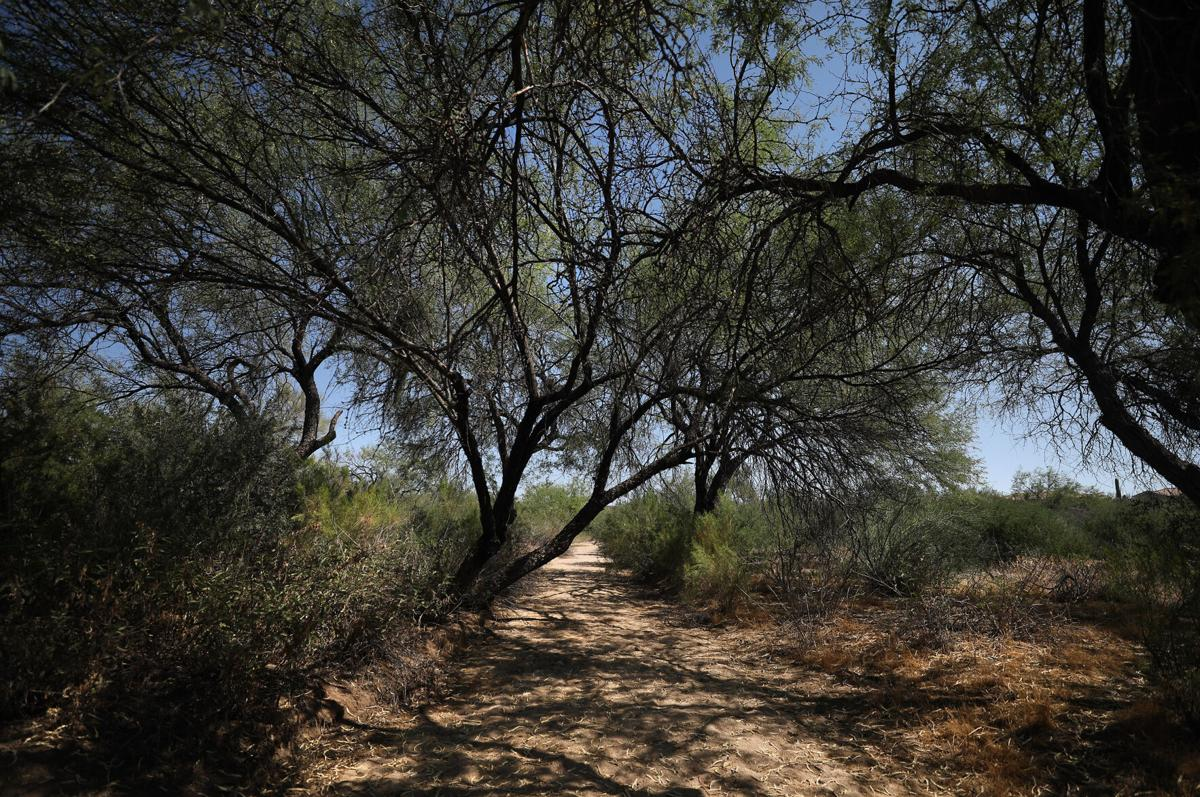
On Saturday I walk five to seven miles on the trails through Vistoso Nature Preserve, a two-hundred-acre open space that borders our backyard. In every direction, I see the glorious mountain ranges that surround us. Their solid majesty guardian of our valley. I’m grateful for the beautiful Preserve where wildlife is abundant and free to roam. I am grateful they share their space with us, invaders in their world. Today a young coyote crossed the trail about twenty feet in front of me. She stopped on the other side, paused to look at me, and then ambled into the underbrush and trees. Within seconds she disappeared, as animals do, melding into her environment. A couple of miles later, two cavorting coyotes came to the edge of the trail from an open area, noted my presence, then played on chasing each other, leaping and disappearing into the tall grass. They looked like a couple of dolphins breaching from beneath the sea.

Bird song accompanied my walk. I felt I was being passed along from song to song, bird by bird. I’m not a birder so I couldn’t identify the avian varieties, but their songs were a lovely accompaniment to the walk. Rabbits, large and small, scampered alongside trails busy in their bunny ways. They would halt to give me a look, then go about their business.

I am grateful to be able to walk. A few years ago, I broke my ankle and had to have the shattered bones screwed and plated back together. I spent weeks on the sofa unable to take even a single step on my own. Thank God for Dr. Ty who did a wonderful job of putting Humpty Dumpty back together. I so looked forward to walking across the family room into the kitchen. But… Immediately upon healing, I broke the other ankle. Don’t ask. It’s a dumb story and one for another day. I believe God saw I had not learned the lesson He intended and decided I needed more time immobilized. So again, I had to have surgery and spend more time on the sofa unable to walk.

During that long recovery period, Ken would pack me into the car for little excursions to get me out of the house and lift my spirits. What it mostly did was make me jealous of people I saw walking. Such a simple thing. We learn as babies to stand on two legs and claim our freedom to get from one place to another on our own. I did not appreciate that freedom until suddenly I was anchored down for three months. I swore that once mobile I would walk every day and appreciate each step. I have and I do. My daily walks are one to four miles and each step is blessed.

Ken still accompanies me on daily walks for up to a mile. He cannot walk further right now but hopes to increase his mobility in the near future. I’m cheering him on as he works to improve. I’m grateful that he is making every effort.

Most Saturdays I walk with my friend Roxanne, but she has been away visiting her son in Oregon, so I go alone. When we walk together, we talk, talk, talk for two hours. We solve the problems of the world and a few of our own. When I walk alone, of course, I’m really not alone with all the critters in the Preserve or friends from the neighborhood I meet along the way. My time walking alone during the week is for quiet contemplation, writing poems in my head, thinking about situations a character in one of my stories faces, or sometimes listening to music or a book on my phone. I am grateful for all those opportunities – alone or with friends.

Haiku from today

Silly woodpecker
Rapping on the metal pipe
What is he thinking?

Time and Perspective

Today is opening day of the 2024 MLB season and you cannot scrub the smile from my face. Baseball!!! As I watched the MLB Central show (my favorite morning show) I thought about the changes since my dad was alive. An Army Air Force veteran from WWII, he helped vanquish the reviled forces of evil in 1941 to 1944, Germany and Japan. Today one of the most celebrated baseball players of all time – right up there with The Babe and Lou Gehrig is Shohei Ohtani – a young Japanese man. I cannot even imagine what my father would have thought if that had been told to him in 1944. In fact, the top three players today on the celebrated Dodgers are Mookie Betts, Shohei, and Freddie Freeman, a total fusion of ethnicity on one team. In 1945 when I was born, Jackie Robinson was still two years away from breaking the “color barrier” in major league baseball. Back then there were only a handful of Latino players and no Asians. The Dodgers were the dreaded team still in Brooklyn, across town from my dad’s favorite Yankees. As a farm boy from Kansas who loved baseball, he would have been very surprised, I dare say unbelieving if told about the future of baseball.

Baseball is a merit-based business. No one gets on the field without talent and an overwhelming desire to play the sport. Size, shape, color, and birthplace don’t matter. Some, like my husband, are recruited from high school and join minor league teams sponsored by professional teams to train recruits for their major league team.  A kid as young as 19 can end up on a major league team if he has the right stuff. Some young men go to college and are prepared for professional play on college teams.

Scouts are out all year round searching for talent in every nook and cranny of the country and now across the world. No one gets to the professional level without a lot of talent regardless of their background – talent and drive win out. That is why a Mookie Betts at 5’9” 180 lbs. is as effective on the field as Aaron Judge at 6’7” 282 lbs. Size doesn’t matter. Talent, heart, and intelligence matter. I’ll put Jose Altuve’s passion (5’6”, 166) against any physical barrier. He literally sparks when he is on the field. His happiness, his delight to be playing, glows through his smile.

If a man has talent, it will reveal itself and the fans will show up to watch two teams compete using their players’ skills and strategies. There is no baseball business without fans whether they watch on TV or go to the games.

Baseball as a sport will endure because it is fun to watch, easy to understand, and fun to play at whatever level. A sphere is thrown at top human speed at the round-edged bat – what could go wrong? The players are not only part of a team, but their individual skills are on display. I have likened baseball to a cross between bullfighting and ballet.

When a pitcher faces a batter, mano a mano, it is a bull fight. The pitcher hurls a missile directly at the batter at 90 to 100 miles an hour – the bull. The batter, matador, protected by a helmet, holds a stick less than 3 inches in diameter and not more than 42 inches long to fend off the approaching sphere. If the bat contacts the round missile and sends it out to the field the ballet begins.

Players tall and small will dive, spin, and leap performing ballet-like movements such as –
Fouletté – whipping the body around from one direction to another;
Pirouette – a player steps up on toes of one foot while extending the other leg in a turn as they catch the ball;
Temps lié – connected movement that prepares the body to maintain balance and control while shifting weight from one position to another as they reach for the batted sphere;
Grand jeté – high jump with extended legs to snag a soaring ball;
Penché – a player leans far forward with the forward arm and head low and leg raised in the air;
Renversé – bend the body during a turn, from the waist, sideways and backward, maintaining equilibrium – a real talent;
Sissonne – jump from two feet to one.

After completing these athletic moves, the fielder must then throw the ball with deadly accuracy hundreds of feet across the field aimed at a mitt 10” by 10”, to try to stop the runner on his circuitous route from home back to home. Sometimes this throw is accomplished while the player with balletic grace is still airborne. When that happens ahhhs and oooos erupt from the crowd. Replay is guaranteed on TV.

I stopped rooting for teams, as such, since they became so fluid. Money talks and talent walks. A man, even if he signs a multiyear contract, may be traded or elect to go to another team if the price is right. I can’t blame a guy for getting the most pay that he can. Athletic careers are notoriously short due to injury and burnout. Players spend hours away from the field on conditioning to keep their bodies as fit and flexible as possible. Baseball is an EVERYday sport. There are very few days off and position players show up to play every day. Only pitchers whose bodies are put to exhausting tests in a game are given 4 to 5 days between games. Now I root for the players themselves and whichever team has the most of my favorite players is the team I choose for that matchup. For instance, it is very hard for me when Gerrit Cole, pitcher for the Yankees faces at bat Bo Bichette, shortstop for the Blue Jays. I love them both and find it painful to split my loyalty.

Ahhh, but the season has begun and I’m in heaven no matter who is playing. I’m sure I’ll discover new favorites this season. Right now, the Dodgers just beat the Cardinals, 7-1. Yeah Dodgers, but I feel sad for two of my favorites, Nolan Arenado and Paul Goldschmidt who played their hearts out for the Cards.

Home

Last week our writing group had a discussion about place. Where do you consider your home?

I identify as a Kansan even though I haven’t lived there for over sixty-five years. It still feels like home. I have family in several towns across the state from Missouri to Colorado. Whenever I am in Kansas, I am home. I grew up with a large extended family around. Some were city folks, some farm folks. The common meeting place was my great-grandparents’ house where generations gathered for Sunday dinners or family celebrations. My widowed grandmother lived with and took care of her parents in their declining years. After my great-grandparents died, two of her sisters, one a divorcee and one a widow, moved in with her. Then their brother who was also widowed joined them. It remained THE family home for many more years. Oh, the stories that house on High Street could tell. It will always be home even though it passed from family ownership decades ago. There is something that is intrinsically Midwest in my bones.

I spent many summers of my youth with my grandparents in a small town in Colorado. No parents – just doting grandparents. My grandfather was a trainman on the Union Pacific Railroad and was out of town overnight sometimes on runs to Green River, Wyoming. I got to sleep in his bed when he was gone. They had twin beds in their bedroom and I had a big double bed in my room. I loved the cozy twin next to my grandmother. Grandma had a vegetable garden and canned her summer harvest. She had a flower garden that filled my senses with colors and smells. I sat under the weeping willow in the front yard to play with a neighbor girl. Summer at the base of the Rockies was glorious. We fished at Estes Park (Grandpa baited the hook). We always caught enough to cook and eat there with some left to take home for breakfast. The wriggly rainbow trout were put in his woven basket that hung in the water at the edge of the river letting cool water flow through so they were fresh when he cooked them on the portable gas grill. Grandma packed potato salad, buttermilk biscuits, fresh fruit, and cookies for our riverside picnics. Back in their neighborhood, I took long walks with Grandpa, stopping at the ice cream shop for candy cane ice cream. We took trips to the big city of Denver to visit aunts, uncles, and cousins. Grandma and Grandpa listened to baseball every night on the radio. It was a great place to visit, but it wasn’t home.

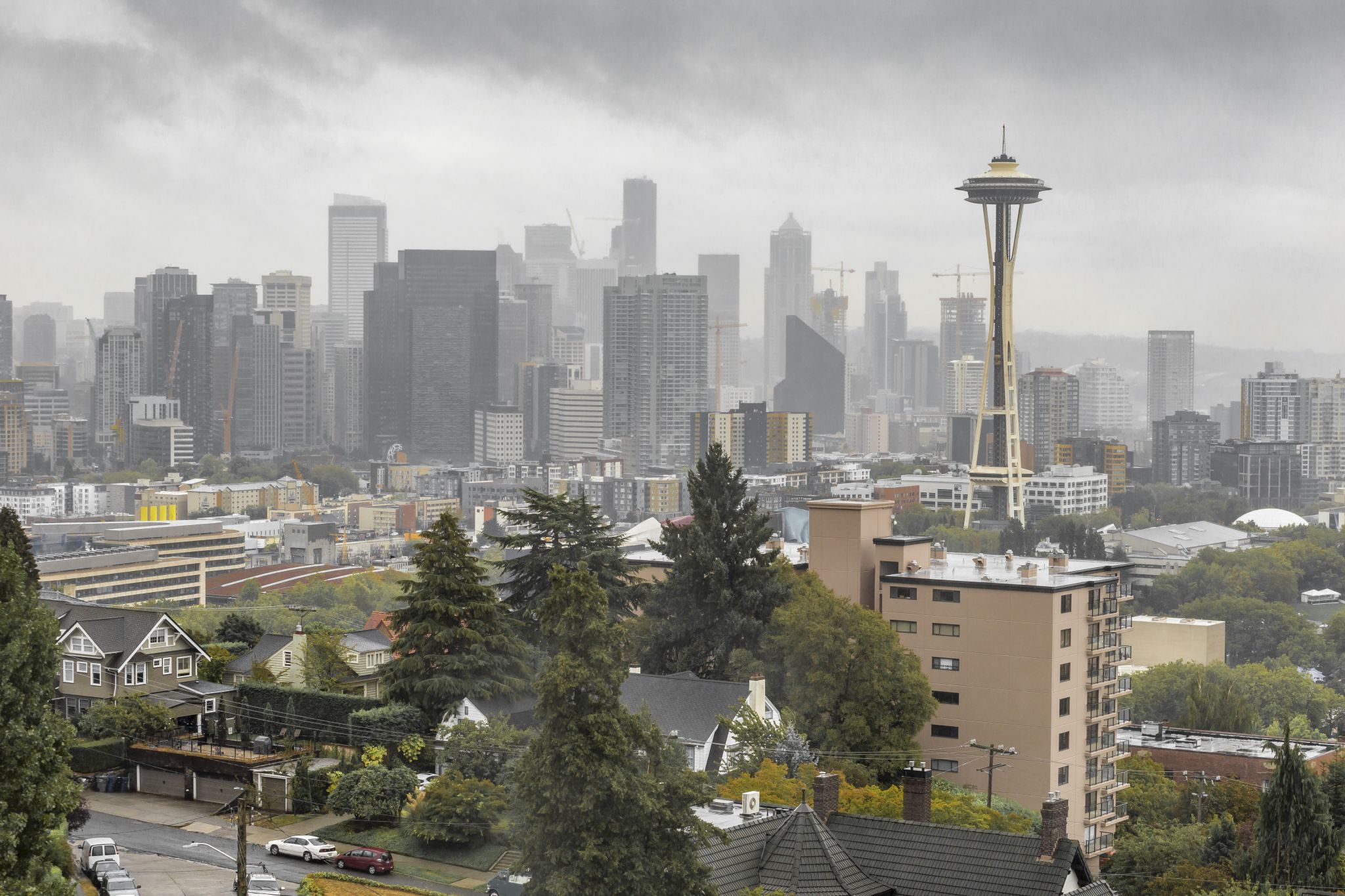
Seattle in clouds

The bulk of my adult life, over forty years, was spent in the Pacific Northwest where I remained a stranger, an outsider.  Even though it was there that I met my beloved, created a family, and had a boatload of friends, it was never home. I love the city of Seattle because of the variety of world cultures that settled and thrive there. You are never far from a festival, an event to celebrate people from far-flung lands. I love my many Seattle area friends. I loved being able to snow ski Mount Rainier and sail Puget Sound, horseback ride and play tennis, most of the year in mild temperatures. Wonderful ethnic food, an enormous variety of world-class arts –  museums, theater, music – play a big part in Seattle’s identity. I once wrote a twenty-page paper on the City I Love to Hate – extolling its history and all its virtues and why I suffered in its bounty. I was claustrophobic, confined, imprisoned by the environment. A blue sky is sporadic, appearing a few times a month (occasionally never making an appearance for weeks) and rarely bringing warmth. Clouds hung like Damocles’ sword, low overhead, threatening gloom. My feet never felt dry, my hands never warm. A pervasive smell of mold clung to everything. Trees obscured the horizon and all potential vistas of mountains and lakes. People were closed as tightly as their coats and sweaters, bundled for safety, cliquish.

Santa Catalina Mountains

During our adventure traveling through the contiguous forty-eight states for fourteen months in 1984-1985, we found a place that felt like it could be another home. Tucson. It is ringed by five mountain ranges, not snowy like the Rockies, but rugged and beautiful, rising from the Sonoran Desert. The Santa Catalinas, the Tortolitas, the Rincons, the Santa Rita, and Tucson ranges. These mountains display a mind-blowing range of color at sunrise, sunset, and when clouds filter the desert light. I have photos of them dressed in reds, oranges, blues, purples, and golds. During monsoon season they flaunt a verdant green as vegetation awakens in the nearly tropical heat and humidity. But we still had a life (family and work) in Bellevue, Washington; but when the kids were raised and it was time for retirement we headed south. I am grateful every morning I wake up to the sunshine. I even learned, after many years, to treasure rain again. It was such a curse in Seattle. Anxiety no longer attacks me when dark rain clouds appear on the horizon. They are temporary. I know they will make the cacti and fruit trees blossom, wildflowers erupt into blankets of color and sate thirsty desert critters. I welcome monsoon season like a native. My feet are firmly planted in this place. Breathing clear air, embracing dark skies at night with diamond-bright galaxies shifting overhead, walking trails and communing with desert animals that cross our path or visit our yard, make this place home.

This poem is about the four places that influenced me from childhood until now. Home is more than just an address, a dot on a map. It is a place where your soul can breathe.

Where I Am From

I am from the traveling wind, deep roots,
Wide blue skies, far horizons, and waving wheat,
Great-grandma’s raw onions by her supper plate,
Great-grandpa’s spittoon beside his rocker,
Refrigerator on the back porch and dirt fruit cellar,
Fireflies on summer nights.

I am from deep dark earth and snowy mountain highs
Grandpa’s railroad uniform smelling of wool and tobacco
Fishing at Estes Park, summer night baseball,
Honeysuckle, snapdragons, and putting up the beans
A ringer on the washing machine
Cold fried chicken, white bread with butter and sugar

I am from endless gray skies, armies of black-green sentinel fir trees
Reaching to the smothering clouds
A city where art and music blend past and present
A thousand cultures mingle like flavors in a stew
The drizzle of cold, the smell of mold
Wind in the sails, islands in the fog

I am from the knife-edged peaks with mysterious crevices
Rising from the desert floor.
Dark starry nights, quiet as serenity
Deer, coyote, and javelina share their space.
The soul-filling scent of the creosote bush after a summer monsoon.
The endless blue of sky and translucent flower of prickly pear.

Age Appropriate

It has been said to me several times in the last year, “Wow, publishing your first book at the age of seventy-seven. That’s a big deal.”  I beg to differ. My age has nothing to do with writing other than I hope I have improved over the years. It’s as if my life culminated in this book. No, it hasn’t. If truth be told I have written enough over the years to compile as many volumes as the Encyclopedia Britannica. Publishing was never a priority or even a thought. I have written for seventy-eight years, no actually seventy-one years because my first novel was at the age of seven.

When we moved from Bellevue, Washington to Tucson in 1993, I jettisoned my journals, notebooks, and pages of writing to lighten the load. Boy, how I wish I had some of that back to fill in memories that are hazy now. Teen diaries with social events prominent, newlywed adventures, then pages of notes on my children as they grew up. Some pages were complaints, some were gratitude, some were hopes, some were sorrows – most were filled with the joy I felt watching my kids grow.

Of course, as writers do, I accumulated more journals, notebooks, and loose pages of writing in the intervening twenty-six years. They are not systematic or categorizable. I grab a notebook or journal when the spirit urges and start writing not caring what came before. I have journals with entries from 1997, 2005 and 2020. They are not in order because I start writing on whatever blank page I open to, so a 2017 entry may be before a 2005 one and heaven forbid if there is any theme articulated. This unstructured whimsy pattern is my life. My brain cannot do linear for more than a few minutes at a time.

Is there a right and wrong to writing? Absolutely not. Writers have to write. It is like breathing. It is an imperative to living. Age is not a factor in writing. There is nothing that says you can’t write after you are fifty or seventy or one-hundred. You don’t need an MFA or be on the best-seller list to write. Until I moved to Tucson the only writing class I had was a Freshman 102 class at WSU. A young professor tried to introduce newbie English majors to the idea of creative writing.

After we were settled in Tucson, I saw an ad for a writing class that sounded interesting and I thought it would also be a way of meeting people in my new town. I had no idea that class would introduce me to many other adults who loved to write “just because”. Indeed, I thought I’d be the only one there who wrote just for myself because “writer” meant a higher level of achievement than what I felt I had. Thankfully, I was wrong.

I met several people who love words and love putting them in some kind of order to tell stories. Our writers’ critique group was formed from a few people in that class and four of us stayed together for over twenty-five years. The book we wrote is to encourage other writers to create and maintain critique groups as a way of expanding and enhancing their writing experience. Creativity stays with you throughout your life.

Getting back to the age issue, I once knew a woman who dressed “inappropriately” for her age. She was in her late sixties, then early seventies when I knew her. She wore medium-heeled shoes with lacey bobby socks, fancy dresses that barely touched her knees and her long grey hair was done in braids, ponytail, or pigtails with ribbons and delicate butterfly clips depending on her whim and the time she took to get ready in the morning. She was petite, with a trim figure and her clothes looked good on her body, but they would have been more “appropriate” on her granddaughter. She was the hostess at a high-end restaurant in the town where we lived. She was courteous, on the ball, and did her job with confidence. She was NOT a nutcase. She was an individual. She loved people and it showed in her manner, her care with customers. I’m sure the first time people saw her, they were taken aback. I know I was. But after observing her over several years I knew she was authentic, not an act. I moved from that town so I’m not sure how long she remained in her job. I do know she had plenty of energy and enthusiasm for it and did it better than women who were in their twenties.

My point is people age differently, some are old at forty while others maintain their lust for life well into their eighties, even nineties. My grandmother was an example of someone who never let age determine her life trajectory. She was widowed at fifty-eight. She had no pension and social security was minimal. She went to live with and care for her elderly parents who lived into their nineties. When her parents passed away, two of her sisters (a widow and a divorcee) and a brother (a widower) moved in to share the family home and expenses. Four siblings in their seventies and eighties acted like four siblings in their teens. They teased, argued, hassled each other, and laughed in equal amounts. It was hilarious to visit them. If you overheard their conversations, you would never believe they were senior citizens. They all sounded like fourteen-year-olds.

Grandma developed congestive heart failure later in life, but it didn’t hold her back. She was a woman of boundless faith. The day she died she had been out helping her “old people”, those friends in their sixties and seventies (ten to twenty years younger than she) who relied on her to drive them to appointments and shopping. She went home after a busy day and said she didn’t feel well enough for dinner. She was taken to the hospital later and died of heart failure that night. Not once in my life did I ever hear her say anything about her age or infirmities. They were just not significant factors in her life. She created the best of each day she was given without excuses. I adored her for many reasons, her kindness, her generosity, her “get on with it” spirit, and aspire to be like her. She embraced the gift of each day. Age is a number not a state of being. A spirit cannot be defined by age.

Our Town

On November 5th we hosted a pot-luck Texas Hold ‘Em poker party for a group of long-time friends. We ate outside on the back patio then went in for the card game. Our poker parties go back many many years. As couples, we used to meet regularly. When covid hit the parties became sporadic but we still met on occasion. In total, there are seventeen of us. Not everyone makes every party, but we try. The ladies of the group also gather monthly for dinner at a restaurant to celebrate a birthday. When there is no birthday that month we meet anyway to celebrate friendship. In October there was a garden party hosted by a couple who built a greenhouse during the pandemic. The incentive for that gathering was to show all the beautiful plants and vegetables they propagated during the last two years. Everyone left with a small basket of fresh veggies to make soup at home.

Ken and I owned a real estate company and, in 2002, hired our first agent. During the next couple of years, we added more agents. We met their spouses and became friends. We added some of our clients to the group and, over twenty-plus years, an enduring bond of friendship and support was created. That friendship continued even after we retired. We all managed through covid, vaxed or unvaxed. Two couples moved away for several years, one to California and the other to Minnesota, but returned and were immediately brought back into the fold. In 2021 one of our friends died but he is still very much in our thoughts and part of our conversations.

Potluck is our preferred kind of party, even if it doesn’t include poker. Everyone brings a favored dish to share. Just as potluck is a combination of foods, our group is a combination of individual talents. Each person contributes to the whole with their uniqueness. All are blessed with the knack of friendship – they listen, they make others feel comfortable. We poke fun at one another in gentle ways and in memory of all the good times together.  Laughter is a big part of every gathering.

The day after our party the 1940 film, Our Town was shown on TCM. I remember reading Thornton Wilder’s play in our 11th-grade English class taught by Mrs. Lupton. The play was performed by our high school drama club. Then again years later, Ken and I saw it performed by the Seattle Repertory Theater. Even though I am an oldy film buff, I had never seen the movie. The play takes place in the early 1900s and its human themes resonate today. I reflected on our party. As friends, we have known each other, not since childhood, but through years that included births (of grandchildren), love, divorce, marriage, illness, and death. We attended baby showers and followed the milestones of each grandchild. Now one of those grandsons is in basic training for the Air Force and there are still toddlers in the group. Life moves at a breathtaking pace. I am ever grateful for their continued friendship as we compare old veiny hands and the inconveniences of aging. We discuss travel plans, artistic endeavors, beloved pets, children’s achievements, the highlights of grandchildren, and celebrate each accomplishment. Poker is fun too and we all (yes, even Larry) cheer the winner.

Our Town was knocking on my consciousness. This post began life as an entry in my journal several weeks ago. Within days of my journal entry, I started and finished reading the novel Tom Lake by Ann Patchett in which a “character” in the story is the play Our Town. Hmmm, a coincidence? My journal is much longer and more detailed, but I decided to pare it down and post it since the play seems to be all around me from a movie to a novel and the sense of my own community around me. Funny how that happens – recurring themes. The life of a writer.

Officer Hershey times three

In the space of two years, Officer Hershey came into my life three times.

In the 1990’s, we lived in a neighborhood at the top of a hill in Bellevue, Washington. On this particular morning, after my husband left for work, I ate breakfast, played with the dog, did some housework, and got ready for work. I’ve never been a morning person. I don’t get my head working much before 9 am. I was late two out of five mornings. I tried to make it up by being early at least once a week. Luckily, I worked for an old friend who put up with me.

I looked at the clock and, oh my, I had ten minutes to make the fifteen-minute drive to work. I jumped in the car and started down the long winding road from the top of the hill to Main Street. The speed limit was 25 because it was so curvy and, in places, steep. My foot never touched the accelerator, only the brake as I drove down the hill. This morning I didn’t pay attention to speed.  I was traveling between 40 and 45 mph when I saw the motorcycle cop behind me with his lights and siren. I pulled over. Darn, now I’d really be late and with a traffic ticket on top.

I rolled down the window and in my sweetest tones, “Good morning, Officer. I must have been going a bit fast.”

The officer had a big grin on his face like he’d caught the fish of the year. His badge said Officer J. Hershey. “May I see your license and registration young lady.”

I pulled the license from my wallet and the registration from the glove box and handed them to the policeman.

“You live on this hill,” he said.
“Yes, sir, Officer Hershey.”
“Then you travel up and down this hill a couple of times a day, don’t you?”
“Yes, sir.”
“You know the speed limit here, right?”
“Yes, sir.”
“You know this is a dangerous road when it’s raining or icy, right?”
“Yes, sir and it’s a beautiful day today.”
“Are you on your way to work?”
“Yes, sir.”
“Do you love your husband?” His face became serious.

Now that one knocked me back. What was he getting at? That didn’t sound like a traffic citation question. I looked up and tried to see his eyes through his dark motorcycle goggles.
“Yes, sir.” I said with hesitation.

“Well, this is what I want you to do. When you get to work, call your husband. Tell him you love him and want to take him out to lunch. That lunch will cost about the same as the ticket I should be giving you. Apologize for driving too fast down this hill because it is not safe and tell him you won’t do it again.”

I let out a big breath. “No, ticket?” I asked.
“Not this time but I patrol this road so don’t let me catch you again.”
“Yes, sir. Thank you, sir.”

I did exactly as he instructed. I told Ken the impossible story of how I barely avoided a traffic ticket over our lunch.

A few months later, on a Saturday, I was in a traffic jam on one of the main streets in town. I was in the middle of three lanes inching forward little by little on my way to the mall. In my rear-view mirror, I saw a motorcycle cop working his way between the slow moving cars and when he got to my car, he put on his siren and lights. He gestured for me to move out of traffic into the parking lot of a business. Disgruntled, I signaled and began traversing the road through traffic. Other drivers were also made unhappy by this movement. I glanced again at the cop and realized it was Officer Hershey. What the heck? I couldn’t have been speeding, I was barely moving. Why was he pulling me over?

I parked in the lot. He got off his motorcycle and came to my window. “Please give me your license and registration,” he said.
He took a second look at me and said, “Oh, you again”.
“Yes sir. I couldn’t have been speeding. What’s wrong?”
“Please step out of the car.”

I did as I was asked wondering if he was going to give me a sobriety test or something. Very confused. The traffic on the street picked up a little as the light changed but it was still very congested.

“Come back here.” He gestured to the rear of my car.
“You don’t have a current license tag. You are out of compliance; your car license is expired.”

I looked and sure enough. The new stickers were not on my car.
“You’re right. I have the new stickers in the console. I asked my son to put them on for me last weekend, but I didn’t check. The little bugger didn’t do it.”
“How old is your son?”
“Fifteen.”
“Yah. That’s sounds about right. Get them out of the car.”
I did as he asked and handed them to him so he could see they were up to date.

He took a cloth from his jacket pocket and wiped off the license plate then took the sticker and put it on. Then he did the same for the front plate.
“Have a good day.” He said and touched his cap as he got on his motorcycle and moved back into traffic.
“Thank you again, Officer Hershey.”

Nearly a year later the tranquility of a Sunday morning in our hilltop neighborhood was shattered by a violent soundscape. Adults yelling. Young children screaming and crying. Car doors slamming. The crack of gunshots. A car engine roaring. Tires squealing. A car racing down the street. Ken and I looked at each other puzzled and he said, “I better go check what’s happened.” Out the front door, he went. A few minutes later he came back with our neighbor, Maryann, bloody, trembling in her pajamas, barefoot, with a coat thrown over her shoulder.

“She’s been stabbed. There’s blood everywhere inside and outside the house,” Ken said and went to call the police.

I took her into the bathroom to address her wounds. Fortunately, nothing was spurting or flowing. (I faint at the sight of blood). She told me how her estranged husband showed up uninvited and demanded to take the kids. They argued and he snatched the kids and took them to the car. Then he returned to the house and assaulted her with a knife, stabbing her several times before she could grab a gun from a kitchen drawer and shoot him.

Maryann and her family had moved into the rental house next door a few weeks before this incident and we’d only met them casually. We didn’t even know her husband had left the family.

Within minutes the doorbell rang. I answered and who stood before me but Officer Hershey. “Officer Hershey, come in,” I said in surprise.
“It’s Detective Hershey, now,” he answered, a serious look on his face as he entered the house with two other officers.

I sat with my arm around a quavering Maryann as she told her story to Detective Hershey. Ken was questioned by one of the other officers. Then the police took Maryann back to her house to continue investigating the scene. That was all we heard until we were called as witnesses at Maryann’s trial for attempted murder.  

As it turned out, Maryann was crazy, threatening her family when her husband moved out of the house. He wanted to get the children away before they were harmed. She knew he was coming over to get the kids and she staged the fight so she could have a motive for shooting him. She inflicted stab wounds on herself. Luckily she wasn’t a good shot. She wounded him in the neck, but he was able to get to the hospital for treatment and was okay. Maryann was sent to an asylum for the criminally insane.

We moved from the neighborhood soon after, not because of the shooting, but because it was a planned move. I never saw Officer/Detective Hershey again, but he remains a sweet memory. I looked him up online. In 2017, he retired as a Captain after 35 years in the police force with commendations and kudos from dozens of citizens in the city, especially high schoolers who appreciated his common sense approach to teens, his humanity.  He had a significant impact on young people in the city. He was called a legendary gentleman by one citizen. Bellevue was blessed with his service. Exemplary man and policeman. Thank you, Captain Hershey!


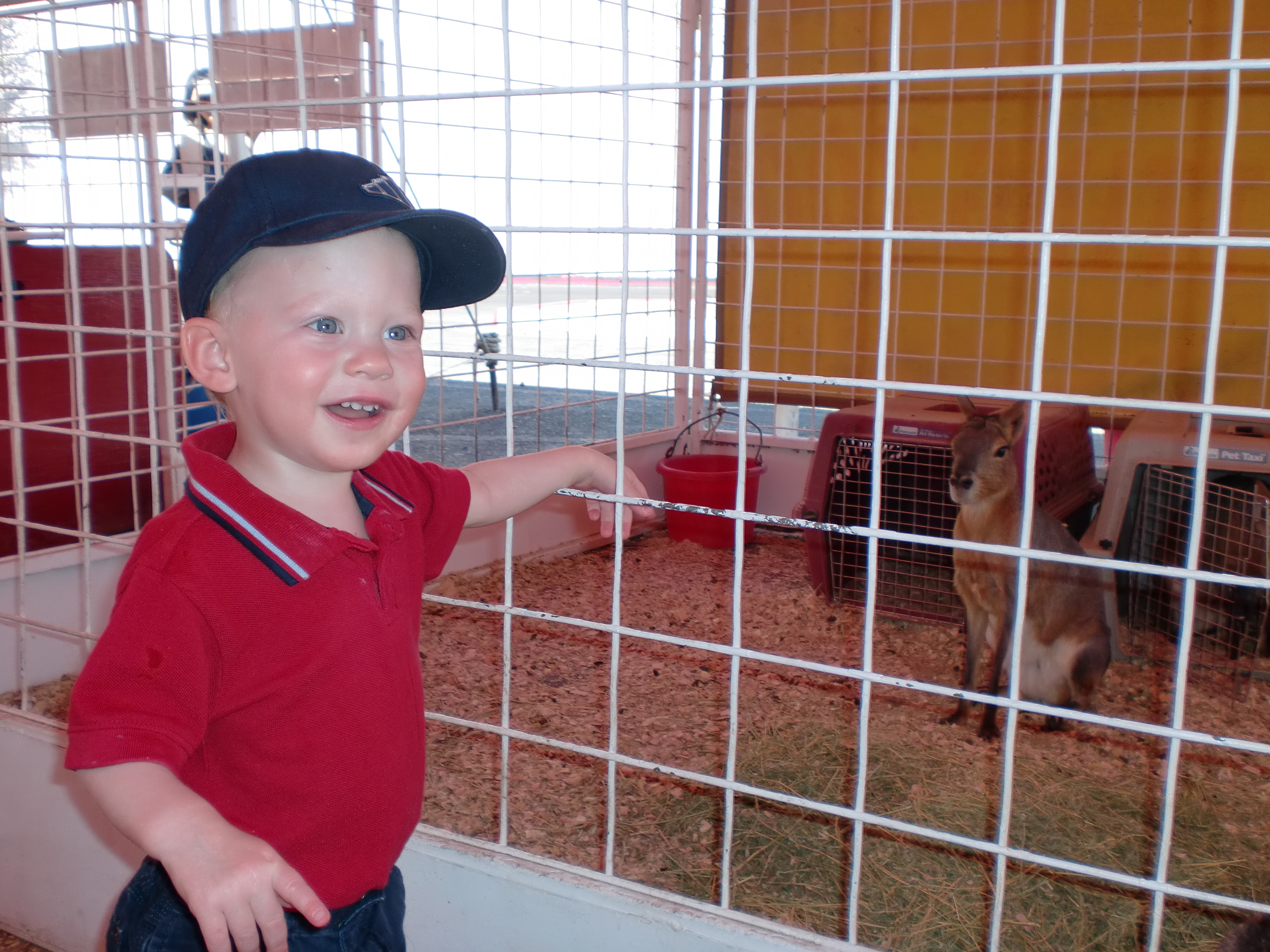
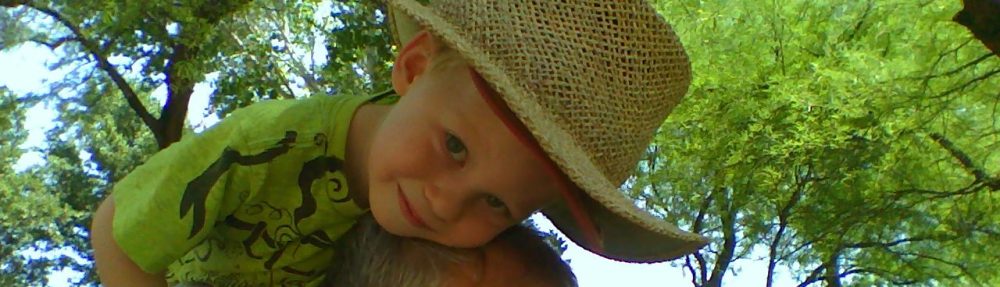
Look at that happy face. You can’t help but smile back.