Here I am after more than three-quarters of a century looking back at some of the changes that occurred during that lifetime. The biggest technical change is the explosion of personal data devices. I did not get a cell phone until about twenty years ago. I was one of those people who said, “I’ll NEVER have a cell phone!!” I considered them an intrusion. I resisted and resisted. Then it became obvious that a cell phone was a necessary accompaniment to my daily lifestyle.
At the time my mother had moved to Tucson and was in need of close attention. She lived on her own but was in her 80s and had moved from the town where she lived for most of her life, away from lifelong friends and familiar places. She needed contact not only for personal needs and information about how to get around a new town, but also for company. My work took me out of the office, so I was not always available by landline. I believed she would find friends fairly quickly but, in the meantime, I was her social link, her sounding board, her complaint department, her connection to the world.
I discovered I needed a cell phone for business. Ken and I had just started a property management and real estate company and the need for quick exchanges of information became evident. So there I was, a new and reluctant cell phone user.
Looking way back…In the mid-1980s my family of three teenagers, two dogs, my husband and I, left our home in Bellevue Washington to travel the country. We journeyed through the forty-eight contiguous states plus a couple of Canadian Provinces and Mexican states for fourteen months. We took two of our kids out of high school (the third had just graduated). They wanted to keep up their studies while traveling so they could stay up in grade with their friends when we returned. That was accomplished with a study program coordinated by the University of Missouri and Bellevue High School. Correspondence courses were mailed (years before email) to us by the University and then back to the University as they completed each section and results were reported to their high school. All communication was by public phone in phone booths across the country and by mail, snail mail. Lots of postage. We had no cell phone and no computer. We were off the grid so to speak. Amazingly they were able to complete their studies in English, History, Math, and Social Studies – the basics, while learning firsthand about our beautiful country, its regions, its national parks, its varied cultures and languages (English has many nuances), history and geography. We took advantage of public libraries and museums along the way. Being teenagers imprisoned with their parents 24/7 for fourteen months, traveling in a van, living in a travel trailer, was indeed a sentence few would volunteer for. The only “device” they had for entertainment were Walkman cassette players with earphones. Those were revolutionary in that time. It was their means of escape into personal head space. I must give them all credit for their stalwart determination to survive. I’m sure it felt to them akin to traveling by covered wagon across the country. We crisscrossed the country from sea to shining sea four times in our quest to visit every state. How did we manage without a cell phone, GPS, the internet?
My how times have changed. Now the idea of leaving my house without a fully charged cell phone makes me quake with anxiety. What if something breaks down, what if my (fill in the blank) _________, husband, friend, daughter, grandson, needs to talk to me, an emergency, what if I get lost and need direction? What if, what if, what if? I can hardly believe the intense change from being a NEVER-CELLPHONER to being a NEVER-BE- WITHOUT-A-CELLPHONER.
Technology has certainly changed my life. For better?
I am the ONLY person I know who does not sing the praises of Autumn. All my friends look forward to the cessation of our desert heat when the humidity drops to single digits. They express endless gratitude for the crisp cool air and colors of fall. Me – not so much. Each season does have good points, but for me the darkening of days, the cooling air, the descent into winter does not herald a positive trend.
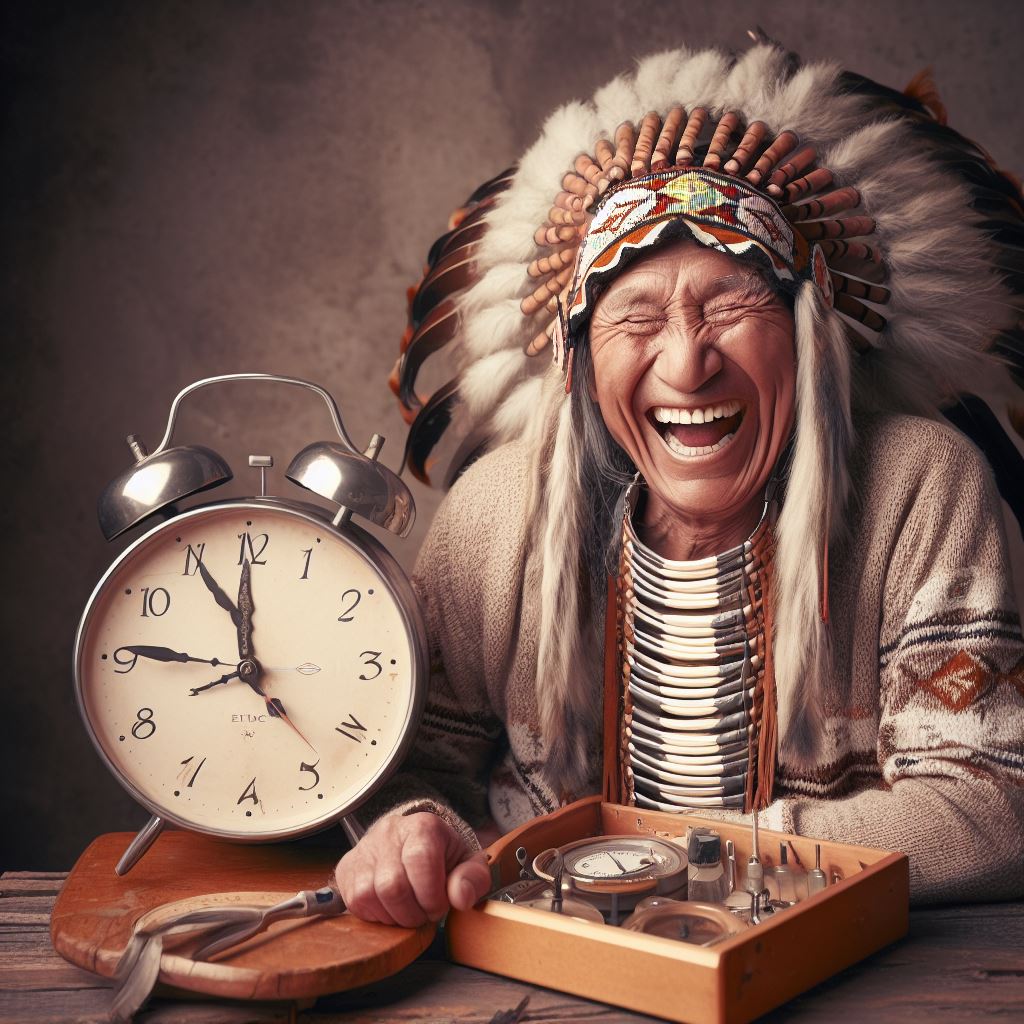
Along with this is the churning of time. I don’t mean the minutes that ebb from my life, a steady drip into the bucket of forever. I’m talking about the changing of clocks. One reason I love Arizona is that this state did not get sucked into the folly of daylight “savings” time. Our clocks remain the same through all the months of the year. However, because everyone else in the U.S. changes time, I must remember which time zone they have switched to. Annoying. I’m sure someone sometime had a savvy presentation with charts and graphs to justify the idea. But as a wise old Native American was once credited with saying: “Only a white man would cut two inches off the bottom of his blanket and sew it to the top and think the blanket is longer”. That sums up the ridiculousness of daylight-saving time. What are we saving? Which bank is it in? Can we spend it when we really need it? Daylight is one of nature’s gifts and follows the tilt of the sun and earth according to seasons, not a man-made device. No matter how you slice it we have the same amount of daylight. It is shorter in the winter in the northern hemisphere and longer in the summer, but the number of hours can’t be expanded by moving the hands of a clock.
I am a warm-weather sunshine person. My husband agreed to move to Tucson so I could warm up after living forty years in the Pacific Northwest in a constant state of chill and I don’t mean the trendy kind. We’ve lived here twenty-seven years so I’m beginning to thaw. However, when temperatures dip below 80°, I put on long underwear. No kidding, even in Tucson – you can ask my husband. I get frosty to the bone very easily. No, it is not a medical condition, it is a mental condition. Thankfully the sun shines here most of the time in all seasons thus providing us, the cold-blooded creatures, with a modicum of warmth during each day. Darkness does not overtake us as it did in Seattle.
In the Pacific Northwest, fall and winter are not only colder and wetter than summer, they are also darker. Daylight is barely nine hours. We got up in the dark and came home from work in the dark. Dull skies muffled in blankets of gray clouds during what was said to be daylight hours did not allow a smidge of sun to peek through. Sunshine was as rare as a Corbin Carroll home run in the 2023 World Series. Depression – your name is Seattle winter.
Thanksgiving is my favorite holiday so that is the plus for Autumn. In Tucson, we serve our big Thanksgiving meal about 4:00 on the patio. We usually have twelve or more family and friends join us. The doors stay open and people go in and out. Turkey is cooked on the barbeque and all the trimmings are set out on the counter so the hungry can help themselves. They choose to sit inside in the dining room or out on the patio tables. Most often outside is favored. After dinner (when the sun retires leaving a beautiful sunset) we put on a sweater or light jacket to sit outside with a glass of wine and good conversation and watch the stars blink on. We build a fire in the chimenea for atmosphere. It is a beautiful celebration with friends. The weather doesn’t cooperate one out of four years. Then we serve dinner inside just like those unfortunate people who don’t live in the Sonoran Desert.
Sometimes a place will promote feelings that need to be written and poetry is the way I can best express feelings whether it is joy or melancholy. Walking a lonely beach in the Pacific Northwest, I imagined a woman with regrets trying to find her way to forgiveness.
Salt Kisses
I walk the stony beach As day fades Thoughts of you grow ever stronger. Aching heart and leaden feet Move me forward.
Sorrow clutches my heart. I look back with longing To better days. Briny breezes fill my lungs Leaden with a murky future.
I can do nothing But walk barefoot, Kicking up the sand, Stumbling with swollen eyes raised To red-stained sunset skies
I can do nothing But breathe the snatching wind, Enfolded by pastel clouds. Air as prayer, A gossamer thread to forever.
I can do nothing But swing a bare leg into the surf, Glide my feet over slick rocks At the edge of the world, Stand with arms outstretched to the rising moon.
In the presence of this beauty Regret and grief begin to ebb The water knows me Waves leap to brush my lips With salty kisses
The water calls me To wade in luminous moonlight. My legs sting with salt As your tears stung my lips When I left.
I watch water’s foam-tipped strokes Fade from the sand, Then reappear. With the next curling wave I sense resurgence.
You are my water. As I fade you replenish me. Your curling waves caress and revive me. I am sorry for my future transgressions. I know how much you love me
By how fast you forgive me.
This poem was published last year in a slightly different version in the book Telling Tales and Sharing Secretswritten by Jackie Collins, Sally Showalter, and me. The book is a collaborative memoir and compilation of stories, essays, and poems written during our twenty-five years as a writers group. It is available in paperback and digital versions through Amazon and Barnes and Noble.
When writing, to clear your mind, it is sometimes fun to find a prompt that stretches your imagination, gets you out of a rut, and lets your brain breathe. This story is what came to me instantly from a prompt to write a one-page story, poem, or essay about a trinket, a twenty-minute write. Now there are endless possibilities in that direction. What is a trinket? Is it a treasured bobble given you by your grandmother? Is it a fun reminder of a trip to the fair? or to Italy? Sometimes I need to be flexible about the one-page directive. Many stories are handwritten so the “one-page” doesn’t count because I transcribe them to computer. Then one–page can be fiddled by changing margins and font size unless otherwise restricted. The idea though is to be free, unloose your imagination. Let yourself go.
Effie’s Trinket
“Euphemia. Euphemia. Come in for supper,” her mother called from the screen door into the backyard.
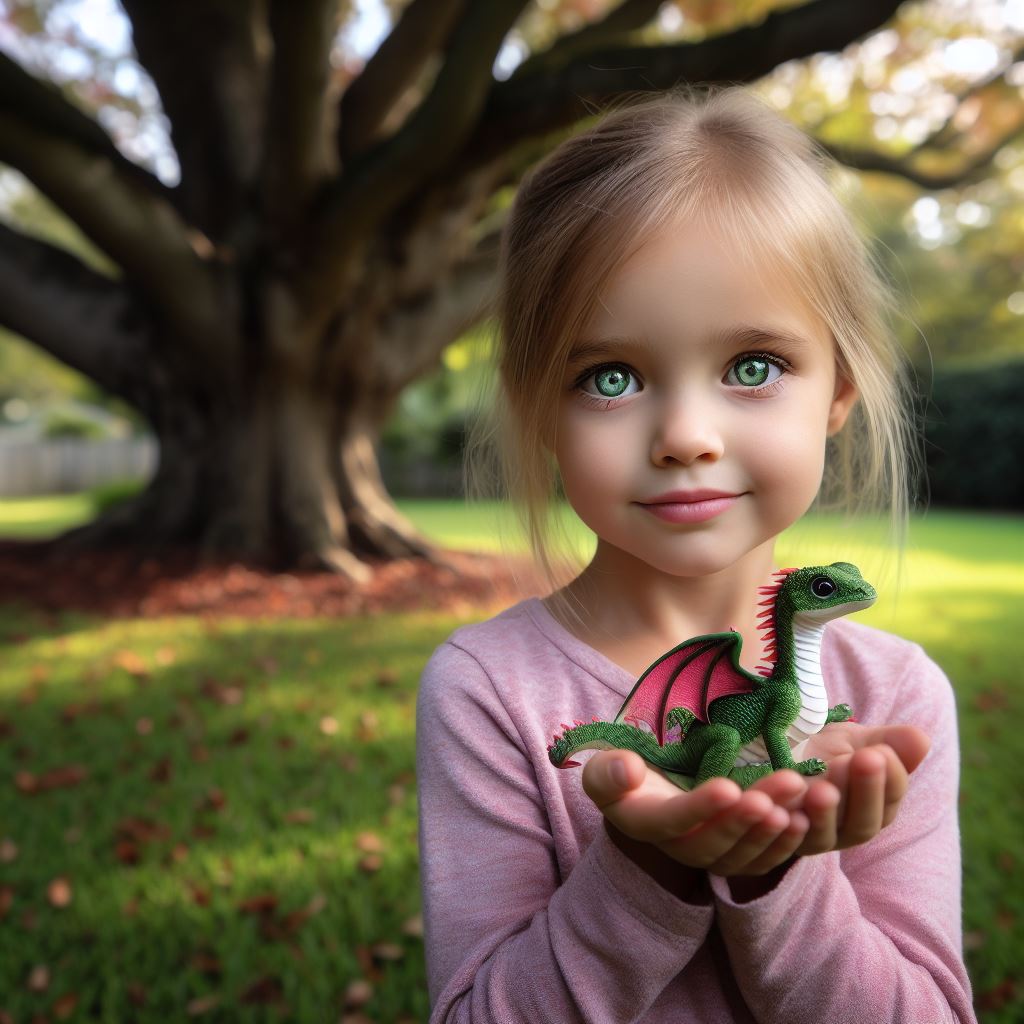
Effie scrunched down so she couldn’t be seen from the back porch. Old Elmer’s giant arms embraced her, fanning his huge green-gold and orange leaves to conceal the girl’s hideaway. Effie’s stomach gurgled. It had been hours since she ran away from home and maybe she was a bit hungry. She held Trinket in her two hands, cooing to him. “We don’t need food, Trinkie. We’ll live on moonlight and magic.” Trinket nuzzled his spikey head under her chin, his grey-blue eyes blinking as he stared up at her.
Effie’s mom went back into the kitchen, the screen door slamming behind her. “Go ahead, sit down. I’ll give her another five minutes and then we’ll eat,” she said to her husband Eustis and son Micah. The round oak kitchen table was set for four. Food waited on the stove top to be served. Glasses of honey mead, diluted by water for the children, were in place.
“Ma, I’ll go find her,” said Micah.
“You’ll stay just where you are,” Eustis proclaimed. “You’re the reason she walked out this afternoon. Why did you have to tease her again about her dragon?”
“Aww, Dad. She’s nine and too old to be carrying around a baby dragon. I’m embarrassed when my friends see her.”
“Well, son, you may be a mature fourteen-year-old now but it wasn’t all that long ago you rode your unicorn, Cool Whip, up and down the county road. I think you were about Effie’s age when you told us he took you over the moon one cloudless full-moon night.”
“Euphemia Jane. It’s time to eat. I made chicken pizza and mashed potatoes with butter and bacon bits.” Dorothy called again from the back door.
She scanned the yard for a sign of her daughter. Effie had a habit of running away when she was mad. She had never wandered beyond the boundaries of their two-acre property but there was always a first time. Dorothy looked at the shed, a common retreat. Blackberry vines that covered the building didn’t look disturbed. In summer, Effie would come in with scratches on her arms and legs from reaching for the ripest fattest berries. Her fingers, her mouth and tongue would be stained royal purple. But it was autumn, not the season for blackberries. She glanced up at Old Elmer. The tree sat halfway between the shed and the vegetable garden. There, about a quarter of the way up the seventy-foot colossus, she saw a glimmer of pink. Effie’s pale gold hair glowed pink in red rays of sunset.
“Euphemia Jane Charles, come down this instant. Bring Trinket with you. Your brother will leave him alone.”
The empty feeling in Effie’s tummy and her aching legs from being crouched for so long as well as her mother’s promise that Micah would leave Trinket alone persuaded her to shimmy down the tree with the baby dragon secured under her arm. “Thanks Elmer,” she said as her toes touched the soft cushion of fallen leaves beneath the tree and she set Trinket on the ground. She started to walk toward the house but the golden cord that tethered Trinket to her ankle became taut. Trinket cocked his head, lavender wings folded tightly against his body, refusing to follow her.
“Com’on, Trinkie, let’s give Micah one more chance. He didn’t really mean it when he said he would take you away and drop you at the end of the earth. I won’t let that happen even if I have to carry you always. You’ll be getting bigger and pretty soon he won’t be able to bully you. Your wings are almost strong enough to carry you where he can’t reach you. One of these days your fire starter will work and it will serve him right if you give him a little scorch. She bent down and picked Trinket up cuddling him close to her chest. He gave a little snort, a happy snort, waggled his pink and purple scales, and settled in her arms.
They went in for supper.
The End
I gave this story to a friend for comment, not about grammer but about the flow of the story. He is a serious writer/researcher. His comment was, “So, is Trinket a stuffed animal? Or a cat?” “What do you mean? Trinket is a dragon,” I replied. “It says it pretty clearly.” “Oh,” says he, and that was the end of his comments. It is useful to remember that a reader filters your stories through their experience. They may have a completely different interpretation of it than was your intent.
The whole idea of writing from a quick prompt is to exercise a separate part of your brain and give yourself the freedom to explore topics from different, hopefully, fresh angles. You may find a nugget of something useful to your main project in those musings.
I am blessed with dozens of people who live in my head. They are generally unobtrusive unless called upon to inhabit a story. I also don’t know where their names come from. I don’t recall ever hearing the name Euphemia or Effie before. Once these people have been let out, they become a part of my mind-family. I’m never lonely. I know them all so well. For instance, Eustis, in this story is a very real character to me. He has tomato-soup-red, short, curly hair, black-framed glasses, and is a scientist who works for a small chemical company in the mid-west. He always has a slight grin on his face as though he is observing life through bubble glass. He hums a little song frequently with part of the chorus “I got Memphis blues, right down to my shoes.” I don’t know if that is a real song or not. It just popped into his head. Although he is a minor character in this story, he may reappear in a different story at a different time with his unusual family. That is unless they all expire from his wife’s cooking. I cannot imagine serving such a meal to my family.
Another person I wrote a story about is Hannah, a black woman born in the late 1890s who is a baker in Wickenberg Arizona in the 1920s – 30s. I know all about her childhood and her family who were sharecroppers in Mississippi, and slaves, a generation before that. I know her journey to independence as a businesswoman. I’ve seen (in my imagination) the headstones of the family in the county cemetery. She has an amazing story to tell. One day I may put it on the blog. These people are very real to me but they are all born from my imagination. Sometimes I think I should put a disclaimer on my stories like the old TV shows that says, “Any resemblance to persons living or dead is purely coincidental”.
I have volumes of stories about my children and some of their friends as they encountered life in their first years. One of my favorites is about our middle child, our second daughter, the quiet one.
Shari attended morning kindergarten at the elementary school around the corner from our house. Our backyard abutted the playfield. After school she would come home for lunch and tell about her day. Several times a week my husband came home for lunch also. His office was not far from our house and he liked to spend lunchtime with Shari, our three-year-old son Casey, and me. On this particular day in October, Shari’s class went to a pumpkin patch. Each child was to bring a quarter to buy a pumpkin to bring home. Shari arrived home without a pumpkin. Ken arrived at the same time, and this was their exchange.
“Hey Shar, did you have fun at the pumpkin patch?”
“Yes Daddy, I saw lots and lots of biiiiiig punkins.”
“Did you bring one home?”
“Nope. I didn’t have my quarter.”
Ken made sure she had a quarter before he left for work that morning.
“You lost your quarter?”
“No. I didn’t have it.”
“I gave you a quarter this morning.”
“I know Daddy, but I didn’t have it to buy the punkin.”
“You lost your quarter,” he said.
“No.”
“If I gave you a quarter and you didn’t have it, you lost it.”
“No, I DIDN’T lose it.” she said with emphasis.
“Do you still have it?”
“No.”
“Then it is lost.”
“It isn’t lost. I know ‘xactly where it is. It fell between the bus seat and the bus wall. I know where it is, but I can’t get it. It ISN’T lost.”
Case closed. No quarter, no pumpkin but the quarter is NOT lost. I was sure she would grow up to be Clarence Darrow. Her logic was flawless; her argument, decisive. Even her daddy could not shake her. She knew what lost meant and she didn’t waiver.
I am entranced by little people. Any child between birth and eight years old, I find enchanting. I can spend hours watching and talking with them. At one time I wanted to be a second-grade teacher like Miss Jones, with whom I felt a special rapport. Instead, I became a mother. Although those years between birth and eight didn’t last as long with my own children as they would have with year after year of new students in school, I thoroughly enjoyed those times. After the age of eight, children are lured into our larger social structure through school and activities, and they lose that innocent view of the world. Much of the awe is exchanged for a comfort with the reality around them.
I am so privileged to have been a stay-at-home mom. I was able to experience the day-to-day wonder as each child began their journey. Now I think it is a rare privilege. It seems that mothers these days are required to work outside the home for financial reasons or choose to do so because of career choices.
My own mother was a working mom, through choice as much as necessity. I resented that for many years even though I know what she sacrificed to keep both sides of her life humming along. I wanted her to be home with me as all the other kids had their moms at home. My parents did their very best to provide in-home daycare for me. I never went to an outside babysitter or daycare center. Even though I had terrific nannies who I remember with fondness, it still wasn’t Mom. My husband and I agreed that when we had children, I would be home with them. He often worked two jobs to make sure we could provide that lifestyle. Thus, I was able to be a part of those special moments in each child’s life. Many I recorded in journals and many more I have probably forgotten but the echo of that special time remains.
I find a three-year-old to be the most interesting companion. They are full of curiosity and have learned the art of conversation. One morning my son and I were running errands around town, we passed through a construction zone with a crew of men digging a trench on the side of the road.
Casey asked, “What are those men doing?”
We had been through several areas with large machines and workers, and I had gone through explanations about making a ditch to put in sewage pipes, and preparing a new place to build houses for people. Each answer elicited another barrage of questions. What is sewage? Why do we need sewers? Why do people poop? Why do roads need to be fixed? How many houses are going to be built? Who will live in them? Can we meet them sometime? Do those men put their machines in their garage at night? Can we live in one of the new houses? Can Glenny and Johnny come live next door? Each question led to another. Most I could answer easily. We passed a new high-rise being constructed and a bridge being reinforced. Now we were detoured through lanes as a road was under repair.
“Mommy, when will the world be finished?” That question put a pause on the talk, talk, talk.
What a concept – a finished world, a static world, a world without change. This was not a throwaway answer. I always welcomed his curiosity as he learned about the world around him. This question required more thought. Never – is the easy answer. But to a three-year-old that doesn’t cut it. Why? Why? Why? Are the follow-ups. As we paused in our journey delayed by the construction, we discussed how things like roads have a purpose and, when they are used, they wear out just like his beloved blanket that was now in shreds, even after many rebindings, but still a constant companion at bedtime. Sometimes buildings are made and then need to be changed for bigger or better buildings. We discussed the nature of change as the seasons change. How flowers bloom sometimes but not always, and leaves change colors. He was only old enough at that time to really have memory of one complete year of seasons. We talked about how he changed, learning to walk, learning to use the toilet, learning new songs and words. As a person he will change as he gets older. Someday he will be big like Daddy and have his own family. Because of all those things, the world will never be finished. It is always evolving/revolving.
I can liken that to my writing. When is a story finished? I spend hours writing only to find, after review, it needs to be changed. Even a short essay requires review and editing. I usually write something then put it away for a day or two and revisit. I wake from sleep with a brand new line for a story that was born in my unconscious. Many of my stories remain in my computer or, if handwritten, in my file cabinet. If they are to be published, they will be revised and revised before other eyes see them. I always think of different ways of saying something or other words to use to reveal a character or action. I don’t believe I have ever reread a piece of my writing that I haven’t wanted to change something. Even in the book we published last year, I go back and find so many lines that need to be rewritten. I’ve talked to other writers who feel the same. There is a point when “it is good enough” is the only way to actually produce a “finished” story or poem.
Just like the world, my stories are never really finished. What you read is just the latest iteration.
Erica began to tremble. I was seated next to her at our table on the restaurant patio. It was a beautiful spring Tucson day in 2018. We were having lunch at a popular restaurant with three other women volunteers from the hospital surgery center. I noticed a flash of unease cross her face.
“Erica, are you all right?”
“It’s nothing,” she replied.
“You were trembling just now. Are you cold?”
“No, it is an old body memory that I can’t stop.”
“Body memory of what?”
“The war,” she said. “I start shaking when I hear a plane overhead.”
I hadn’t even noticed the sound but did hear it faintly as the plane flew away.
A native of Germany, Erica emigrated to the US with her husband in the 1950s. They established a business and home in the Midwest and raised their son as an American citizen. Erica was a widow, now in her mid-eighties. I knew that much of her story. She volunteered one morning a week at the surgery center of our local hospital, as did I. We occasionally had lunch together. I liked hearing about the customs and recipes she brought from Germany. She made luscious baked goods to share with hospital staff. I enjoyed her wit and positive attitude – always available to help someone.
At lunch that day we talked more about her experiences growing up in a small village in central Germany. During WWII, Allied bombing raids passed over their farm on their way to targets unknown by those on the ground. Bombs were dropped on nearby towns. If she was outside she would run to shelter fearing death from the sky at any moment. The imprint of terror stayed with Erica from the time she was nine or ten throughout her long life in the United States. A teenage brother was killed in one of the bombings, wrong time, wrong place. Even with the lasting repercussions of war for her and her family, Erica had no animus against the men who “did their duty”, or the country that directed those bombers. She was taken in as an immigrant and her family thrived here. She had nothing but gratitude to the U.S.
Many times, I read my father’s journal of his twenty-eight bombing missions during WWII from December 1943 through July 1944. He was the waist gunner on the plane that led the entire Eighth Air Force in the invasion of Normandy on zero day – D-Day June 6, 1944. Unlike bombs dropped on Warsaw, Helsinki, Hamberg, Nagasaki, Hiroshima, London, and Stalingrad that killed thousands of citizens of those cities, none of the bombing raids by his crew were directed at civilian populations. Their targets were strategic military installations and industrial war factories. Of course, civilians were in those places as well, but residential areas were not the focus according to his journal entries.
Dad’s plane, The Red Ass
My dad never talked about his wartime experiences, and I didn’t find out about them until many years after he died at the age of fifty-two. I was proud of his part in securing victory over the Axis Powers in Europe. Never once did I consider the fear that must have sprouted and flourished in the psyche of those helpless folks on the ground who heard the giant purveyors of doom swooping in overhead. They experienced daily the trauma of the unknown – would it be their town or farm this time?
Talking with Erica gave me an entirely different perspective on what war was like for the nameless faceless people who had to endure the decisions made by the powerful. Even after more than seventy years, Erica still visibly trembled at the sound of an airplane overheard. Truly innocent human beings, who wanted to live with their families in peace, became victims of war. A war that had to be endured in the best way possible to survive. It became very personal and was made vivid to me because of her stories. My pride in my dad is tempered by the realization of the physical and psychological damage inflicted even without dropping a bomb. The weapon is terror.
I’m left with the unanswerable question. Why do human beings war with each other? There has not been a time in recorded history that we have not had wars somewhere. Even oral traditions celebrate war and victories over enemies. Our instinctive tribal nature divides us. The reach for power continues to exploit that instinct. When will we learn? As the song says, “There is no profit in peace.” 1 Until unelected oligarchs in our country and around the world, who wield the cudgel of dominance behind the scenes with endless supplies of money, cede power (not likely), or are ousted from power, war is inevitable. George Orwell described in his novel, 1984, how a small minority benefits from war and must keep the general populace dumbed down and compliant by force and fear. Is that the purpose of continuing to divide and segment us by our differences rather than uniting us in our common humanity? Hmmmm. That is the moral question.
Bessie in front row is second from left, Bea is second from right with their mother between them
The early 20th Century, after reconstruction and before the First World War, was something of a golden era in the United States. The country was expanding economically as was optimism for the future. The first transcontinental railroad opened the West to more settlement. My grandmother born in 1888, was the youngest in the John Lambie family of seven girls and eight boys. Her mother was Danish and her father, Scottish. They lived in Wisconsin, on a farm near Kaukauna.
In the buoyant spirit of optimism, my grandmother, Bessie Caroline, and her sister Bea set out for adventure in the wild wild West. They signed on to be Harvey House Girls.
In 1913 a prominent New York food critic, Henry Finck, named Mr. Fred Harvey, “the food missionary” to an underserved population in the West. Mr. Harvey placed restaurants and hotels along the routes of the Atcheson, Topeka, and Santa Fe Railroad and the Gulf, Colorado, and Santa Fe Railroad among others. He is credited with “civilizing the West, one meal at a time.” He is acknowledged to have started the first restaurant chain of eighty-four (at its peak) Harvey House Restaurants extending through twelve states from Chicago to San Diego.
Harvey House Girls had strict rules governing their conduct and living arrangements. The Harvey Company policy was to employ single, well-mannered, and educated American ladies. In newspapers throughout the East Coast and Midwest, their ads specified “white, young women, 18–30 years of age, of good character, attractive and intelligent”. The women were paid $18.50 a month, plus room and board. That was considered a very handsome salary in those days. The opportunity to leave their homes, enjoy travel, have new experiences, and work outside the home was very liberating for thousands of young women.
Bessie in the center – 4th from left – 4th from right
The women lived in a common dormitory much like a sorority house with a strict 10 p.m. curfew. A Harvey Girl with seniority assumed the role and responsibilities of house mother. The official starched black and white uniform was designed to diminish the female physique. It consisted of a shirt waist dress with a skirt that hung no more than eight inches off the floor, and a high pointed collar with a black bow tie. They wore opaque black stockings and black shoes. Their hair was contained in a net and tied with a regulation white ribbon. Makeup of any sort was absolutely prohibited. Marriage was the most common reason for a girl to terminate her employment.
Harvey Company restrictions maintained the clean-cut reputation of the Harvey House Girls and made them even more marriageable. Cowboy philosopher Will Rogers once said, “In the early days the traveler fed on the buffalo. For doing so, the buffalo got his picture on the nickel. Well, Fred Harvey should have his picture on one side of the dime, and one of his waitresses with her arms full of delicious ham and eggs on the other side, ‘cause they have kept the West supplied with food and wives.”
Judging from a few photos in family albums, my grandmother made the most of her twenties. There are pictures dated between 1908-1915 of her hiking in the mountains, picnicking at a lake, cruising in a 1906 convertible Pope Toledo, Type XII gas-powered, chain-driven automobile with five other young men and women, and in the arms of various “boy-friends” and generally having a grand time. Besides photos of her in Wisconsin, she was in Mojave, San Diego, San Fransico, and Bakersfield, California, at the Grand Canyon, in Trinidad, Colorado, at Starvation Peak in New Mexico, and at the home of a Mexican family in New Mexico, among many other places over those years. Bessie and Bea are shown in one photo standing atop a train wreck. It was taken at the 1913 California State Fair in Sacramento. Two trains were intentionally run toward each other at 90 mph as entertainment at the Fair.
Bea, on the left and Bessie standing atop a train wreck. I wish I heard THAT story
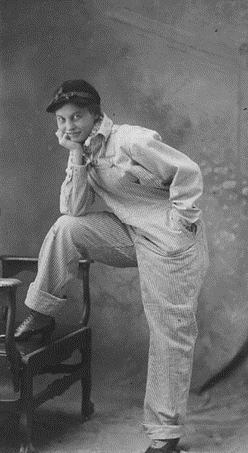
Grandma in her trainman outfit
In 1916, Bessie met Ed Henry, a trainman naturally. They married in 1917 and she settled into a life of domesticity. They had three children of which my mother was the eldest. My grandfather was one of the lucky ones who kept his job during the hard times of the Depression so the family did not suffer as much as some families during that time. My mother did tell stories of hobos knocking on their kitchen door asking for food and Grandmother making a meal for them.
I just wish I had known of Grandmother’s early days when I was a child spending whole summers with my grandparents in Colorado. I can think of so many questions I would have asked her. My grandfather was still a brakeman for the Union Pacific Railroad. I remember him coming home after a two-day round-trip from Denver to Green River, Wyoming. His big embrace when he picked me up upon arriving home smelling of wool, tobacco, and shaving cream is with me to this day. I can conjure it when I close my eyes and think of him. He was a tall man and a loving man. He must have been something to have wooed my grandmother’s adventuring spirit into marriage.
Once when I was six years old, my grandmother and I rode on Grandpa’s train to Green River and back so I could know what Grandpa did when he was gone. I remember being so proud when he came into our car in his uniform and hugged me. Everyone could see my handsome grandpa loved me. I remember how much I loved being on the train. A ten-hour ride each way went swiftly. Grandma and I stayed overnight at the home of their friends in Green River.
Back home at their house in Longmont, Colorado, Grandma was the domestic goddess. She kept a beautiful flower garden with sweet peas, honeysuckle, nasturtiums, roses, and chrysanthemums out back as well as a vegetable garden. I can still recall the sweet earthy smells. She canned peas, beans, tomatoes, peaches, and made jam. They had raspberry vines along the fence. She washed clothes with a wringer washing machine. I got my fingers caught once in the wringer when I tried to “help” her. She made delicious meals. Grandma had a sweet tooth and most everything had sugar in or on it. I had bread and butter with sugar as a snack and fresh garden tomatoes with sugar sprinkled on them. She claimed it was her Danish heritage that made everything sweet.
When Grandpa was home we often went fishing at Estes Park in the mountains. Grandma filled a huge picnic basket with scrumptious food – cold fried chicken, potato salad, chicken sandwiches, tomatoes, carrots, berries, and of course dessert – cookies or cake. Grandpa baited my hook with squirmy worms. I’d watch the bobber closely until it disappeared and I knew I had a rainbow trout on the line. Grandpa would take it off and put it in the woven basket that dangled in the water to keep them fresh. Grandpa would sometimes cook them right there on the little camp stove we brought. We always had more to take home for a dinner or two. Grandpa especially liked trout for breakfast with Grandma’s big fluffy biscuits dripping with butter and homemade jam.
I have great memories of my grandparents and wish I could have learned more of their stories in the years I had with them. In times past, each generation was tasked with passing on family stories from generation to generation. I think we lost that tradition in our hustle-bustle world and it saddens me. Every life is a series of stories and we should keep them alive in the family. I’m sure a semi-fictionalized (creative non-fiction) version of my grandparents’ story will start pestering my crowded brain at some point.
I noticed online that there is a Harvey House in Madison, Wisconsin. It is not the old one but a new version. Wish I lived near there. Maybe a road trip is in the future.
The date, December 16th. The dawn of a very cold day in Boston. A light snow had fallen during the night leaving the ground covered in a thin layer, and clouds of smoke spewed from chimneys adding more gray to the skies.
I’m out of tea for breakfast. I just want one lousy cup of tea and the tea box is empty. I cannot believe I didn’t get a tin the last time I was at the merchant. I’ll go next door to Martha Mason. She always has an abundance of everything. She could be called a hoarder but I’d never say it to her face because she often has just what I need, like tea, and she is always willing to share. A beneficent hoarder.
I pull my woolen great coat on over my shabby linen dress and stuff two corn husks in the bottom of my shoes to keep out the wet. I step outside my door. I’m grabbed from behind, suddenly engulfed in a mass of humans. No, they’re not human, they are Mohawk Indians. I’m bumped and shoved into the midst of their surging bodies. Indians! With tomahawks and painted faces. What are they doing in town? They are sweeping me along with them. Oh my god, I’ll be killed. Bitter panic rises from my stomach to my throat. I try to cry out, terror overwhelming my desire for tea. I can’t even scream. I’m trying to stay upright amid the surging horde. I don’t want to be trampled. I almost lose my footing, but I’m bolstered by the crush of savages around me. I can smell the sweat of their leather-clad torsos. There must be over a hundred of them. They are stealthy and silent except for their heavy breathing. As the tide of heaving bodies forces me along, I look into the face of the Indian to my right. Wait, that’s no Indian, it’s Mister Borwin, the tea merchant.
“What are you doing?” my voice in shrill cry.
“Shhhh, quiet missy,” he says, “We’re almost there”.
We traveled the eight blocks toward the harbor. I can see ships swaying at anchor. Suddenly whoops and yells erupt from the mob and they pick up speed as they dash aboard the ships. I’m pushed aside and land abruptly on my rump in a pile of snow. The “Indians” begin picking up one great crate after another, throwing them overboard into the harbor. I realize the crates they are throwing are full of tea. Tea! I raise myself up and jostle my way aboard the closest ship. As a crate is raised it breaks open. I grab two tins of tea and rush home for my breakfast cuppa.
*Flash fiction is a short short story with plot, action and characters, no more than a page in length.
I know I’m committed to positive posts and stories but…
Pet peeve:
I just got to say how much I dislike the word got. It is one of those words that is like fingernails on a blackboard for me when I hear it used, especially if it is uttered by professionals on TV or at a podium; not so much if it is part of the dialogue in storytelling. When a reporter, narrator, or commentator uses it, I wince and clench my teeth. It is a lazy word. It is an ugly word. Listen to it – got got got. Yuk. I hasten to add that I do not judge, nor do I want to be judged when that word is dropped into casual conversation. My husband and I make a game of catching each other when we say it. A reminder that we can do better.
Instead of saying: “I bought flowers at the store today”, we most often say, “I got flowers at the store today.” Either way, they smell sweet and brighten a room, but the word got demeans them. They deserve a prettier word for the pleasure they bring. Instead of received or acquired or obtained or purchased, the word got is a shortcut. There are many more pleasant sounds that communicate the very same action.
In place of “I got to have…” how about – I want, I desire, or I’m hot for
Instead of “I got it.” how about – I understand, I catch your drift, or you’re coming in loud and clear
Then there is the egregious have got which really puts my whities in a twist.
Have/had are other words that I believe are overused in everyday language. “I have made plans” instead of “I made plans”. Often have/has is used as a helper verb when it is not needed. “He has seen the queen” instead of “He saw the queen”. Both mean the same thing but since the queen is dead, would make one question the sighting.
Have/had should be used as main verbs. “I have new shoes” or “I had a good time last night”. I know there are times when the helper verb adds emphasis and seems appropriate such as “He has not told me the secret to his success yet” or “I have been to that movie before”. “I’m lunching at noon” instead of “I’m having lunch at noon” is a little precious but it really sounds better.
English is the global language of commerce, aviation, and technology. It is not an especially melodious language. If you want music to the ears speak French, the language of love. Spanish and Italian have a lilt to them. English is birthed from German and had a Latin nanny.
English is a flexible language given to all sorts of twists with no tonal requirements like Chinese and other East Asian languages, even some Native American languages. The word “ma” in Chinese can mean six different things depending on how it is said. Our grandson coached me in those sounds when he took Mandarin in kindergarten and first grade. It is a skill I did not master, but it made me aware of the complexity of some languages compared to English.
I studied French for seven years and do not speak it in any sensible way, but I love the sound. It is a sensual language. I am currently brushing up on French with the app Duolingo. Our nephew, who is a native of Spain, is coming for a visit. His English is marginal, my Spanish is non-existent, but he also speaks nearly fluent French. I’m aiming to communicate in that language which is foreign to both of us.
In English, it is possible to use verbs as nouns and nouns as verbs and still be understood. A writer friend wrote a story in which the protagonist “bathroomed” in the woods and the meaning is clear, even though Mr. Webster does not recognize that word in his book. In English you can plan a table or table a plan.
There are words that sound alike but are spelled differently and have different meanings such as right and write, or tide and tied. There are words that are spelled alike but sound differently and have different meanings such as dove and dove. “The dove dove into the bushes when the hawk circled overhead.” That is a common occurrence in our backyard.
I am an English speaker and English writer, so I try to make my language as understandable and fluid as possible. Those are my minor quarrels with modern English. Being a person who loves words and searches out meaning with words, I am possibly more sensitive to how they resonate. Now, when you read my posts, you will see how many times I use these annoying words, but I try to ferret them out.
I don’t want to belabor this tiny grumble about personal bugaboos, so I have got to go for now.









 wonkagranny