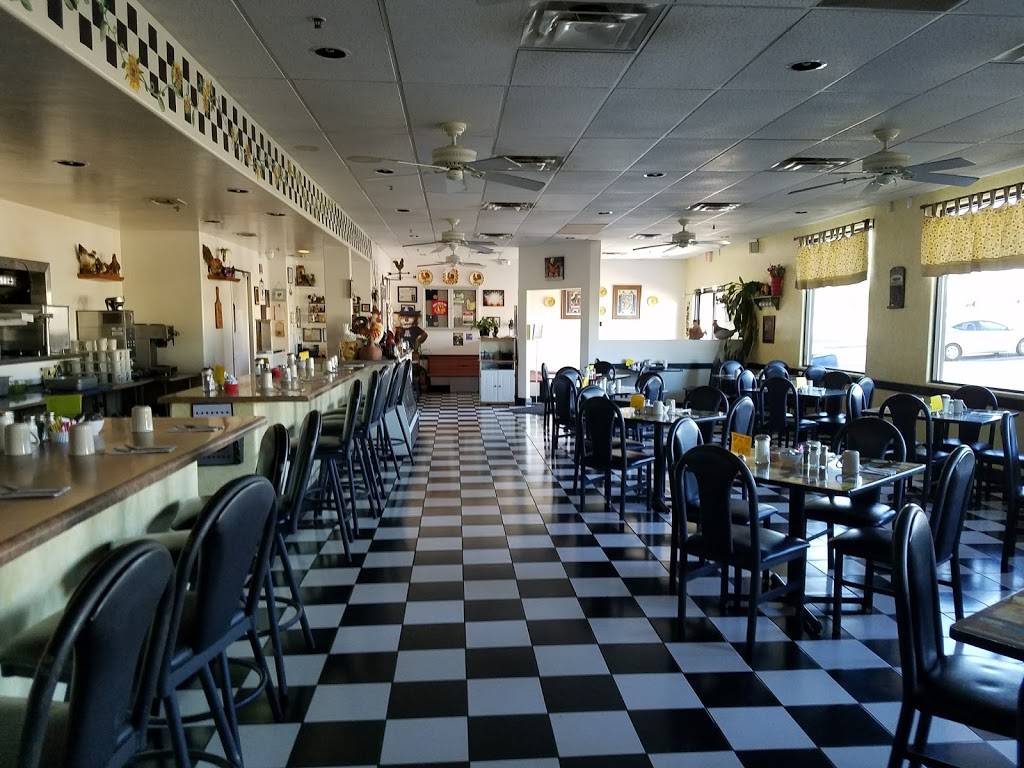
We had lunch at a local diner, one sunny February afternoon. We frequent that diner because it is nearby, has very friendly staff, homestyle cooking, generous portions, and reasonable prices. The diner is open daily for breakfast and lunch. The décor is Midwest farm kitchen. There are pictures and photographs throughout of farm life, fields, and animals. There is a plethora of chicken and rooster statuettes everywhere. The main room has two dozen tables and a lunch counter with another dozen stools. There are two extra rooms for overflow, used mostly on Sunday mornings or when clubs have meetings. We are so grateful that the diner was able to stay open for the two years of the covid panic. So many mom-and-pop businesses had to close.
Just after we were seated at a table by the window, I observed a woman, 60ish, cross the parking lot and come into the diner alone. She was short, pear shaped and wore a dress with a leafy green on green print and brown “sensible” shoes. She carried a pink purse, a blue hardbound book, and a plastic grocery bag that looked packed with something. It could have been clothes or trash, I don’t know, but it was tied up. She placed her book and purse on the counter and went to the bathroom with the grocery bag. I assumed by her casual leaving of her belongings that she was a regular. I often see solo diners eat at the counter, but I’ve never seen a lone woman there. She returned without the plastic bag and assumed her tall chair, ordered iced tea and lunch, and opened her book. I saw from my table across the room that it was a Patricia Cornwell mystery – big letters on the cover.
My husband and I talked about our niece who was visiting from Montana as we waited for our food.
A tall man, over six feet, also in his 60s, possibly 70 entered the diner. He had on a blue plaid wool long-sleeve work shirt, blue jeans, boots and wore a camo ballcap that he didn’t remove. Lanky would adequately describe him, loose limbed and thin. He passed by the woman. Neither acknowledged the other. He threw his leg over a counter chair, two seats away from the woman. He looked very much at home at the counter. The waitress took his drink and lunch order. Both the man and woman faced straight ahead. The woman reading her book. It looked like she had just started it – only a few pages in. When their waitress brought their lunches, they began to eat, still not looking at one another.
I glanced over to them as I ate my lunch. After a couple of bites of sandwich, the man looked at the woman and made a comment. Since I was across the room, I have no idea what was said. The woman acknowledged his question or comment and continued eating her sandwich and reading her book without turning to look at him. Again, he said something and again she answered without looking his way. He continued to eat and talk looking in her direction. After about five minutes she looked up and smiled at him. She said something in return. Encouraged, he turned his swivel chair so he directly faced the woman. His talking became more animated. He used his hands, then his arms with broad gestures, to illustrate what he said. She looked up at him more often and the conversation became mutual – a back and forth dialogue. Finally, she closed her book and gave her full attention to the man.
I watched this human interchange from across the room as it slowly unwound. It was enjoyable to see the two people, who I assumed were strangers, find something in common to talk about as they ate their lunches.
“What’s going on?” my husband queried when he saw me chuckling quietly while I watched the couple at the counter.
“I am watching two people getting acquainted.”
He looked up for a moment then, uninterested, returned to his sandwich.
The waitress gave each of them their bill as they finished their meals. They continued to talk for a minute or two then the man got up, paid, and left the restaurant. The woman followed a few minutes later after buying a sweet from the pastry display cabinet to take with her. My husband and I left also.
I felt I had watched an entertaining play unfold before me during lunch. I suppose I could make up the dialogue but the scene, even without words, was enough. It was like watching a silent movie.
That’s what writers do. We observe. Stories, scenes, and characters come from everyday incidents. Imagination fills in the blanks, the dialogue, the prologue and the epilogue. I’m sure the two people I saw that day will join the many other characters who live in my mind’s village and have a story of their own one day. What was in that plastic bag?? Could their story be a mystery? a little romance? a fantasy? a political thriller?
What have you observed either at a restaurant, in line at a grocery store, or walking in the park? Stories are born from these scenes. You don’t have to know the dialogue, that’s what your fertile imagination will create.


 wonkagranny