A Most Memorable Christmas

Time to read: 5-7 minutes.

When Ken and I moved to southern Arizona to be full-time residents in 1997, we left behind our three kids, all adults, our two mothers, two brothers, and a sister, plus all their families. Throughout our forty years in Bellevue WA, as we established our family, we always spent the holidays with all of them, sharing meals and family traditions. Our first Christmas alone had a daunting, hollow feeling of abandonment, even though it was Ken and me who left the family for our Arizona life.

When we were first married, we spent Christmases just we two, and we didn’t miss anyone because we were so focused on each other and being together. However, after our first child arrived, we were always in the midst of our two families during the holiday season. I decided to find a way to shake the Arizona Christmas blues. I found an ad in the Arizona Star for volunteers to help make Christmas memories for children in Nogales. We signed up.

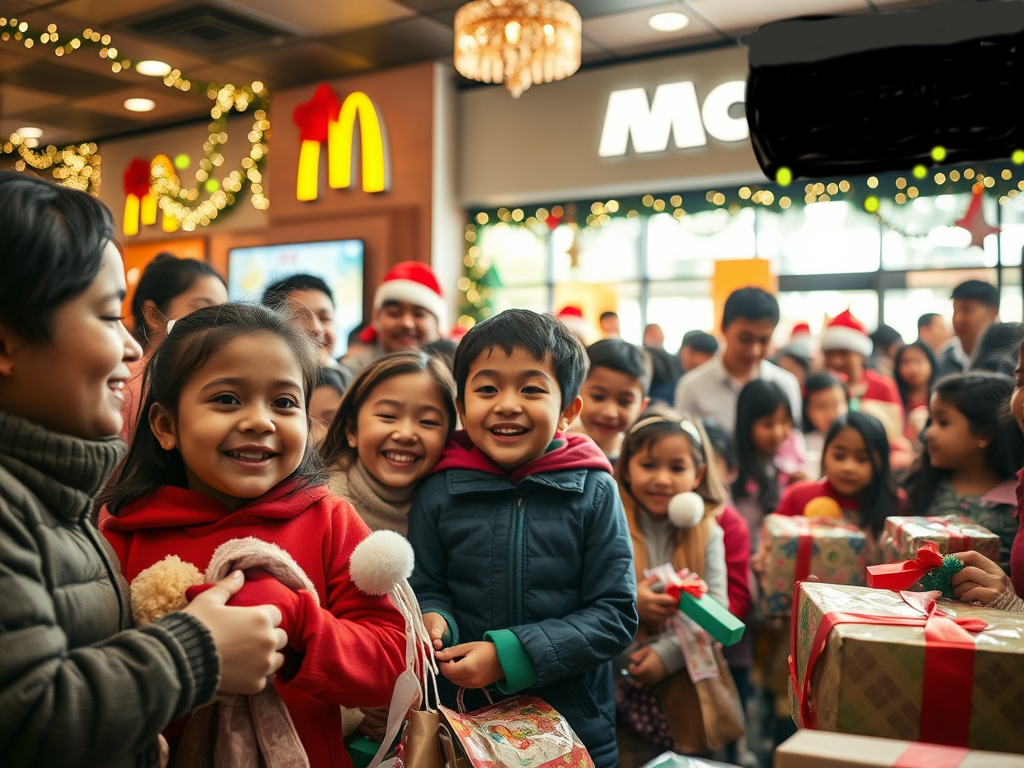
The patron of the volunteer operation was Jose Canchola, who owned several McDonald’s franchise restaurants. The volunteers all met at one in Nogales. Every year for thirty-one years until his death in 2008, Mr. Canchola hosted a Christmas party for underprivileged children from Nogales, Sonora, Mexico. Jose was born in Chicago to immigrant parents and rose by hard work and persistence to become a business and political leader in Southern Arizona. Besides owning restaurants, he was a part-owner of the Arizona Diamondbacks major league baseball team, and served as mayor in Nogales for a time. His philanthropy was legendary.

On Christmas day, we left for Nogales in the dark morning hours, arriving about 7:00 am. We loaded our backseat with toys and some clothing to add to the contributions of other volunteers and businesses. We were taught a few rudimentary sentences in Spanish to use to help guide them. We learned what our jobs were and waited for the first busload of kids to arrive at about 8:00. We were told the children were from the very poorest part of Nogales and the mountains around it. Buses went into Mexico, collected children in and around Nogales, Sonora, and brought them across the border to Nogales, Arizona, to Mr. Canchola’s McDonald’s restaurant. Bus load after bus load of kids were dropped off to be fed a McDonald’s lunch and receive gifts of clothes and toys.

One large room of the restaurant was heaped with gifts for kids. Toys on one side and clothing on the other side. Each child was greeted at the bus by a volunteer and either taken into the dining room for lunch or brought into the big room to choose clothing, a backpack, and a toy. Then they switched, and the lunch group went into the big room, and the other group went for lunch.

I worked in the toy/clothes room, and Ken worked in the restaurant serving lunch. It was timed perfectly and, as one bus load finished choosing gifts and eating lunch, another bus pulled in with another group of kids. There were about thirty minutes between buses.  One group was loaded back onto their bus, returning to Mexico as the next bus was greeted. It was rapid fire with no time between bus loads. I cannot tell you how many children were served that day, but we didn’t stop until after dark, at least nine hours, probably fifteen busloads of kids.

I marveled at the fact that the parents of all the children had faith to put their kids on a bus headed to the U.S., knowing they would be cared for by strangers and returned with gifts and a full tummy. The children were as young as two, on up to ten or twelve. Some kids came in family groups with the eldest looking after one, two or three siblings. A few of the children asked if they could take a gift to a sibling who wasn’t able to come on the bus. Some took a sack lunch of a hamburger and fries back with them to siblings who were left behind. The kindness and generosity of everyone involved was a heart-lifting experience. We were all there for the kids.

Very few of the children spoke English well, but most understood it a bit. My job was to take a child to the clothing area and find for them a shirt, jacket, pants, or coat that fit and that they liked. Shoes were available if they wanted a pair. Most picked out one item of clothing, but a few chose two or three items. Then I took the child to the toy side of the room, and they picked out a toy for themselves or sometimes one to take back to a sibling. Each child expressed their happiness at receiving the bounty they took home, some with words, most with their smiling, happy faces.

Ken told me about little ones with drippy noses that he had to wipe before they had their meals. None were obviously sick, but they were not in the best condition either. All were eager to dive into their yummy Mickey D’s. Hamburgers and fries disappeared in minutes.

One small boy sticks out in my mind. While several of the kids had been part of this gift program for a year or two, many were there for the first time. Their bright eyes grew enormous when they took in the stacks of toys and clothes. One little fellow named Luis was about six. He went into the restaurant first, and when he finished his lunch, he came to the big room. I took his hand and welcomed him, and asked what he wanted for clothes. I’ve since forgotten it all. He picked out a jacket, tried it on, and decided to keep it. Then we went to select a toy. I don’t remember what he chose, but his little arms were full. I walked him out to the bus, he got on, turning to smile at me. I watched other kids load and was about to go back inside when a bundle of love tackled me around the waist. It was Luis. He left his gifts on the bus and jumped off to give me a goodbye hug. He looked up at me with the most gorgeous, sweet smile and said, “Gracias, amable dama.” My heart melted. Tears come into my eyes now as I write this, nearly thirty years later, because I can still feel his hug and the look in his big brown eyes. Another volunteer translated his words, “Thank you, kind lady.”

Ken and I drove back to Oro Valley that night, exhausted but with full hearts. We experienced the essence of Christmas. GIVING and SERVICE to others. Our family now included all the children we met that day, even though we will never see them again. It was and is the very best Christmas I ever had.

This Old House

My family moved into our home on Burns Avenue in the Riverside District of Wichita Kansas when I was three years old. It was an area between two rivers, the Little Arkansas and the Big Arkansas. The rivers were just a few blocks from us, one to the East and one to the West of our house. To the south, in the fork of the two rivers, is Riverside Park, less than two miles from our house. Our neighborhood was built prior to WWII.  Our house, built in 1940, had grey asbestos shakes and white trim. It was about 900 sq. ft. with two bedrooms, one bathroom, and an unfinished basement.  The detached garage was a few feet behind and to the side of the house. The entire neighborhood of homes had a tree-lined street with sidewalks.  Behind our house was an alley and across the alley was a church.  Sunday morning delivered raucous music, loud singing, and righteous preaching that we could hear from our backyard. Around the corner and down the block on another corner was an IGA grocery store. Across 18th Street from the IGA was a drugstore with a lunch counter where we could get ice cream sodas, a rare but delightful treat. In the other direction around the corner in the middle of the block was a tiny mom-and-pop grocery. The old man would soak toothpicks in cinnamon oil and keep them near the cash register. He gave them to neighborhood kids who stopped by on the way to or from school. We chewed on them as we walked. He also stocked the best penny candy.

One of my best friends moved into the house next door within a few months of our arrival. His name was Billy. He was my age and we hit it off, playing cowboys, hide and seek, and climbing my big backyard tree.  My very best friend, Lois, lived two blocks away on Woodland Avenue. When we were five we all attended Woodland Elementary which was two blocks in the other direction from my house on Salina Avenue. John Marshall Jr. High was three blocks further south. I left after sixth grade and didn’t get to attend John Marshall.

My room was at the back of the house and had two windows. The wallpaper on my wall was white with bouquets of lavender posies and yellow ribbons. My bed resided between the windows and I could see the backyard and my tree. It was an enormous maple tree. I sometimes made a tent over my bed with the open side toward the window and would pretend I was camping.

As soon as I was big enough, I climbed into Old Maple’s comforting branches to spend hours daydreaming or reading. It was well over thirty feet tall and, for a couple of years, I needed help to get up to the fork in the trunk that enabled me to climb higher. I could go far out on the limber bottom branch where I straddled it and bounced, pretending I was riding a horse. Dad built a swing attached to the side of the garage – another place to think and dream.

Our house had arched doorways between rooms except the two bedrooms and the bathroom. In the hall that led to the bedrooms and bathroom was a niche in the wall for the telephone. The living room had a fireplace with a floor-to-ceiling bookcase notched in beside it. The dining room had French doors out to the back porch. The kitchen was long and narrow, and my mother painted it Chinese Red. A window over the sink looked out to the backyard. At the end of the kitchen was an alcove where stairs led to the basement. It also had a side door leading out to the driveway where a honeysuckle vine grew on a tall white trellis.

A story I remember about the phone in the hallway was when I was four, I went swimming with the fishes. My mother ran my bath with nice warm water and bubbles and, before I got in, the phone rang. She went into the hall to answer it and began a conversation with someone. I was buck naked, running around the house. I decided to have company in the tub so I climbed on my little red chair, I got my goldfish bowl from the top of my dresser and dumped the fish with their castle, green ceramic mermaid and algae figures, and shiny rocks into the tub and climbed in. I began chasing the fish around in the tub and Mom heard the commotion. She was not amused. The fish were removed along with their paraphernalia to their bowl with clean water. The tub was emptied and washed out. Then I was tubbed, and scrubbed, and put to bed. I don’t believe the fish lasted through the night.

Another story that involved the phone was when I was six. I refused to clean my room. I put up a tantrum about something that was important to me at the time. My mother was at her wit’s end to get me to comply or at least calm down. She tried threatening and yelling at the same level I did with no positive result. Finally, she became very very quiet. She went to the phone in the hall. She dialed a number. I watched from around the corner to see who she was calling – the police? my Dad?  No, she called the Indians. She put her hand over the receiver and told me she was going to send me back to them since I was acting like them and wouldn’t mind her. I begged her to let me stay and promised to try to be a better girl. She relented and told them over the phone I wouldn’t be going to live with them, at least not that day.

The basement was where Mom’s washing machine resided. We had clotheslines in the backyard to hang clothes to dry.  The brown and white hide of my Dad’s horse Knobby was slung over the top of a folding roll-away bed. I sometimes climbed atop it and with a broom stuck in the crevice for a horse head, I pretended to ride the range on my paint pony. To this day I don’t know why my dad had his old horse pelt at our house. I do remember Mom did not appreciate its sentimental value and when we moved from that house it was left behind – who knows where?

I remember a year when the waters of the rivers rose above flood stage. All the neighbors went to the riverbanks to put sandbags along the edges. Even with that precaution, our basement held a few feet of water. The heartbreaking loss for my mom was the letters she received from my dad when he was overseas in the war. He wrote daily and she saved them in bundles with ribbons around them stored in the basement – until the flood when all were lost.

I loved my house, my neighborhood, and my school. The kids played kick the can, hide and seek, cowboys and Indians, a form of baseball across the front yards and into the street all through the year. In summer we’d roller skate from one end of our block to the other. Of course, in the winter we had snowball fights. The neighbor across the street raised chickens and when he decided to make one or two into their dinner he would let us know. The kids would line up to watch him catch a chicken from the coop, lay its head on an old stump in his backyard, and chop its head off with one mighty blow of a sharp axe. Then he let it go and the body would run around the yard and eventually flop over. A bloodthirsty gang we were.

I was eleven when Dad announced he received a promotion, and we were packing up and moving to Seattle Washington. It meant that when fall rolled around I wouldn’t be able to go to John Marshall Jr. High with all my cronies. The promotion I ached for – to be in Junior High. I was devastated. Mom was elated. She did not like living in Wichita. She was from Denver, a big fashionable city. To her eyes, Wichita was a cow town in the midst of the prairie. She yearned for the more cosmopolitan environs of Seattle. I remember trying to strike a deal with them to stay with my great-grandparents on High Street instead of going to Seattle. They reminded me that even if I did stay behind, I wouldn’t be able to go to school with my friends because my great-grandparents lived across the river about two and a half miles away in a different district. I went with them and met my destiny in Seattle.

The Night I Saw Santa

One Christmastime, my parents drove from Wichita to Longmont Colorado so we could spend Christmas with my mom’s family. We stayed at Grandma and Grandpa’s house. We were there a few days before Christmas. My grandparents’ home on Carolina Avenue was small. The routine during our stay was that I went to bed in grandma’s bed. Then when the adults went to bed, I was transferred to the living room sofa. My parents slept in the guest bedroom. I always went sound asleep, never sensing the move from bed to sofa.

On Christmas Eve my aunt, uncle, and cousins came to visit with us. My cousins were much younger than me, so we didn’t play together. We had dinner then everyone helped decorate the tree. The bright lights cast a colorful glow around the room. There was a fire in the fireplace making the night cozy. The big picture window in the front room framed the snowy scene outside. Grandma had paper and crayons for me to draw pictures. I drew a picture of Santa and his reindeer to leave for Santa along with cookies and milk.

When my aunt and uncle left with my cousins it was time for me to go to bed. I worried that Santa would get burned by the fire when he came down the chimney. Grandpa assured me he would stay up to make sure the fire was out and the fireplace cool so Santa would be fine.  I told them I would stay awake until he got there just in case. And then, lights out.

In the morning I awoke when Grandma came into the living room to take the cover off of Mr. Thorndike’s cage. He was their blue and green parakeet. He started to jabber, jabber, jabber as soon as he saw daylight. Slowly I recognized where I was and looked first at the fireplace to check on the fire. It was out. Then I looked at the tree and saw presents all around it. Santa had come. The milk and cookies and my drawing were gone. I missed him – I slept through it all. Oh, how disappointing. But I couldn’t let anyone know I had not fulfilled my mission.

Grandma and Mom went into the kitchen to start breakfast. Grandpa came into the living room followed by my dad. They looked amazed at the tree and all the presents. Dad picked me up and Grandpa took the blankets and pillow off of the sofa so they could sit down.  I walked around the presents; everything was wrapped, and I didn’t know what was mine but I tried to guess. Grandpa said we’d open gifts after breakfast. Oooo, I didn’t know if I could wait so long. Grandma took me to the bathroom and helped me dress. I was so anxious. Grandpa picked one present from under the tree and told me I could open just one before breakfast. It was a china tea set with roses on the four small cups and saucers, and a teapot, sugar bowl, and creamer.

Then the question. Did you see Santa? Did you talk to him?

My four-year-old brain lit up. “Yes,” I said emphatically. “Santa came down the chimney and got his pants a little dirty. He saw me lying on the sofa and put a finger to his lips and told me not to talk. He ate the cookies and rubbed his tummy, mmm good. Then he laid out all the presents from his big red bag and blew me a kiss, took my drawing, and disappeared back up the chimney and I fell asleep really quick and didn’t look at the presents.”

“Oh, you’ll have to tell Grandma what you saw,” Grandpa said and called Grandma and my mom in from the kitchen.

I repeated my revelation and added that I heard the reindeer on the roof and their bells.

“You are one lucky girl,” said Grandma. “Not many get to see Santa.”

I did not notice the exchange of looks and winks that I’m sure darted around the room from adult to adult as I told my story. They accepted every word and repeated what a lucky girl I was.

Four years later, when my third-grade teacher told the class just before we left for the day and Christmas break, that although Santa wasn’t real, it was the spirit of giving that made Christmas special. A knot formed in my stomach. Santa, not real? How could that be? My throat went dry, a lump obstructed my swallowing. I couldn’t talk. I was devastated. I went home after school and asked my mom. She grumbled about the teacher telling the class about the myth of Santa but admitted that the teacher was right. Santa was the spirit of giving not a real man. The magic trickled out of the holiday like syrup slowly dripping off my Christmas waffles. It took me the whole Christmas vacation to accept that Santa was not a person, just the essence of giving. I couldn’t even talk about it to my best friend. The day before school began in the new year, I asked her if she knew about Santa before Mrs. Singer told us. She said yes, she was not surprised. Her parents never believed in Santa and told her and her brother not to talk about it to other kids who might believe. That really put the exclamation point on the lesson. I had no choice but to believe them.

Then I remembered my Santa sighting. Another whole dimension developed in my troubled brain. Now I knew, they knew I was telling a whopper of a tale when I described my visit from Santa. By then, I’d convinced myself that it was true. Not once did any of those grownups bring it up. Toward the end of my mother’s life, I asked her about it and she said my imaginative, impromptu story was the highlight of that Colorado trip.  I’ve told stories real and imagined since I was four.