Prompt: You, as a child, meets you now. X# of years have passed. What does the child ask? What does the adult tell the child?

As a prelude to this story, my grandmother in Kansas once told me that buffalo were walking through the living room of her house. She said the past is alive even though we can’t see it, and the future is there also. We are prisoners of the present with blinders to the flow of time.  It was a concept that I, as a seven-year-old, couldn’t wrap my head around, but it stayed with me all these years. When I read this prompt, that old memory came to mind. I wrote about the intersection of time for a ten-year-old girl and her eighty-year-old self.

Looking a little lost, a ten-year-old girl, born and bred in Wichita, Kansas, wandered through an outdoor marketplace in Tucson, Arizona. She was supposed to meet with a woman who knew her in Kansas, but she couldn’t remember why or who.  A woman, old enough to be her grandmother or even great-grandmother, came up to her and took her hand.

Initially, the girl pulled away. “Who are you?” Her voice trembled.

“I am the future you,” the elderly woman said gently.

The girl’s heart picked up a rapid beat. Am I dreaming?  But when she looked into the woman’s eyes, she felt an unexplainable recognition. The woman was her, a stranger with gray hair and a wrinkled face, and yet she saw herself. How is this possible? The marketplace around them seemed to blur, sounds faded, and the people became indistinct.

The woman quietly walked the girl to an open park area where a picnic was set out on a wooden table. Chicken salad sandwiches on toasted bread, chocolate chip cookies, fresh orange slices, and chocolate milk – exactly what the girl loved.

“We only have a few minutes. Then the veil that separates our time will come between us again. Do you have any questions for me?” The woman asked.

The girl’s mind raced with questions. How could this be? She glanced around, hoping to find something that would make sense of the situation, but everything remained surreal. She wasn’t afraid, but she was uncomfortable.

“How can this happen?” The girl asked in a whisper.

“Time is a relevant thing. Time is not linear; it flows back and forth, in and out. Sometimes the past, present, and future intersect, and that is when you can meet yourself.”

“How old are you?  Or am I?”

“I am eighty.”

The girl appraised the woman, looking her over. She didn’t look feeble or sick. Eighty is sooo old.

“I can live to be eighty?” She queried.

“Indeed, and beyond. I caution you to take good care of yourself because it is not easy to be eighty, unless you are in good health.”

“Why do you, I mean, I live in Tucson? My whole family lives in Kansas. “

“You will live in many places and, after years of traveling, you come to Tucson. The mountains feel like home, so here you stay.”

“Do I become a great writer?”

“You already are undeniably a writer. Great is a subjective matter. Just continue your love affair with words. Keep your journals, poems, and short stories. They will mean more, and more as you get older.”

“Do I have a horse?”

“Not now, but you have had horses during your life, just as you wished. Be patient.”

“Do I get married?”

“Yes. You marry the love of your life who sticks with you through thick and thin.”

“Do I have a family?”

“Yes, you have three children, grown now, but they are close. And you have a grandson.”

The girl became skeptical. “How do I know you are me?”

“Remember when you were six and ran away from home after a snowstorm? You didn’t have your heavy coat or boots. The snow lay in a thin layer on the ground. You were mad at Mom. She wouldn’t let you go out to play in the new snow because the afternoon was getting darker. You walked out the door when your parents weren’t looking. You didn’t really have any place in mind to go, maybe to your friend, Lois’s house, or to Jimmy’s. But you knew they would call your parents and tell them, so you hunkered down next to the old brick grocery store around the corner at the end of your block and waited.”

“What was I waiting for?”

“A good idea to pop up. It took many years for you to learn to rein in your impulsive inclinations. Your “mad” began to go away though, when you started to feel the cold, especially in your feet, since you only had your slippers on. Then you heard your father’s voice calling.  He easily followed your footsteps in the snow.”

“How do you know all that?”

“I’m you, remember? Dad’s voice made you feel all warm again, and you rushed to him. He picked you up, wrapping you in a blanket he had with him, and carried you back home. Mom had cocoa ready for you.”

The tears welled up in the girl’s eyes. How did this old lady know those details?             

“There are many unexpected twists and turns throughout your years. That’s called life. Remember, you have the strength to overcome any obstacles. Be brave. Find ways to be useful to others. Trust yourself and live each day to the fullest with an open heart.”

“Thank you,” the girl said. She sensed the old woman was leaving. The scene around her faded, and she was back in her bedroom in Kansas.
Reincarnation – a mystery

Our book club read The Gift of Rain by Tan Twan Eng earlier this year. In our discussion, the subject of the three Eastern religions arose, specifically Buddhism, Taoism, and Confucianism. All three philosophies are represented in the story. In Buddhism, a primary tenet is reincarnation. In the story, the sensei, Endo-San, tells his pupil that they were connected in past lives and will be in future lives. 

There were differing views on the idea of reincarnation in our book group. I volunteered my experience with our daughter, Shari, as an example of how spirits may be connected over and over across time.

In 1971, when Shari was three, she was watching out of our living room window as her friend, our six-year-old neighbor, Glenny, learned to ride his new Christmas bike on the street in front of our house.

She turned to me and said, “I used to have a bike just like that.”

“No, sweetie. You’ve never had a bike. We’ll get you one when you are a little bit older.”

“I did have a bike when I was a boy,” she said emphatically.

That took me back. What?

“But you’re a girl,” I countered. “You aren’t a boy.”

“Mommy”, she said with an exasperated tone. “No, when I WAS a boy. Then I fell out of a tree and died.”

Now, the concepts of being dead or a different gender were not subjects that ever came up in any of our discussions or games. I was a stay-at-home mom with three children, so I spent hours and hours with my kids. Nothing remotely close had ever been touched on in our play or conversations.

I asked her to tell me more, but she just shrugged and turned to watch Glenny again. It was the end of the conversation.

Later in the spring, she and I were in her room cleaning out her toy box to give away some old, used toys.

She stopped with a reflective look on her face. “Mommy, do you remember when we were Indians?”

I searched my memory for a time when we played Indian and couldn’t come up with anything.

“No, honey, I don’t. When did we play that?”

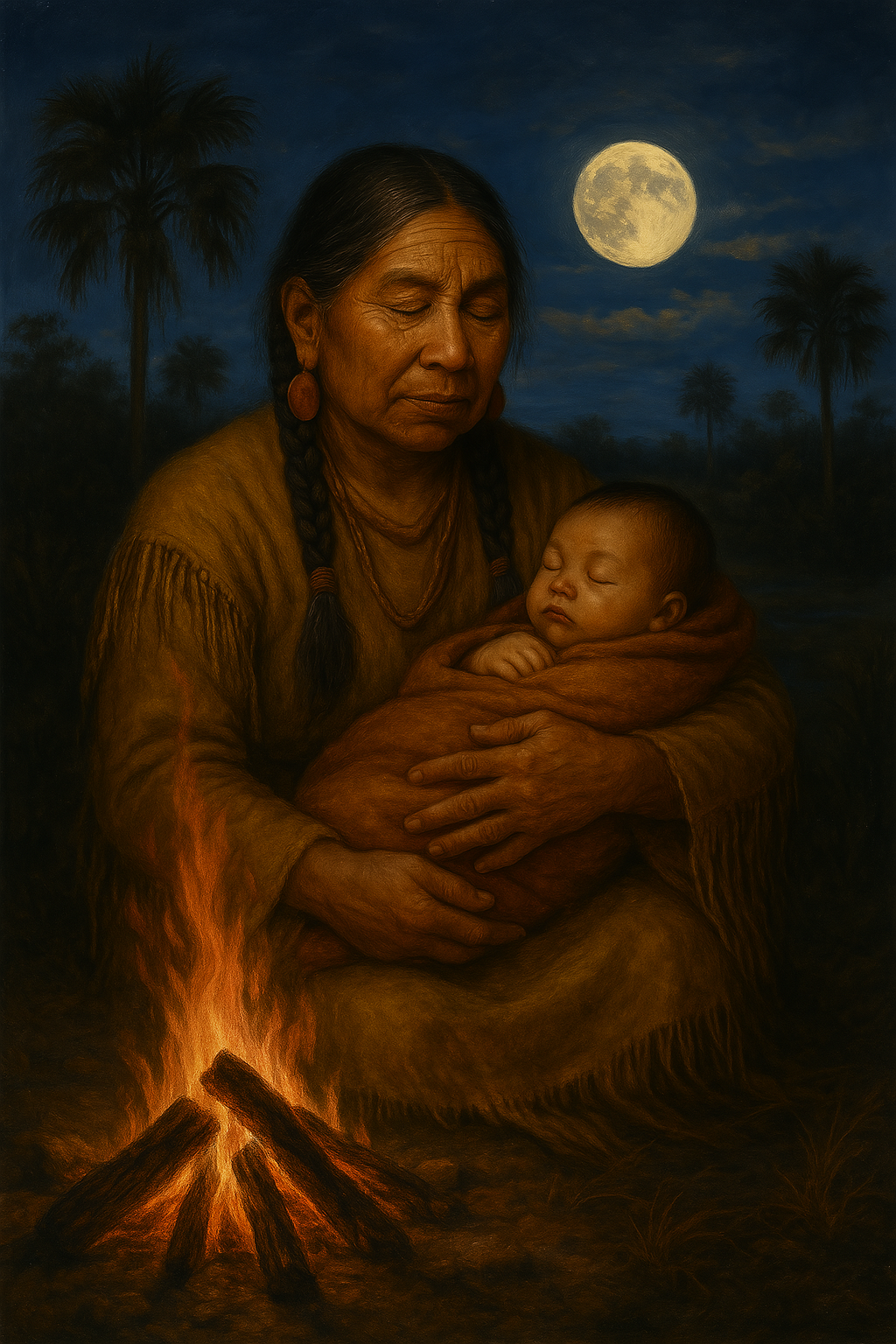
“We didn’t play it. I was the grandmother, and you were the baby, and I rocked you in my arms outside by the fire.”

Prickles ran up my arms. Again, she was telling me about an experience that she believed happened. She had changed our roles. She was the ancient one, and I, a baby. We were connected, but in different roles.

“When did that happen?” I asked. “Were we playing a game? Did you have a dream?”

“No.”

And that was the end of the memory. She had nothing more to add. She changed the subject to talk about the toys we were sorting. She lost the thought and didn’t want to explain more. It didn’t sound like a dream.

Shari was a very chatty child. She had a lot to say about everything and had an advanced vocabulary for her age. The concepts of death, gender, and role reversal in the extreme were not topics we ever talked about, except for those two instances. She seemed to wander into a reverie, then snap back to the present quickly and didn’t reconnect to the memory at all. When she was eleven or twelve, I asked her about those memories or if they were dreams, and she had no recollection of anything connected to it.

Those two experiences made me question the idea of reincarnation, and I did some research. Psychologists and researchers have documented children who spontaneously reveal memories from past lives. It happens from the age of two when speech is beginning, until about six, when children go to school and are infused with the day-to-day reality of this life. Many recorded cases have been detailed in books, magazine articles, and research papers. They can be ascribed to a rich fantasy imagination. My experience didn’t feel like imagination – it felt like Shari was telling me of real, very specific memories.

A few years ago, we were the caretakers of our grandson, Henry, from the age of one until he started school, while his mom worked weekdays. When he was three, he and a friend were playing in his room, building Lego forts, then bombing them with little rubber balls. He told his playmate that he had been in WWII and died.

From the time he was two, he had an uncommon attraction to guns. When he learned to draw, he drew gun-like figures. When I was teaching him the geography of the U.S., he picked out Florida as his favorite state because it looked like a gun. He bit his cheese sandwich into the shape of a gun. We never had guns or been around them, and certainly never talked about them. I asked my daughter if she had talked about war or guns with him, and she said no, but that he did talk about it when he was home too.

We took Henry to story hour at the library every week, and afterward, we would look for books to check out. He only wanted to pick out books in the history section about WWII or any war.  We checked out big volumes. At home, he sat and looked at the pictures and asked me to read parts of the books related to those pictures.

Henry earned TV time by doing small tasks around the house. Usually, he watched old TV shows like Mayberry RFD or a science kid show.  One day he watched a documentary about Churchill and war strategy on the History channel. He never took his eyes off of it for the entire hour. He asked me to find war documentaries when he had TV time, not cartoons or kid shows. He wanted to talk about wars, WWI, WWII, and the Civil War. They fascinated him. All that disappeared when he got to school, and it hasn’t been part of his life since.

I certainly learned a lot about wars while I was attempting to satisfy his curiosity. It is a mystery to me how a very young child can connect to experiences they didn’t have in their three or four years on the planet but are able to make them seem real. Could they have been here before? Is it totally imagination? It is a mystery.

PS: I recommend The Gift of Rain. It is about Malaysia during WWII, an area of the world I knew little about. It is the coming-of-age story of a young man, half-English, half-Chinese, with a Japanese teacher. All three cultures collide in his story during the turbulence of war. The concepts in the story are interesting, even if the main character is a bit flat. Questions of loyalty and betrayal are examined.

If you are interested in a recent report regarding children with past life memories, this is a link to a study reported by the University of Virginia, School of Medicine.

https://med.virginia.edu/perceptual-studies/our-research/children-who-report-memories-of-previous-lives/

Grandma’s Cabbage Casserole or How to Cook Creatively

Originally posted on A Way with Words blog

I read a blog post recently about old family recipes and it reminded me of one of my favorites. My mother’s mother was a plain cook, but a good cook. She made simple things delicious. One of her recipes was published in a cookbook at the senior living community where she and my grandfather lived in the 60s. I laughed when I read it. Fortunately, I watched her make it many times, so I knew the results of the magic she employed. The recipe is “one head of cabbage, butter, milk, soda crackers, salt, pepper, bake 350 for 45 to 60 minutes”. That was the entire recipe called Cabbage Casserole. No quantities, no explanation of process. If I hadn’t observed her, I would be flummoxed by the lack of description and probably would not try it. I served it on many occasions to people who claim to hate cabbage, and all found it delicious.

I am a seat-of-the-pants or whatever’s-in-the-fridge cook. I only use recipes as inspiration to launch my own inventions. That can be really good or sensationally bad. I’ve had my husband say, ‘oh this is so good, I hope you make it again’. The answer is ‘probably not’ because I’m not actually sure how I made it in the first place. Nothing is ever made the same way twice. A little of this, a dash of that, a smidge of whatever. I don’t write it down as I create it. I’ve tried to make notes but have not been successful in the effort. On the other hand, he has looked up from the first bite or two and indicated with facial expressions that my creativity missed its mark, and it would be best to forget that experiment. He needs no words.

I’m crazy enough to serve guests my one-time-only dishes and, so far, have not poisoned anyone or had them refuse a repeat invitation. I truly know no other way to cook. I may start with the best of intentions to follow a recipe but somewhere along the way find I need to add or subtract something, usually add. It’s a compulsion I cannot deny.

Back to grandma’s cabbage. I like it BECAUSE it doesn’t have a lot of information. I know the destination and I know the road by heart. It gives me lots of room to create without feeling I’ve done an injustice to the spirit of the dish. I sometimes add cheese, sometimes ham, sometimes bacon crumbles, sometimes even chopped broccoli or shredded carrot. It all works.

If you are interested, I will give you more information. Use a well-buttered 13 x 9 baking dish. Shred a head of cabbage (or any vegetable you want to add, in whatever quantity you want – I discourage diced tomatoes or squash, however). Crush a sleeve of soda crackers (maybe two sleeves depending on your taste). Layer half of the cabbage, then a few pats of butter spaced across the cabbage, then half of the crushed soda crackers, salt (not much needed and can be eliminated because of the salted crackers), and pepper (again to taste) and repeat for two luscious layers. I have been known to add some of those French fried onions from the can to the top layer of crackers. Pour enough milk (sometimes with cream added) over the entire casserole until the level of milk is a little more than halfway up the side of the dish. Bake in 350° oven for 45 to 60 minutes – yes, that’s a big discrepancy but that’s what I do. It won’t be ruined by baking an hour and sometimes the veggies are a little crunchy at 45 minutes. If you add protein like cheese or ham, that can be a separate layer under the cracker layer. I bake it a little longer with those additions. I’ve thought of cooked chicken as a possibility, but my taste buds say no; but do it YOUR way.

I hope I’ve written all the steps.  If it works for you, let me know. If it doesn’t, I must have missed something because it always works.