One Christmastime, my parents drove from Wichita to Longmont Colorado so we could spend Christmas with my mom’s family. We stayed at Grandma and Grandpa’s house. We were there a few days before Christmas. My grandparents’ home on Carolina Avenue was small. The routine during our stay was that I went to bed in grandma’s bed. Then when the adults went to bed, I was transferred to the living room sofa. My parents slept in the guest bedroom. I always went sound asleep, never sensing the move from bed to sofa.
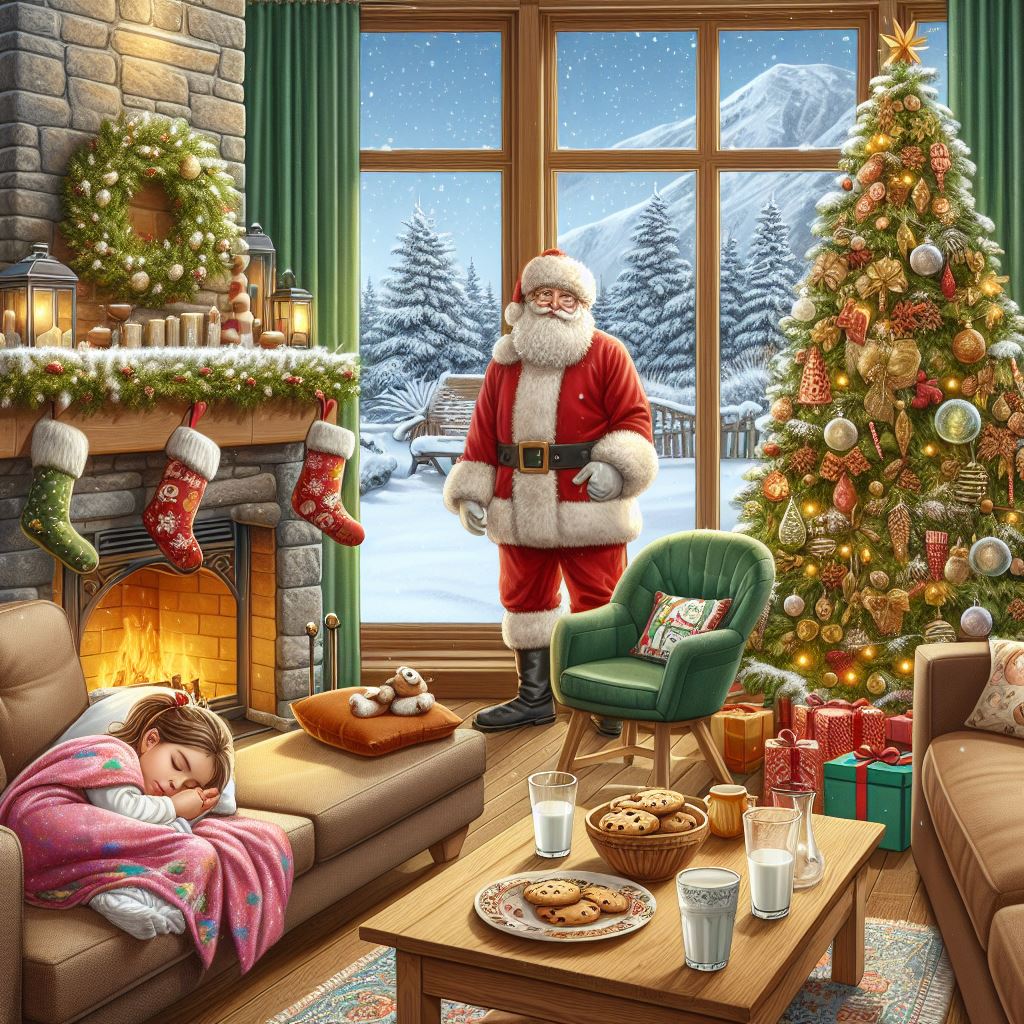
On Christmas Eve my aunt, uncle, and cousins came to visit with us. My cousins were much younger than me, so we didn’t play together. We had dinner then everyone helped decorate the tree. The bright lights cast a colorful glow around the room. There was a fire in the fireplace making the night cozy. The big picture window in the front room framed the snowy scene outside. Grandma had paper and crayons for me to draw pictures. I drew a picture of Santa and his reindeer to leave for Santa along with cookies and milk.
When my aunt and uncle left with my cousins it was time for me to go to bed. I worried that Santa would get burned by the fire when he came down the chimney. Grandpa assured me he would stay up to make sure the fire was out and the fireplace cool so Santa would be fine. I told them I would stay awake until he got there just in case. And then, lights out.
In the morning I awoke when Grandma came into the living room to take the cover off of Mr. Thorndike’s cage. He was their blue and green parakeet. He started to jabber, jabber, jabber as soon as he saw daylight. Slowly I recognized where I was and looked first at the fireplace to check on the fire. It was out. Then I looked at the tree and saw presents all around it. Santa had come. The milk and cookies and my drawing were gone. I missed him – I slept through it all. Oh, how disappointing. But I couldn’t let anyone know I had not fulfilled my mission.
Grandma and Mom went into the kitchen to start breakfast. Grandpa came into the living room followed by my dad. They looked amazed at the tree and all the presents. Dad picked me up and Grandpa took the blankets and pillow off of the sofa so they could sit down. I walked around the presents; everything was wrapped, and I didn’t know what was mine but I tried to guess. Grandpa said we’d open gifts after breakfast. Oooo, I didn’t know if I could wait so long. Grandma took me to the bathroom and helped me dress. I was so anxious. Grandpa picked one present from under the tree and told me I could open just one before breakfast. It was a china tea set with roses on the four small cups and saucers, and a teapot, sugar bowl, and creamer.
Then the question. Did you see Santa? Did you talk to him?
My four-year-old brain lit up. “Yes,” I said emphatically. “Santa came down the chimney and got his pants a little dirty. He saw me lying on the sofa and put a finger to his lips and told me not to talk. He ate the cookies and rubbed his tummy, mmm good. Then he laid out all the presents from his big red bag and blew me a kiss, took my drawing, and disappeared back up the chimney and I fell asleep really quick and didn’t look at the presents.”
“Oh, you’ll have to tell Grandma what you saw,” Grandpa said and called Grandma and my mom in from the kitchen.
I repeated my revelation and added that I heard the reindeer on the roof and their bells.
“You are one lucky girl,” said Grandma. “Not many get to see Santa.”
I did not notice the exchange of looks and winks that I’m sure darted around the room from adult to adult as I told my story. They accepted every word and repeated what a lucky girl I was.
Four years later, when my third-grade teacher told the class just before we left for the day and Christmas break, that although Santa wasn’t real, it was the spirit of giving that made Christmas special. A knot formed in my stomach. Santa, not real? How could that be? My throat went dry, a lump obstructed my swallowing. I couldn’t talk. I was devastated. I went home after school and asked my mom. She grumbled about the teacher telling the class about the myth of Santa but admitted that the teacher was right. Santa was the spirit of giving not a real man. The magic trickled out of the holiday like syrup slowly dripping off my Christmas waffles. It took me the whole Christmas vacation to accept that Santa was not a person, just the essence of giving. I couldn’t even talk about it to my best friend. The day before school began in the new year, I asked her if she knew about Santa before Mrs. Singer told us. She said yes, she was not surprised. Her parents never believed in Santa and told her and her brother not to talk about it to other kids who might believe. That really put the exclamation point on the lesson. I had no choice but to believe them.
Then I remembered my Santa sighting. Another whole dimension developed in my troubled brain. Now I knew, they knew I was telling a whopper of a tale when I described my visit from Santa. By then, I’d convinced myself that it was true. Not once did any of those grownups bring it up. Toward the end of my mother’s life, I asked her about it and she said my imaginative, impromptu story was the highlight of that Colorado trip. I’ve told stories real and imagined since I was four.
 wonkagranny