My Night in Jail

In 1990, we had our house remodeled. The kids were all off on their own. To avoid staying in the mess during a six-week remodel, Ken and I decided to live aboard our sailboat Wind Dancer, which we moored at the Elliot Bay Marina in Seattle. We commuted from there during the week to our jobs in Bellevue. It was truly a wonderful summer. The remodel ended up being closer to three months – as remodels are wont to do. Sitting on the aft deck of the boat in the evening with a glass of wine, watching the lights come on all over the city, reflecting squiggly colored lights in the inky waters, was a magical experience. All was well and we were content.

My cousin came to town, her first time in Seattle. She stayed with my brother’s family since we obviously couldn’t accommodate her and her two kids on our boat. I wanted to show her around when I could, so we made a date for the weekend to go out to dinner and a little tour of the city.

We went out to a nice dinner, then I drove her to see some of the interesting sights and viewpoints. Summer evenings in Seattle are light until very late. Afterward, I was going to take her back to Bellevue to my brother’s house.

It was 11:00, night had come, and the streets of Bellevue were dark and empty. We came to a stop sign at the intersection where I would turn from the right lane to go to my brother’s, but I decided to turn left to show her something of interest that I had forgotten. I turned left from the wrong lane just as a police car drove over the hill behind us, and I knew they spotted my illegal turn. Again, there were NO other cars on the road in any direction, and I didn’t see the police car because it didn’t come over the rise of the hill until I was halfway through my turn. I knew they would stop me, so I immediately pulled over to the side of the street after completing the turn. Sure enough, the lights went on, and the police car pulled up behind me. A young female officer got out and came to my window with her flashlight.

“You made an illegal left turn. Let me see your license and registration.”

I pulled my driver’s license from my purse, got the registration from the console, and handed them to her.

“Have you been drinking?”

“Yes, I had a glass of wine with dinner an hour or so ago.”

“Ok. Get out of the car and take a breathalyzer.”

Now this is where things went wonky. Not more than a month before, Ken and I had dinner with an attorney friend of ours, and he mentioned apropos to nothing, “Don’t ever take a field sobriety test. They aren’t reliable. Go to the police station if they insist on a breathalyzer.”

“No”, says I. “I won’t take a field sobriety test.”

She was visibly surprised that I refused.

“Just wait in the car, I’ll be right back.”

She went to her car and was on the phone. Within two minutes, three other police cars appeared. My car was surrounded, one behind me, one in front of me, turned to face me, one beside me blocking the street, faced the side of my car, and a fourth on the other side drove into the parking lot of the business next to where I parked on the street and faced my car. All their bright headlights were trained on me, and their roof lights rotated a merry spectacle. It looked like we were in a concert venue, and I was the star attraction. Again, I emphasize, there were no other cars on the street during this time.

The officer came back to my car. “Get out. You’re going to do a sobriety test.”

“Fine,” I said, knowing I wasn’t the least bit inebriated.

“Take off your shoes. Walk a line heel to toe with one foot in front of the other. Touch your nose with your finger.” Etc. etc. I took off my high heels, and I really don’t remember all her directions, but my nylons were being shredded. I did as I was told. Meanwhile, six other police officers were standing around me and my car. My poor cousin was stuck inside, wondering what was going on. I surmised that I somehow had been misidentified as a serial killer or terrorist. I was mildly amused by all the attention, but tried to keep a straight face, figuring humor at this juncture would not be well received.

After the drunk test, the officer said, “You are under arrest.”

“Why?”

“You didn’t follow orders, you were unbalanced, I think you’re drunk.”

There were six other policemen around me, and not one of them objected or said anything. I knew I’d done exactly what she asked. Now I was surprised.

“What am I supposed to do with my car?”

“The woman in your car can drive it to your house.”

“No, she can’t. Our house is under construction. I live on a sailboat in Elliot Bay. She is visiting from Kansas and doesn’t know the area. I was taking her to stay with my brother when I made the bad decision to turn from the wrong lane.”

“Okay, she can follow us to the station, and your brother can pick her up. She can leave your car there.”

It was beginning to feel surreal, but I had no choice with seven police persons surrounding me. The police station was only two blocks from where I was stopped. No big deal for my cousin to follow them to the station. I was handcuffed and put in the back of the patrol car. The seat was a molded bench with a back, not anything like a normal car backseat. Wow, you do have to duck your head to avoid getting bonked when you get in the backseat. Another learning experience. All their cars made a U-turn in the middle of the street (definitely an illegal maneuver), and my cousin followed. I reiterate – there were NO other cars on the street. During the entire thirty or forty-minute procedure, only three cars came to that stop sign intersection. They could see the street was blocked by police action and quickly turned in the opposite direction from our circus.

My cousin called my brother from the station, and he came to get her. I was detained in the back and didn’t see him, so I couldn’t explain.  I was photographed, fingerprinted, and all my personal information was taken before I was ushered to a straight-backed chair against the wall. Two other people were sitting there in chairs. One by one, they were taken out. I don’t know why or where they went. Again, I was asked to take the breathalyzer. Now my stubborn streak kicked in. I declined the offer. Three or four police quietly conversed behind the desk with the arresting officer. I watched the goings-on with interest. They were obviously prepping her. Meanwhile, two drunks were brought in separately – two obviously drunk men weaving their way with officers holding them up. I watched as they were booked, etc. Couldn’t they see the observable difference between those drunks and sober me? An administrator type came over to me with a piece of paper.

“Sign this,” he said.

“Ok. Let me read it first.” I read it, and it had to do with agreeing to the charges and waiving my rights. After over a thirty years passage of time, I don’t remember exactly what the document was, but upon reading it, I knew it wouldn’t be a good idea to sign.

“Sorry,” I said. “I’m not drunk, and this doesn’t appear to be something I want to sign. Can I make a phone call?”

“Do you have an attorney?”

“Yes, I’ll call him.”  At that time, we didn’t have cell phones, so I could not reach my husband on the boat for advice. I called our attorney friend, the one who told us not to do a field sobriety test. Unfortunately, he was asleep as it was about 1:30 am, so he didn’t answer his phone. On top of that, Bob is a real estate attorney, not a criminal defense attorney, so he probably wouldn’t have been much help.

“Well, I guess I don’t have an attorney.”
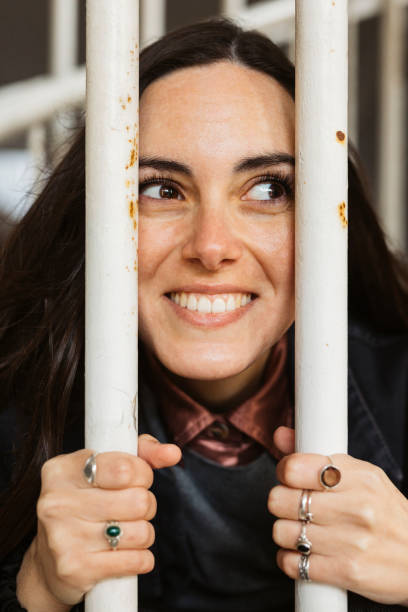
“We’re going to put you in a cell, now.” Two officers walked me down a hall to a nice, clean beige cement room with a sink, toilet, and bench-like cement ledge on the wall. They took off my handcuffs. The front of the cell was bars, just like on TV.  I wasn’t upset by the turn of the evening events, secure in the knowledge that I was not drunk. I was more curious and mildly amused. What would be next on the menu of procedural absurdities? Would I be strung up by my manacled hands like a ham with a lash applied to my naked back until I confessed to treason?  Ah, maybe a bit too dramatic.

I was in the cell for a while. Time was a blur. There were no clocks visible, and I don’t wear a watch. I was sleepy, but the concrete ledge didn’t invite sleep, so I sat on it leaning against the corner of the wall. Finally, an officer came to my little room and told me he would take me to the phone; they had the name of a public defender who would talk to me. I followed him and called the number he gave me.  The officer never left my side. The public defender (I’m sure awakened from his sleep and not in the best mood) said I was obligated to take the breathalyzer test and that I could call him the next day, and he would explain everything to me.

I took the breathalyzer, and they put me back in my cell.  An unknown amount of time again went by before they came to get me. The officer said, “Here are your keys, your car is by the front door. We will contact you about your trial.”

“What trial? I’m not guilty of drunk driving, only an illegal turn. Can’t I pay the ticket and go home?”

“No, you are charged with drunk driving, and you refused to sign the charge document, so it has to go to a judge.”

“What did my breathalyzer show?”

“You blew .01, that is why we are letting you drive home.”

“But I’m still charged with drunk driving?”

“That was what you were arrested for; now it has to be adjudicated.”

By that time, the sun was up. I drove to the marina and told Ken the whole story. He was surprised, but relieved to know I had been in a safe place staying out all night. I went instantly to sleep. Rocked by the boat’s gentle motion, I slept about four hours.

My trial was set for several weeks from that night. In the meantime, I met with the attorney who said I wouldn’t be found guilty of drunk driving but of reckless driving. It was the harshest thing they could legally charge me with, instead of a simple illegal turn. The police were unhappy with my attitude. The arresting officer was a rookie, and I had made her first arrest a nightmare.

By the time of the trial, we were back in our beautiful newly remodeled home. The night before my trial, I decided to dye my hair. I don’t remember the exact reason, but I did try to dye my hair. The next day, my hair was pink. I called my daughter and said, “Help, I have to go to court, and they’ll probably rearrest me for some obscure infraction if I show up with pink hair.” She called her good friend, who was a hair stylist, and together they got my hair back to a reasonable hue.

At the trial, the six policemen sat directly behind me as I waited for my case to be brought up. I waved and smiled at them. They didn’t respond. Were they trying to be intimidating? Why would all six men take time from their real work to watch my trial? The arresting officer testified with untruths. She indicated I got my registration out of the glove box, but I kept it in the console between the front seats. She said I was wobbly when I did the drunk test, I wasn’t. I finally got the clue about one of the reasons she thought I was drunk. She said my eyes were red and weepy. That was true. I had been with my cousin for several hours, and she was a smoker. She smoked in my car while we drove around, and my eyes burned from the cigarette fumes. I was called to testify and pointed out the officer’s mistakes about where the registration was, and that she said I was wobbly when I knew I was steady, and my eyes were red, but it was from cigarette smoke, not alcohol. I added that I blew a .01 on the breathalyzer, so I couldn’t have been drunk anyway. The judge said I had to pay a fine for reckless driving, but it wouldn’t stay on my record if I didn’t get any moving violations for a year. Then I had to pay the attorney a ridiculous amount to represent me with a pro forma script he could have recited in his sleep. Theater of the Absurd.

And that is the story of my night in jail.

Where Were You When St. Helens Blew?

We are all at the mercy of Mother Nature. Indigenous cultures celebrate that fact, and historically set aside times and ceremonies to honor the power of natural forces in our human existence. No matter how much we think we are in control of our choices and our lives, Mother Nature may exert a force beyond our meager limitations. As a baseball fanatic, I’ve always enjoyed the phrase, “Mother Nature bats last.”  It is a reminder that we are guests here and need to respect our hostess. She has a resilience that we can never match. This short story is akin to an actual situation I knew of in 1980. The names are changed and events slightly altered, so I can call it fiction.

Sunday, May 18, 1980, a lovely, blue sky day in southwest Washington State. Three days prior, Prescott and Mira rendezvoused in Olympia from their homes near Seattle, then drove together in Pres’s 1979 Firebird; their destination was Long Beach on the Washington coast. Prescott was supposed to be on a fishing trip with old college friends in Eastern Washington. Mira told her husband she was attending a writers’ retreat in Vancouver, Canada. Their affair started a year earlier, and this was the meeting where they would decide what and how to tell their spouses.

They talked over the impact of the affair on their lives and that of their families. Pres had a three-year-old daughter whom he loved dearly. He loved his wife, but that love changed when he met Mira.

Mira loved her husband, but her commitment to him was forever altered when she and Pres met by chance at an organizational meeting for a new food bank, Second Harvest. Her passion for him overwhelmed her love for Mark.

For a year, they met clandestinely, a few hours at a time. They never spent a night together, or even an entire day. They were drawn to each other, an intangible force that neither could resist. It was a recognition that they were connected in a different way than their marriages. They talked and finished each other’s thoughts. Lovemaking was more fulfilling than any they had in marriage. An overpowering passion consumed them. They both acknowledged love for their spouses and were reluctant to confront them with the affair.

During the three days together, they realized that they couldn’t end their marriages; so, had to end the affair, a heart-wrenching decision.

A heavy gloom settled over them as they drove toward Seattle. They couldn’t look at each other; their throats were too dry to speak. They had just reached the intersection with I-5 that would take them to Seattle.

“Let’s stop for coffee,” Pres suggested.

“Nothing will change. We can’t delay the inevitable,” Mira said softly.

BOOM! The sound, a supersonic blast, rocked the car and sent it careening toward the center lane of northbound I-5. The air shimmied. Compressed air stifled sound on the highway like a blanket suddenly thrown over the scene. Ash and smoke enveloped the car. Pres pulled to the right side of the highway. Rocks pelted the Firebird from above, as in judgment.

“What’s going on? What’s that sound, Pres? Are we being attacked?”

The radio blared an alert that I-5, north and south, was closed. Mount Saint Helens finally erupted after months of threatening earthquakes. The Toutle River, carrying tons of debris, whole forests of tree trunks, and a tidal wave of water, raged down the mountainside, obliterating the highway.

Prescott pulled the car off on the right shoulder. Fire could be seen in the distance on the mountainside, and a plume of thick smoke rose miles into the morning sky. The sun was obscured, turning the blue heavens to black night. Other cars pulled off the road or turned to head south, moving slowly in dense darkness. Headlights were barely discernible. Cars, choked by the thick air, stalled out on both sides of the road.

Pres looked at Mira. “It blew. We’re screwed,” he said. “We have to go farther south to get out of this mess.” Stunned, he slowly pulled back on what he thought was the highway, avoiding other vehicles. Nothing was clear. This was not in the plan.

Caught by Mt. Saint Helens. Sunday, May 18, 1980 @ 8:30am, almost to Castle Rock from Long Beach, Washington.

A few minutes later, the Firebird’s engine sputtered and died. Mira and Pres huddled inside the car, not wanting to get out in the thick, toxic atmosphere.

“What next?” Prescott ran his fingers through his hair.

“Maybe they’ll find our bodies buried in ash, like Vesuvius.” Desolation crept into Mira’s voice.  “We won’t have to say a thing. It will be obvious. If we get out of here, we’ll have to fess up.”

Pres pulled Mira close. “Maybe that’s the message from the mountain. We can’t escape the truth anymore.”

An hour later, a rescue van from the National Guard drove up. The Guard picked up stranded motorists to take them to the Mark Morris High School gymnasium in Longview. The air smelled vaguely of sulfur. Was it hell? The ash-covered Firebird looked like a relic from a dark past; barely recognizable, a remnant of their guilt. Leaving everything behind, they got into the van.

Families and campers from near and far were packed into the gym.  Warnings issued by scientists and local broadcasts as early as March that an eruption was imminent hadn’t kept the curious away. Everyone wanted to see what an active volcano looked like before it blew. The mountain dictated on its own terms, in its own time, when it would unleash its fury. 

Warnings had not been a thought when Pres and Mira decided to meet for a long weekend. They weren’t going near the mountain. They went to the beach. They hadn’t taken into consideration that they would pass by Mt. Saint Helens on their way. All threats of an active volcano had been mere background noise to them. Their personal volcano was all they could think about. Would they blow up their families or stay the course, putting aside the love they had for each other?

They were deeply immersed in plans for a future together, but finally resolved to recommit to their marriages. They were on the way home, determined to reconnect with their spouses, but the mountain had other plans for them. A reckoning. Unexpected consequences. The mountain blew away their secrets, turning their marriages to ash. The future was undeniably altered.

There was a line of people using the phone to call loved ones. Mira and Pres waited for their turns. What to say? How to say it? Now the reality of their love would become evident.

I leave it to you, dear reader: Were they able to save their marriages, now that their affair was revealed? Did this event seal their future together?

Seattle – Part 6 Finale, Green Lake to Pier 56

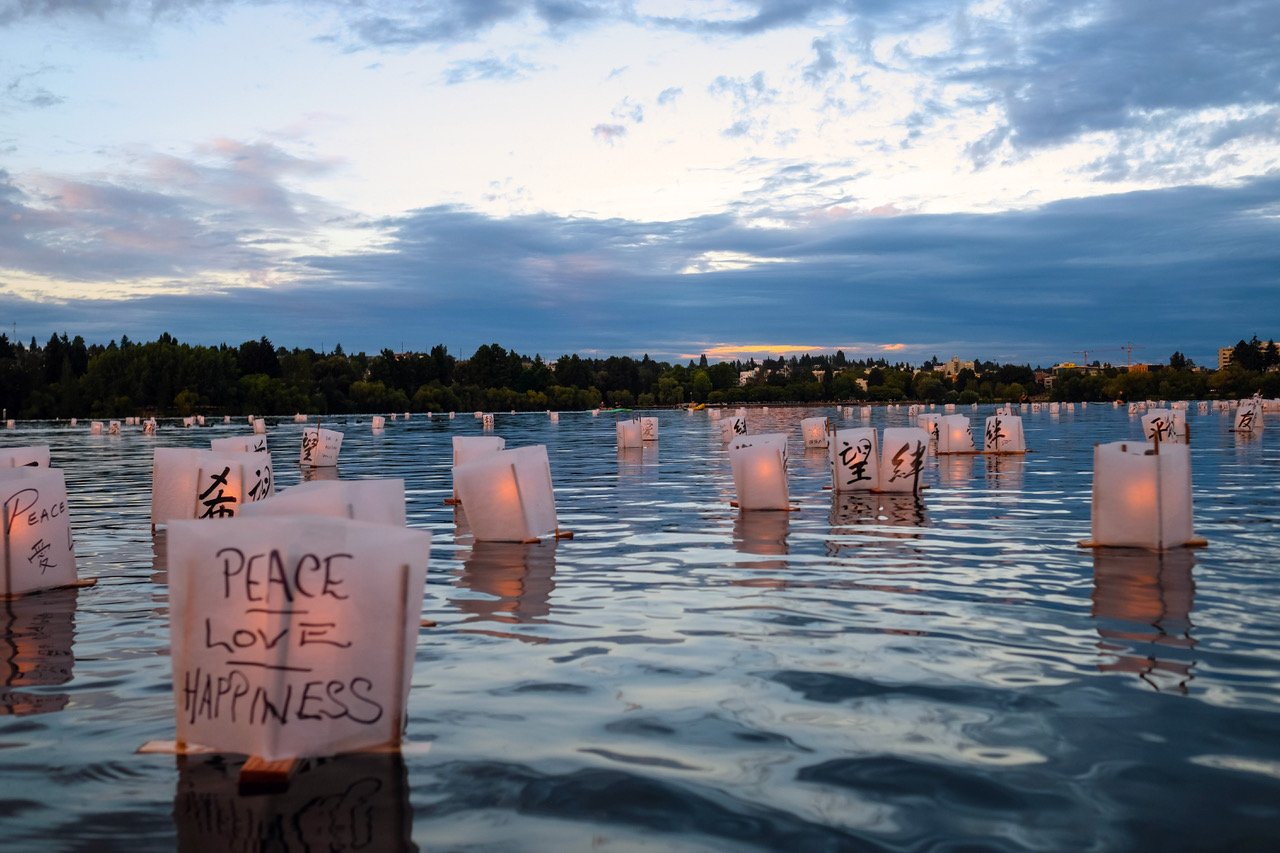
Green Lake Memorial Lantern Float photo by Vuong Vu

As a final episode in our tour of Seattle, I will take you to the Green Lake neighborhood. It is a quiet neighborhood that I love to walk around. Green Lake is 259 surface acres and was named because of the algae that formed, causing the lake to turn green. At times, it produced noxious odors. The algae caused rashes for many who tried to swim there. Attempts to clear the lake were unsuccessful until about twenty years ago. Now people can swim in it. Motorized boats are banned on the lake, but people still splash around in kayaks, canoes, and on paddleboards. There is a large open area for picnicking and nearly three miles of paved paths around the lake. Every year since 1984, a memorial lantern float is held to memorialize the victims of the Nagasaki and Hiroshima bombings.

At some point in the 1920s, a bathhouse with changing rooms and showers for bathers was built at the edge of the lake. That building now houses the Public Bathhouse Theater, one of the many public theaters in Seattle. It offers a wide variety of entertainments and is a starting place for actors.

Green Lake had an aquatic theater in the 1950s, where the Aqua Follies were produced.  It was the site of concerts and live entertainment by some of the pros, such as Bob Hope, Led Zeppelin, and the Grateful Dead, among others.

Woodland Park Zoo is at the edge of the Green Lake neighborhood and connects through the park. It is over ninety acres of animals, exhibits, and family fun. When our kids were young, we spent many hours at the zoo and the children’s theater.

 While a student at the University of Washington, our son lived in the attic of an old home just up the hill from Green Lake. Then he moved for a time to the Wallingford neighborhood across the I-5 from the University District. His house was actually tucked in under the edge of the elevated freeway. He and his buddies started a raucous rock band called Legacy. It quietly ended shortly after graduation.

Of course, the University District and The Ave hold a myriad of adventures and students who are in the active process of becoming. I spent many hours exploring my favorite emporium, The University Book Store on the Ave. On a couple of occasions, when my husband wanted to WOW me, he gave me a large dollar gift certificate to “the bookstore”, where I escaped into other worlds for hours in distracted bliss. The downside for him was that I came home laden with books that he then had to move from house to house each time we moved. He said he’s not moving them again, so I guess we’re here for the duration. Love me, love my books.

There is the Ravenna neighborhood that we bypassed, and the International District with great dim sum. You can lose yourself in the culinary delights from around the world. There are Rainier Beach and Sodo (South of Downtown) areas. There are the Roosevelt and Sand Point districts, Montlake, Phinney Ridge, toney Madison Park, and the exclusive, completely walled-in and gated neighborhood of Broadmoor. I went to a party in Broadmoor once, a political do as I recall, but the memory is vague – it must have been a very “good” party.

 We passed by Beacon Hill in the southeast section of the city. It is the original headquarters of Amazon.com. Beacon Hill is primarily an Asian neighborhood, mostly residential. We sometimes shopped at an Asian import store on Beacon Hill. I brought a three-foot-tall laughing Buddha to Tucson with me as a reminder of that neighborhood. He happily reigns over our backyard in the desert.

 We didn’t spend much time in downtown Seattle, the mega-mecca of everything big city. For a while, our eldest daughter lived on the eighth floor of a thirty-two-floor building in the high-rise forest of the mid-town business district within walking distance of her office and her place of worship, Nordstrom. Nordstrom began in Seattle as a family-owned shoe store in the 1920s. It transitioned to a big-time department store in the 1960s, expanding far beyond Seattle. I think its growth was financed, in large part, by our shoe-addicted daughter.

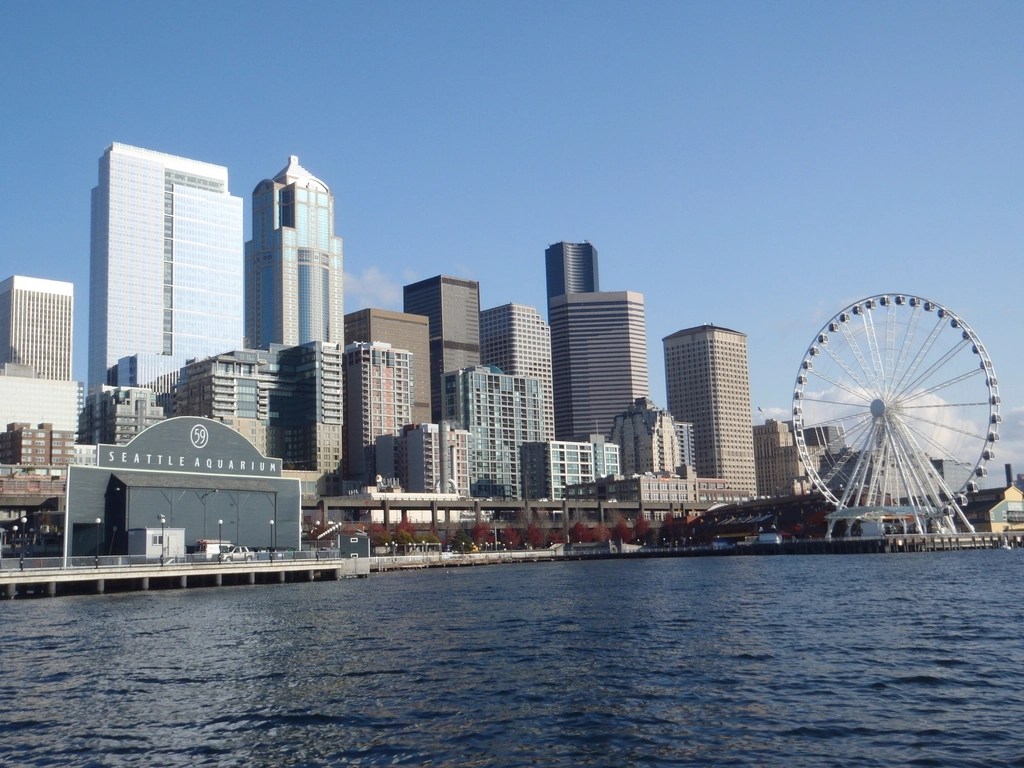
 We’ve missed a significant portion of the waterfront where ferries ply their way across the Bay and Puget Sound to various islands and Victoria, Canada. Pier 56 is known as Fisherman’s Wharf. It is full of shops and entertainment opportunities. The Seattle Aquarium is underwhelming compared to other city aquariums we’ve visited. Not worth the money.

The Great Wheel – Seattle

The Great Wheel is interesting. A Ferris wheel that is 175 feet high and extends 40 feet out over Elliott Bay has views of Seattle, the Olympics, and Puget Sound (on a clear day). They have a spectacular light show. Each of the forty-two climate-controlled gondolas holds eight passengers. There is one VIP gondola with special appointments that holds four passengers. The Wheel revolves three times in the twelve-minute ride.  It doesn’t compare to the London Eye, which is 445 feet high, anchored in the Thames, but it is worth the $13 to experience, and you don’t have a twelve-hour flight to get there.

We bypassed the industrial part at the south end of Elliott Bay, where big tanker ships and commercial barges load and unload from ports around the world.  It is less than elegant, but it does provide a comfortable living for those working the docks.

At various times, Seattle was named the most educated city in the US and the most literate city. But then, it has also been named the most livable city, and I’m sure whoever came up with that was smoking something stinky and missed all the suicides. It is a city of eclectic neighborhoods, each a little world unto itself.  Some began as immigrant enclaves but changed in character as Seattle grew. When you travel around Seattle, it is like taking a trip to different lands, different customs, and cultures without needing a passport. You will have to come back with me again sometime and explore the places we missed.

In future posts, I will share some of our sailing experiences in the Puget Sound area. I will take you to Friday Harbor on San Juan Island during the Jazz festival, to the Victorian town of Port Townsend, harboring at Orcas Island, and the legendary Fluffy Duck cocktail, visits to Stuart and Sucia Islands, going through seaside customs on our way to the Gulf Islands of Canada. Killer whales played with our sailboat as we cruised the Strait of Juan de Fuca.

I’m not sure how Seattle informed me as a person during my 40 years of incarceration. I spent so much time resenting it that I really didn’t let Seattle in. My interior barriers blocked any positive influence that threatened my bias. I took a cue from my adorable little grandmother when she came from Kansas to visit for the first time. We took her up in the Space Needle. Her comment was, “Yes, it is beautiful from up here, but you can’t see anything when you’re down there because of those damn trees.” To each his own. To some, trees provide a beautiful landscape; to others, they are an impediment to seeing the horizon.

I enjoy going back to embrace Seattle for all its gifts, now that I know I can return to Tucson’s blue skies. My children, all born with gills and webbed feet, love Seattle and always have. They thought we lost our minds when, through my insistence, we made our escape to the desert twenty-eight years ago. Two of those Seattle-loving children presently live in sunshine, one in Texas and one in Tucson. Only one stubbornly remains in Seattle, her little webbed feet firmly planted in the muck. Seattle is a very watery, water-oriented place. Water – everywhere.

No more clammy feet, soggy clothes, frizzy Bozo hair and gray skies for me. If nothing else, Seattle taught me to appreciate blue sky, clear air, stars, and yes, even the heat, it’s a dry heat. I love Tucson. I will live 40 years in the desert to dry out and make up for all the years I endured Seattle…then, on to somewhere else, preferably Paris. I know the weather in Paris is not ideal either, but it is PARIS.

Ahhh, Paris

Seattle Part 5 – Queen Anne, Elliott Bay and Magnolia

Discovery Park takes up a major part of the land on Magnolia Bluff. It is the largest park in Seattle with trails, forest, meadow, and beaches for a diverse outdoor experience. Magnolia was misnamed by a military surveyor back in the 1800s because he thought that the red-barked Madrona trees that cover the hill were Magnolias.

A caveat of the Treaty was the promise that any surplus military land would be returned to the original owners. Following the Korean War, Fort Lawton was considered surplus land. In 1970, there was a nonviolent demonstration for four months by indigenous peoples led by Bernie Whitebear with supporters such as Jane Fonda and the Black Panthers to increase national attention to the cause. The result of the negotiation was that the Fort would be turned over to the City of Seattle for a public park, and the United Indians People’s Council would receive a ninety-nine-year lease for twenty acres to become a cultural center. The Daybreak Star Indian Cultural Center was completed in 1977 and is a cultural and educational magnet for visitors.

Like every piece of land in Seattle, Magnolia belonged for eons to Native Americans.  The native Americans considered themselves custodians of the land. A gathering place for possibly 10,000 years. Archaeological evidence shows sustained settlements in the area with tools, homes, canoes, etc. The Euro-white invaders forced the indigenous population to reservations by the 1855 Treaty of Point Elliott with promises (still not kept) regarding healthcare and economic opportunities. The land was turned over to the military and became Fort Lawton until the 1970s.


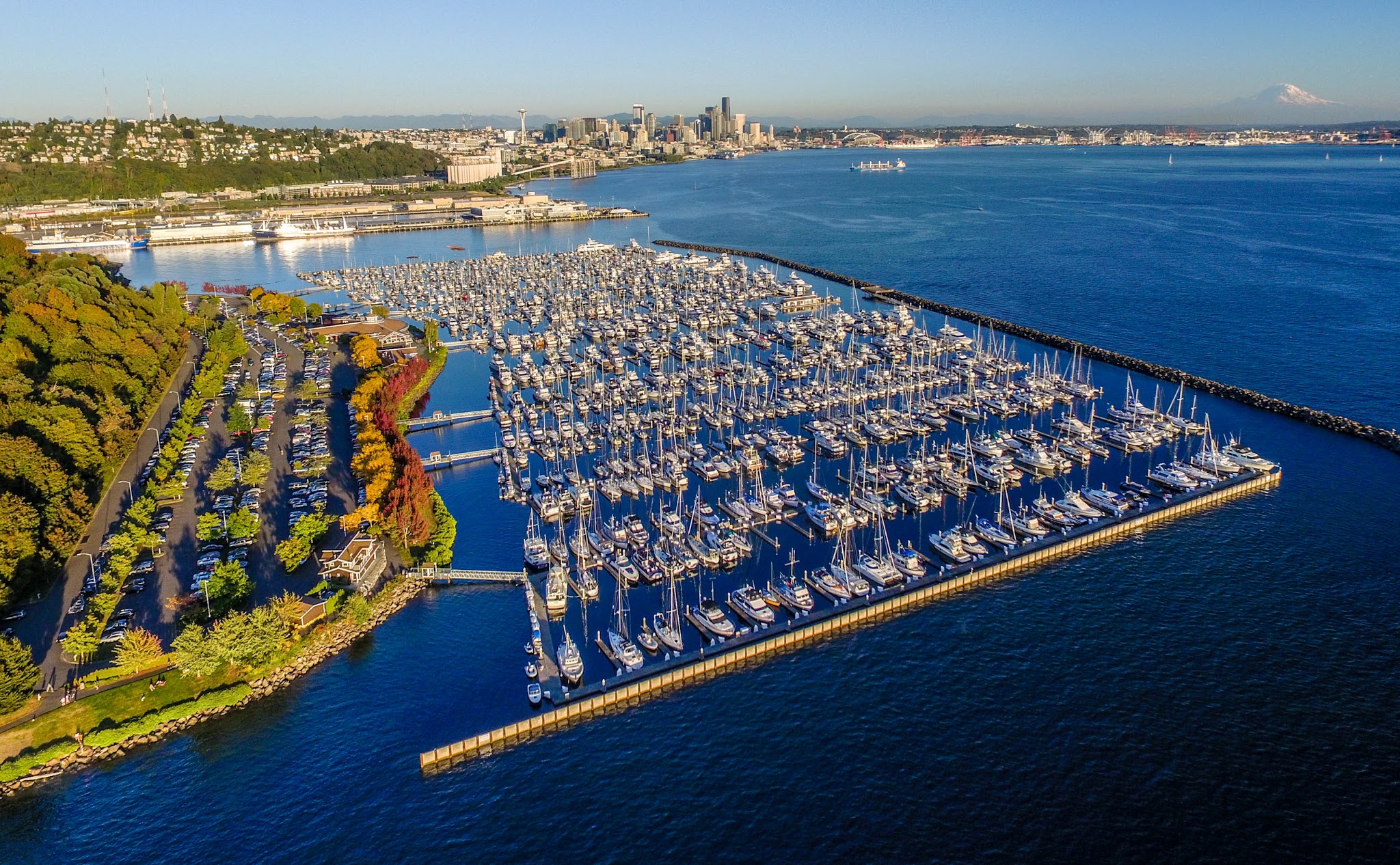
At the base of Magnolia Hill is Elliot Bay Marina where we moored our sailboat for years. It has a magnificent view to the east of downtown Seattle across the Bay, spectacular views of Puget Sound to the west, and Mount Rainier to the South. We lived aboard our boat for part of a summer while we had our house remodeled – a six-week project became three months. I remember sitting on the aft deck with a glass of wine in the evenings, the boat swaying gently with the tide, puffs of crisp sea air coming off the Sound, watching the moon rise over the Cascade Mountains and Seattle, thinking there couldn’t be a prettier sight – one of my Stockholm hostage moments. Reflection of the setting sun on windows in the city made a warm copper glow emanate from some of the buildings. Lights in the skyscrapers cast multicolored rippled beams across the water of the Bay as the sky grew darker and darker. Adorable harbor seals swam into the marina and barked at each other and boat dwellers. They are creative beggars, slapping the water to get attention and rolling on their backs, inviting gifts of food. Eagles swooped down over our boat from the tops of the madrona trees on their way hunting or fishing. Idyllic. Inner city peaceful.

Elliott Bay Marina

Palisades restaurant at the marina is one of my favorites in the city, and their Mangorita is the best. Maggie Bluffs Café is unmatched for Sunday brunch. The king crab Benedict is unbeatable. Fisherman’s Terminal is another great spot for dining on the freshest fish. One undeniable benefit of Seattle is the fresh seafood, especially my favorite, crab. From our earliest days in Seattle, a friend of ours gave us crab that he caught near his house north of Seattle. We had mountains of crab and salmon in the refrigerator and freezer all the time. I took it for granted, even said I was tired of it. Now I crave it. I must stop the restaurant tour because I’m making myself too hungry.


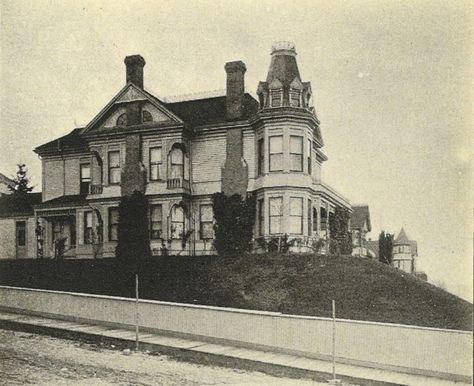
From Magnolia, we drive back southeast to Queen Anne Hill, the grand dame that looks down over Seattle and the Bay. Queen Anne is the highest hill (but not the steepest slopes) and has many of the earliest mansions built by Seattle pioneers. Lavish old homes perch on hillside lots with rounded tourettes, bric-a-brac details, and gingerbread that place them in a bygone era. Even newer built homes echo some of those details. At the base of Queen Anne to the east is Lake Union. Lake Union is lined with restaurants (which we will not visit on this trip due to hunger concerns) and nautical businesses. It is the freshwater mid-point on the canal between the Sound and Lake Washington.

A friend of ours rehabbed an old Conoco gas station into a lovely two-story home on Westlake Avenue on the hill above Lake Union with views up and down the Lake. She was one of the most creative, imaginative people I’ve known. She was also a gourmet cook and owned a restaurant in Seattle. I would extoll her varied and unique menu, but sadly, her restaurant is no more. Besides lovely lake views and boat watching, she had a view of the floating houses moored on the west edge of Lake Union. They are a unique living concept and, I’ve heard, some can be rented for a Sleepless in Seattle experience.

Lower Queen Anne on the south side of the hill is the location of the Seattle Center, the Opera House, the Seattle Repertory Theater, the Pacific Science Center, sports arenas, a live theater district, and the famous Space Needle.  Ken took me to the revolving restaurant atop the Space Needle for my eighteenth birthday, and gave me a diamond and pearl ring – a promise to get engaged. And here we are sixty-two years later.

Our younger daughter lived in an apartment on Upper Queen Anne for several years. It is a distinguished neighborhood with a significant part of cultural Seattle at your feet within walking distance. I loved her apartment, embedded in an old mansion that had been rehabbed into a multiple dwelling building. It had character and charm, a perfect setting for a young writer of romance novels. Alas, she didn’t write romance novels.

Lower Queen Anne, on the south side of the hill, is the location of the Seattle Center, the Opera House, the Seattle Repertory Theater, the Space Needle, the Pacific Science Center, sports arenas, and the live theater district. It was the site of the 1962 Seattle World’s Fair. Elvis fans will remember he made a movie there…sigh. Kurt Russell was in the film, It Happened at the World’s Fair, as a little boy who kicked Elvis in the shin. Not to be missed is the Chihuly Glasshouse. If you haven’t seen the genius of Dale Chihuly glass, this is the place to explore. The Center holds so much magic it takes days to explore it all. At the edge of the Center is the Experience Music Project, now called MoPop, a spectacularly ugly structure originally dedicated to music, mostly rock and roll, but now includes symbols of modern pop culture. A monorail connects the Center to the main part of downtown. It is the location each year of the Bumbershoot Festival and Taste of Seattle. I could go on for pages about The Center. It takes days to explore it all.

Time is short, and the pages are long, so we’ll leave now. We’ve missed West Seattle and Alki Point, where our best friends lived, and the actual birthplace of Seattle. We passed by Ballard, the Scandinavian part of town, where Shilshol Bay is. Ballard is the home of all the fishermen in Seattle, and they have funny accents. Maybe that’s a little stereotyped, but it’s true, ya sure, you betcha. I’ve skipped Belltown, a waterfront neighborhood just north of Pike Place Market with lots of good restaurants and nightspots. Belltown is also the home of the P-Patch, where public gardening is offered. The next post is the last in the tour. We will visit Green Lake and the University District, and I’ll tell a smidge about our sailboat life. There will probably be other posts in the meantime. Lots of things swirling in my mind.

Part 4 of Our Seattle Tour – SeaFair and Skipping School

Today is one of those not-quite-sunny-but-definitely-not-raining days, so we’ll go to another part of Seattle where I once worked, Leschi. It is on the east border of Seattle along Lake Washington, just north of the Lacey V. Morrow floating bridge (the second longest floating bridge in the world, next to the other Lake Washington Evergreen Point Bridge further north on the Lake, which is the longest in the world). Lake Washington is a navigable body of water about 22 miles long. It is deep enough for ocean-going vessels to enter its ports through the canal, then down to the south end. Across Lake Washington, further east of Seattle, are Bellevue and Medina, where my family lived.

Leschi is a mix of beautiful homes, from craftsman bungalows built in the early 1900s to stately Tudors and contemporary homes built later. It was originally a place for summer cottages, but now it is an enclave for multi-million-dollar lakefront properties. I remember the day when, in one of those million-dollar waterfront mansions at Leschi, Kurt Cobain shot himself in the head, leaving Nirvana headless. Sorry, bad joke.

In the late 80s, I worked for two companies at 120 Lakeside Avenue in Leschi. Both were headed by multi-millionaires. First, I worked for a venture capitalist S.S. Besides being a successful entrepreneur, he was a philanthropist. He owned a mall in north Seattle and a prominent grocery chain, which became part of Kroger. He donated to various charities and supported an inner-city elementary school with a $1 million per year endowment. There were only five of us in the office. I was hired as a secretary/receptionist with general office duties. He didn’t have much work that challenged me, and I had time on my hands. It was while working in his office that I taught myself computer skills – back in the day of DOS.

One story about S.S. that I remember was when my husband and I decided to purchase a boat. I told S.S. we were looking around for a modest sailboat. He owned a sailboat, did a lot of cruising, and had some good advice. One piece of advice though, depicts the difference between his place in the world and ours. Speaking very earnestly, he told me to be sure the sailboat had a washer and dryer onboard so that when we were out cruising for weeks, we could have clean clothes. I know my mouth gaped when he said it, but I recovered and thanked him for his advice. His idea of a sailboat was more YACHT than boat. On neither of the boats we eventually owned was there room, let alone hookups, for a washer and dryer. Nor did we cruise for more than ten days at a time. Oh well, a girl can dream.

Later, I went to work for his friend T.L., who, with his partner D.S., managed the upscale commercial building of offices, retail, a marina, and gas dock on the shore of the lake. S.S. bragged to T.L. about my computer skills, and T.L. was just beginning to get savvy about computers for his company. He offered me a job with challenge and a better salary, so I left S.S. We all remained friendly. T.L.’s offices were downstairs from S.S. Cabin cruisers, yachts, fishing boats, kayaks, commercial hauling boats, ski boats, and sailboats paraded past the lakeside windows of my office daily. I managed and leased office space and kept books for the dock facilities. I also set up their computerized accounting system. Those who know me will laugh. I am terrible with numbers, but I do understand computerized systems. Well, I did then when they were less complicated than today.

Let’s have lunch at BluWater; it used to be the Leschi Café when I worked there. They had the very best clam chowder in town. Well, maybe second best next to Duke’s. It’s a nice enough day so we can sit on the patio with a jacket on, watch the boats, and look across the lake to the city of Bellevue, connected to Seattle by the floating bridge. Until the 1940s, the only way to get across Lake Washington was by ferry boat. You can now zip across quickly in your powerboat or go across one of two bridges.

Our son and his friend Mike sometimes skipped a class in high school on a nice day and drove Mike’s speedboat across the lake to my office. I treated them to lunch at the pizza restaurant downstairs in our building before they went back to school. I was not a terribly strict mother. I’ve always felt that experience trumps classroom learning. I occasionally practiced the art of experiential learning as a high school student.

Big Ships at dock during Fleet Week

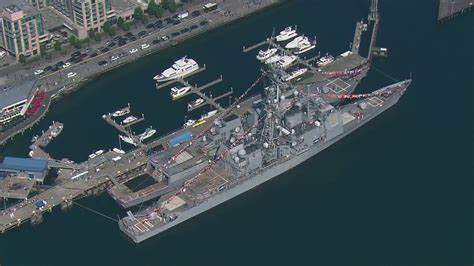
The last week of July is the celebration of SeaFair, with SeaFair royalty and pirates in the torchlight parade, boat parades on Lake Washington, Navy Blue Angels exhibitions, Boeing airshows, Fleet Week in Elliott Bay with tours of big naval ships, and all manner of hilarity. The size of those naval ships is astonishing. Both of my mother’s brothers were in the Navy during WWII. My Uncle Johnny described his harrowing experience in the Battle of Leyte Gulf and recommended a book, The Last Stand of the Tin Can Sailors. It is about a different naval battle, but he said it brings the feelings to life. In his later years, he talked about it rather matter-of-factly, but I sensed the emotions it brought back.

Hydroplane races on Lake Washington during SeaFair

One of the most exciting things I remember about SeaFair is the hydroplane races. Flat-bottom boats with powerful airplane engines race each other around a course reaching 200+ mph, lifting off the water. It is thrilling to watch their explosive water fantails shoot high in the warm August air. Just as in car races, their roar is so loud you remain deafened for a few hours afterward. SeaFair was a highlight of my youthful summers, I think, because it was usually such a nice weather week with so many diversions.

To continue our Seattle tour, we’ll drive up and over First Hill, one of the original seven hills of Seattle, which we called “pill hill” because of three big hospitals located there. Now we’re in the Central area, the most ethnically diverse neighborhood. It started as a Jewish settlement and is still the home of Temple de Hirsch Sinai, the largest Jewish congregation in Washington. Rabbi Raphael Levine was the leader of that congregation when I lived in Seattle and he was a towering presence throughout the 60s, 70s, and 80s, fighting for civil rights and brotherhood. A Buddhist Church is nearby as well as a Japanese Congregational Church. The Central area had the highest population of blacks in Seattle. The Central area was the childhood home of Jimi Hendrix, Dave Lewis, Quincy Jones, and Bruce Lee, and a staging area for the Black Panther movement in the 60s.

I remember the Central area most because that is where I often went when I skipped school in my senior year. One of the high schools in the area is Garfield. Garfield’s basketball, track, and football teams made the championships every year in the 50s and 60s. In 1963, they had a jukebox in their lunchroom. One of my friends, Kelly, had a car, and her boyfriend, John, was a basketball player on the Garfield team. Kelly and I would leave our school in Bellevue at about 11:30 in the morning and drive across the lake to Garfield to dance to the music and eat our lunch with John and his friends. We got back to our school in time for last period and went home at the proper time. We had friends in the attendance office who made sure we were marked present officially during that time. Can’t get away with that these days.

One time, Kelly and I were walking the halls of Garfield on our way to the lunchroom when a phalanx of large – think football player – young black men with their arms across each other’s shoulders blocked the hall, wall to wall. They wore serious eye-squinting faces as they marched toward us. There was no escape except to go through them. We did. We ducked under their arms. They broke out in laughter. Hearts pounding, we were relieved it was a prank, not a threat.

My French teacher was suspicious and called my house one day when I missed her class one time too many. Usually, that was no big deal because both of my parents worked, so she would not have reached anyone. This was in ancient days before cell phones and message machines. Just my luck, my father was home sick that day, and she told him I missed French class several times in a few weeks. When I got home at the regular time, my father greeted me at the door.

“Where were you all day?” he asked.
“School,” I said with total truthfulness, I left out that I had been in two different schools.
“Miss D called to say you were not in class today and had been absent several times.”
At that point, I was speechless. I thought I had everything pretty well covered.
“I’ll ask again. Where were you?”
“I was at school,” I insisted, but then admitted, “At lunchtime, Kelly and I went to Garfield to see John. When we got back, it was too late to go to French, but I did get to my last class.”
“Don’t do it again,” he admonished, but I could see he was stifling a grin, knowing that was an empty directive. “I told her you came home and weren’t feeling well. She’s watching you.” Then, as an aside, “And don’t let your mother know, you know how she is.” Dad always had my back.


That was the end of the conversation and the end of the episode. Miss D didn’t give up trying to catch me, and I strived to get back in time for her class when we skipped for lunch. I got a B in French (a class I really liked). In retrospect, I think Miss D was one of the teachers who actually cared about my future. She tried her best to give me advice, even keeping me after class to explain how I was cheating myself and that I had so much potential. I blew it off, but I remember her now as a mentor, a failed mentor, but not from lack of trying. It was not the end of my “experiential learning”. My mother never learned about my truancy until I told her years later, after my dad died, that he had been a co-conspirator in my escapades. Her remark was, “That sounds like your dad.”

I graduated with a respectable B average and was accepted to Washington State University for the fall. I liked school and classes, but I enjoyed being a little rebellious, too. I do not think I learned a lesson or reaped the consequences for my misdeeds. Although my college career was short-lived, it was a fun year. That is another story entirely.

On our next tour, we will visit Discovery Park in Magnolia, Elliott Bay, and Queen Anne. I will tell you a little about living on our sailboat.

Seattle, Part 3 – Millionaires and A Troll

Continuing our tour, we go north to Capitol Hill, one of the most interesting, in my opinion, of Seattle’s varied neighborhoods. It is the center of the gay, lesbian, and transgender population of Seattle. Punk hipsters with tattoos, pink mohawks, and multiple piercings are commonplace, sharing the streets and sidewalks with men wearing business suits and carrying briefcases.

Capitol Hill has the steepest streets in Seattle, a few plummeting as much as 21% grade, and some swanky residences line Millionaire’s Row. The Row is a National Historic Landmark District with homes built at the turn of the 20th Century.

Lobby of Harvard Exit Theater
Harvard Exit Theater Lobby

It is the home of grunge music and my favorite movie house, the Harvard Exit. The Harvard Exit was formerly The Women’s Century Club. The century referred to is the 19th Century. It was opened during the last decade of that century by Carrie Chapman Catt, a suffragist who succeeded Susan B. Anthony as leader of the national organization. The building was sold to a theater operator in the 1960s who converted it to a two-screen movie house. It became a favorite place for movie aficionados who like eclectic, off-beat movies. When the movie house closed, long after I left, the Mexican Consulate leased the building. The Exit was allegedly haunted by a woman who hung herself in the upstairs theater. I never met the ghost personally, but the possibility was titillating. The other great old theater nearby was once a Masonic lodge that became the Egyptian Theater. These two theaters put on the Seattle Film Festival every year, screening weird and wonderful films. I never missed it. There was a wonderful bakery on Capitol Hill called Bella Dolce. I used to order cakes for special occasions there, and they are incredible – yum. I haven’t checked to see if it is still there.

Capitol Hill is the location of Lakeview Cemetery, where Bruce and Brandon Lee are buried. An inscription at their grave site is one that I like, “The key to immortality is first living a life worth remembering”.

Our eldest daughter called Capitol Hill home for a year after she moved out of our house in the mid-80s. It was near her work, and there was a dance group that she joined. She moved away from Capitol Hill because the constant day and night activity, including gun shots, made it hard for her to sleep.

Capitol Hill has several aged Catholic churches and was once the center of Seattle’s Catholic population. It is also where St. Mark’s Episcopal Cathedral stands regally on a hilltop, a cliff actually. It is a massive and beautiful old cathedral with a rose window on its east wall that makes the interior glow during the day, even in light-challenged Seattle. As a child, my family went to our neighborhood Episcopal Church in Bellevue each week, but we attended Christmas services every year at St. Mark’s Cathedral. Their Compline Choir is world famous. I felt so holy in that place. Many years later, our daughter performed in the Christmas service at St. Mark’s with the Seattle Girl Choir. The annual Christmas service is televised in Seattle.

This neighborhood is where our son, age eight at the time, learned what a prostitute was. Our daughters were members of the Seattle Girl Choir in the 70s. We took our younger daughter for a choir rehearsal at St. Mark’s. While she rehearsed, my husband, son and I walked down a couple of blocks to get dinner. On a corner, we encountered a very obvious prostitute looking for her next customer. Under his breath, my husband made a comment about her choice of business location, only a block from St. Mark’s, and our son overheard.
“What does she do?” Casey asked.
“She’s a hooker,” said my husband.
“What’s that?” Casey needed more information.
“She sells her body for a price.” I enlightened our son.
“Oh.”
And that was the end of the conversation. When we returned to the Cathedral after dinner, we walked down the same street. I totally forgot our before-dinner conversation.
“She must have gotten her price,” said Casey when we passed the corner.
“What are you talking about?” asked Ken.
“The hooker. She must have gotten her price because she’s not here anymore.” A brief lesson in Capitalism on Capitol Hill.

Tucked in just south of Capitol Hill is First Hill, referred to as Pill Hill because of the number of hospitals and medical facilities housed there. My only connection to it was the times I spent visiting family members in hospital. Not the best memories.

Chittenden Locks raise boats from sea level to the freshwater level of Lake Washington

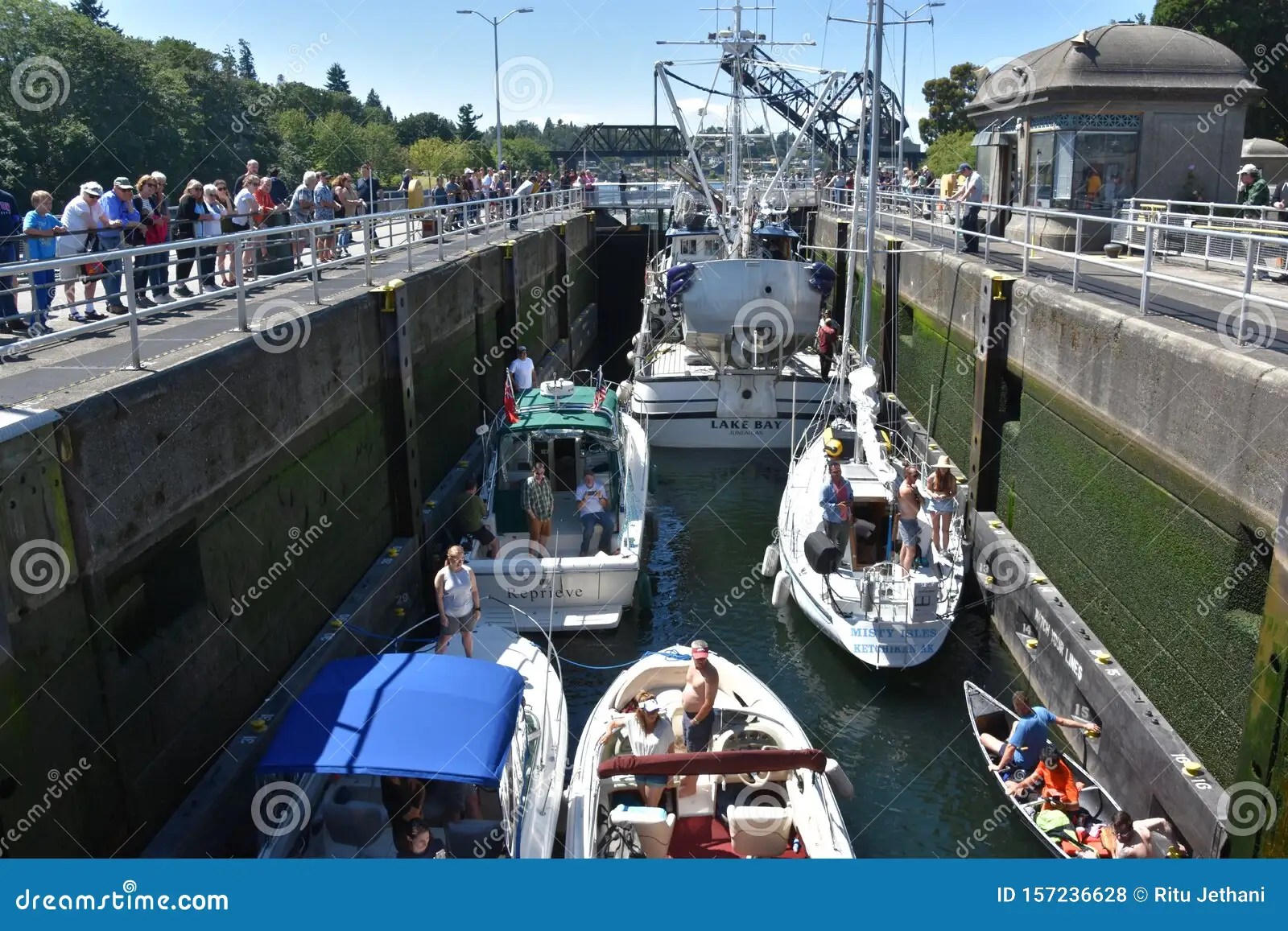
After Capitol Hill, we go north and a little west to Fremont, another of my favorite places. It is bordered on the south by the ship canal that was dug in 1911 to connect Lake Union and Lake Washington to Puget Sound. West of Fremont in the Ballard area are Chittenden canal locks that you have to take your boat through to get from the fresh water lake to the salt water Sound and visa versa. We took our sailboat through a few times. It is an interesting but nerve-racking experience.

Most interesting at the locks is the fish ladder. Salmon are hatched in freshwater lakes and rivers then make their way to the open sea. When it is time to lay their eggs, they return home. The fish ladder has twenty-one “steps” to help the salmon migrate from sea level to the higher level of Lake Washington. Local sea lions can be seen supervising the gates to the fish ladder, looking for a quick meal. We loved to take a Sunday afternoon to watch the boats go through the locks, walk the surrounding park, and, from the underground viewing room, watch the fish swim up the ladder.

Waiting for the Interurban

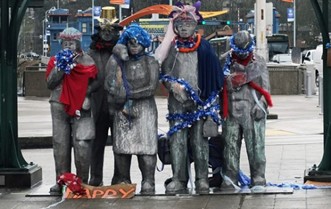
Fremont is the artist community of Seattle. It is sometimes called the People’s Republic of Fremont, and their motto is “De Libertas Quirkas,” which means, loosely translated, “the freedom to be quirky”, I think. A sixteen-foot statue of Lenin was bought by a resident of Fremont after the fall of the communist government in Czechoslovakia. It was installed in the Fremont neighborhood in the 1990s. Another sculpture called “Waiting for the Interurban” stands in the middle of a thoroughfare near the Fremont Bridge, where no public buses pass. It is six people and a dog with a human face waiting for public transportation. The people of Fremont dress the sculpture inhabitants appropriately for the seasons – Hawaiian shirts or scarves and mufflers.

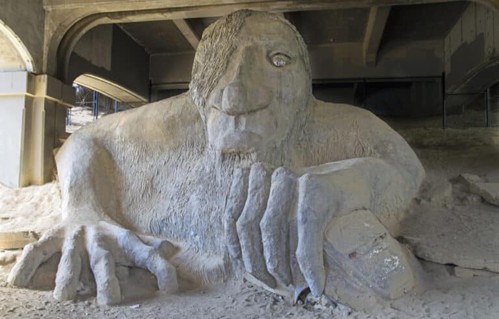
Another sculpture in Fremont is under the Aurora Bridge. It is the Fremont Troll. There was a legend of the troll under the Aurora Bridge, similar to the old Norwegian Fairy Tale about the three Billy Goats Gruff. As a result of an art competition and to keep random drug paraphernalia away from the bridge, an eighteen-foot-tall concrete sculpture of the troll appeared. He is crushing a Volkswagen Beetle that he grabbed from the bridge above in his left hand. The car in his left hand is an actual VW bug encased in cement. It contains a time capsule.

The Fremont Troll


Fremont is an eccentric mix of businesses, shops, and residences, very free form. They have a Summer Solstice Pageant every year with nude cyclists. I go to Fremont just for fun. Other than fun, my Fremont connection is negligible. I took a one-semester off-campus Seattle University class in that neighborhood in the 70s; and my husband and I went to a Fremont hypnotist to lose weight one summer.

Seattle, Part 2 – Totems and Toilets

Our tour continues with a little bit of history. Seattle is built on seven hills: Beacon Hill, First Hill, Capitol Hill, Queen Anne Hill, Cherry Hill, Yesler and Denny Hill, with Magnolia Hill, West Seattle, and Mount Baker as later annexed inclines. You get the point – it is a very hilly city. Things are built on slopes, some notoriously precarious. Landslides are a geological gamble in Seattle. Whole neighborhoods have slid into Puget Sound. In fact, one of the original hills, Denny Hill, a total of 62 city blocks, slid slowly but steadily into Elliott Bay between the years 1903 and 1928. Denny Hill is now the Denny Regrade. The Bay accepted the transfer of soil with equanimity, being over 300 feet deep in places. I will take you to some of the hills that had meaning to me.

There is a rich Native American heritage in Seattle. Mainly, the Salish, Snoqualmie, and Duwamish peoples settled where the city is now. A couple of dozen tribes along the coast left their imprint on the area. Totem poles are in evidence throughout the Northwest as symbols of native traditions and storytelling.

My high school mascot was a totem pole. I was in the first sophomore class at the new school. The students voted for the mascot. I voted for the cougar as a mascot, being an animal lover. However, the cougar was the mascot of Washington State University, and living in western Washington, the home of the U.W. Huskies, cats weren’t popular. I got on board with the totem because it honored the Native Americans who first inhabited the area. As a legacy for the school, our senior class had a red cedar totem pole carved to stand proudly in front of the school.

For fifty years, we were the Totems until the enlightened ones decided that a totem pole is a form of cultural appropriation and “can possibly cause psychological harm to Native American children”, instead of being a sign of respect for the native culture. The mascot was changed to the Redhawks. A Redhawk, of course, is a Ruger double-action revolver. Could it be that the powers-that-be prefer a firearm rather than a totem to symbolize a high school? I hesitate to guess the inner motives of bureaucrats. Maybe they meant to honor the red-tail hawk, which is prevalent in the Pacific Northwest, as indeed the picture of their mascot is an angry-looking red-headed bird. Who knows?

Pow Wow celebrations of Native American culture and heritage are held throughout the state. The SeaFair Celebration, held annually in late summer, has a Native American Pow Wow component. I will talk about SeaFair in a later post.

Seattle lies on a fault line that runs under the west coast of the US. The roller coaster effects of earthquakes are another thrill that residents of Seattle have an opportunity to experience. Most are minis reaching no more than 1 or 2 on the Richter scale, but they do upset the equilibrium. A BIG one hasn’t happened in Seattle since the 7.1 in 1949, but Alaska and California have felt the effects of 8+ earthquakes, so it may be just a matter of time. Our napping teenage son was once shaken out of slumber and off the couch by 5+ seismic event.

The combination of earthquakes and damp, saturated ground poses a constant threat of landslides. Yet, many of the most expensive homes are built on bluffs above the water with expansive views of Puget Sound and the Olympic Mountains. Duh. It is like building along the coast of Florida, where hurricanes are omnipresent. “Youse rolls the dice and youse takes yer chances,” as an enterprising Irishman once said.

Steep streets are a challenge when slippery wet. Many a manual-transmissioned car has slid backward down a slope or into other cars when piloted by an inexpert driver. I’ve seen it happen.

We will continue our tour by going to Pioneer Square near downtown Seattle and Skid Road. Its real name was Yesler Way. In early days the road had wooden planks (skids) laid along it, covered with grease to help the oxen or horses pull the heavy loads of lumber to the port. It was the dividing line between the affluent part of town and the sketchier mill-worker part. During the depression, it became Skid Row, demarcating the area where the downtrodden resided. One didn’t want to be seen south of Yesler, the grittier side of town.

I can recommend a book about Seattle during its formative years called “The Mercer Girls” by Libbie Hawker. Women were recruited in the 1860s after the Civil War by Asa Mercer, a member of one of the pioneer families of the area. He advertised in the East and Midwest for high-minded women of good character to come to Seattle to “elevate” the male population. At the time, there were ten men for every woman in the city, mostly lumberjacks and fishermen. Asa was the first president of the University of Washington and a member of the State Senate. A large residential island in Lake Washington is named for his family, as well as a principal street in Seattle.

North of Yesler is Pioneer Square, where the original white settlers started the town after they left Alki Point. It is a more sheltered part of the bay, better for their commercial objectives. Now it’s a historic district where, in 1914, the tallest building west of the Mississippi, the Smith Tower, was built. The Tower has been dwarfed by countless skyscrapers built within the last fifty years. Smith Tower is the only building in town that still has elevator operators who wear uniforms and white gloves and have to maneuver the elevator cage with a dial lever to just the right spot at each floor before they can open the glass door, then the multi-hinged metal guard to let people on and off. The elevator shaft is enclosed by glass so you can watch the elevator ascending or descending from floor to floor. There are no call buttons, only the elevator operator’s watchful eyes as he or she passes the floors. It’s fascinating. It is tempting to stay on the elevator for hours just to watch the expertise of a bygone era. *This anachronism may not exist due to a spate of modern safety regulations. It was a joy to behold when I lived there.

Captain Vancouver, an Englishman, explored the Pacific Northwest in the late 1700s, giving impetus to the idea that the land west of the Rocky Mountains had possibilities for commerce. Lewis and Clark did their inland exploration in the early 1800s. Euro-American invaders followed to settle the northwest in earnest. A group of entrepreneurs led by George Yesler and another by the Denny brothers, Arthur and David, homesteaded and settled at Alki Point in the 1850s. They recognized the potential value of the western port. They soon moved across Elliott Bay to an area now known as Pioneer Square in Seattle, where the Bay was deeper. They each headed competitive lumber operations. Seattle grew at tide level. It was a town that mainly shipped lumber, raw or finished, from its harbor. The Alaska Gold Rush of the late 1890s further encouraged white people to move West.

The timber industry flourished, and Seattle grew on the tidelands at the edge of Elliott Bay. Sawmills were constructed. Wagon loads of timber from the abundant surrounding forests were transported to the sawmills, then loaded onto ships for export around the world. Seattle was built with wood. Buildings, sidewalks, even water for plumbing was sometimes transported through wooden ducts.

The forward-looking capitalists of Seattle heard of indoor toilets – the White House had one installed in 1853. In 1881, Seattle was one of the first cities in the US to receive a bulk supply of Crapper Toilets. Over time, it became apparent that having the city built at tide level was a mistake. Sewage that was supposed to flow down into the Sound was sluicing back into the streets. Toilets backed up, creating fountains of effluent in homes twice a day during high tide. Streets were infamously turned to mud by rain and tides.

Pioneer Square was devastated by the Great Seattle Fire of 1889, which burned twenty-nine city blocks, destroyed what was then the central business district. Since it was apparent that having the city at tide level was a mistake, the city fathers decided to rebuild ten feet higher. Seattle was rapidly rebuilt and nearly doubled in size, due in part to all the new construction employment. Instead of wooden buildings, zoning codes required brick and stone buildings to be erected. After the fire, the streets were raised and built over the area that had been at tide level.

Now, there is an underground tour, ten feet below the current street level, that you can take to see the original storefronts and streets of the old city. You will see toilets mounted on pedestals like thrones to lessen the tidal backwash. I encourage any resident or visitor to take the fascinating tour.. Ghosts even haunt the underground.

Speaking of toilets. Seattle has some impressive “salles de bains” at the Columbia Tower. The 967-foot Columbia Tower has seventy-six floors with 360 ° views of Seattle, the Olympic and Cascade mountains, and Puget Sound. The Tower is the tallest building in the State of Washington. The first three floors offer retail and restaurants. The remaining seventy-three floors are luxury offices for discerning companies. The 75th floor is the Columbia Tower Club, an exclusive private club for members or invitees only. Besides having excellent gourmet food, you are treated to the poshest potties in the world.

We were invited by Janice and Jack, who were members, to join them at the Club for dinner and the city fireworks display on the 4th of July. When we arrived, Janice suggested that she and I go to the ladies’ lounge before we sat down to dinner. She stood back as I entered the lounge to watch my reaction. The room was luxurious, well-appointed with plush carpet, cushioned chairs, dressing tables, and chaise longues, but the startling feature was the individual toilet stalls along the outside wall. Each had a floor-to-ceiling window that looked out over the city. I gasped. How do you do potty business with the wide-open sky in front of you and the city at your feet?

Of course, I had to show Ken. We went back to our table, and I urged Ken to follow me to the ladies’ lounge. He demurred, but Jack encouraged him to go. Jack had seen the sight, as had other male club members. It was common for men to discreetly look in the “Ladies'”. The men’s room had no such marvel. Seattle has come a long way from the erupting Crappers on tidewater flats in 1881.

The fireworks were the second most interesting part of the evening. We were perched on the observation floor high above the loftiest rocket sent skyward that night, so we looked down on fireworks instead of up. An unusual sensation.

The tour of Seattle continues in my next post, featuring a lady of the evening and a troll.

Seattle

Recently, I visited Seattle, where I have not lived for over 28 years. It was a short, impromptu visit to see our daughter. The weather was atrocious, but the company was great. She and I had a nice long time to share memories and reconnect. However, I was reminded of the reason Ken and I fled to southern Arizona.

This essay, which I will publish in several parts, is based on memory and journal notes from the years when I lived there and shortly thereafter. The Seattle we left is not the same as the present-day city. None of the reports from people who live there are especially favorable about the conditions in the city, relating stories of homelessness and crime. I witnessed a few of the changes in the days I was there. Traffic is abominable – a moving parking lot, very like LA. I have no desire to return. I’d rather live with lovely memories of what was.

SEATTLE

I want to tell you about a city I hated, but grudgingly learned to appreciate. I was a captive for nearly 40 years under gray, drizzly skies, wrapped in its suffocating blanket of onshore flow and tedious droplet-laden air. How does one breathe when the air is saturated with water? Seattle has an enormous diversity of smells, sights, and textures, but the overriding constant is wet, moldy dampness. During the day, the vibration of color is muted because of the lack of light, sunshine. Color doesn’t exist without light. Everything is enveloped in dimness. When you look up, you see a dull white sky. Haze covers the bright orb we were told was the sun. A clear blue sky is rare. Seattle has one of the highest rates of suicide in the US. I can certainly understand why. It has the distinction of being the US city with the highest sales of sunglasses. You use them on a sunny day, then by the time another sunny day arrives, the sunglasses have been lost or seriously misplaced, and you must buy another pair. Mine were found once in the freezer…but that’s another story.

Contrary to common thought, it doesn’t really rain in Seattle; it fatally mists you. It would be a welcome change if rain actually fell, fat full drops in quantities of a tipped-over horse trough. But no, gloomy clouds hang low overhead, spritzing gauzy water day and night. The average rainfall in Seattle is less than in Little Rock, Arkansas, Atlanta, Georgia, Lexington, Kentucky, or New York City. In those places, rain falls with intent – the intent to make things wet. In Seattle, you can walk around all day in the vaporous fog and never have a single drop of rain slide down your face, but you are damp nonetheless from the outside to the bone. You can walk between raindrops in Seattle and be saturated by the artifice of rain.

My father accepted a transfer with Boeing to Seattle in 1957. I was ripped from the wide open sunny plains of my Kansas home as a child of eleven and whisked off to the Pacific Northwest, boxed in by low clouds and lofty, dark, sentry-like evergreens. You cannot see many vistas or horizons in Seattle because of those damn giant black-green trees. I became a victim of Stockholm syndrome. I learned to identify with and, grudgingly, admire the city that was my captor.

Now that I am liberated from its bondage, I visit the city with an entirely different attitude. I appreciate its energy, its diverse population, and its distinct neighborhoods. I still do not admire the weather. There are approximately five sunny days sometime between late July and late August, and then another five in February. On those rare days, the city is stunningly beautiful – a dazzling jewel nestled at the base of the snowcapped Cascade Mountains between Lake Washington on the east and the cerulean sparkle of Puget Sound to the west. On clear days, you can see Mount Baker to the North, and Mount Rainier looms up over the city to the South.

Let me take you on a virtual tour of my Seattle, some of the places that have meaning and memory for me.

Our tour begins. It is a liquid, dark September night, and light from building signs reflects on the drenched black asphalt of Pine Street. The street shimmers with smears of circus colors like a Monet painting in front of the Inn at the Market, where I stay when visiting, and Sur La Table next door. Pine Street slides with a 9% grade downhill west. From the front of the hotel, you see over the top of the Pike Place Market at the end of the block to the waterfront and Puget Sound beyond. We are on the western edge of downtown Seattle proper.

Jazz music flows from The Pink Door in Post Alley, playing deep into this night. The Alley, just above the Market, is where the Market Theater and the gum wall are. The gum wall is a brick wall of chewed gum in a variety of colors, grape, cherry, lime, and plain gray spearmint, originally created by people who stood in line to go to the theater. Years of ordinance after ordinance failed to keep that wall clean. It became a bizarre tourist attraction that turned up in the movie “Love Happens”.

You can’t talk about Seattle without mentioning Starbucks. Starbucks started here near Pike Place Market in the 1970s. Now, it’s an international megalith for coffee worshipers. The Starbucks at Pike Place still has the original logo with the bare-breasted Norse maiden in the middle of the medallion. I’m generally a tea person. A nice cup of double-strength Irish Breakfast Coffee is my morning wakeup. I prefer Seattle’s Best for coffee because it doesn’t seem as bitter. Coffee, anyone?

Seattle is a city of frenzied days fueled by Starbucks (one on every corner with kiosks mid-block), people traveling up and down endless rain-slicked hills, and long nights lubricated by microbreweries like Pike Brewing Company and Elliot Bay Brewery, and lots of good music. We’ll stop by Kell’s Irish Pub for a short one and then turn in. The tour will continue tomorrow.

Good morning, we’ll start our tour here near the famous Pike Place Market where “flying fish” are sold. I’m sure you have all seen this well-known marketplace on TV or the internet. The owner and staff of the Pike Place Fish Market made a video of their shop and developed a motivational training program for employees who work with the public based on the Fish Philosophy of “Play, Be There, Choose your Attitude and Make Their Day”. The fish sellers have great fun with shoppers at the Market, throwing whole fish back and forth to each other like footballs over the heads of wary customers, using rhyme and signals to let each other know a fish is coming their way. An unsuspecting patron often nearly gets hit by a fish thrown in his direction, but caught at the last possible second by one of the fishmongers. A massive slippery open-mouthed monkfish lures you close and then jumps at you. Pike Place Market is a destination for most Seattle tourists. The high-jinks are worth the trip.

If you have the time, enjoy this six-minute video of the Fish Philosophy.

Pike Place Market exudes tantalizing aromas of newly picked farm produce, the woody, musky tang of incense, and the sweet bouquet of flowers, plus the salty ocean smell of fresh fish.

My favorite shop in the Market is Tenzing MoMo. An intense potpourri of frankincense, myrrh, ylang-ylang, patchouli, and sandalwood beckons you into the dark, magical, Asian inspired apothecary. They deal in herbs, tarot cards, chai tea, brass bells, ear candles, essential oils, and all manner of other necessities. It is deep in the belly of the Market which is built on a cliff plunging three stories down from the street. The top floor, at street level on the east side, looks westward across Elliot Bay toward Puget Sound. My favorite restaurant at the top level is a French bistro, Maximilien’s, with a terrace that allows a 180-degree view of the Sound. I cannot resist the Croque Monsieur.

Pike Place Market was created in the first decade of the 1900s as a fresh produce co-op market for local farmers. It retains that promise but has expanded to include buskers, homemade baked goods, handmade clothing and jewelry, antique dealers, restaurants, comic-book vendors, and crafts – something for everyone. The Market also houses a senior center, a childcare center, a medical clinic serving the working poor, elderly, and HIV-positive patients, and has HUD-subsidized housing for about 500 people. Rachel, a big brass pig, nearly three feet tall, greets visitors at the front of the Market. Her snout is rubbed for luck. She is a giant piggy bank that collects coins for charities supported by the Market.

In the early 80s, I worked six blocks from the Market up the insanely steep hill on Pine Street at the Bon Marché Department Store in their construction department. Often on my lunch hour, I negotiated the incredible downhill to the Market, roaming the nine acres of vendor stalls for something delish for lunch. My family was treated to the farm-fresh produce for dinner. Then I trudged up the hill with my treasures, back to work – my exercise for the day.

Next time, I will take you through a little history of Seattle, a smidge of the underground tour, and The Seattle Toilet History (a remarkable story).

Home

Last week our writing group had a discussion about place. Where do you consider your home?

I identify as a Kansan even though I haven’t lived there for over sixty-five years. It still feels like home. I have family in several towns across the state from Missouri to Colorado. Whenever I am in Kansas, I am home. I grew up with a large extended family around. Some were city folks, some farm folks. The common meeting place was my great-grandparents’ house where generations gathered for Sunday dinners or family celebrations. My widowed grandmother lived with and took care of her parents in their declining years. After my great-grandparents died, two of her sisters, one a divorcee and one a widow, moved in with her. Then their brother who was also widowed joined them. It remained THE family home for many more years. Oh, the stories that house on High Street could tell. It will always be home even though it passed from family ownership decades ago. There is something that is intrinsically Midwest in my bones.

I spent many summers of my youth with my grandparents in a small town in Colorado. No parents – just doting grandparents. My grandfather was a trainman on the Union Pacific Railroad and was out of town overnight sometimes on runs to Green River, Wyoming. I got to sleep in his bed when he was gone. They had twin beds in their bedroom and I had a big double bed in my room. I loved the cozy twin next to my grandmother. Grandma had a vegetable garden and canned her summer harvest. She had a flower garden that filled my senses with colors and smells. I sat under the weeping willow in the front yard to play with a neighbor girl. Summer at the base of the Rockies was glorious. We fished at Estes Park (Grandpa baited the hook). We always caught enough to cook and eat there with some left to take home for breakfast. The wriggly rainbow trout were put in his woven basket that hung in the water at the edge of the river letting cool water flow through so they were fresh when he cooked them on the portable gas grill. Grandma packed potato salad, buttermilk biscuits, fresh fruit, and cookies for our riverside picnics. Back in their neighborhood, I took long walks with Grandpa, stopping at the ice cream shop for candy cane ice cream. We took trips to the big city of Denver to visit aunts, uncles, and cousins. Grandma and Grandpa listened to baseball every night on the radio. It was a great place to visit, but it wasn’t home.

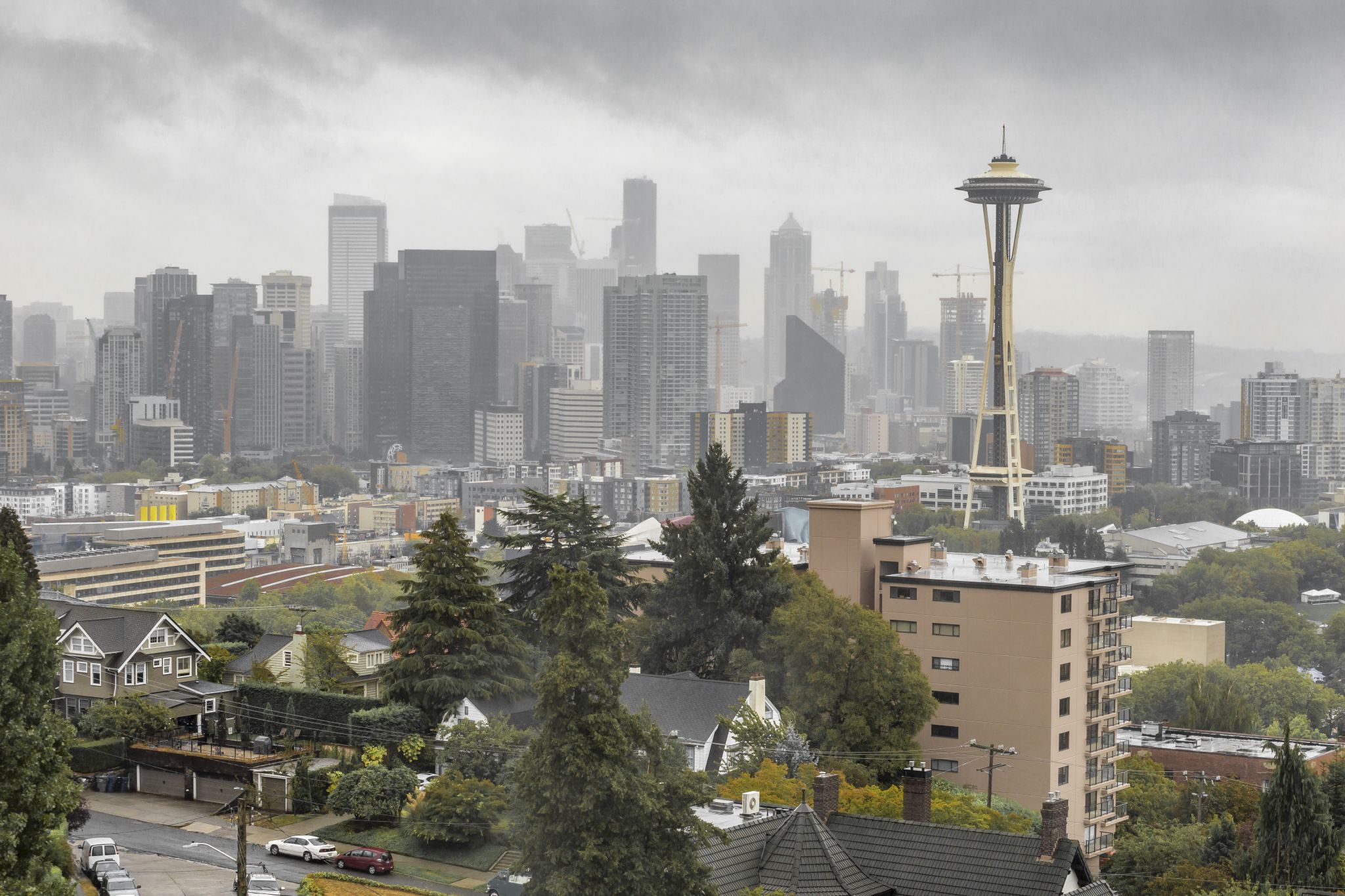
Seattle in clouds

The bulk of my adult life, over forty years, was spent in the Pacific Northwest where I remained a stranger, an outsider.  Even though it was there that I met my beloved, created a family, and had a boatload of friends, it was never home. I love the city of Seattle because of the variety of world cultures that settled and thrive there. You are never far from a festival, an event to celebrate people from far-flung lands. I love my many Seattle area friends. I loved being able to snow ski Mount Rainier and sail Puget Sound, horseback ride and play tennis, most of the year in mild temperatures. Wonderful ethnic food, an enormous variety of world-class arts –  museums, theater, music – play a big part in Seattle’s identity. I once wrote a twenty-page paper on the City I Love to Hate – extolling its history and all its virtues and why I suffered in its bounty. I was claustrophobic, confined, imprisoned by the environment. A blue sky is sporadic, appearing a few times a month (occasionally never making an appearance for weeks) and rarely bringing warmth. Clouds hung like Damocles’ sword, low overhead, threatening gloom. My feet never felt dry, my hands never warm. A pervasive smell of mold clung to everything. Trees obscured the horizon and all potential vistas of mountains and lakes. People were closed as tightly as their coats and sweaters, bundled for safety, cliquish.

Santa Catalina Mountains

During our adventure traveling through the contiguous forty-eight states for fourteen months in 1984-1985, we found a place that felt like it could be another home. Tucson. It is ringed by five mountain ranges, not snowy like the Rockies, but rugged and beautiful, rising from the Sonoran Desert. The Santa Catalinas, the Tortolitas, the Rincons, the Santa Rita, and Tucson ranges. These mountains display a mind-blowing range of color at sunrise, sunset, and when clouds filter the desert light. I have photos of them dressed in reds, oranges, blues, purples, and golds. During monsoon season they flaunt a verdant green as vegetation awakens in the nearly tropical heat and humidity. But we still had a life (family and work) in Bellevue, Washington; but when the kids were raised and it was time for retirement we headed south. I am grateful every morning I wake up to the sunshine. I even learned, after many years, to treasure rain again. It was such a curse in Seattle. Anxiety no longer attacks me when dark rain clouds appear on the horizon. They are temporary. I know they will make the cacti and fruit trees blossom, wildflowers erupt into blankets of color and sate thirsty desert critters. I welcome monsoon season like a native. My feet are firmly planted in this place. Breathing clear air, embracing dark skies at night with diamond-bright galaxies shifting overhead, walking trails and communing with desert animals that cross our path or visit our yard, make this place home.

This poem is about the four places that influenced me from childhood until now. Home is more than just an address, a dot on a map. It is a place where your soul can breathe.

Where I Am From

I am from the traveling wind, deep roots,
Wide blue skies, far horizons, and waving wheat,
Great-grandma’s raw onions by her supper plate,
Great-grandpa’s spittoon beside his rocker,
Refrigerator on the back porch and dirt fruit cellar,
Fireflies on summer nights.

I am from deep dark earth and snowy mountain highs
Grandpa’s railroad uniform smelling of wool and tobacco
Fishing at Estes Park, summer night baseball,
Honeysuckle, snapdragons, and putting up the beans
A ringer on the washing machine
Cold fried chicken, white bread with butter and sugar

I am from endless gray skies, armies of black-green sentinel fir trees
Reaching to the smothering clouds
A city where art and music blend past and present
A thousand cultures mingle like flavors in a stew
The drizzle of cold, the smell of mold
Wind in the sails, islands in the fog

I am from the knife-edged peaks with mysterious crevices
Rising from the desert floor.
Dark starry nights, quiet as serenity
Deer, coyote, and javelina share their space.
The soul-filling scent of the creosote bush after a summer monsoon.
The endless blue of sky and translucent flower of prickly pear.