I became enamored with the book, Jonathan Livingston Seagull, by Richard Bach sometime in 1971. I was a young suburban mother of three living in Bellevue, Washington. In the book was wisdom about living your best life that inspired me. A couple of years later my friend Karla told me she read in the newspaper that Richard Bach was going to barnstorm in Issaquah later that week at the small skyport there. We decided to take our kids to see him. Karla’s son was three and so was mine, my two daughters were five and six. We went to a big open field with one runway and a barn to watch Richard Bach guide his biplane to a landing and get out to greet people. There were about twenty or so people there. He looked very spiffy in his jeans, white turtleneck shirt, white scarf, and leather jacket with windblown wavey hair and a mustache.
I wanted an autograph in the worst way but in my excitement, I forgot to bring the book with me. Richard offered to give short rides in his biplane for five dollars. Karla and I looked at each other and exclaimed “Let’s do it!” There were two or three people who flew before us, so we watched as he piloted his plane through various maneuvers. I kept an eye on her son while she took a ride, and she watched my three kiddos while I went up.
When it was my turn Richard asked if I had ever been in a biplane before. “No,” was my answer. “Have you ever been seasick or airsick?” Again “No”. Would you be afraid to be upside down?” My excitement climbed. “No”. “Ok then, we’ll have fun,” he said.
The ride was short and exhilarating. We did loop de loops, barrel rolls, and zig zags. I think my entire flight lasted fifteen minutes and my heart soared. When we were back on the ground, he hopped out of the plane and helped me down. He shook my hand, and I thanked him, utterly starstruck. Then I told him I read his book but forgot to bring it for an autograph. He reached into an inside pocket of his leather jacket and pulled out a piece of blue paper. He tore it in half, took out a pen, drew a picture, and signed his name. “Here,” he said. “Paste this inside the cover of your book.”
I have read and reread most of his books. I think Illusions is my favorite although when I read another it becomes my favorite. These are a few of his quotes I love best.
“When you have come to the edge of all the light you have And step into the darkness of the unknown Believe that one of the two will happen to you Either you’ll find something solid to stand on Or you’ll be taught how to fly!” ― Richard Bach
“No matter how qualified or deserving we are, we will never reach a better life until we can imagine it for ourselves and allow ourselves to have it.” ― Richard Bach
“Remember where you came from, where you’re going, and why you created this mess you got yourself into in the first place.” ― Richard Bach, Illusions: The Adventures of a Reluctant Messiah
“You’re never given a dream without also being given the power to make it true.” ― Richard Bach, Illusions: The Adventures of a Reluctant Messiah
“There is no such thing as a problem without a gift for you in its hands. You seek problems because you need their gifts.” ― Richard Bach, Illusions: The Adventures of a Reluctant Messiah
“You don’t love hatred and evil, of course. You have to practice and see the real gull, the good in every one of them, and to help them see it in themselves. That’s what I mean by love. It’s fun, when you get the knack of it.” ― Richard Bach, Jonathan Livingston Seagull
One Christmastime, my parents drove from Wichita to Longmont Colorado so we could spend Christmas with my mom’s family. We stayed at Grandma and Grandpa’s house. We were there a few days before Christmas. My grandparents’ home on Carolina Avenue was small. The routine during our stay was that I went to bed in grandma’s bed. Then when the adults went to bed, I was transferred to the living room sofa. My parents slept in the guest bedroom. I always went sound asleep, never sensing the move from bed to sofa.
On Christmas Eve my aunt, uncle, and cousins came to visit with us. My cousins were much younger than me, so we didn’t play together. We had dinner then everyone helped decorate the tree. The bright lights cast a colorful glow around the room. There was a fire in the fireplace making the night cozy. The big picture window in the front room framed the snowy scene outside. Grandma had paper and crayons for me to draw pictures. I drew a picture of Santa and his reindeer to leave for Santa along with cookies and milk.
When my aunt and uncle left with my cousins it was time for me to go to bed. I worried that Santa would get burned by the fire when he came down the chimney. Grandpa assured me he would stay up to make sure the fire was out and the fireplace cool so Santa would be fine. I told them I would stay awake until he got there just in case. And then, lights out.
In the morning I awoke when Grandma came into the living room to take the cover off of Mr. Thorndike’s cage. He was their blue and green parakeet. He started to jabber, jabber, jabber as soon as he saw daylight. Slowly I recognized where I was and looked first at the fireplace to check on the fire. It was out. Then I looked at the tree and saw presents all around it. Santa had come. The milk and cookies and my drawing were gone. I missed him – I slept through it all. Oh, how disappointing. But I couldn’t let anyone know I had not fulfilled my mission.
Grandma and Mom went into the kitchen to start breakfast. Grandpa came into the living room followed by my dad. They looked amazed at the tree and all the presents. Dad picked me up and Grandpa took the blankets and pillow off of the sofa so they could sit down. I walked around the presents; everything was wrapped, and I didn’t know what was mine but I tried to guess. Grandpa said we’d open gifts after breakfast. Oooo, I didn’t know if I could wait so long. Grandma took me to the bathroom and helped me dress. I was so anxious. Grandpa picked one present from under the tree and told me I could open just one before breakfast. It was a china tea set with roses on the four small cups and saucers, and a teapot, sugar bowl, and creamer.
Then the question. Did you see Santa? Did you talk to him?
My four-year-old brain lit up. “Yes,” I said emphatically. “Santa came down the chimney and got his pants a little dirty. He saw me lying on the sofa and put a finger to his lips and told me not to talk. He ate the cookies and rubbed his tummy, mmm good. Then he laid out all the presents from his big red bag and blew me a kiss, took my drawing, and disappeared back up the chimney and I fell asleep really quick and didn’t look at the presents.”
“Oh, you’ll have to tell Grandma what you saw,” Grandpa said and called Grandma and my mom in from the kitchen.
I repeated my revelation and added that I heard the reindeer on the roof and their bells.
“You are one lucky girl,” said Grandma. “Not many get to see Santa.”
I did not notice the exchange of looks and winks that I’m sure darted around the room from adult to adult as I told my story. They accepted every word and repeated what a lucky girl I was.
Four years later, when my third-grade teacher told the class just before we left for the day and Christmas break, that although Santa wasn’t real, it was the spirit of giving that made Christmas special. A knot formed in my stomach. Santa, not real? How could that be? My throat went dry, a lump obstructed my swallowing. I couldn’t talk. I was devastated. I went home after school and asked my mom. She grumbled about the teacher telling the class about the myth of Santa but admitted that the teacher was right. Santa was the spirit of giving not a real man. The magic trickled out of the holiday like syrup slowly dripping off my Christmas waffles. It took me the whole Christmas vacation to accept that Santa was not a person, just the essence of giving. I couldn’t even talk about it to my best friend. The day before school began in the new year, I asked her if she knew about Santa before Mrs. Singer told us. She said yes, she was not surprised. Her parents never believed in Santa and told her and her brother not to talk about it to other kids who might believe. That really put the exclamation point on the lesson. I had no choice but to believe them.
Then I remembered my Santa sighting. Another whole dimension developed in my troubled brain. Now I knew, they knew I was telling a whopper of a tale when I described my visit from Santa. By then, I’d convinced myself that it was true. Not once did any of those grownups bring it up. Toward the end of my mother’s life, I asked her about it and she said my imaginative, impromptu story was the highlight of that Colorado trip. I’ve told stories real and imagined since I was four.
Writers obtain inspiration from a variety of sources. Mine usually come in dreams, or as I’m waking in the morning. Sometimes a character talks to me while I’m walking or driving asking to have his/her story told. It can be said to be divine, or mystical, or even crazy but it is magical. This is the true story of a spirit who guided me to write a poem.
At the tender age of sixty-two I suddenly realized that I would never be a grandmother. It had been my highest ambition, having grown up with wonderful grandparents and great-grandparents. As Polonius said, “and it must follow as the night, the day….” (totally out of context) I believed it was the natural culmination of a life well lived. I made the bold statement to my three progeny at various times that my aim in having children was so I could eventually be a grandma. I think that may have been a step too far. In hindsight, probably not a great tactic in the parent/child relationship.
By April, 2008 none of them exhibited any interest in procreation. NONE. They were happily living the lives they designed without one thought to my hopes and desires. Oh me, oh my. For several years, I had pinned baby pictures of my friends’ grandchildren and even the children of my childrens’ friends on a wall in my office cubicle. Someday, I believed, the wall would contain a load of pictures of MY grandchildren. But now all my children had exceeded their fortieth birthday and no grandchildren on the horizon. Not even a hint, a whiff, a whisper, a sign.
That evening I sat with my journal and began to jot down a poem mourning the conscious loss of something I would never have. I wrote about the little granddaughter I wished for – all the things I envisioned doing with her.
The next day I went to my computer to transcribe that story to submit to my writers’ group. As I sat at my desk, I felt the strong presence of a little boy hovering over my left shoulder. I could hear his voice. He wanted me to bake a cake for his third birthday. His spirit was so vivid, that the story of my granddaughter morphed into a poem about my grandson. I read it to my writer’s group the next week with an air of sad resignation, a kind of mourning.
My Grandson at Three A memoir of loss
A chubby bundle of verve Dirty knees, killer smile A charming packet of cuddles, Blue eyes spark with wonder That is my grandson
Innocence and childish wisdom Life – a fish bowl of dashing delights A bright idea swishes past A clever observation The world full of marvels
At three his every thought Becomes action Or question to be explored Energy and curiosity Cascade thru our day
From awakening Til he is tucked away Too tired to dream My grandson to me is Joy, delight, a miracle
Sweet arms surround my neck “Read it again, gramma” Good Night Moon redux Snuggles in my lap Affection, a two-way road, no tolls
I know it can’t last This rapture of childhood If love holds when he is grown He’ll read to me In the afterglow of remembrance
I wished a granddaughter Tea parties and dress up I wanted a granddaughter To primp and pamper I dreamed a grandson, the light of my life
I am the mother of three None plan children of their own Their choice, their path Expectation denied A loss I mourn
He will never be born to the world In consolation of loss My grandson is born to my heart A luminous vibration of life Forever tenderly just mine.
On Mother’s Day, May 11, 2008, I received a call from our eldest daughter who was living in Hawaii. “Hi Mom,” she said, “Happy Mother’s Day. You are going to be a grandma.” I was stunned. Excited, stunned, excited, over-the-moon, amazed. It was several days before I remembered the little boy who asked me to bake his birthday cake. My daughter declared that she was not going to find out the sex of her child until it was born. I had a hard time keeping the secret – I knew a little boy was on his way. He told me so about a month earlier.
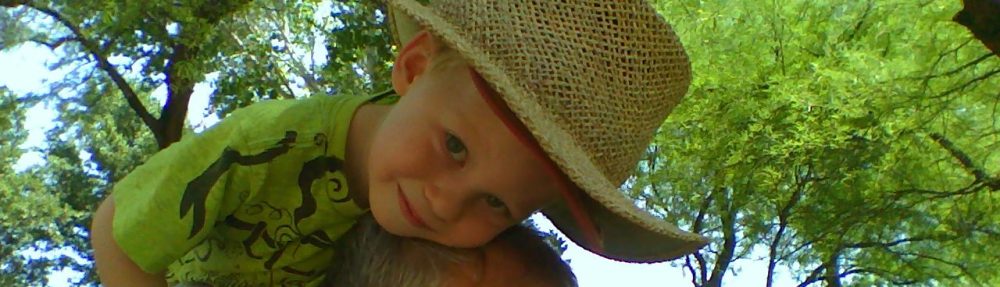
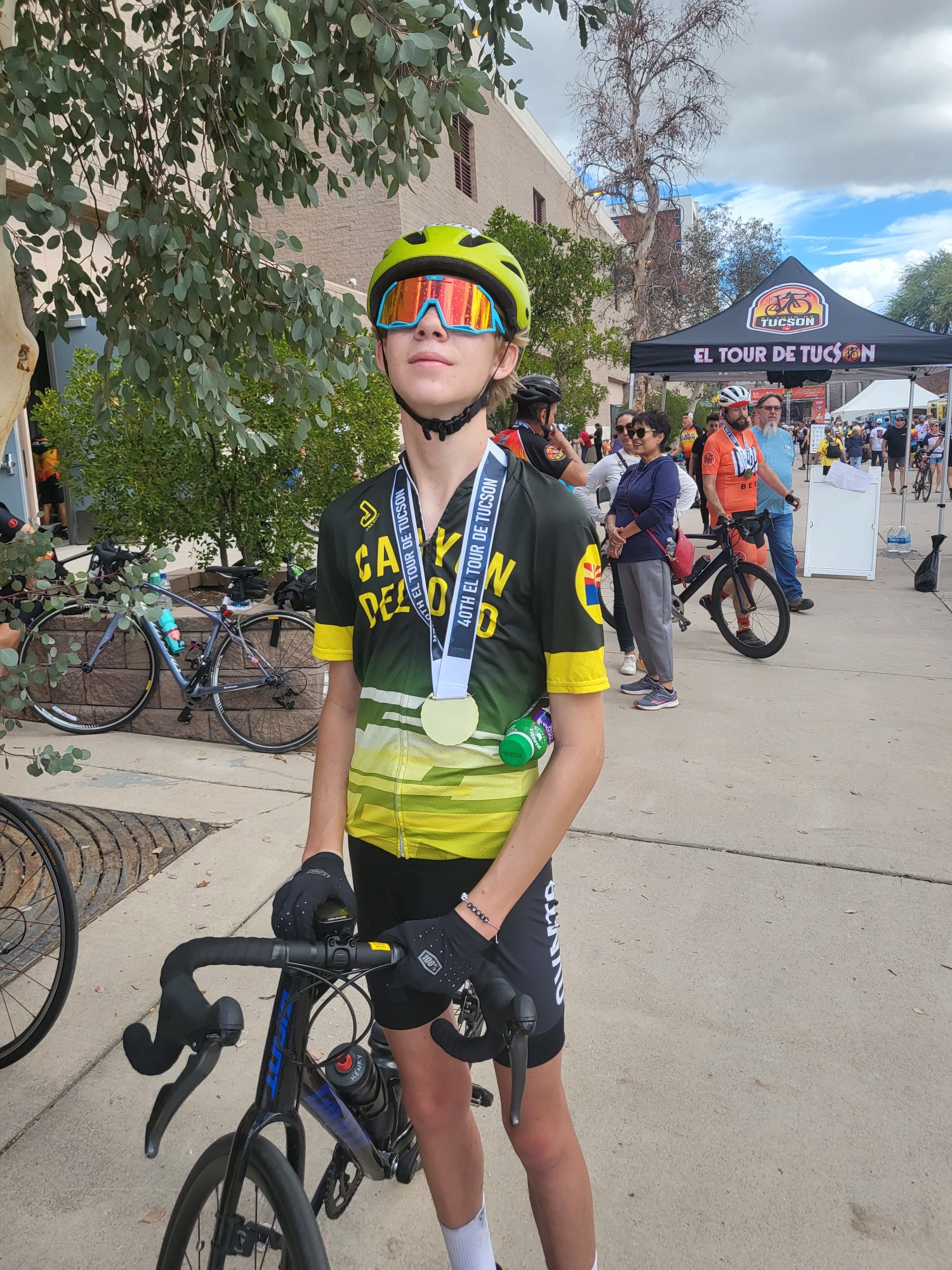
Our daughter was divorced and moved to Tucson just before her baby was born. Ken and I were privileged to be part of his childhood. I did bake his birthday cake for his third birthday, white cake with chocolate frosting and M&M’s. He is all that I dreamed. He does have blue eyes and a killer smile. He is a bundle of energy and light. He is a blessing beyond my imagining. He taught himself to play the piano by ear at age three. He learned to play the guitar from his mama. He played little league with his grandpa as a coach. He’s a scholar at school taking honors and AP courses. He is now over six feet tall, nearly as tall as grandpa, and very much his own person. He belongs to his high school mountain biking team. He has participated in El Tour de Tucson Bike Race every year since he was four starting with the fun run, then the five mile and so on. This year he challenged himself to ride the longest run – 105 miles that he completed in five hours. Oh, the bragging can go on and on for pages.
This past weekend we celebrated his 15th birthday. I baked a German Chocolate birthday cake for him.
And at nap time when he was little, we did read Goodnight Moon – many times.
This is a story I submitted to our Oro Valley Writers’ Forum. The story had to be 300 words or less. This is based on a real “character” in our family. Names were changed even though Lila is totally recognizable by those who know her. This story would make her smile with a wink.
The Coquette
Lila knew how to get attention. First, she always wore a hat. She liked to make a statement even when she went to the grocery store. Her closet was full of hat boxes. Lila also loved men. She was expert at catching the eye of a male. She was petite and moved like a dancer on tiny feet. Her large blue eyes cast about for prey when she entered a room. Then her lashes would lower like a butterfly folding its wings as soon as she secured the attention of a particular fellow.
One day my husband and I picked Lila up to go meet my in-laws at a favorite local restaurant. Lila wore a yellow straw hat with red cherries decorating the brim. My father-in-law set his baseball cap on the ledge at the end of the row of tables where several others had placed their hats. We ordered lunch. I watched Lila, out of the corner of my eye, scouting the room. A tall lanky man in his mid-forties came in and was seated at a table nearby. He placed his ballcap on the ledge also. His eyes drifted to our table and Lila gave him a nod. He smiled and went about his lunch. When it was time to leave, Lila quickly got up and went to the ledge where the hats lay and, snatching up the stranger’s ballcap, announced in a loud voice, “Oh Walt, don’t forget your hat.”
“That’s not mine,” my father-in-law replied picking up his own hat.
The stranger looked up and stood. “a – that’s my hat, Miss,” he said.
“Oh I’m sorry. I could have sworn it was my friend’s,” she said, smiling sweetly. Objective met. Lila was 92 and had buried three husbands.
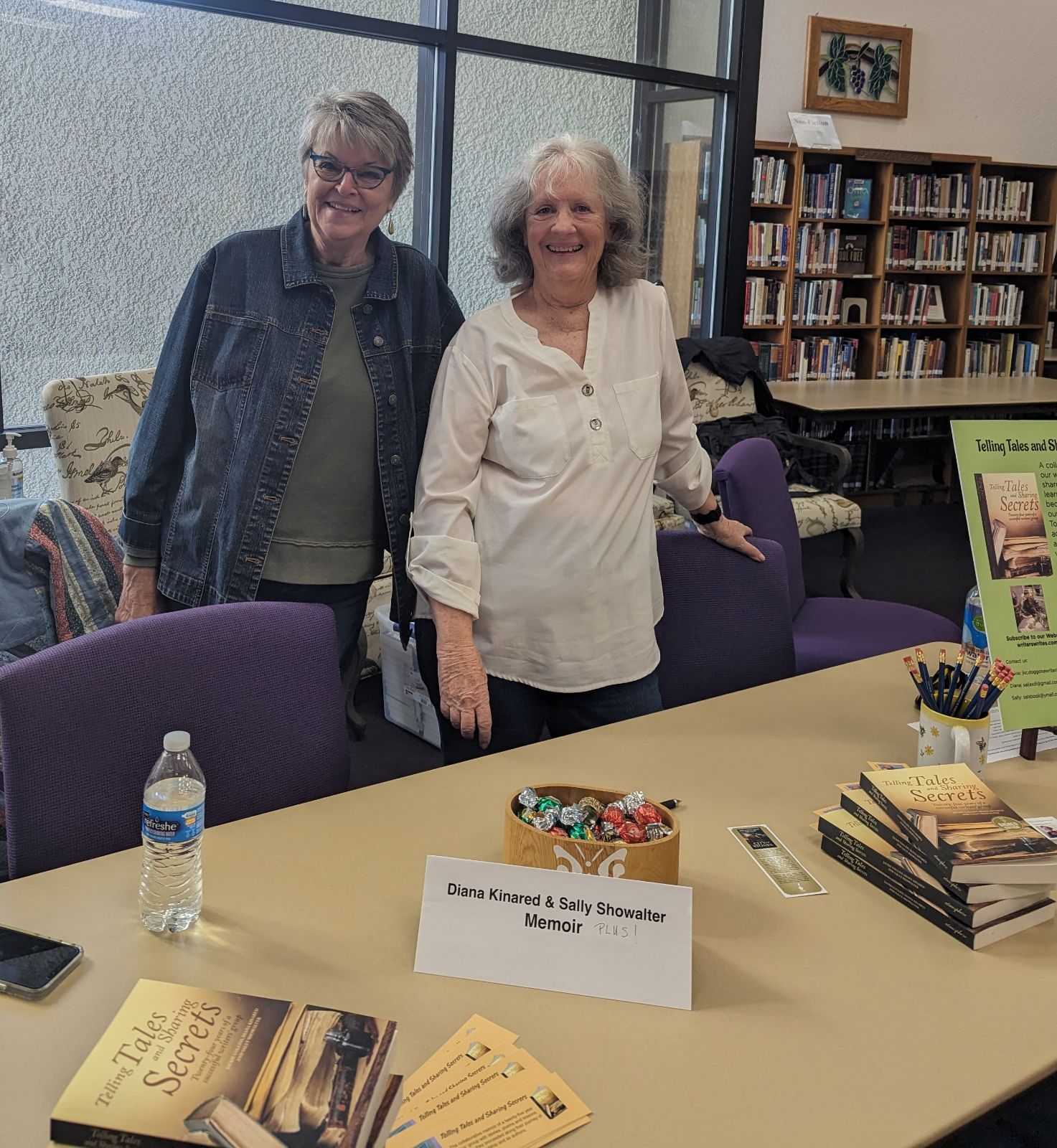
Saturday, November 25th Sally and I attended the Green Valley Book Fair sponsored by the Society of Southwest Authors to promote Telling Tales and Sharing Secrets. There were forty-four authors there, some had as many as nine different books to sell. It was a very good turnout of book lovers/readers. Sales of our book went well but the most fun we had was talking with other writers and the readers. We connected our stories with their stories in many ways thus making our community of book lovers even larger. The three hours went like ten minutes, then we packed up and left, glowing from the experience.
I’ve listed some of the books that I saw there that really interested me and, of course, I bought a few (there go the profits). Their authors had great stories to tell.
Out of the Fog by Sandra CH Smith – a bigger-than-life adventure story. Too big for one book, she is writing a second. I wish there were pictures in it. Every page is another ah-ha or oh! my goodness. This is definitely a true adventure that should be made into a movie – but who would believe it?
One Mile at a Time by Marie (Midge) Lemay and Suzanne Poirier. This book is a synopsis of the travels of two sisters who left everything behind to travel the continental U.S. in 2009 in a Honda CRV named Gypsy. They planned to travel for 12-18 months but ended up continuing for 21 months with the mantra “One Mile at a Time”. This story is dear to my heart because they traveled the “blue roads” just as our family did in our 14-month journey around the U.S. in 1984-85. Those are the roads less traveled, through small towns instead of freeways through major cities. Blue Highways by William Least Heat Moon is one of my very favorite books and inspired our travels.
A series of John Santana Mysteries by Christopher Valen. I love mysteries. I have not read this series, but I peeked into a few of Chris’ books and they look like they will be interesting reads. They are on my TBR shelf.
My compatriots at the Oro Valley Writers’ Forum cannot be forgotten. Wonderful authors all. I’ve read many of their books and highly recommend them.
I have a tiny piece of it – The Wall. The wall whose demolition I thought signaled hope and the end of division. The wall that came down in Berlin on November 9, 1989. Unlike other days that are seared into memory with feelings of foreboding, like J.F. Kennedy’s assassination, Elvis’ death, M.L. King’s assassination, Bobby Kennedy’s assassination, 9-11, this was a day of global celebration. I very clearly remember where I was the day when hundreds of people smashed that wall to pieces. I watched the event on TV in a hotel while at a business conference with my husband, feeling a sense of gratitude and relief that the symbol of oppression was destroyed. A friend was in Berlin when it came down and brought a piece of it to me. I can’t recall who he was. His face and name are lost in the labyrinths of my mind. But I still have that remnant of the wall in a small, bejeweled keepsake box in the top drawer of my dresser. It used to sit in a tray on top of the dresser where I could see it every day, but my cats taught me that anything visible could easily become invisible if they decided to swipe it; especially a small thing even if it represents a much bigger thing.
The Berlin Wall separated families physically by only a few feet but by deep canyons of ideology. We are still in that place. Walls are taken down only to have other walls built. Walls have been built forever – to keep people in as the Berlin wall, and to keep people out as the wall being built on our southern border, and the Great Wall of China that was designed in the 7th century BCE to keep out the invading Mongol hordes. People crash through walls at their own peril when what is on the other side is perceived to be more enticing than what is on their side. The world has been crashing our borders to get into a country that is labeled by some as racist, homophobic, oppressive, and discriminatory. The rapidly eroding American Dream. It is a country many still believe is better than what they left. Some European countries are attacked with the same fervor.
Humans build walls. That’s what we do. It is a conundrum. We build walls but we don’t like walls, so we tear them down. We surround our property, farms, ranches, and suburban plots with walls or fences. Office spaces are defined by boundaries. Even the homeless mark out their plots to squat. What is that all about?
I am not naïve as I once was, believing we could all live together in peace and harmony if we would only try. Seventy-odd years of life swept that dream away. Sorry Martin Luther King. In the timeless myth of King Arthur, the king explained that when Merlin, the wizard, turned him into a bird, he flew high above the land and could not see where one county ended and another began because the earth doesn’t designate boundaries, only people do. John Lennon wrote about a world without boundaries in the song Imagine. “Imagine no countries, it isn’t hard to do. Nothing to kill or die for and no religion too.” A world to wish for but, despite our rhetoric, that is not what human beings do. It’s sad but it is human nature. In the words of another King, Rodney, who in 1992 survived a brutal police beating and subsequent riots in his name, “Can’t we all just get along?”
I can only do what I can do to make others feel welcome and accepted provided they do not threaten me with harm. Their religion, nationality, sexual proclivities, or political beliefs are of no interest to me if they are friendly and interesting to talk with. I confess I have a wall around my backyard too. It keeps out the deer, javelina, and coyotes who have not yet figured out how to open the gate. The bobcats and quail, however, jump the wall and the bunnies squeeze through the weepholes. I’m okay with that. We live in harmony.
Happy Thanksgiving to All! This has always been my favorite holiday – all about food, friends, and family. A time to be with those we love with no obligation for gift-giving. Once upon a time our family had a very memorable Thanksgiving – not in the usual way.
The Thanksgiving tradition in our family developed over a number of years. As young marrieds, my husband’s two sisters, their husbands and the two of us went to his parents’ home for Thanksgiving. His single brother came along with the girlfriend of the month. None of us had the room or wherewithal to deal with a crowd for the holiday. We all lived in and around the greater Seattle area.
When children were born to each household, we found it easier to have the feast at one of two houses, ours and Ken’s sister Arlene’s. At one point our two families lived only a block from each other. We had large homes and each had three children of similar ages. The kids attended the same schools. Ken’s dad suffered with medical problems and his mom was getting older, so it was harder for her to prepare a big meal, even with help. We divided up the holidays. One year Ken and I would host Thanksgiving and Arlene and Charles hosted Christmas. The next year we switched. That went on for most of the years our children were small through their teens.
The last year for our big family gathering was the most memorable. Arlene and Charles had moved to a home on a few acres at Offut Lake, south of Seattle. Ken and I moved even further south to Arizona. All our children were adults living in the Seattle area. Ken’s parents had passed away. Charles’ mother, Maude, lived in her own little trailer home on their property so they could care for her as her health declined. A few days before this particular Thanksgiving, we were told she had been moved into the house because she needed twenty-four-hour attention. We expected to spend time with Maude during the day.
We flew to Seattle from Tucson and drove out to the lake. Upon arrival, our arms loaded with gifts and treats for the family, we were greeted on the front porch by Charles with, “Happy Thanksgiving. We’re glad you could make it. Come on in. Mom just died. She’s lying in her room. You can visit with her if you like. We’ve called the coroner.”
Shocking, to say the least. We had no cell phones at that time, so could not receive a heads-up that she was near the end. Momentary confusion rattled us. Should we postpone Thanksgiving dinner? The family no longer all lived in close proximity and everyone traveled a distance to be together. Was it proper to have a celebration with a deceased loved one in the bedroom? Not a common question at Thanksgiving. The whole family was gathered, and we took in the reality each in our own way. There were no tears, just a collection of faces in varying degrees of disbelief. Now wasn’t that just like Maude. She certainly grabbed the center of interest for this family event. We finished preparing the meal reminiscing about past Thanksgivings. Laughter and memories of Maude were shared. We took time, individually, to go to her room and wish her Godspeed toward Heaven.
Dinner was served. We sat down to the feast, Charles said a prayer of Thanksgiving, and we enjoyed the traditional assortment of foods as in past years. Death was an unexpected specter at our table. Just as we finished, a knock came on the door. The coroner with two assistants arrived between dinner and dessert, as if scripted. Maude’s body was removed and we continued our meal with pies and cakes. It was odd but felt completely appropriate and comforting for everyone to be together.
In later years as our family spread out to various states, we gathered friends together who also had far-flung relatives and created a friend/family to celebrate Thanksgiving. It is still my favorite holiday. Has your family or friend/family had an unusual Thanksgiving? I’d love to hear about them.
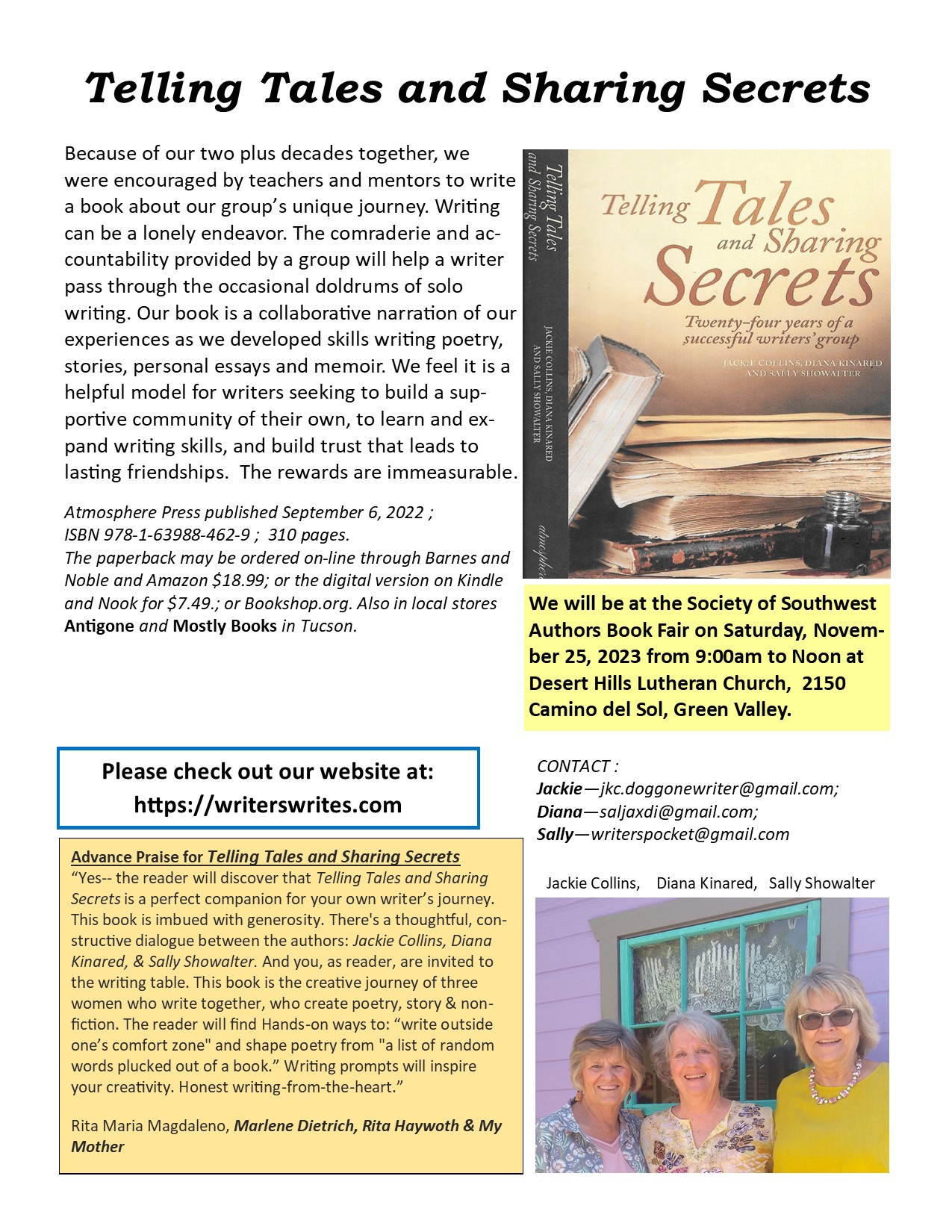
Our writers’ group published a book a year ago, Telling Tales and Sharing Secrets, about the fun and challenges of being a writers’ group. It is a collaborative memoir that spans two-plus decades of friendship and writing. Besides being a memoir, our book includes prompt ideas, tips to keep a group together, stories, poems, and essays by the three of us. This coming Saturday, November 25, Sally and I will be at the Society of Southwest Authors Book Fair to meet and greet, sell, and autograph books. Previously we were invited to participate in the Tucson Festival of Books last March 2023. It was fun talking with folks who read our book, learning how they used our tips with their groups. We get a big kick out of sharing our story and encouraging other writers to start support groups like ours that will further their writing goals. The third member of our writing trio lives in Colorado and is not able to be with us this time. If you are in the Tucson vicinity, please come join us at Desert Hills Lutheran Church in Green Valley between 9 am and noon. There will be other local writers with a variety of books to sell. Below is a link to our book on Amazon and Barnes and Noble. It can be purchased digitally or in paperback.
Odyssey: A long and adventurous journey or experience.
Homer wrote the epic poem The Odyssey 700 years before Christ was born. Poor Odysseus is beset by many challenges as he wends his way home after the Trojan Wars. The theme of a hero’s homeward journey of discovery has been reimagined many times since Homer. James Joyce echoed the themes as his hero Ulysses negotiated life in Dublin at the turn of the 20th Century. The Cohen Brothers rewrote the story in their film O Brother Where Art Thou? in the year 2000. Themes from the story have been reworked many times.
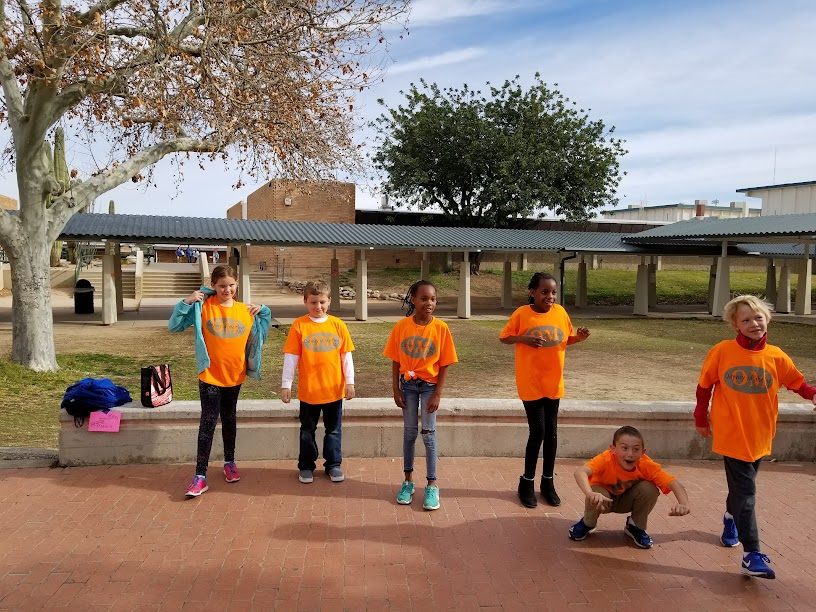
Our family experienced an odyssey for fourteen months, driving across the U.S. in 1984-1985, an adventure of a lifetime. I wrote a little about that trip in my blog post Technology for the Baby Boomer. Our grandson, born twenty-three years later, led me into another Odyssey. He came home from kindergarten one day and told his mother he wanted to join a group called Odyssey of the Mind. She asked what it was, and he told her there was a meeting of parents to learn about it that he wanted her to attend. She enlisted Ken and I to go along. A teacher from school explained the program which is an annual international problem-solving tournament for kids from kindergarten through college. They compete according to grade level. At last count, twenty-five countries participate.
The motto of OM is that for every problem, there is a solution. They believe learning should be fun and that there are always new uses for old items. The idea is to encourage creative problem-solving. The simplest explanation of the program is that each year, there are five categories of challenges issued by the International Odyssey of the Mind Association. Within each category are six problems to be solved. A team of five to seven kids chooses their problem and they work from October to February to come up with a solution that is presented to judges in late February at the first of three competitions. Teams are created by an Odyssey coordinator at the school. Team meetings are as often as the coach and kids decide, generally starting at once a week and becoming almost daily toward the end of the five months. In that time the kids conceive a solution to the problem they choose, create a script/story to explain their solution, each team member assumes a role, makes their own costumes and props, create a set that can be constructed on stage within perimeters set by the rules, and present the solution to the judges in an eight-minute skit. Easy? Not so much.
Power tools
Adults are not allowed to assist in ANY portion of the process. Teams are penalized if a mom or coach even brushes someone’s hair before the performance. Any suggestion is automatically discarded if it comes from someone outside the team. The team takes great pride in not sharing their story or their work with anyone until the dress rehearsal when families are invited to preview their performance. In elementary school, the costumes were cobbled together with items found at Goodwill or in the back of closets. Tape, glue, and staples were used in the construction of costumes since none of the kids could sew. An adult is allowed to show the team how to use certain tools. Ken helped them learn how to use power tools safely, but we could only watch as they used them.
A coach’s job is to guide the kids, not with ideas, but with questions such as “what if…? How would you make or do that? How could you tell that story? How can you adapt an item or make something to do that job? How can you make that funny or more interesting?” The adult coach may NOT offer solutions during the creative process, only guidance in following the rules of the program. There is a whole book of rules aimed at keeping competition fair. As the team starts developing their solution, the coach asks if they are on track to answer the problem and if the plan can be performed on a stage twelve feet by fifteen feet. As I said, this is an international competition. It is judged at a world final in March of each year. Each team enters a local competition, then if they are chosen first or second place, they enter a state competition and finally, if they win, they are invited to the world competition where they meet teams from all over the globe who have won their divisions. A spontaneous competition is held on the same day as the skit competition. Each team is taken into a room without their coach and given a problem they must solve in ten minutes. That instant problem-solving skill is practiced throughout the year as the team works on their big presentation. Creative thinking, team building, and cooperative problem solving are skills that people need throughout their lives. Odyssey of the Mind builds great problem solvers.
Since our daughter was a single mom and full-time breadwinner, she did not have time to be a coach. Henry turned to me. “Grandma”, says he, “will you be a coach?” Can I turn down any request by my grandson? So I became a coach. I jumped in with both feet, having no idea what I was doing or what I would learn along the way. I fell in love with the competition and with each one of my team members. I coached four different teams in four years through four very different problems. It was a true odyssey – a journey of discovery. One year, Henry did not participate so I volunteered as a judge at the local competition. I learned how very inventive young minds are. If adults are not directing them, the sky is the limit. Adult minds can put brakes on imagination. The kids come up with amazing, creative solutions, costumes, props, and backdrops on their own – beyond anything I could imagine.
A month before competition each year I was sure my team would not be able to complete their task because something was missing in their presentation. I felt they were sailing their ship right off the edge of the earth. I racked my brain for strategies to help them find their way from the brink and stood helplessly watching the disaster unfold. I read and reread the rules to them, asking them to reevaluate their presentation. Each year they continued to work diligently toward the goal. They didn’t seem to feel the pressure. I didn’t sleep the whole week before the competition, knowing how disappointed they would be to not complete their task after all the time spent on it. I was riddled with anxiety, reevaluating each step in their progress. Each year, they proved me wrong. They found a way to make it happen every time. They always surprised me. At the end of each competition, I was in awe of my team’s abilities. By the fourth year, I learned to relax and have complete confidence in the team.
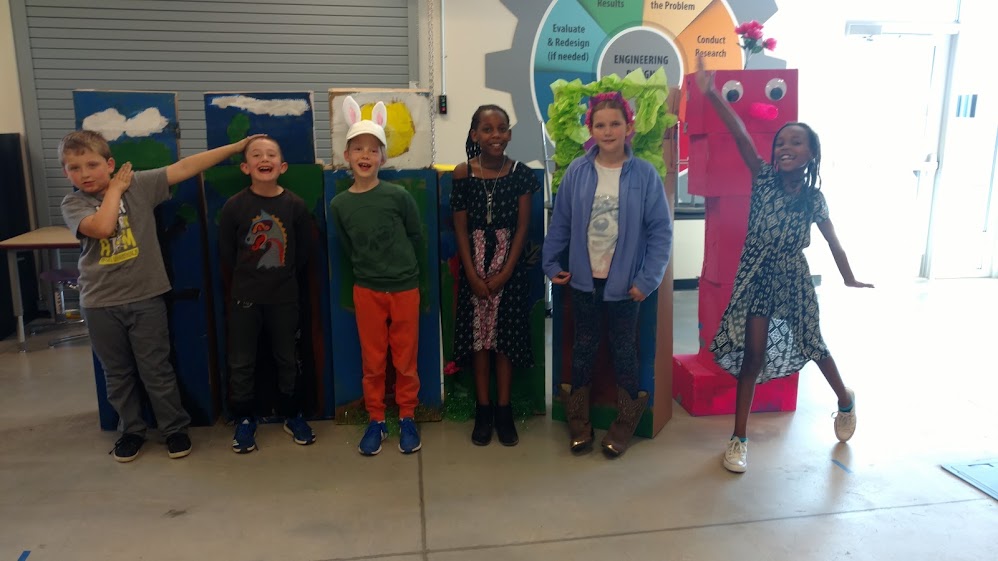
In 2018 the team, Team Wonder, did a presentation taking the Alice in Wonderland story in a new direction. They created a newscast that included an interview with the White Rabbit and the Cheshire Cat. The question was who stole the Queen’s tarts with the flamingo as the hidden camera. They had a news anchor, an interviewer, the White Rabbit and Cheshire Cat, a flamingo, and a commercial pitchman selling Wonka bars. It was hilarious.
Team Wonder
Back: Coach Diana, Bethany Papajohn (Principal) Front: Emmy, Steven, Henry, Sierra, Zaylei and Peter
One year the team came in third in the OM local competition and didn’t get to go on to state. Their problem was to recreate Leonardo Da Vinci’s workshop and conceive a new invention Leonardo may have devised. Their story took place in two time periods, modern daand the 1400’s. They had so much fun with their skit they begged me to ask if they could present it to the school at an assembly. I asked the principal who said she would consider it. The auditorium had many uses. It was occupied most of each day. Assemblies were carefully scheduled, and it was near the end of the school year. Finally. the last week of school the principal agreed to let the team make the presentation. She said it would not be a mandatory assembly, so each teacher had discretion about bringing their classes. My team was over-the-moon excited. Ken and I hauled all the costumes, props, and set fixtures (mostly made of cardboard) to school. It had been two months since the OM competition, and they had not had a practice. We did one practice session before the assembly. I told them they might have only a few in the audience. As the auditorium began to fill we realized that most of the school came. I sat in the audience to watch not knowing how it would go after so much time passed. The team got on stage and recognized they were not bound by the eight-minute time limit. They began to riff and improvise on their skit. I looked at Ken in astonishment. They were having so much fun. The applause was loud, and the kids were in their glory. They may have been third in the official competition, but they won the hearts of their schoolmates.
Team Time Twister: Leonardo’s Workshop Emmy, Sierra, Zaylei, Steven, Henry, Oliver
Improv – creating the script
The Thinkerton Detective Agency
The last year that I coached, the team chose to solve the heretofore unsolved mystery of the Mary Celeste, a ship that was found in 1872 abandoned in the Atlantic without its crew, but otherwise intact with its cargo. What happened to the crew? They created the Thinkerton Detective Agency to investigate and find an answer. At the end of five months of hard work, the team presentation was timed at nine minutes. They tried and tried to do it faster, to get it shorter. No amount of magical thinking could change the clock. Teams are penalized for each second over eight minutes and it will generally take a team score out of contention. Dress rehearsal the night before competition was a calamity. My cousin, a school teacher, was visiting and watched the preview. She shook her head and looked at me. “How are they going to get this together?” I just smiled knowing that somehow they’d pull it off. I won’t say there weren’t tremors in my gut, but I had learned to ignore them. Early on the morning of competition, we gathered at the high school where judging took place, and they went over their skit in the parking lot – still over time. Right then and there they decided what to take out. They improvised a new script, they practiced twice, and it came in under eight minutes. They presented their improvised story at the competition. Of course, the judges would never know it was not the original script. At the beginning of their skit, a part of the backdrop/scenery broke, and they had to repair it on the fly. I caught my breath. They prepared in advance for mishaps by having extra parts, tape, scissors, and wire available on set. It was a true example of preparation and situational spontaneous problem solving just like MacGyver– exactly what Odyssey of the Mind teaches. Seamlessly, repairs were made and the skit continued without pause. They won the competition.
Our team was invited to the state competition. It was the beginning of covid and the tournament was in chaos because it is a hands-on, in-person event. Rules changed, everything changed, and the judging was to be by video. The team chose not to participate. They took their win and trophy for the school.
I am forever grateful for the time I spent with all the children I coached in Odyssey of the Mind, they were my teachers. I know each of them will be better equipped for their future after participating in OM, learning the tools of creative problem-solving.
I think of life as my soul’s odyssey through this earthly existence on its way home. We all have adventures and challenges along the way. At this point I can look back and see how very fortunate I am. My life has been fulfilling and good times are abundant, but I’ve come to realize that it is during the tumultuous times that the most valuable lessons are learned. No one gets out alive so enjoy the voyage and pay attention to the lighthouses along the way that guide you through rough seas and through the shoals.
Here I am after more than three-quarters of a century looking back at some of the changes that occurred during that lifetime. The biggest technical change is the explosion of personal data devices. I did not get a cell phone until about twenty years ago. I was one of those people who said, “I’ll NEVER have a cell phone!!” I considered them an intrusion. I resisted and resisted. Then it became obvious that a cell phone was a necessary accompaniment to my daily lifestyle.
At the time my mother had moved to Tucson and was in need of close attention. She lived on her own but was in her 80s and had moved from the town where she lived for most of her life, away from lifelong friends and familiar places. She needed contact not only for personal needs and information about how to get around a new town, but also for company. My work took me out of the office, so I was not always available by landline. I believed she would find friends fairly quickly but, in the meantime, I was her social link, her sounding board, her complaint department, her connection to the world.
I discovered I needed a cell phone for business. Ken and I had just started a property management and real estate company and the need for quick exchanges of information became evident. So there I was, a new and reluctant cell phone user.
Looking way back…In the mid-1980s my family of three teenagers, two dogs, my husband and I, left our home in Bellevue Washington to travel the country. We journeyed through the forty-eight contiguous states plus a couple of Canadian Provinces and Mexican states for fourteen months. We took two of our kids out of high school (the third had just graduated). They wanted to keep up their studies while traveling so they could stay up in grade with their friends when we returned. That was accomplished with a study program coordinated by the University of Missouri and Bellevue High School. Correspondence courses were mailed (years before email) to us by the University and then back to the University as they completed each section and results were reported to their high school. All communication was by public phone in phone booths across the country and by mail, snail mail. Lots of postage. We had no cell phone and no computer. We were off the grid so to speak. Amazingly they were able to complete their studies in English, History, Math, and Social Studies – the basics, while learning firsthand about our beautiful country, its regions, its national parks, its varied cultures and languages (English has many nuances), history and geography. We took advantage of public libraries and museums along the way. Being teenagers imprisoned with their parents 24/7 for fourteen months, traveling in a van, living in a travel trailer, was indeed a sentence few would volunteer for. The only “device” they had for entertainment were Walkman cassette players with earphones. Those were revolutionary in that time. It was their means of escape into personal head space. I must give them all credit for their stalwart determination to survive. I’m sure it felt to them akin to traveling by covered wagon across the country. We crisscrossed the country from sea to shining sea four times in our quest to visit every state. How did we manage without a cell phone, GPS, the internet?
My how times have changed. Now the idea of leaving my house without a fully charged cell phone makes me quake with anxiety. What if something breaks down, what if my (fill in the blank) _________, husband, friend, daughter, grandson, needs to talk to me, an emergency, what if I get lost and need direction? What if, what if, what if? I can hardly believe the intense change from being a NEVER-CELLPHONER to being a NEVER-BE- WITHOUT-A-CELLPHONER.
Technology has certainly changed my life. For better?











 wonkagranny