The Bartender’s Special

Sheila didn’t remember why she took the drink offered by the bartender at Pirate’s Cove. She didn’t normally drink alcohol. She was out with co-workers who indulged in cocktails with names like Fuzzy Navel, Cannon Ball Express, Fluffy Duck, and Margara-Mai Tai. Sheila typically steered clear of the social scene. However, she was becoming friends with a new hire at the library, Twyla, the children’s librarian. On two other occasions, Twyla had urged her to join the lively group at the bar.  Somewhat reluctantly, she was getting to know Jon from IT, Sandy the media specialist, James the archivist, and Twyla. They were a friendly group of coworkers. Sheila always ordered a Coke. She decided to take a sip of the drink offered to see what it tasted like. Roman was his name, the bartender.

Next thing she knew, she was at her desk in the library. The book in front of her was a copy of the Odyssey by Homer, in GREEK. She looked around. Everyone and everything seemed to be as usual.  She turned several pages in the book, and sure enough, she could read it. She called her colleague, Sandy, over to her desk and read aloud a few paragraphs from the book – in Greek. Sandy looked stunned and went back to her office, shaking her head. Sheila searched WebMD for the answer to “sudden ability to read ancient Greek”. It was not helpful. She slammed the book closed and took it to James.
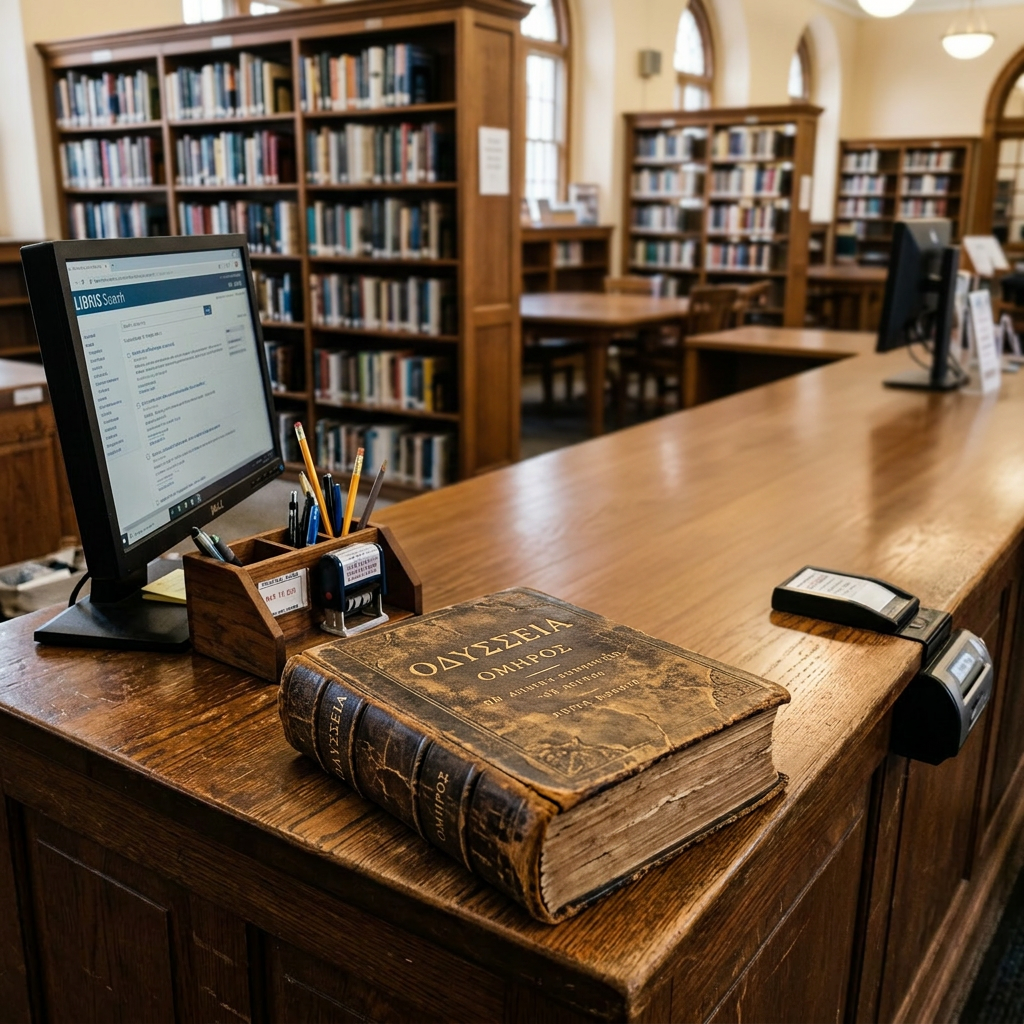
Librarian checking out books at a wooden library desk with computer and stacks of books
The Odyssey

“Did I ask for this book?” she questioned.

“Yes, early this morning. You were the first here today, and when I came in, you asked me to find a copy of the Odyssey in Greek in our archives. You looked a little out of it. Maybe a bit of a hangover from last night?”

“Okay. Well…”

“Are you doing research for something in Greece?”

“Not exactly.” Sheila paused, bewildered. “You can reshelve it now. Thanks.”

A tourist stopped her outside the library as she left for the day. He asked for directions – in Mandarin. Sheila answered in Mandarin. The words escaped her mouth like a ribbon of sound. It was like she could see it float through the air.

I’ve got to see somebody about this, she thought. I wonder if HR can help?

On the subway across town after work, she heard conversations in multiple languages as usual. What wasn’t usual, she could understand them. She heard a couple wrangling away in Portuguese, another woman oversharing with her seatmate about her boyfriend in vivid and unnecessary detail – in Japanese, and a man mumbled to himself in Russian as he analyzed other passengers on the subway – he was not very complimentary, she thought, although she agreed with most of his assessments. His reaction to the thirty-something lady with tattoos covering all her exposed skin except her face was spot on.  He grumbled that she looked like a walking billboard for Dharma’s Eightfold Path. Sheila giggled but turned quickly away.

She thought, I really don’t want to know all this stuff. I can’t ignore them anymore. I can’t look people in the face when they think I don’t understand them. It’s almost like reading minds. Maybe this is a gift. I don’t want to seem ungrateful. Maybe it will lead to other job opportunities. But, she argued with herself, I don’t want other jobs, I like working in the quiet atmosphere of the library. It is what I was made for.

The next day, Twyla asked Sheila if she wanted to go to the racetrack. She said she knew one of the grooms, and they could get entrance into the paddock before one of the races.  Twyla had been trying to interest Sheila in the races for months. Never one to challenge the odds, Sheila preferred to stay home and read books. Her occasional attempts at social interaction had fallen flat. She didn’t fit in. It risked her peaceful equanimity and anonymity to try.

With her new powers of language, she was now curious about the outside world. She was uncomfortable being home alone. Her mind kept spinning, trying to reason how she could understand other languages. She needed company to take her mind off her problem. The racetrack seemed to be as good a place as any. She promised to go on Saturday.

That night, Sheila flipped through TV channels, searching for foreign language movies. She challenged herself to find out what languages she could understand. She found a French-language film that she enjoyed. She came across a German-language gameshow and she couldn’t understand it. Wow, good. I’m poly-lingual, but not a pantoglot. THAT would be scary, she thought, somewhat relieved.

In the morning, she watched the news as she got ready for work. There was a major shakeup in the stock market. That was the big news of the day. She glanced at the TV and, lo and behold, all the stocks listed were in technicolor! The stocks the analysts said were “buys” blossomed on the screen as various shades of green, from bright to pale. The stocks he claimed were on the downslide showed in browns from tan to deep chocolate. Other stocks mentioned were in a variety of colors. She didn’t see any dollar amounts, just colors. She was mesmerized by the rainbow of stocks.

Sheila heard the analyst name one corporation as a “dump this” stock, but she saw it in brilliant green. When she went to work, she asked Clarence in HR about stock options through the library savings plan. He said it was one of the benefits. She was beginning to appreciate the craziness in her head. What if?

“I want to put all my 401K into Salton Claremont Industries.”

“We can’t do that, Sheila. You are limited to moving only 20% of your savings at any one time. I can put 20% of your savings into that stock if you like, but not the whole thing.”

“Okay, do that.”

“Did you get a hot tip?”

“No, it sounded good this morning on the stock review part of the news.”

“In the ten years you’ve worked for the library, you’ve never seemed interested in the savings plans, but I’m happy to make the buy for you through our investment plan supervisor.”

On Friday morning, Sheila attentively watched the stock market review on TV. Sure enough, Salton Claremont Industries made an unheard of gain – up 50% overnight. The analyst was gobsmacked. There was no sound reason for the uptick. But there it was. Sheila appreciated the intense green aura around the stock name.

She went to Clarence and told him to sell the stock right away. Again, he was puzzled by her seeming expertise. He looked up the price of the stock on the internet and was in total surprise at the change in it.

“What did you know?”

“It just looked good to me. No insider info. Can you sell immediately? I want to take the win.” Sheila surprised herself with her certainty.

“Sure, I’ll do it now. The gain will be locked up at today’s price. Funds clear Monday. That’s a tidy sum you just banked – $15,000.”

“Great!”

She went to see Twyla at her break. “I’d love to go to the races tomorrow.”

“I’ll meet you there about 11:00. We’ll watch the races and have lunch. Bring $100 if you can, so you can bet ten bucks on each race,” Twyla said.

“Do you ever bet more?”

“No. I bet for fun and rarely win. I choose the winners by the color of the jockey silks or by their name, not by what shows in the racing form. It’s just a fun way to spend the afternoon.”

“I recently came into a little money. I might bring a bit more and see how it goes.”

“Your money, your chances. Gotta go. I have kiddies coming for story time in fifteen minutes. See you tomorrow.”

Saturday morning dawned bright, but there was a chance of rain in the afternoon. Sheila went down to the newsstand to get a copy of the racing form. She studied it while she ate breakfast, without understanding much of it. She decided she would bet on names. Papa’s Hunch was in the sixth race and sounded good.

Sheila met Twyla at the track, and they went to their seats.

“Herm said we could go down to the paddock just before the fifth race. That’s the one his horse is in.”

“Does he own it?”

“No, he works for the trainer. He thinks it’s a good horse, though. Its name is Butter Buster.”

“Is that the one you’re betting on? I saw one called Papa’s Hunch in the sixth. I like that name.”

“As good a way to bet as any,” Twyla said. “Let’s order lunch.”

The horses came onto the track for the first race. Sheila noticed right away that one of them had a bright aura around it.

“I’m betting ten dollars on number three,” she told Twyla.

“Ah, you like the name?”

“What is its name? I like how it looks.”

“It’s Camel Ott. I’m going for number two, Simpleman”.

They went to bet.

Camel Ott came in first, Simpleman came in fourth.

For the next three races, Sheila bet on the horse with the aura and won. After her first win, Sheila bet more than the ten dollars per race – considerably more.

“First time luck, I guess,” Twyla said. “You have a knack. What are you betting next? I think I’ll do what you do.”

Before the fifth race, they went down to the paddock and met Herm. He let them in but told them to stay way back from the horses because the high-strung beasts were sensitive to strangers. They stayed in the center of the circular paddock parade path, away from the stable area. Again, Sheila noticed one of the horses had a special light around it.

“I’m choosing that one,” she said, pointing to the dappled grey horse.

“They say, bet a grey horse on a grey day,” Twyla said, looking at clouds gathering overhead. “Herm’s horse is the one next to it. I’m betting his horse, number six.”

After riders up and the paddock parade, the women placed their bets at the betting windows.

Sure enough, number seven won the race – the grey horse with the aura. Twyla’s horse came in second.

“You’re making a killing. How are you doing it?” Twyla asked.

“Don’t know. Lucky, I guess.”

Then came the sixth, and Papa’s Hunch was warming up on the track.

“There’s your horse,” Twyla said, pointing to the big bay sporting purple and yellow jockey colors.

Sheila didn’t see any aura around Papa, but she did see a glow around Sissy’s Crime.
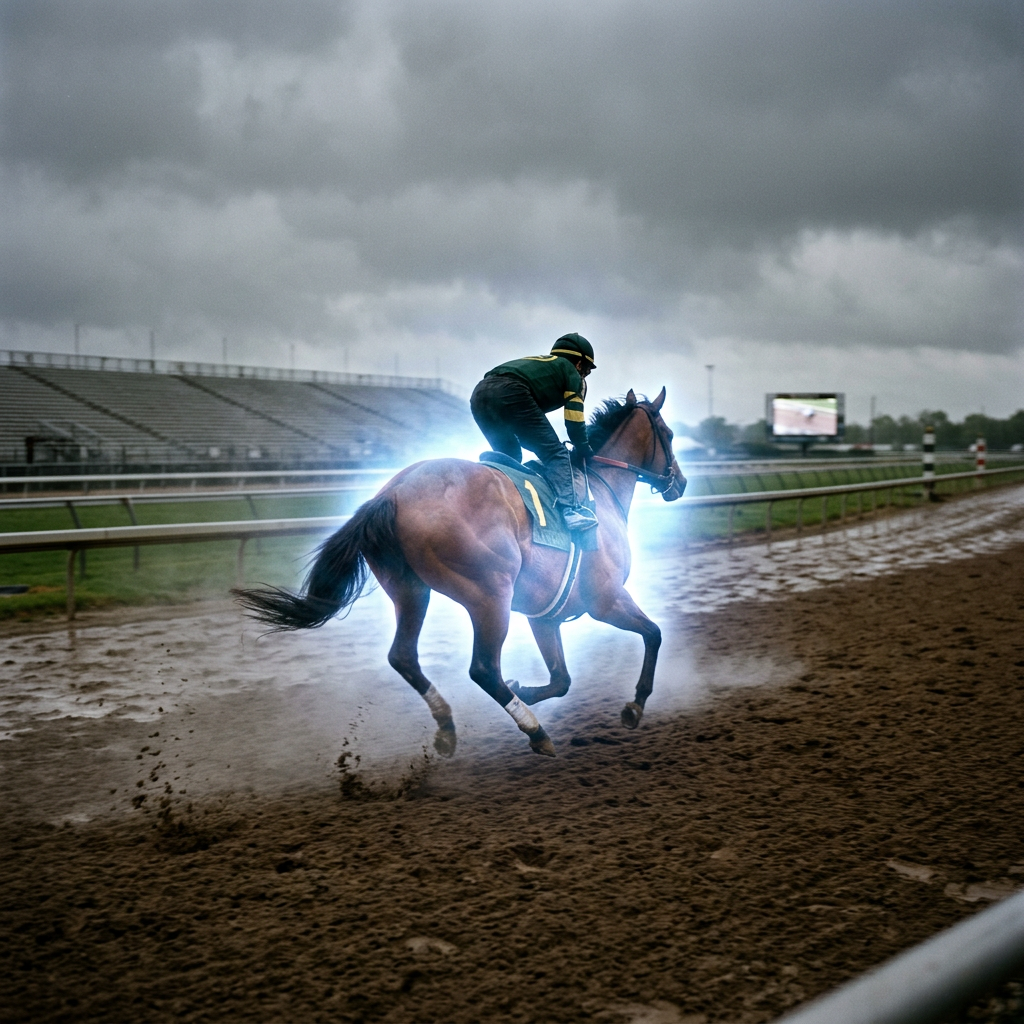
Sissy’s Crime – a long shot wins easily

“I changed my mind. I’m betting on Sissy instead.”

“He’s a long shot, but whatever you do, I’ll follow.”

Sissy’s Crime won. Papa’s Hunch came in last.

“Let’s go,” Sheila said. By that time, she was ahead by $4,000.

“You’re doing so good, why don’t you stay for the last four races?”

“It’s just getting a bit much for me.”  Sheila was beginning to be uncomfortable. At first the winning was a heady experience, but she feared being swallowed by expectation, following the signs, no longer in control.

“I never considered winning to be exhausting,” Twyla said.

“I know it sounds strange, but I’m getting a headache. I’m leaving.”

“Okay, see you Monday. Thanks for the wins.”

On Monday, Jon showed up at Sheila’s desk with a legal pad and hungry eyes asking for advice on stock picks. Clarence had told him about her lucky strike. Her supervisor called her into the office to ask about a biotech stock. James asked her to help him organize some unpublished Polish documents pertaining to WWII in the archives. Word had gotten out. A fellow named Ted, who said he worked in IT with Jon, wanted a tip on the next big race coming up. She was no longer the quiet research librarian whose name nobody could remember; she was now the most interesting person in the library. She was pushed beyond her comfort zone. It had stopped being a gift and felt more like a curse. Was this what it was like to win the lottery? All the expectations from other people?

That evening, Sheila went to Pirate’s Cove. Roman was behind the bar and managing the boisterous crowd. In the bustling swarm, he noticed Sheila and immediately went to her.

“What was in that drink you gave me last week?” Sheila asked

“Hmmm. Don’t know what you mean. When were you in here?” He asked, but she could see a knowing twinkle in his dark eyes.

“I came with my friends from the library. I know they are regulars. You called them by name. I’ve come a time or two, but never had a cocktail before. You offered me a special drink. I want to know what you gave me. Why me?”

Roman smiled, a deep dimple creasing the left cheek in his deeply tanned face. “Did you like it? Want another? A good bartender knows what his customers require.”

“No, I want the antidote. I want to go back to my old quiet life. I’m afraid of the next thing that might happen to me. I don’t want that much responsibility. Just give me my old life back, please. I’ve climbed to the top of the roller coaster, and the ride ahead looks terrifying – probably more than I can handle.”

Roman tipped his head in mild acquiescence and put two glasses on the bar in front of her. In one, he poured a blue-tinted concoction; in the other, he poured a clear beverage.

“Are you sure? It’s up to you now,” he said. “Choose carefully. It is your destiny.”
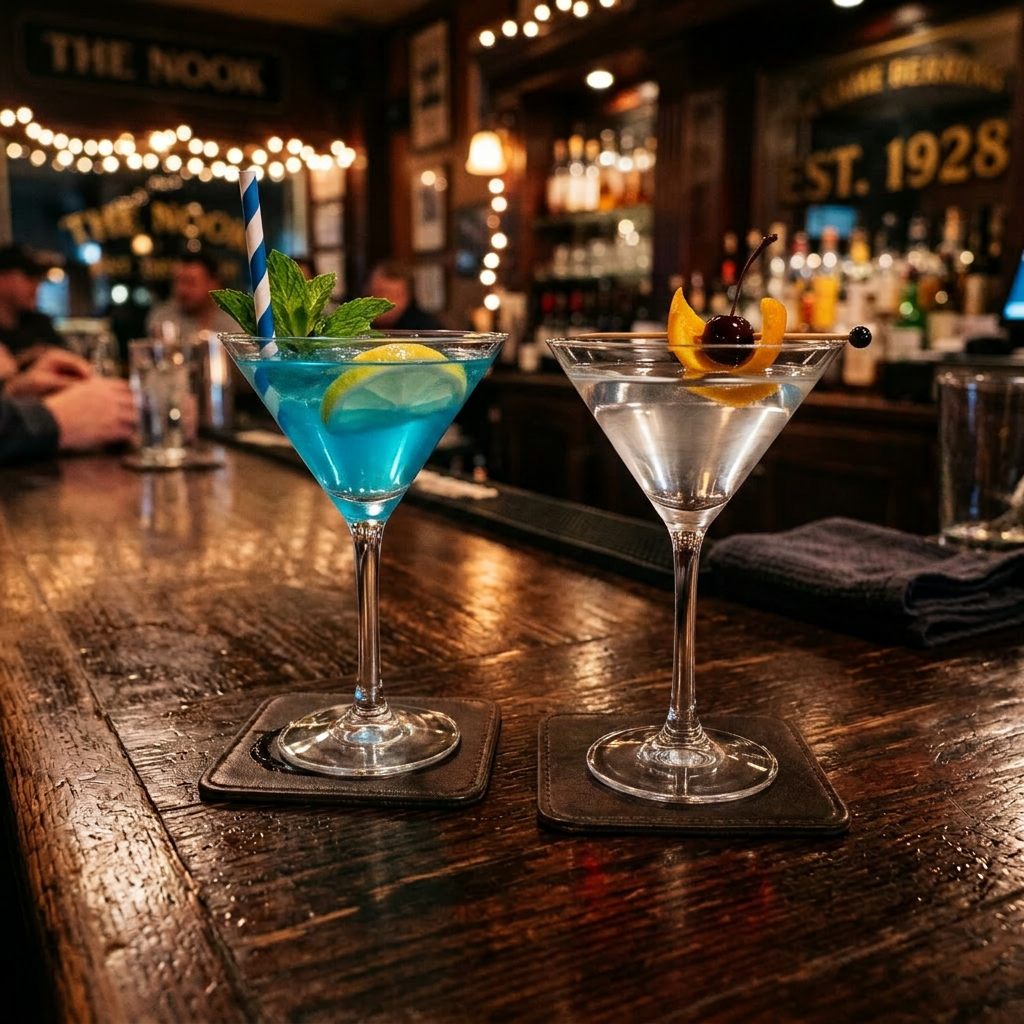
Blue cocktail with lemon slice and mint next to brown cocktail with cherry and orange peel on wooden counter
Two choices in Roman’s bar

The pictures in this story are generated by AI through WordPress.

Chicago: August 1984 and July 1985

Intro: From June 1984 to September 1985 our family of five plus two dogs traveled around the country in a three-quarter-ton reconfigured cargo maxi van pulling a thirty-one-foot trailer. Our trip began in Bellevue, Washington. We quit our jobs, took our three teenagers out of school, sold our two-story house, packed ourselves into the trailer, and took off on a grand adventure. Our 15-year-old nephew, Wally, accompanied us the first summer (four teens).

We had no cell phones, no computers, no GPS. We were off the grid. We didn’t even have seat belts. We traveled 50,000 miles crisscrossing the U.S. four times. Planning for the trip included library research and correspondence with all the Secretaries of State of each state we intended to visit. I had folders full of information about each state. Needless to say, the teens were not thrilled with the idea of spending fourteen months 24/7 with the old folks and missing a whole year out of school with their friends.


We went to all the contiguous United States, three provinces of Canada, and dipped into Northern Mexico a couple of times. After Christmas, we took a Caribbean cruise stopping at Jamaican, Grand Cayman, and Mexican ports. The objective was to show our kids their country, all the nooks and crannies, all the cultures and quirks, visiting museums, state houses, historical sites like Civil War battlefields, national parks, as well as small towns. We tucked in a few theme parks, and professional sports when a team was in a town we passed through. We endeavored to meet people in each region that make this great land. I am beginning to piece together our stories from letters, journals, photos, and memories. This is a snippet from our journey. These stories are taken from letters and journals written during the trip forty years ago and do not reflect the places as they may be today.


Chicago: August 1984 and July 1985
As we drove around the country we tried to stay on the “blue roads”, so named in the 1982 book by William Least Heat Moon, Blue Highways. It was one of the sources I used to plan our odyssey. That meant we were away from main highways – the red roads, arterials – instead using the minor, less traveled, roads that took us through small-town America. On paper maps – we didn’t have GPS or internet – the blue roads look like the veins of the human body, tiny but necessary for travel and commerce, the lifeblood of the nation. Big cities are very much alike but small towns are unique to their region and citizens. Of course, in order to visit major sites we needed to go into major cities.


We went to Chicago twice, once on an eastbound trip and once again on a westbound stretch. Both visits were too short. Some states we visited twice and some states, like Texas, seemed endless and it took us forever to get across.


Our family first visited Chicago in August 1985. At this point, there were five of us, Ken, me, and our three kids. Our nephew had to return to Bellevue before school started for the year. The closest campground we could find was in a town called Mokena about forty-five minutes south of Chicago proper. We parked our trailer there and ventured into the city. The late August weather was warm and sticky. Everyone wore shorts and short-sleeved shirts, except me. I had on a sundress.

We drove through the city and around the perimeter where we admired the Chicago River and the architecture of the buildings along it. We walked the Magnificent Mile with all the big stores such as Saks Fifth Avenue, and Bloomingdales as well as chic boutiques like Armani, Burdeen’s, and Gucci, none of which we went into. We saw the great Shedd Aquarium in its beautiful building filled with unbelievable beasties, amphibious and seagoing marine life. There are things there you cannot even imagine until you see them; plants that look like animals and animals that look like plants. The intelligent and curious octopi alone are worth a whole day. They interact with the public. I wish every large metropolis with a waterfront would take a lesson from Chicago. They made the lakeside a people-place with parks, museums, a planetarium, beaches, marinas, fountains, and gardens – all for everyone to enjoy. Their waterfront isn’t blocked off by factories, warehouses, or docks – it’s beautiful, clean, and fully accessible.

One of our friends told us we had never eaten real Italian food until we had food in Chicago’s Little Italy. So we set out for some REAL ITALIAN FOOD. Our local guidebook said that the Italian community in Chicago centered on Taylor Street. Consulting the map, we took ourselves to the west side of town. As we toured the neighborhood, we noticed large numbers of citizens loitering around street corners and sitting on stoops. The local occupation appeared to be indolence. There were dozens of boarded-up stores with Italian names even though the people on the streets didn’t appear to be Italian. Countless residences were rundown or abandoned.


While Ken drove, I pointed out Mama Rosa’s, Little Luigi’s, or Georgio’s as possible places for dinner. He shook his head.

“I wouldn’t leave our van on the street in this area,” he said. “I wouldn’t feel safe walking down the street with our family. We’re not eating around here. Look up something else, somewhere else.”

He turned back on Taylor Street toward downtown Chicago. I was not to be deterred. We were going to eat in Little Italy, no matter that the area had undergone a cultural transformation. We passed a restaurant, Bocciola della Rose (Italian for rosebud), with a fenced and gated parking lot. Three prosperous-looking senior citizen couples were entering.

“How about that place? The parking lot is gated and there is an attendant inside the fence. Don’t you think that would be safe?” I begged.
“Ok, we’ll try it.”

We quickly went around the block and returned to the gated parking lot where a young man of Italian descent, Guido, told us he would park our van and watch it until we finished dinner. Smiling from success, we proceeded into the dark narrow little restaurant which had a small bar as you entered the front door.

I led the way and, as the rest of our group appeared through the door, a tiny wizened lady rushed down behind the bar shaking her finger and head at us saying in very broken English, “We no serva the short.” It took three repetitions of this phrase for me to realize that she meant we were improperly dressed for her establishment. Sure enough, looking around we noticed all the men were wearing slacks and shirts with ties, some even had jackets and the women were all in dresses. – NO SHORTS. Imagine our chagrin after coming thousands of miles to eat in Little Italy, then finding its character altered and somewhat intimidating, then finding, with some reservation, a suitable place to eat and being turned away as undesirable. We left to continue our quest for Italian food in the Chicago loop. We ate our spaghetti and meatballs in Miller’s Pub on Wabash Avenue. Good American pub food, highly recommended and they serve shorts.

Our second visit to Chicago was, unfortunately as brief as our first visit the previous August…rush, rush, rush. We were there only a couple of days. We went to the top observation level on the 103rd floor of the world’s tallest building (at that time), the over 1,400 ft. high Sears Tower.


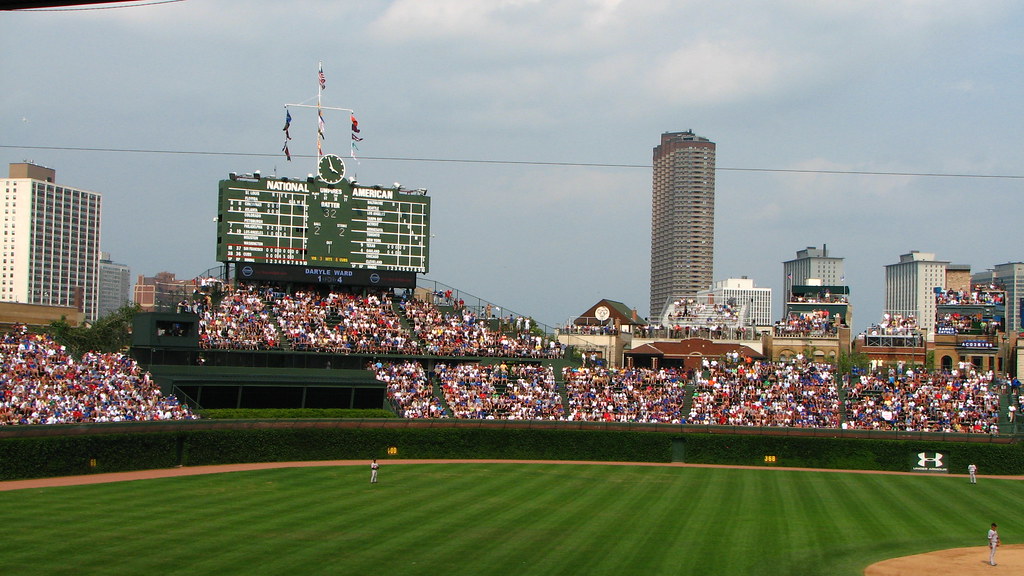
Visiting baseball parks to see professional games was part of the agenda on our trip. On Friday, July 12, 1985, we attended a Cubs vs Dodger game in the best ballpark we’d seen – Wriggly Field – a gorgeous real grass field, ivy covered brick outfield walls, and sunny blue skies. This is the city where fans fought for tradition – no lights at Wriggly. All games were played during the day. (The big business of baseball being what it is, that has changed. Lights were installed in 1988. Night games are played there now.) We stayed around after the game to talk to the winning pitcher, an L.A. Dodger from the Seattle area, Tom Neidenfurer. He won the game 7-4. Our friend Dickie Pederson had gone to school with him in Redmond, Washington and asked us to say hi to him if we crossed paths on our journey.

We returned to the Italian restaurant, Rosebud, which refused us service the previous visit because we wore shorts. This time we were properly attired and were served; cannelloni for Ken, lasagna for me, and spaghetti with meatballs for the kids. We were not disappointed. It’s a classy place with great food and a mellow musical accompaniment. Another evening, we went back to Miller’s Pub on Wabash. The local tavern filled with regulars who consumed large quantities of pasta, wine, and beer, while watching sports on TV had become our favorite, offering more comfort than class.


The next day took us to The Dells in Wisconsin and on to Appleton where my grandmother, Bessie, was born. She left home at nineteen to be a Harvey Girl and travel across the country to Wyoming where she met the love of her life. I wrote about her in my blog post of September, 2023. Travel and adventure run in my blood. I’ll add more stories to our journey as memories bubble up.

Odyssey of the Mind

Odyssey: A long and adventurous journey or experience.

Homer wrote the epic poem The Odyssey 700 years before Christ was born. Poor Odysseus is beset by many challenges as he wends his way home after the Trojan Wars. The theme of a hero’s homeward journey of discovery has been reimagined many times since Homer. James Joyce echoed the themes as his hero Ulysses negotiated life in Dublin at the turn of the 20th Century. The Cohen Brothers rewrote the story in their film O Brother Where Art Thou? in the year 2000. Themes from the story have been reworked many times.

Our family experienced an odyssey for fourteen months, driving across the U.S. in 1984-1985, an adventure of a lifetime. I wrote a little about that trip in my blog post Technology for the Baby Boomer. Our grandson, born twenty-three years later, led me into another Odyssey. He came home from kindergarten one day and told his mother he wanted to join a group called Odyssey of the Mind. She asked what it was, and he told her there was a meeting of parents to learn about it that he wanted her to attend. She enlisted Ken and I to go along. A teacher from school explained the program which is an annual international problem-solving tournament for kids from kindergarten through college. They compete according to grade level. At last count, twenty-five countries participate.

The motto of OM is that for every problem, there is a solution. They believe learning should be fun and that there are always new uses for old items. The idea is to encourage creative problem-solving. The simplest explanation of the program is that each year, there are five categories of challenges issued by the International Odyssey of the Mind Association. Within each category are six problems to be solved. A team of five to seven kids chooses their problem and they work from October to February to come up with a solution that is presented to judges in late February at the first of three competitions. Teams are created by an Odyssey coordinator at the school. Team meetings are as often as the coach and kids decide, generally starting at once a week and becoming almost daily toward the end of the five months. In that time the kids conceive a solution to the problem they choose, create a script/story to explain their solution, each team member assumes a role, makes their own costumes and props, create a set that can be constructed on stage within perimeters set by the rules, and present the solution to the judges in an eight-minute skit. Easy? Not so much.

Power tools

Adults are not allowed to assist in ANY portion of the process. Teams are penalized if a mom or coach even brushes someone’s hair before the performance. Any suggestion is automatically discarded if it comes from someone outside the team. The team takes great pride in not sharing their story or their work with anyone until the dress rehearsal when families are invited to preview their performance. In elementary school, the costumes were cobbled together with items found at Goodwill or in the back of closets. Tape, glue, and staples were used in the construction of costumes since none of the kids could sew. An adult is allowed to show the team how to use certain tools. Ken helped them learn how to use power tools safely, but we could only watch as they used them.

A coach’s job is to guide the kids, not with ideas, but with questions such as “what if…? How would you make or do that? How could you tell that story? How can you adapt an item or make something to do that job? How can you make that funny or more interesting?” The adult coach may NOT offer solutions during the creative process, only guidance in following the rules of the program. There is a whole book of rules aimed at keeping competition fair. As the team starts developing their solution, the coach asks if they are on track to answer the problem and if the plan can be performed on a stage twelve feet by fifteen feet.  As I said, this is an international competition. It is judged at a world final in March of each year. Each team enters a local competition, then if they are chosen first or second place, they enter a state competition and finally, if they win, they are invited to the world competition where they meet teams from all over the globe who have won their divisions. A spontaneous competition is held on the same day as the skit competition. Each team is taken into a room without their coach and given a problem they must solve in ten minutes. That instant problem-solving skill is practiced throughout the year as the team works on their big presentation. Creative thinking, team building, and cooperative problem solving are skills that people need throughout their lives. Odyssey of the Mind builds great problem solvers.

Since our daughter was a single mom and full-time breadwinner, she did not have time to be a coach. Henry turned to me. “Grandma”, says he, “will you be a coach?” Can I turn down any request by my grandson?  So I became a coach. I jumped in with both feet, having no idea what I was doing or what I would learn along the way. I fell in love with the competition and with each one of my team members. I coached four different teams in four years through four very different problems. It was a true odyssey – a journey of discovery. One year, Henry did not participate so I volunteered as a judge at the local competition. I learned how very inventive young minds are. If adults are not directing them, the sky is the limit. Adult minds can put brakes on imagination. The kids come up with amazing, creative solutions, costumes, props, and backdrops on their own – beyond anything I could imagine.

A month before competition each year I was sure my team would not be able to complete their task because something was missing in their presentation. I felt they were sailing their ship right off the edge of the earth. I racked my brain for strategies to help them find their way from the brink and stood helplessly watching the disaster unfold. I read and reread the rules to them, asking them to reevaluate their presentation. Each year they continued to work diligently toward the goal. They didn’t seem to feel the pressure. I didn’t sleep the whole week before the competition, knowing how disappointed they would be to not complete their task after all the time spent on it. I was riddled with anxiety, reevaluating each step in their progress. Each year, they proved me wrong. They found a way to make it happen every time. They always surprised me. At the end of each competition, I was in awe of my team’s abilities. By the fourth year, I learned to relax and have complete confidence in the team.

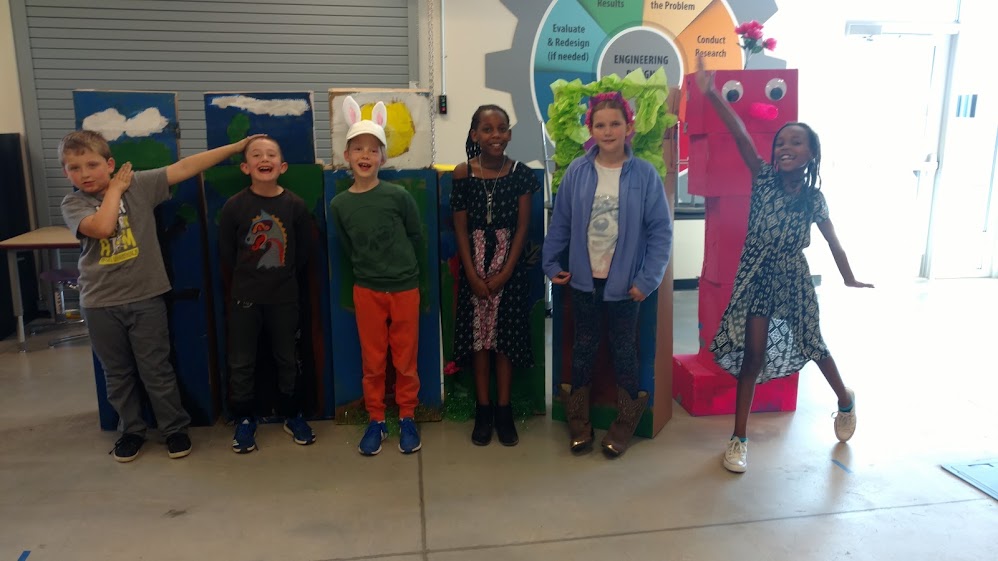
Wonder Newcast: Alex, Liam, Henry, Ava, Molly, & Addison

In 2018 the team, Team Wonder, did a presentation taking the Alice in Wonderland story in a new direction. They created a newscast that included an interview with the White Rabbit and the Cheshire Cat. The question was who stole the Queen’s tarts with the flamingo as the hidden camera. They had a news anchor, an interviewer, the White Rabbit and Cheshire Cat, a flamingo, and a commercial pitchman selling Wonka bars. It was hilarious.

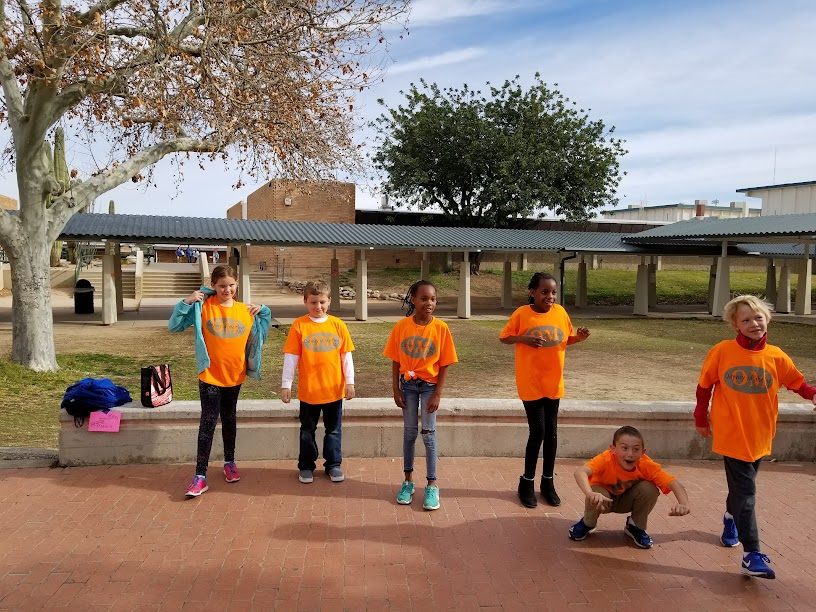
Team Wonder
Back: Coach Diana, Bethany Papajohn (Principal) Front: Emmy, Steven, Henry, Sierra, Zaylei and Peter

One year the team came in third in the OM local competition and didn’t get to go on to state. Their problem was to recreate Leonardo Da Vinci’s workshop and conceive a new invention Leonardo may have devised. Their story took place in two time periods, modern daand the 1400’s. They had so much fun with their skit they begged me to ask if they could present it to the school at an assembly. I asked the principal who said she would consider it. The auditorium had many uses. It was occupied most of each day. Assemblies were carefully scheduled, and it was near the end of the school year. Finally. the last week of school the principal agreed to let the team make the presentation. She said it would not be a mandatory assembly, so each teacher had discretion about bringing their classes. My team was over-the-moon excited. Ken and I hauled all the costumes, props, and set fixtures (mostly made of cardboard) to school. It had been two months since the OM competition, and they had not had a practice. We did one practice session before the assembly. I told them they might have only a few in the audience. As the auditorium began to fill we realized that most of the school came. I sat in the audience to watch not knowing how it would go after so much time passed. The team got on stage and recognized they were not bound by the eight-minute time limit. They began to riff and improvise on their skit. I looked at Ken in astonishment. They were having so much fun. The applause was loud, and the kids were in their glory. They may have been third in the official competition, but they won the hearts of their schoolmates.

Team Time Twister: Leonardo’s Workshop Emmy, Sierra, Zaylei, Steven, Henry, Oliver
Improv – creating the script
The Thinkerton Detective Agency

The last year that I coached, the team chose to solve the heretofore unsolved mystery of the Mary Celeste, a ship that was found in 1872 abandoned in the Atlantic without its crew, but otherwise intact with its cargo. What happened to the crew? They created the Thinkerton Detective Agency to investigate and find an answer. At the end of five months of hard work, the team presentation was timed at nine minutes. They tried and tried to do it faster, to get it shorter. No amount of magical thinking could change the clock. Teams are penalized for each second over eight minutes and it will generally take a team score out of contention. Dress rehearsal the night before competition was a calamity. My cousin, a school teacher, was visiting and watched the preview. She shook her head and looked at me. “How are they going to get this together?” I just smiled knowing that somehow they’d pull it off. I won’t say there weren’t tremors in my gut, but I had learned to ignore them. Early on the morning of competition, we gathered at the high school where judging took place, and they went over their skit in the parking lot – still over time. Right then and there they decided what to take out. They improvised a new script, they practiced twice, and it came in under eight minutes. They presented their improvised story at the competition. Of course, the judges would never know it was not the original script. At the beginning of their skit, a part of the backdrop/scenery broke, and they had to repair it on the fly. I caught my breath. They prepared in advance for mishaps by having extra parts, tape, scissors, and wire available on set. It was a true example of preparation and situational spontaneous problem solving just like MacGyver– exactly what Odyssey of the Mind teaches. Seamlessly, repairs were made and the skit continued without pause. They won the competition.

Our team was invited to the state competition. It was the beginning of covid and the tournament was in chaos because it is a hands-on, in-person event. Rules changed, everything changed, and the judging was to be by video. The team chose not to participate. They took their win and trophy for the school.

WINNERS! Back: Connor, Henry, Mandeep Front: Sierra, Emmy, Zaylei

I am forever grateful for the time I spent with all the children I coached in Odyssey of the Mind, they were my teachers.  I know each of them will be better equipped for their future after participating in OM, learning the tools of creative problem-solving.

I think of life as my soul’s odyssey through this earthly existence on its way home. We all have adventures and challenges along the way. At this point I can look back and see how very fortunate I am. My life has been fulfilling and good times are abundant, but I’ve come to realize that it is during the tumultuous times that the most valuable lessons are learned. No one gets out alive so enjoy the voyage and pay attention to the lighthouses along the way that guide you through rough seas and through the shoals.