Unknown's avatar

About Diana

I'm a writer

What Is Happiness?

I had a discussion recently with friends at the Oro Valley Writers’ Forum (OVWF) about happiness. Then I read a blog post by Anthony Robert (tonysbalogna).  Do You Suffer From The Curse of Comfort – tonysbologna : Honest. Satirical. Observations

The discussion and blog post seemed to be synchronized. What is happiness? What brings comfort? Does it come with achieving your goals? Is it when you have acquired everything you ever wanted? Is it a daily ritual or habit?  How do we keep that carrot dangling before us, so we continue to reach for our future, our happiness, and contentment?

I believe Anthony has a good hold on it.

I believe that happiness is all in the pursuit of…

Happiness cannot be the end game. No matter what you think, you will find that happiness is just beyond what you thought it was. Comfort is also an elusive concept. What is comfort? There are levels that can only be defined by the individual. Can too much comfort lead to laziness, slack thought, unhappiness? It is the striving that brings satisfaction.

This of course is, as they say, a first- world-problem. People in depressed, exploited, or poverty-ridden areas of the planet have a totally different view of happiness and comfort. Their comfort is taken in small bits, as is happiness. Having a full belly brings comfort and leads to happiness if a full belly is a rare thing not taken for granted.  Food has always been in the immediate reach for me, so comfort is easily achieved. Sometimes food is happiness when an exceptional meal is planned and served.

I was blessed with a happy disposition, not something I work at, just a gift. My husband says it is because I have a very poor memory. I admit I do live without regret or longing for the past. I’m incapable of worrying about the future. That leads to an inability to plan ahead which can be very annoying to a spouse. I’m pretty much a today kind of girl.

Once when our marriage hit a bad patch, we were swirling down the drain headed for divorce after thirteen years. We went to my mother to tell her the news and prepare her for a different relationship with our family. We weren’t mad at each other – it was the times, the circumstances, and the expectations that caused a wedge. It was a matter of having achieved goals – a nice house in a beautiful neighborhood, two cars, three kids, two dogs, a great career – then looking around and saying, “Why am I not satisfied?”  My mother in her misguided effort at support declared, “Ken, I know she is hard to live with, but you’ll never meet a happier person.” A backhanded endorsement of me if I’ve ever heard one. The divorce failed, we reconciled, and the rest is history. My happy disposition must have helped win the day. I’m certainly not any easier to live with.

The things that bring joy in my life are my relationships with my family and friends and even strangers. I love to meet people and hear their stories. Lives lived in many different ways, yet with so much in common as human beings. I never tire of learning about other people, other cultures, other places. My life is enriched by those discoveries. That is the carrot that keeps me moving forward.

Writing is another joy in my life. There are infinite ideas to explore, infinite memories to share, infinite stories to conjure.  Words paint pictures. Words spark conversations. Words are a never-ending source of revelation.

What about you? What does happiness mean to you? What brings comfort?

This Old House

My family moved into our home on Burns Avenue in the Riverside District of Wichita Kansas when I was three years old. It was an area between two rivers, the Little Arkansas and the Big Arkansas. The rivers were just a few blocks from us, one to the East and one to the West of our house. To the south, in the fork of the two rivers, is Riverside Park, less than two miles from our house. Our neighborhood was built prior to WWII.  Our house, built in 1940, had grey asbestos shakes and white trim. It was about 900 sq. ft. with two bedrooms, one bathroom, and an unfinished basement.  The detached garage was a few feet behind and to the side of the house. The entire neighborhood of homes had a tree-lined street with sidewalks.  Behind our house was an alley and across the alley was a church.  Sunday morning delivered raucous music, loud singing, and righteous preaching that we could hear from our backyard. Around the corner and down the block on another corner was an IGA grocery store. Across 18th Street from the IGA was a drugstore with a lunch counter where we could get ice cream sodas, a rare but delightful treat. In the other direction around the corner in the middle of the block was a tiny mom-and-pop grocery. The old man would soak toothpicks in cinnamon oil and keep them near the cash register. He gave them to neighborhood kids who stopped by on the way to or from school. We chewed on them as we walked. He also stocked the best penny candy.

One of my best friends moved into the house next door within a few months of our arrival. His name was Billy. He was my age and we hit it off, playing cowboys, hide and seek, and climbing my big backyard tree.  My very best friend, Lois, lived two blocks away on Woodland Avenue. When we were five we all attended Woodland Elementary which was two blocks in the other direction from my house on Salina Avenue. John Marshall Jr. High was three blocks further south. I left after sixth grade and didn’t get to attend John Marshall.

My room was at the back of the house and had two windows. The wallpaper on my wall was white with bouquets of lavender posies and yellow ribbons. My bed resided between the windows and I could see the backyard and my tree. It was an enormous maple tree. I sometimes made a tent over my bed with the open side toward the window and would pretend I was camping.

As soon as I was big enough, I climbed into Old Maple’s comforting branches to spend hours daydreaming or reading. It was well over thirty feet tall and, for a couple of years, I needed help to get up to the fork in the trunk that enabled me to climb higher. I could go far out on the limber bottom branch where I straddled it and bounced, pretending I was riding a horse. Dad built a swing attached to the side of the garage – another place to think and dream.

Our house had arched doorways between rooms except the two bedrooms and the bathroom. In the hall that led to the bedrooms and bathroom was a niche in the wall for the telephone. The living room had a fireplace with a floor-to-ceiling bookcase notched in beside it. The dining room had French doors out to the back porch. The kitchen was long and narrow, and my mother painted it Chinese Red. A window over the sink looked out to the backyard. At the end of the kitchen was an alcove where stairs led to the basement. It also had a side door leading out to the driveway where a honeysuckle vine grew on a tall white trellis.

A story I remember about the phone in the hallway was when I was four, I went swimming with the fishes. My mother ran my bath with nice warm water and bubbles and, before I got in, the phone rang. She went into the hall to answer it and began a conversation with someone. I was buck naked, running around the house. I decided to have company in the tub so I climbed on my little red chair, I got my goldfish bowl from the top of my dresser and dumped the fish with their castle, green ceramic mermaid and algae figures, and shiny rocks into the tub and climbed in. I began chasing the fish around in the tub and Mom heard the commotion. She was not amused. The fish were removed along with their paraphernalia to their bowl with clean water. The tub was emptied and washed out. Then I was tubbed, and scrubbed, and put to bed. I don’t believe the fish lasted through the night.

Another story that involved the phone was when I was six. I refused to clean my room. I put up a tantrum about something that was important to me at the time. My mother was at her wit’s end to get me to comply or at least calm down. She tried threatening and yelling at the same level I did with no positive result. Finally, she became very very quiet. She went to the phone in the hall. She dialed a number. I watched from around the corner to see who she was calling – the police? my Dad?  No, she called the Indians. She put her hand over the receiver and told me she was going to send me back to them since I was acting like them and wouldn’t mind her. I begged her to let me stay and promised to try to be a better girl. She relented and told them over the phone I wouldn’t be going to live with them, at least not that day.

The basement was where Mom’s washing machine resided. We had clotheslines in the backyard to hang clothes to dry.  The brown and white hide of my Dad’s horse Knobby was slung over the top of a folding roll-away bed. I sometimes climbed atop it and with a broom stuck in the crevice for a horse head, I pretended to ride the range on my paint pony. To this day I don’t know why my dad had his old horse pelt at our house. I do remember Mom did not appreciate its sentimental value and when we moved from that house it was left behind – who knows where?

I remember a year when the waters of the rivers rose above flood stage. All the neighbors went to the riverbanks to put sandbags along the edges. Even with that precaution, our basement held a few feet of water. The heartbreaking loss for my mom was the letters she received from my dad when he was overseas in the war. He wrote daily and she saved them in bundles with ribbons around them stored in the basement – until the flood when all were lost.

I loved my house, my neighborhood, and my school. The kids played kick the can, hide and seek, cowboys and Indians, a form of baseball across the front yards and into the street all through the year. In summer we’d roller skate from one end of our block to the other. Of course, in the winter we had snowball fights. The neighbor across the street raised chickens and when he decided to make one or two into their dinner he would let us know. The kids would line up to watch him catch a chicken from the coop, lay its head on an old stump in his backyard, and chop its head off with one mighty blow of a sharp axe. Then he let it go and the body would run around the yard and eventually flop over. A bloodthirsty gang we were.

I was eleven when Dad announced he received a promotion, and we were packing up and moving to Seattle Washington. It meant that when fall rolled around I wouldn’t be able to go to John Marshall Jr. High with all my cronies. The promotion I ached for – to be in Junior High. I was devastated. Mom was elated. She did not like living in Wichita. She was from Denver, a big fashionable city. To her eyes, Wichita was a cow town in the midst of the prairie. She yearned for the more cosmopolitan environs of Seattle. I remember trying to strike a deal with them to stay with my great-grandparents on High Street instead of going to Seattle. They reminded me that even if I did stay behind, I wouldn’t be able to go to school with my friends because my great-grandparents lived across the river about two and a half miles away in a different district. I went with them and met my destiny in Seattle.

Taking Time for Gratitude

When I wake each day, I spend a few moments thanking God for another day and counting my blessings. Well, not every day. There are those days when I sling shot into the morning with six things to do before breakfast. But then I try to slow down, take a breath, and remember to be thankful. Thankful that I have six things to do and can do them. Also, I’m thankful that as a retiree I have the luxury of slower mornings.

On Saturday I walk five to seven miles on the trails through Vistoso Nature Preserve, a two-hundred-acre open space that borders our backyard. In every direction, I see the glorious mountain ranges that surround us. Their solid majesty guardian of our valley. I’m grateful for the beautiful Preserve where wildlife is abundant and free to roam. I am grateful they share their space with us, invaders in their world. Today a young coyote crossed the trail about twenty feet in front of me. She stopped on the other side, paused to look at me, and then ambled into the underbrush and trees. Within seconds she disappeared, as animals do, melding into her environment. A couple of miles later, two cavorting coyotes came to the edge of the trail from an open area, noted my presence, then played on chasing each other, leaping and disappearing into the tall grass. They looked like a couple of dolphins breaching from beneath the sea.

Bird song accompanied my walk. I felt I was being passed along from song to song, bird by bird. I’m not a birder so I couldn’t identify the avian varieties, but their songs were a lovely accompaniment to the walk. Rabbits, large and small, scampered alongside trails busy in their bunny ways. They would halt to give me a look, then go about their business.

I am grateful to be able to walk. A few years ago, I broke my ankle and had to have the shattered bones screwed and plated back together. I spent weeks on the sofa unable to take even a single step on my own. Thank God for Dr. Ty who did a wonderful job of putting Humpty Dumpty back together. I so looked forward to walking across the family room into the kitchen. But… Immediately upon healing, I broke the other ankle. Don’t ask. It’s a dumb story and one for another day. I believe God saw I had not learned the lesson He intended and decided I needed more time immobilized. So again, I had to have surgery and spend more time on the sofa unable to walk.

During that long recovery period, Ken would pack me into the car for little excursions to get me out of the house and lift my spirits. What it mostly did was make me jealous of people I saw walking. Such a simple thing. We learn as babies to stand on two legs and claim our freedom to get from one place to another on our own. I did not appreciate that freedom until suddenly I was anchored down for three months. I swore that once mobile I would walk every day and appreciate each step. I have and I do. My daily walks are one to four miles and each step is blessed.

Ken still accompanies me on daily walks for up to a mile. He cannot walk further right now but hopes to increase his mobility in the near future. I’m cheering him on as he works to improve. I’m grateful that he is making every effort.

Most Saturdays I walk with my friend Roxanne, but she has been away visiting her son in Oregon, so I go alone. When we walk together, we talk, talk, talk for two hours. We solve the problems of the world and a few of our own. When I walk alone, of course, I’m really not alone with all the critters in the Preserve or friends from the neighborhood I meet along the way. My time walking alone during the week is for quiet contemplation, writing poems in my head, thinking about situations a character in one of my stories faces, or sometimes listening to music or a book on my phone. I am grateful for all those opportunities – alone or with friends.

Haiku from today

Silly woodpecker
Rapping on the metal pipe
What is he thinking?

Time and Perspective

Today is opening day of the 2024 MLB season and you cannot scrub the smile from my face. Baseball!!! As I watched the MLB Central show (my favorite morning show) I thought about the changes since my dad was alive. An Army Air Force veteran from WWII, he helped vanquish the reviled forces of evil in 1941 to 1944, Germany and Japan. Today one of the most celebrated baseball players of all time – right up there with The Babe and Lou Gehrig is Shohei Ohtani – a young Japanese man. I cannot even imagine what my father would have thought if that had been told to him in 1944. In fact, the top three players today on the celebrated Dodgers are Mookie Betts, Shohei, and Freddie Freeman, a total fusion of ethnicity on one team. In 1945 when I was born, Jackie Robinson was still two years away from breaking the “color barrier” in major league baseball. Back then there were only a handful of Latino players and no Asians. The Dodgers were the dreaded team still in Brooklyn, across town from my dad’s favorite Yankees. As a farm boy from Kansas who loved baseball, he would have been very surprised, I dare say unbelieving if told about the future of baseball.

Baseball is a merit-based business. No one gets on the field without talent and an overwhelming desire to play the sport. Size, shape, color, and birthplace don’t matter. Some, like my husband, are recruited from high school and join minor league teams sponsored by professional teams to train recruits for their major league team.  A kid as young as 19 can end up on a major league team if he has the right stuff. Some young men go to college and are prepared for professional play on college teams.

Scouts are out all year round searching for talent in every nook and cranny of the country and now across the world. No one gets to the professional level without a lot of talent regardless of their background – talent and drive win out. That is why a Mookie Betts at 5’9” 180 lbs. is as effective on the field as Aaron Judge at 6’7” 282 lbs. Size doesn’t matter. Talent, heart, and intelligence matter. I’ll put Jose Altuve’s passion (5’6”, 166) against any physical barrier. He literally sparks when he is on the field. His happiness, his delight to be playing, glows through his smile.

If a man has talent, it will reveal itself and the fans will show up to watch two teams compete using their players’ skills and strategies. There is no baseball business without fans whether they watch on TV or go to the games.

Baseball as a sport will endure because it is fun to watch, easy to understand, and fun to play at whatever level. A sphere is thrown at top human speed at the round-edged bat – what could go wrong? The players are not only part of a team, but their individual skills are on display. I have likened baseball to a cross between bullfighting and ballet.

When a pitcher faces a batter, mano a mano, it is a bull fight. The pitcher hurls a missile directly at the batter at 90 to 100 miles an hour – the bull. The batter, matador, protected by a helmet, holds a stick less than 3 inches in diameter and not more than 42 inches long to fend off the approaching sphere. If the bat contacts the round missile and sends it out to the field the ballet begins.

Players tall and small will dive, spin, and leap performing ballet-like movements such as –
Fouletté – whipping the body around from one direction to another;
Pirouette – a player steps up on toes of one foot while extending the other leg in a turn as they catch the ball;
Temps lié – connected movement that prepares the body to maintain balance and control while shifting weight from one position to another as they reach for the batted sphere;
Grand jeté – high jump with extended legs to snag a soaring ball;
Penché – a player leans far forward with the forward arm and head low and leg raised in the air;
Renversé – bend the body during a turn, from the waist, sideways and backward, maintaining equilibrium – a real talent;
Sissonne – jump from two feet to one.

After completing these athletic moves, the fielder must then throw the ball with deadly accuracy hundreds of feet across the field aimed at a mitt 10” by 10”, to try to stop the runner on his circuitous route from home back to home. Sometimes this throw is accomplished while the player with balletic grace is still airborne. When that happens ahhhs and oooos erupt from the crowd. Replay is guaranteed on TV.

I stopped rooting for teams, as such, since they became so fluid. Money talks and talent walks. A man, even if he signs a multiyear contract, may be traded or elect to go to another team if the price is right. I can’t blame a guy for getting the most pay that he can. Athletic careers are notoriously short due to injury and burnout. Players spend hours away from the field on conditioning to keep their bodies as fit and flexible as possible. Baseball is an EVERYday sport. There are very few days off and position players show up to play every day. Only pitchers whose bodies are put to exhausting tests in a game are given 4 to 5 days between games. Now I root for the players themselves and whichever team has the most of my favorite players is the team I choose for that matchup. For instance, it is very hard for me when Gerrit Cole, pitcher for the Yankees faces at bat Bo Bichette, shortstop for the Blue Jays. I love them both and find it painful to split my loyalty.

Ahhh, but the season has begun and I’m in heaven no matter who is playing. I’m sure I’ll discover new favorites this season. Right now, the Dodgers just beat the Cardinals, 7-1. Yeah Dodgers, but I feel sad for two of my favorites, Nolan Arenado and Paul Goldschmidt who played their hearts out for the Cards.

The Strangest Job I Ever Had

What was the strangest job you ever had?

In 1965 I became a gas station hostess. My husband signed with the Detroit Tigers Baseball Company in 1963. This was his second season with the Tigers. The previous year he played on minor league teams, the Lakeland Tigers (Lakeland FL) in the Florida State League and then the Cocoa Tigers (Cocoa FL) in the Rookie League. He was assigned to the Syracuse Tigers (Syracuse NY) AAA team in the International League in 1965 so we were in Florida for spring training. He was gone all day at the ball field, and I needed a diversion. I looked for temporary employment since we would be leaving right after spring training.

I answered an ad for a gas station hostess not having a clue what that might entail. I was hired on the spot because…WHO would aspire to be a gas station hostess? Every weekday I dressed in my best, with nylons and high-heeled shoes. I was in full party make-up.  It was late February in Florida, so not as hot as later in the year; but, it was still very humid.

In the 1960s oil companies competed for business by offering perks beyond the full service expected at a gas station. Full service meant that a man or boy would fill the tank with gas, check the oil (add if needed), and wash the windows. Women were rarely hired for that job. In fact, I don’t remember ever seeing a woman working at a gas station in the 50s or 60s. To acquire loyalty, oil companies offered perks such as green stamps, small appliances or other home goods to customers. Green stamps were collectible everywhere. A number of stamps were given depending on the amount of a purchase, then they were glued into a twenty-page book. When the book or books were filled they could be traded in for items from the green stamp catalog according to value. Stamps were valued at 10, 20, or 50 points. Each business determined what dollar amount equated to what green stamp value. Some stations gave more stamps per dollar, thereby gaining customer loyalty. The gas station I worked for decided that entertainment was an avenue to customer loyalty beyond premiums and rewards.

This is an AI representation of what I did. There are no photos of me at that job.

My job was to greet each car as it drove up and offer the customer a menu of goodies. We had green stamps, of course, but we also had toys for the kiddies and small gifts for the homemaker, an apron, a flower vase, a set of cloth napkins, a coffee pot, etc. It was an invitation for men (they were primarily the drivers) to score instant points with the family – no need to collect stamps for months and months. I also offered a paper cup of coffee or a soft drink for the driver.

Some days, they hired a clown – yes, a clown in full regalia from crazy wig, bright baggy costume, to big floppy shoes. His job was to stand at the side of the road to wave customers into our station. If kids were in the car, he would follow it into the service area to entertain with juggling or some crazy stunt while the car was being serviced. The clown’s job was much tougher because he had to be out in the sunshine dancing and waving with breaks a few times an hour. We were both dripping sweat most of the day. We dashed into the station office when we could to stand before the cool of the air conditioner. He didn’t work every weekday but did work on the weekends. When the clown and I worked on the same day we laughed at the implausibility of our jobs and traded stories of the people we met. He was a part-time grocery store worker and an aspiring actor and writer.

I quit or my temp job ended, I can’t remember which, after four weeks. I earned a little money but had a great story to tell. It looked good on my resume – a conversation starter. To this day I have never met anyone else who was a gas station hostess. If you know one, please let me know.

Le Mot Juste

Writers are always in search of the right word, le mot juste. Words are two dimensional objects, flat symbols on a page, that writers use to express thought. A writer selects words that make a scene leap up from the page and come alive, three-dimensionally, in the mind of a reader or listener; words that create a character the reader can relate to; words that elicit an emotional response to make a reader think more deeply, laugh or cry. Words convey meaning and ultimately tell a story. It is the job of the writer to carefully choose words that activate imagination. Whether written or spoken, words are vehicles of communication; the transportation of ideas from one mind to another.

I learned about words from my father. He may not have been a writer, but he was a reader and he loved language. He was witty and enjoyed telling stories. When I think of him, I always think of books. He had a dictionary, along with stacks of books on the table and on the floor beside his chair at all times. They weren’t necessarily books of profound thought or philosophy, although many were. Often they were the paperbacks current in the 50s – a Mickey Spillane mystery, an Ian Fleming thriller. He read like most people breathe, constantly. He wasn’t limited to any particular genre or author. He just read.

We got our first TV in 1957 but he rarely watched it. Some of my favorite memories of my dad, however, were centered around one TV show, Omnibus.  It was a staple in our home every Sunday afternoon. I remember my father calling me into the living room and sitting beside me on the sofa to watch the live presentations devoted to the humanities. It was hosted by Alistair Cooke, a cultured, erudite British journalist. They recreated scenes from Shakespeare and other playwrights starring popular actors of the 50s such as Orson Wells, Helen Hayes, and Christopher Plummer. Cooke interviewed prominent public figures and historians. The shows provided analysis of opera with Brenda Lewis, a history of music with Leonard Bernstein, interpretations, and examples of dance by performers like Gene Kelly and Agnes de Mille. My dad made sure we watched that program together so he could explain to me, a six-year-old, the importance of the works highlighted. I don’t remember how many seasons the show ran but I know we watched it for several years.

I’m sure that was when my love of words was born. I know my love of Shakespeare’s plays came from those programs and my dad. He was a reader, so I was a reader; checking out books from our school library and devouring books my parents bought for me. I wrote my first novel at the age of seven on school lined paper with a #2 pencil. It was called the Girl Friends Mystery. I wish I still had it. It must have been a pip. From that time on I wrote in diaries, journals, and on odd bits of paper, notes with story ideas or comments on life.

When we moved to Tucson in 1997, I took a writing class and joined a group that wrote stories and poems that we shared with each other. Two years ago, I started writing a blog to share my reflections, stories, and poems, with a larger community. It has been so much fun. I love getting feedback. The comments of others always spark new thought and new ideas for writing – a continuum of word exchanges and the search for le mot juste.

Home

Last week our writing group had a discussion about place. Where do you consider your home?

I identify as a Kansan even though I haven’t lived there for over sixty-five years. It still feels like home. I have family in several towns across the state from Missouri to Colorado. Whenever I am in Kansas, I am home. I grew up with a large extended family around. Some were city folks, some farm folks. The common meeting place was my great-grandparents’ house where generations gathered for Sunday dinners or family celebrations. My widowed grandmother lived with and took care of her parents in their declining years. After my great-grandparents died, two of her sisters, one a divorcee and one a widow, moved in with her. Then their brother who was also widowed joined them. It remained THE family home for many more years. Oh, the stories that house on High Street could tell. It will always be home even though it passed from family ownership decades ago. There is something that is intrinsically Midwest in my bones.

I spent many summers of my youth with my grandparents in a small town in Colorado. No parents – just doting grandparents. My grandfather was a trainman on the Union Pacific Railroad and was out of town overnight sometimes on runs to Green River, Wyoming. I got to sleep in his bed when he was gone. They had twin beds in their bedroom and I had a big double bed in my room. I loved the cozy twin next to my grandmother. Grandma had a vegetable garden and canned her summer harvest. She had a flower garden that filled my senses with colors and smells. I sat under the weeping willow in the front yard to play with a neighbor girl. Summer at the base of the Rockies was glorious. We fished at Estes Park (Grandpa baited the hook). We always caught enough to cook and eat there with some left to take home for breakfast. The wriggly rainbow trout were put in his woven basket that hung in the water at the edge of the river letting cool water flow through so they were fresh when he cooked them on the portable gas grill. Grandma packed potato salad, buttermilk biscuits, fresh fruit, and cookies for our riverside picnics. Back in their neighborhood, I took long walks with Grandpa, stopping at the ice cream shop for candy cane ice cream. We took trips to the big city of Denver to visit aunts, uncles, and cousins. Grandma and Grandpa listened to baseball every night on the radio. It was a great place to visit, but it wasn’t home.

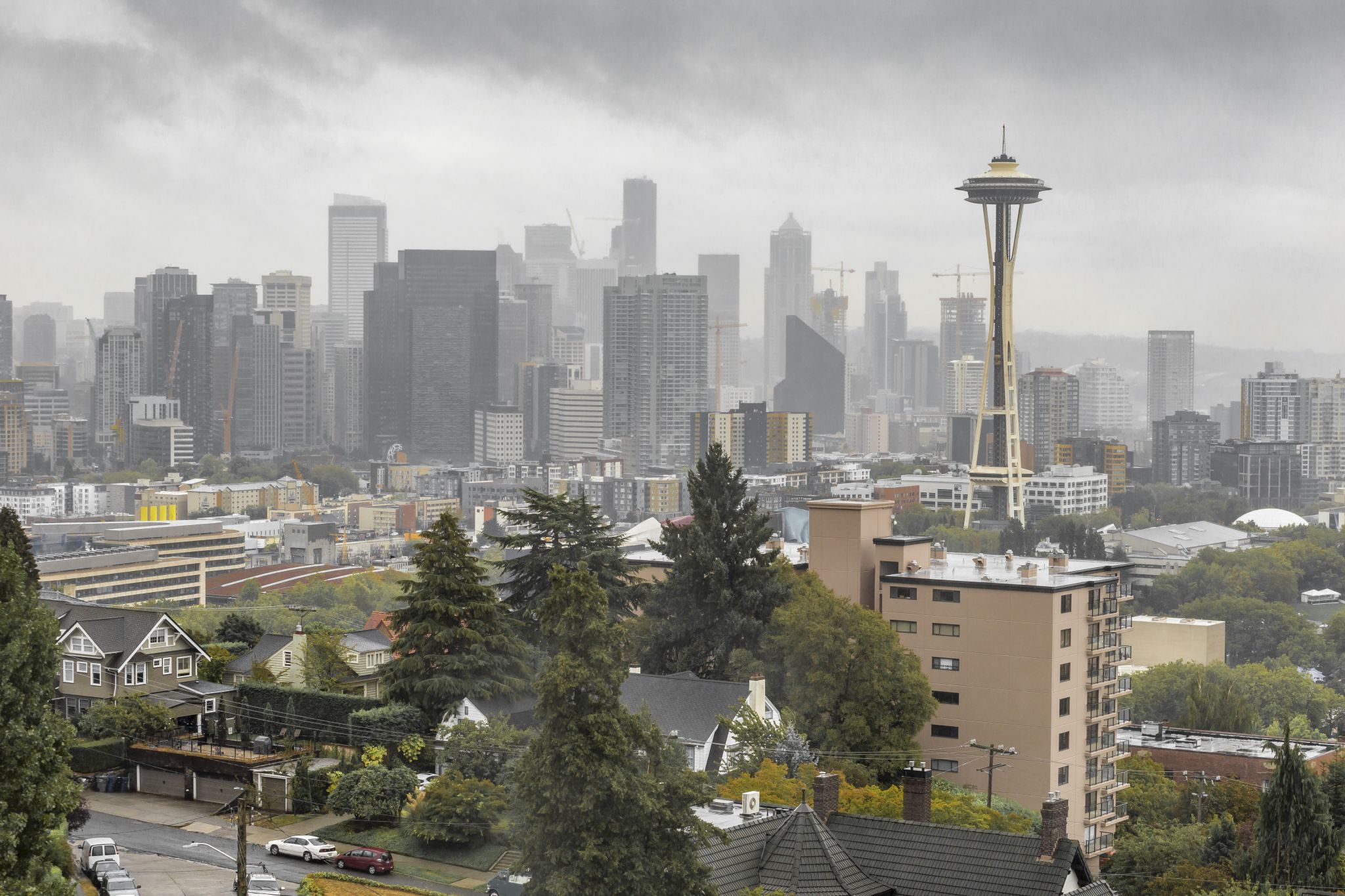
Seattle in clouds

The bulk of my adult life, over forty years, was spent in the Pacific Northwest where I remained a stranger, an outsider.  Even though it was there that I met my beloved, created a family, and had a boatload of friends, it was never home. I love the city of Seattle because of the variety of world cultures that settled and thrive there. You are never far from a festival, an event to celebrate people from far-flung lands. I love my many Seattle area friends. I loved being able to snow ski Mount Rainier and sail Puget Sound, horseback ride and play tennis, most of the year in mild temperatures. Wonderful ethnic food, an enormous variety of world-class arts –  museums, theater, music – play a big part in Seattle’s identity. I once wrote a twenty-page paper on the City I Love to Hate – extolling its history and all its virtues and why I suffered in its bounty. I was claustrophobic, confined, imprisoned by the environment. A blue sky is sporadic, appearing a few times a month (occasionally never making an appearance for weeks) and rarely bringing warmth. Clouds hung like Damocles’ sword, low overhead, threatening gloom. My feet never felt dry, my hands never warm. A pervasive smell of mold clung to everything. Trees obscured the horizon and all potential vistas of mountains and lakes. People were closed as tightly as their coats and sweaters, bundled for safety, cliquish.

Santa Catalina Mountains

During our adventure traveling through the contiguous forty-eight states for fourteen months in 1984-1985, we found a place that felt like it could be another home. Tucson. It is ringed by five mountain ranges, not snowy like the Rockies, but rugged and beautiful, rising from the Sonoran Desert. The Santa Catalinas, the Tortolitas, the Rincons, the Santa Rita, and Tucson ranges. These mountains display a mind-blowing range of color at sunrise, sunset, and when clouds filter the desert light. I have photos of them dressed in reds, oranges, blues, purples, and golds. During monsoon season they flaunt a verdant green as vegetation awakens in the nearly tropical heat and humidity. But we still had a life (family and work) in Bellevue, Washington; but when the kids were raised and it was time for retirement we headed south. I am grateful every morning I wake up to the sunshine. I even learned, after many years, to treasure rain again. It was such a curse in Seattle. Anxiety no longer attacks me when dark rain clouds appear on the horizon. They are temporary. I know they will make the cacti and fruit trees blossom, wildflowers erupt into blankets of color and sate thirsty desert critters. I welcome monsoon season like a native. My feet are firmly planted in this place. Breathing clear air, embracing dark skies at night with diamond-bright galaxies shifting overhead, walking trails and communing with desert animals that cross our path or visit our yard, make this place home.

This poem is about the four places that influenced me from childhood until now. Home is more than just an address, a dot on a map. It is a place where your soul can breathe.

Where I Am From

I am from the traveling wind, deep roots,
Wide blue skies, far horizons, and waving wheat,
Great-grandma’s raw onions by her supper plate,
Great-grandpa’s spittoon beside his rocker,
Refrigerator on the back porch and dirt fruit cellar,
Fireflies on summer nights.

I am from deep dark earth and snowy mountain highs
Grandpa’s railroad uniform smelling of wool and tobacco
Fishing at Estes Park, summer night baseball,
Honeysuckle, snapdragons, and putting up the beans
A ringer on the washing machine
Cold fried chicken, white bread with butter and sugar

I am from endless gray skies, armies of black-green sentinel fir trees
Reaching to the smothering clouds
A city where art and music blend past and present
A thousand cultures mingle like flavors in a stew
The drizzle of cold, the smell of mold
Wind in the sails, islands in the fog

I am from the knife-edged peaks with mysterious crevices
Rising from the desert floor.
Dark starry nights, quiet as serenity
Deer, coyote, and javelina share their space.
The soul-filling scent of the creosote bush after a summer monsoon.
The endless blue of sky and translucent flower of prickly pear.

Age Appropriate

It has been said to me several times in the last year, “Wow, publishing your first book at the age of seventy-seven. That’s a big deal.”  I beg to differ. My age has nothing to do with writing other than I hope I have improved over the years. It’s as if my life culminated in this book. No, it hasn’t. If truth be told I have written enough over the years to compile as many volumes as the Encyclopedia Britannica. Publishing was never a priority or even a thought. I have written for seventy-eight years, no actually seventy-one years because my first novel was at the age of seven.

When we moved from Bellevue, Washington to Tucson in 1993, I jettisoned my journals, notebooks, and pages of writing to lighten the load. Boy, how I wish I had some of that back to fill in memories that are hazy now. Teen diaries with social events prominent, newlywed adventures, then pages of notes on my children as they grew up. Some pages were complaints, some were gratitude, some were hopes, some were sorrows – most were filled with the joy I felt watching my kids grow.

Of course, as writers do, I accumulated more journals, notebooks, and loose pages of writing in the intervening twenty-six years. They are not systematic or categorizable. I grab a notebook or journal when the spirit urges and start writing not caring what came before. I have journals with entries from 1997, 2005 and 2020. They are not in order because I start writing on whatever blank page I open to, so a 2017 entry may be before a 2005 one and heaven forbid if there is any theme articulated. This unstructured whimsy pattern is my life. My brain cannot do linear for more than a few minutes at a time.

Is there a right and wrong to writing? Absolutely not. Writers have to write. It is like breathing. It is an imperative to living. Age is not a factor in writing. There is nothing that says you can’t write after you are fifty or seventy or one-hundred. You don’t need an MFA or be on the best-seller list to write. Until I moved to Tucson the only writing class I had was a Freshman 102 class at WSU. A young professor tried to introduce newbie English majors to the idea of creative writing.

After we were settled in Tucson, I saw an ad for a writing class that sounded interesting and I thought it would also be a way of meeting people in my new town. I had no idea that class would introduce me to many other adults who loved to write “just because”. Indeed, I thought I’d be the only one there who wrote just for myself because “writer” meant a higher level of achievement than what I felt I had. Thankfully, I was wrong.

I met several people who love words and love putting them in some kind of order to tell stories. Our writers’ critique group was formed from a few people in that class and four of us stayed together for over twenty-five years. The book we wrote is to encourage other writers to create and maintain critique groups as a way of expanding and enhancing their writing experience. Creativity stays with you throughout your life.

Getting back to the age issue, I once knew a woman who dressed “inappropriately” for her age. She was in her late sixties, then early seventies when I knew her. She wore medium-heeled shoes with lacey bobby socks, fancy dresses that barely touched her knees and her long grey hair was done in braids, ponytail, or pigtails with ribbons and delicate butterfly clips depending on her whim and the time she took to get ready in the morning. She was petite, with a trim figure and her clothes looked good on her body, but they would have been more “appropriate” on her granddaughter. She was the hostess at a high-end restaurant in the town where we lived. She was courteous, on the ball, and did her job with confidence. She was NOT a nutcase. She was an individual. She loved people and it showed in her manner, her care with customers. I’m sure the first time people saw her, they were taken aback. I know I was. But after observing her over several years I knew she was authentic, not an act. I moved from that town so I’m not sure how long she remained in her job. I do know she had plenty of energy and enthusiasm for it and did it better than women who were in their twenties.

My point is people age differently, some are old at forty while others maintain their lust for life well into their eighties, even nineties. My grandmother was an example of someone who never let age determine her life trajectory. She was widowed at fifty-eight. She had no pension and social security was minimal. She went to live with and care for her elderly parents who lived into their nineties. When her parents passed away, two of her sisters (a widow and a divorcee) and a brother (a widower) moved in to share the family home and expenses. Four siblings in their seventies and eighties acted like four siblings in their teens. They teased, argued, hassled each other, and laughed in equal amounts. It was hilarious to visit them. If you overheard their conversations, you would never believe they were senior citizens. They all sounded like fourteen-year-olds.

Grandma developed congestive heart failure later in life, but it didn’t hold her back. She was a woman of boundless faith. The day she died she had been out helping her “old people”, those friends in their sixties and seventies (ten to twenty years younger than she) who relied on her to drive them to appointments and shopping. She went home after a busy day and said she didn’t feel well enough for dinner. She was taken to the hospital later and died of heart failure that night. Not once in my life did I ever hear her say anything about her age or infirmities. They were just not significant factors in her life. She created the best of each day she was given without excuses. I adored her for many reasons, her kindness, her generosity, her “get on with it” spirit, and aspire to be like her. She embraced the gift of each day. Age is a number not a state of being. A spirit cannot be defined by age.

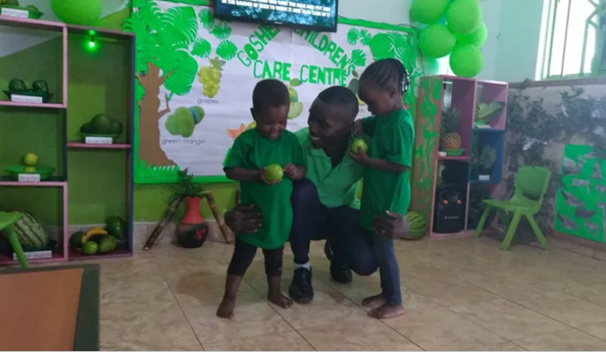
Goshen Children’s Care and School near Kampala

My brother is organizing a fundraiser for this school in Uganda. Please donate if you can. He and his wife are planning a trip in the near future to visit the school and I hope to get some of the stories of the children he meets. This go fund me was posted a few days ago.

https://gofund.me/61f3607a

Please Help…before The Goshen Children’s Care and School is closed down…maybe forever!

It’s a distressing story. Goshen is located in Seeta, Uganda, near Kampala. The school has been operating out of a rental home for several years. However, just in the last month the local government decided the school may no longer operate from a house. It must operate from a “school structure”. Godfrey, the founder and director of Goshen, had a quick solution. With the property owner’s permission, he and his small team built a 3-room “school structure” at their current location. The total cost was just $1700, which was donated by a church in the US. Amazing! They built that structure in just 2 weeks! Double Amazing!

The very next week after completion, the property owner informed Godfrey that he was selling the property! The school must close! This is very cruel to the 20-25 children from this severely impoverished area. Without the Goshen school, those children will no longer continue their education. The families just can’t afford even a few dollars for the minimal tuition.

However a true blessing is available! A vacant lot right across the street from the current school is for sale. Godfrey can buy this property and build another school very inexpensively. The whole project is approximately $15,000.

There is urgency! The new school term starts in early March. If the school is not built by then, the parents may lose faith, and the children probably may not return. In this impoverished town, education is the only way to find opportunities.

Please donate right now! $20, $50, $100

Any amount will help!

Here’s a quote (in broken English) from the director, Godfrey.

“This idea for the academy I had it 7 yrs back. By faith I decided to implement it. I have 5 volunteers who help me. This academy is free, When the youth come we feed them with breakfast and lunch and also print them materials.This week we will start skills session where we will teach them computer skills, art and craft skills and music. Though I don’t have the materials I will use what is available, am grateful that families are giving me youth. Yesterday there are families who brought 10 youths, and my heart was where are they going to sit, what about food, and I said Holy Spirit take control, continue praying for us thank you so much”

Thank you for reading.

At the Diner

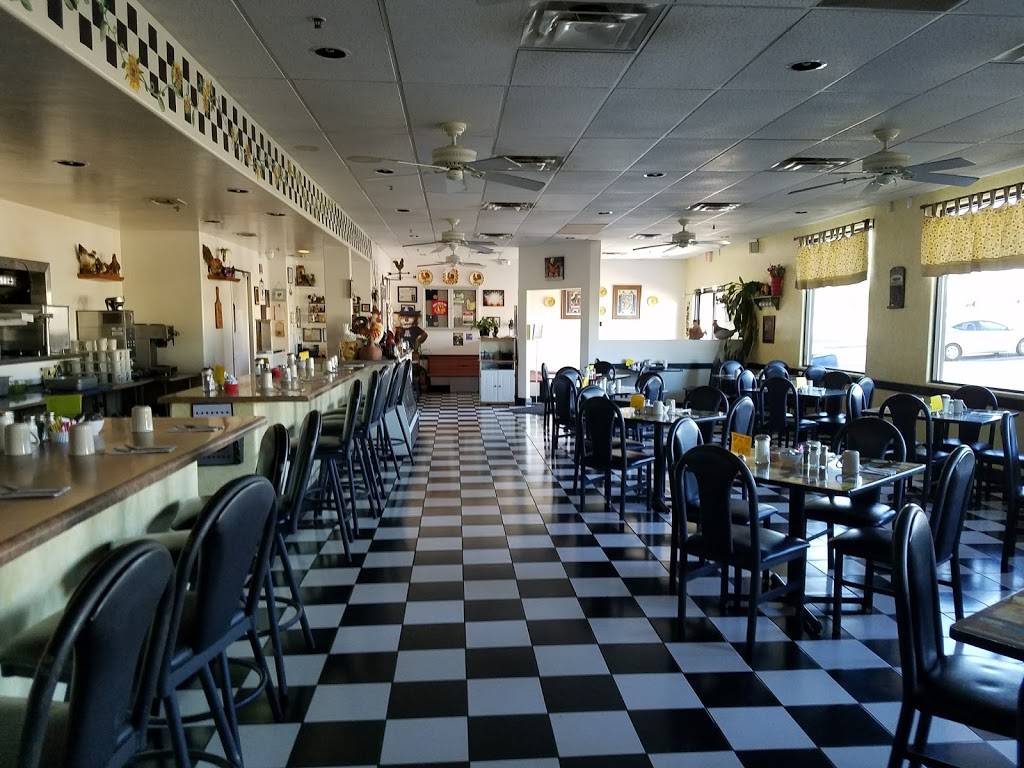
We had lunch at a local diner, one sunny February afternoon. We frequent that diner because it is nearby, has very friendly staff, homestyle cooking, generous portions, and reasonable prices.  The diner is open daily for breakfast and lunch. The décor is Midwest farm kitchen. There are pictures and photographs throughout of farm life, fields, and animals. There is a plethora of chicken and rooster statuettes everywhere. The main room has two dozen tables and a lunch counter with another dozen stools. There are two extra rooms for overflow, used mostly on Sunday mornings or when clubs have meetings. We are so grateful that the diner was able to stay open for the two years of the covid panic. So many mom-and-pop businesses had to close.

Just after we were seated at a table by the window, I observed a woman, 60ish, cross the parking lot and come into the diner alone. She was short, pear shaped and wore a dress with a leafy green on green print and brown “sensible” shoes. She carried a pink purse, a blue hardbound book, and a plastic grocery bag that looked packed with something. It could have been clothes or trash, I don’t know, but it was tied up. She placed her book and purse on the counter and went to the bathroom with the grocery bag. I assumed by her casual leaving of her belongings that she was a regular. I often see solo diners eat at the counter, but I’ve never seen a lone woman there. She returned without the plastic bag and assumed her tall chair, ordered iced tea and lunch, and opened her book. I saw from my table across the room that it was a Patricia Cornwell mystery – big letters on the cover.

My husband and I talked about our niece who was visiting from Montana as we waited for our food.

A tall man, over six feet, also in his 60s, possibly 70 entered the diner. He had on a blue plaid wool long-sleeve work shirt, blue jeans, boots and wore a camo ballcap that he didn’t remove. Lanky would adequately describe him, loose limbed and thin.  He passed by the woman. Neither acknowledged the other. He threw his leg over a counter chair, two seats away from the woman. He looked very much at home at the counter. The waitress took his drink and lunch order. Both the man and woman faced straight ahead. The woman reading her book. It looked like she had just started it – only a few pages in. When their waitress brought their lunches, they began to eat, still not looking at one another.

I glanced over to them as I ate my lunch. After a couple of bites of sandwich, the man looked at the woman and made a comment. Since I was across the room, I have no idea what was said. The woman acknowledged his question or comment and continued eating her sandwich and reading her book without turning to look at him. Again, he said something and again she answered without looking his way. He continued to eat and talk looking in her direction. After about five minutes she looked up and smiled at him. She said something in return. Encouraged, he turned his swivel chair so he directly faced the woman. His talking became more animated. He used his hands, then his arms with broad gestures, to illustrate what he said. She looked up at him more often and the conversation became mutual – a back and forth dialogue. Finally, she closed her book and gave her full attention to the man.

I watched this human interchange from across the room as it slowly unwound. It was enjoyable to see the two people, who I assumed were strangers, find something in common to talk about as they ate their lunches.

“What’s going on?” my husband queried when he saw me chuckling quietly while I watched the couple at the counter.
“I am watching two people getting acquainted.”

He looked up for a moment then, uninterested, returned to his sandwich.

The waitress gave each of them their bill as they finished their meals. They continued to talk for a minute or two then the man got up, paid, and left the restaurant. The woman followed a few minutes later after buying a sweet from the pastry display cabinet to take with her. My husband and I left also.

I felt I had watched an entertaining play unfold before me during lunch. I suppose I could make up the dialogue but the scene, even without words, was enough. It was like watching a silent movie.

That’s what writers do. We observe. Stories, scenes, and characters come from everyday incidents. Imagination fills in the blanks, the dialogue, the prologue and the epilogue. I’m sure the two people I saw that day will join the many other characters who live in my mind’s village and have a story of their own one day. What was in that plastic bag?? Could their story be a mystery? a little romance? a fantasy? a political thriller?

What have you observed either at a restaurant, in line at a grocery store, or walking in the park? Stories are born from these scenes. You don’t have to know the dialogue, that’s what your fertile imagination will create.