
I’ve been with Mama since I can remember. She told me an angel left me on the steps of our church one Sunday morning when I was a baby. When people were leaving church services, they gathered around me. Mama was a Sunday school teacher. She brought me home to live with her. My name is Miriam; I’m five. Mama calls me Akalimi akatamala, sometimes just Akalimi. It means I always talk. She says she knows when I’m sleeping because words are not tumbling out of my mouth like monkeys in banana trees. Mama sings or hums through her days. When she is happy, the songs have words; when she is sad or worried, the songs are mostly soft hummings. Just so.
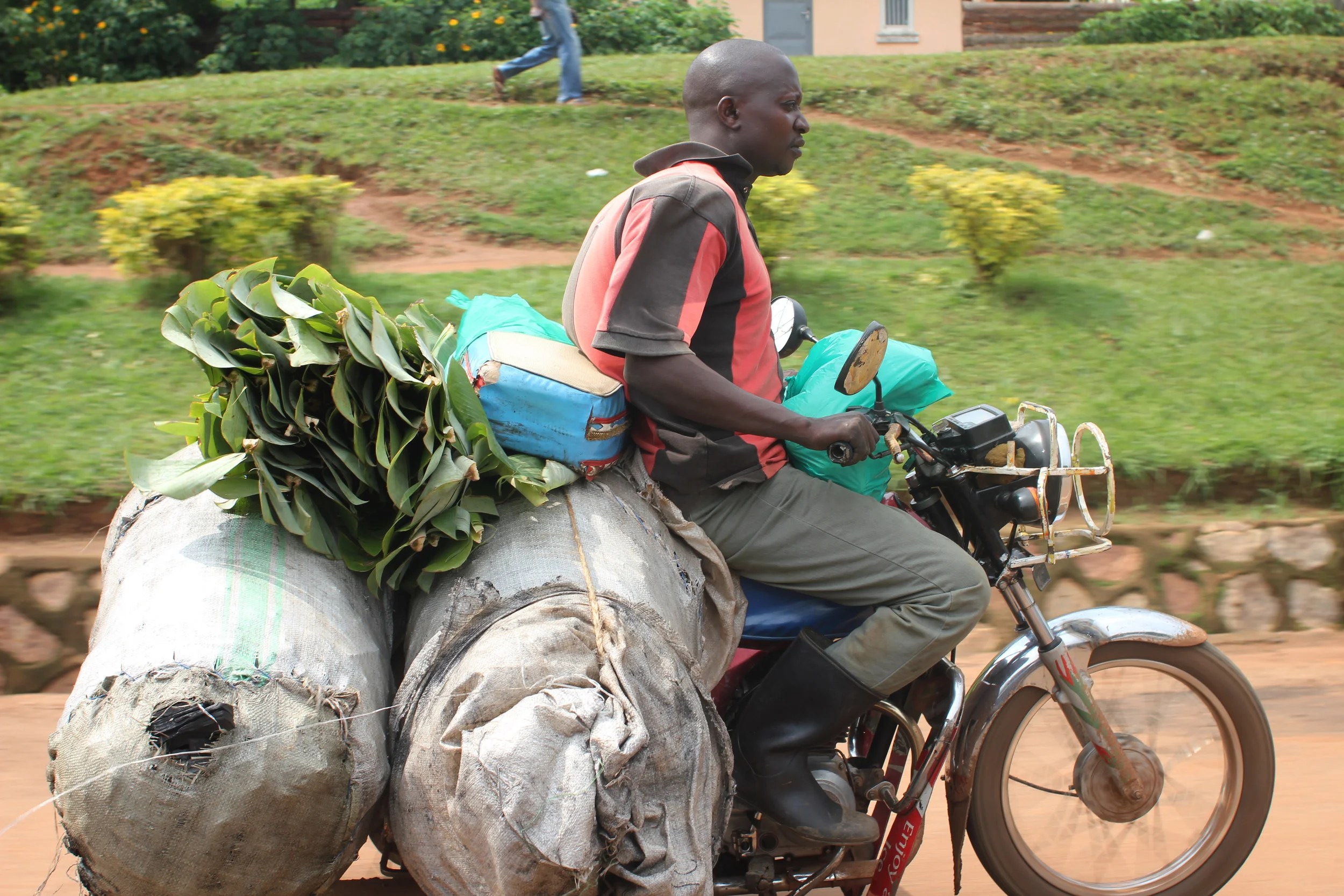
Mutebi is Mama’s man. They are going to get married soon, and we’ll all live together. Mutebi drives a boda-boda between Seeta and Kampala, taking people here and there and delivering big packages. He took me on a boda-boda ride once. It was fun. He weaves in and out of the cars, buses, walking people, and other boda-bodas like an eel slipping through a rocky stream.
Our family is bigger now. Jonathan, who is nine, came to live with us two years ago, and Jordan, who is eight, came last year. Jonathan’s family lived in a different village. When the monster big rains came, his mama, taata, and three brothers were swished away in the flood. He held onto a floating pallet, got stuck in a tangle of tree branches near us, and didn’t go farther, but his family disappeared. He came to Mama’s house soaked like nothing I’ve ever seen. He was so wet he looked like he could have been wrung out like a towel. Every part of him dripped dirty water and he had cuts all over. Most of his clothes were gone. Mama took care of him, and he told her his story. Many people were lost in that flood. His family didn’t come back, so he lives with us.
Jordan was a street boy. Mutebi said he saw him many times begging and wandering the streets and probably stealing since he was a little – maybe four or five. One day Mutebi found him in a heap, all beat up, and crying. A bigger boy that was his protector disappeared, and other boys stole from him and hurt him. Mutebi brought him to Mama’s house. Mama is gentle. Her eyes tell you she loves everyone. That is why she worked in the Clinic, helping people be well. Jordan didn’t talk. He was scared. Mama said she’d clean him and fix his wounds, then after the weekend they would decide where they should take him. Jordan didn’t have a name yet that he told us. He was just called the boy. Mutebi said the priest said he might be able to get him into an orphanage.
The first day, he hid behind the big, overstuffed chair in the living room and wouldn’t say anything or even come out to eat. I smelled an awful stink and ran to Mama to tell her the boy had pooped his pants behind the chair. She went to him, pulled him from behind the chair, held him at arm’s length in front of her. He kicked and wiggled but didn’t scream or yell. She took him out the door to the backyard. She called Jonathan to bring a bucket, fill it with water from the standpipe, and pour it into the cast iron tub we had in the yard. She stripped Jordan and plunged him into the water. Then she scrubbed him with our soap. The water turned dark from all the dirt hidden on him. Jonathan and I watched. He stopped wiggling and seemed to calm down. Mama took him out, dried him off, and took him to Jonathan’s room to find some clothes he could wear. He was closer to my size than Jonathan’s, but she didn’t want to dress him like me. Mama took him to the kitchen to get him something to eat. She offered him a banana. He took a small bite at first, then started stuffing his mouth with mango, sweet potato, and beans. He ate so fast the food disappeared like rain sinking into the garden after our January drought. Then he threw it all up. Again, Mama cleaned him up, humming her quiet song, patting his wet hair, and smiling. She whispered something in his ear, and he looked up at her with almost a smile.
“He’s going to be just fine,” she told us. That’s when we knew the boy would stay with us, not the orphanage.
Jonathan knew his name, but Jordan didn’t have a name. Mama named him after the river where Jesus was baptized. One Sunday after church, we all stayed with our priest. They talked about God and how He accepted Jonathan and Jordan into his open arms. That was the day our Priest sprinkled them with water and gave them their names for real. Mama said he did the same to me when I was named. We all belong to God’s family now.
We used to live in Mama’s house, but we had to move.
Mama lost her job at the Kiwanga Road Health Clinic. She said the funding dried up. I haven’t seen funding so I’m not sure what it looks like dried up but it means she couldn’t work there anymore. She has been doing other kinds of work that keeps her busy almost every day. I used to go to the clinic with her. They had a room for kids to stay who weren’t in school. Then I went to the Saint school with Jonathan and Jordan.
We had to move out of our house because the landlord wanted us to pay money, and we didn’t have it anymore. He left a paper at our door. We had to leave right away.
Mama and Mutebi moved as much as they could out of our house and into a building behind Jjaajja’s house. We went to live in Jjaajja’s little house. Jjaajja is Mama’s mama. We are packed into only two rooms. Our house had two bedrooms, a big front room, and a kitchen. I used to sleep with Mama in our room, and the boys had a separate bedroom. Now Jjaajja, me, and Mama all sleep together on a mattress in her one bedroom. Jonathan and Jordan sleep on mats on the floor in the room next to the kitchen. They sleep under the table and push the three chairs to the wall.
We had a small garden where we grew our vegetables, but Jjaajja has a big-bigger garden. She sells her vegetables and fruit from her mango and pawpaw trees in the marketplace. Jjaajja has two goats too. She sells milk at market. They give milk for us to drink too. We didn’t get milk every day before, but now we do. Just so.
I heard Mama and Jjaajja talk about our perdikermint last week.
“I love having you and the kids here,” said Jjaajja, “but feeding you all is cutting into my profits from the garden and goats. I can’t go on like this much longer.”
“I know, Mama, I’m trying to find a steady job, but there just isn’t anything in Seeta. I may have to go to Kampala to find work. There aren’t as many jobs here doing what I trained for in community health. There are more opportunities in Kampala.”
“I hate to see you move away. What can Mutebi do to help?”
“He’s doing all he can. He added a day to his work schedule and now drives six days a week here in Seeta and carries packages to Kampala. I have taken money from our savings to buy food and pay tuition for Jonathan, Jordan, and Miriam at Saint Augustine Parish school. I don’t know what else to do.”
Mama and Mutebi are saving for a house of their own. They started the can bank even before I lived with Mama. Every Saturday night he comes to our house, and they put their money into the giant Nzonzi Coffee can bank that Mutebi keeps in a secret place. They count what they have, writing it down on a piece of paper. Every time they watch the numbers get bigger, even bigger than the thousands. When they have enough money for a house down payment, they are going to get married. Now their plans include me, and Jordan, and Jonathan. Just so. But when Mama didn’t get money from her job, the numbers started to go in the wrong way – down.
After dinner one night, Mama, me, and Jonathan stood in the yard holding hands. Jordan stood on the other side of Mama. He doesn’t like to be touched, but he took her hand too. We looked up into the black sky full of bright twinkling stars. Squeezing our hands, Mama smiled at the heavens and said, “We’ll find another way. We always do. Thy will be done.”
One afternoon Mama came home so excited. She was on her way to clean the house of a rich European family near Lake Victoria, when she saw a hen strut across the road with her chicks in tow. Mama got a bright idea. Her father, George, taught her as a young girl how to raise chickens. George died when Mama was twelve, and the chicken raising stopped. George’s unused cinder block chicken house is still in Jjaajja’s yard. In fact, it is where Mama and Mutebi stored our stuff when we moved out of our house.
Mama and Mutebi got busy. They sold some of the furniture, some went to the place where Mutebi lives, and some crammed into Jjaajja’s already busting house. They scrubbed and cleaned up the chicken house. Jordan, Jonathan, and me helped. Mutebi built some nest boxes and shelves in the chicken house. He built a fence around the chicken house so they could roam outside without worrying about being eaten by wild dogs and mongooses. He made a screen over top, from the edge of the fence to the roof of the chicken house to keep out the big birds that sometimes eat chicks or raid eggs. Then Mama took a little more of their savings and bought twelve chicks with feeders and food for them. They were the start of her egg business.
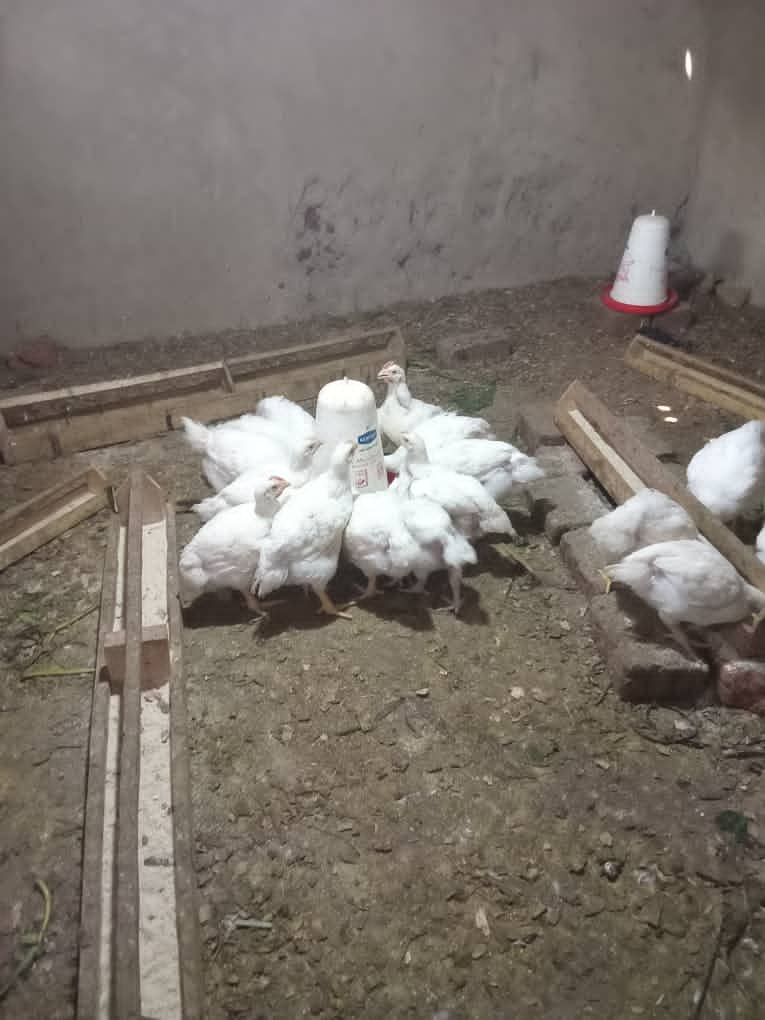
The Virtues are our chickens: Hope, Grace, Faith, Courage, Forgiveness, Patience, Justice, Temperance, Modesty, Humility, Generosity, and Kindness. They give us eggs every day. Mama sells the eggs to the neighbors in our old neighborhood. When we have more-more eggs, she takes them to market; I get to go sometimes when I’m not at school.
After a few months, she decided to raise other chicks to sell at the market when they grow to be chickens. We gave them names too, but they only stayed with us a few weeks. We were very sad when they left us, so Mama said we won’t name them anymore. Maybe it is easier to say goodbye. We call them all linnya-ta because it means no-name.
Kapiteeni is the name of our rooster. His job is to make the chicken family bigger. Mama put him in the chicken yard and told him he needed to guard the hens and make more chicks. She said a prayer Psalm: “May the Lord cause you to flourish, both you and your children.” Kapiteeni warns us with loud crowing if a dog or snake gets close to the chicken yard. He wakes us for every new morning. He’s doing a good job making new chicks too. I love Kapiteeni.
One time a week we have chicken for dinner. Mutebi comes over after church on Sunday to eat with us. It is Jonathan’s job to pick out a chicken for dinner. He goes into the chicken yard and squats in a corner. He talks to the chickens and watches them. He finds the chicken that is willing to be dinner, then he takes it out of the yard to the front of the house. He doesn’t want the other chickens to be sorry. He chops off its head and takes it to Jjaajja. She plucks and cleans it, then it goes into the pot for dinner.
Once Jonathan came in telling Mama that no chicken offered to be dinner.
“No chicken for dinner?” Mama asked, looking at Jjaajja.
“There will be chicken for dinner,” said Jjaajja with her stubborn voice as she headed out to the chicken yard. In only a few minutes, there was a loud squawk and Jjaajja came back to the kitchen holding a headless chicken by its feet. Jonathan refused to eat dinner that night. That was the last time he didn’t find the willing chicken. Just so.
Mama says we will move out of Jjaajja’s as soon as The Virtues and the linnya-ta can support us and the Nzonzi can begins to fill up.
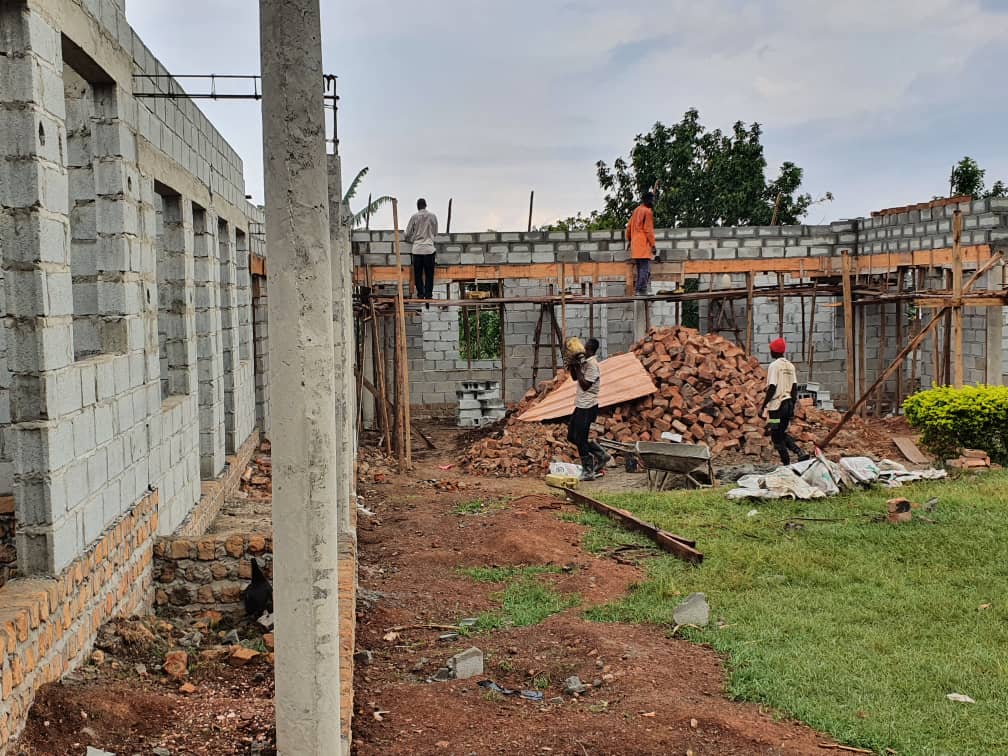
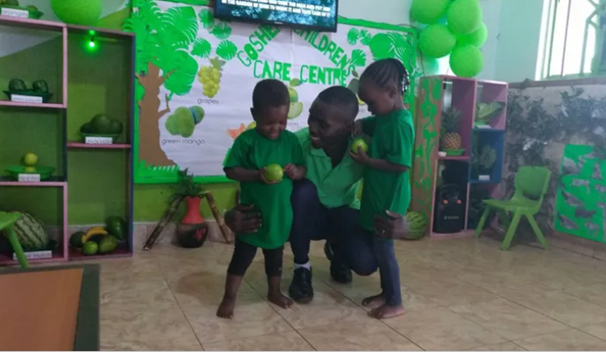
This year we have a new school. It is Goshen Children’s School. We watched it build block on block. Men standing on ladders, men digging trenches. They were all men from our community who wanted to help. The new school has a room for the littles, and a room for the middles. We don’t have any biggers yet, but there is a room for them when we get them. Jonathan is one of the oldest in school. He’s nine and will be a bigger next year. I’m in the littles, but I’ll be in the middles next year. Just so.
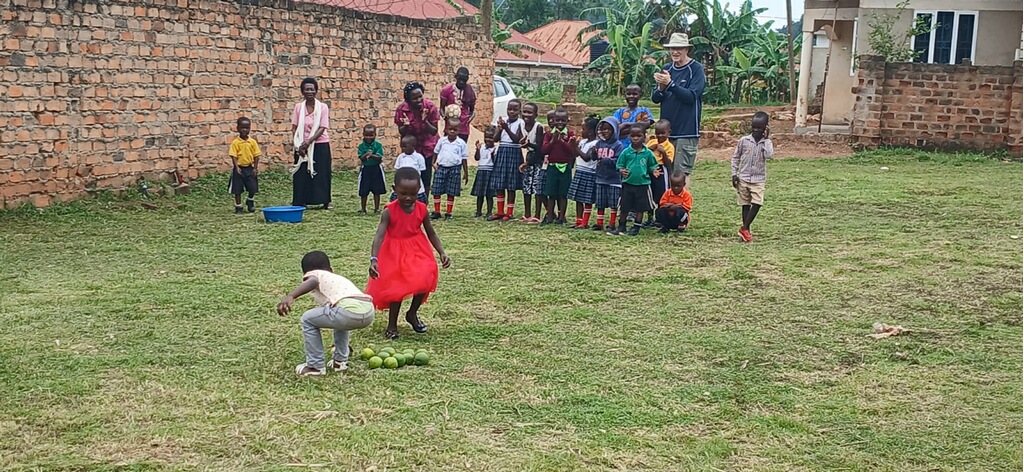
There is a room for lunchtime and snack time. There is a big courtyard where we play games and dance.
There is a room for Mr. Godfrey. He is the director and has a room for to do the school busy things to make everything work. Big job for Mr. Godfrey. Mrs. Esther is his wife, and she helps him. They have two children at the school, Mauda and Michael. Mauda is in the middles with Jonathan and Jordan, but Michael is only three is in the littles with me.
I have learned my English letters from A to Z, and I can read some English words. We don’t speak anything except English at school. I can count to one hundred, and I know that then you start over, and when you get to one hundred again, you have two hundred. I don’t know how the thousands work. Those are bigger numbers, so I only count in hundreds. Jonathan said he can count in thousands, but I’ve only heard him do hundreds too.
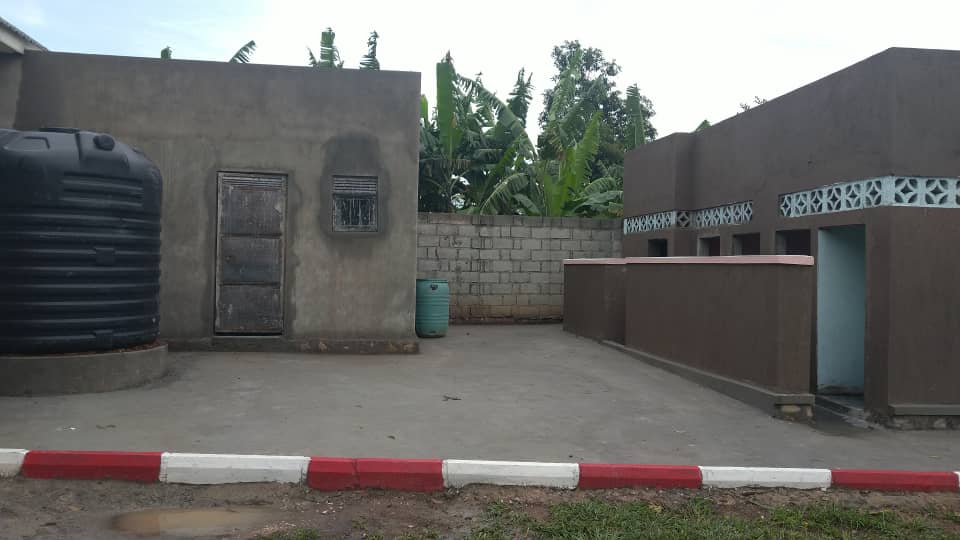
We have a long building behind the school with toilets. It has separate stalls for boys and girls with thick walls between, but there are no doors. The floor is hard, harder than the dirt outside, and painted gray. In each stall, there are squat holes where we do our bathroom necessaries. Sometimes it gets smelly in the building, and I have to hold my nose when I squat. But most of the time it is okay. There are four long openings in the wall under the roof that let in light and breezes. Outside the toilet building, under a big mango tree, is a handwashing station with soap hanging from a rope over the washstand and a tippy tap we use with our foot for the water.
A separate building has the kitchen. Three nice ladies work in the kitchen in the morning and afternoon. In the morning we have porridge and tea. Sometimes we have bread with it. Then at lunch we have vegetables cooked with rice and beans. I especially like it when we have cabbage. Yum, I love the smell of cabbage cooking, and my mouth starts watering on those days, as soon as I smell it.
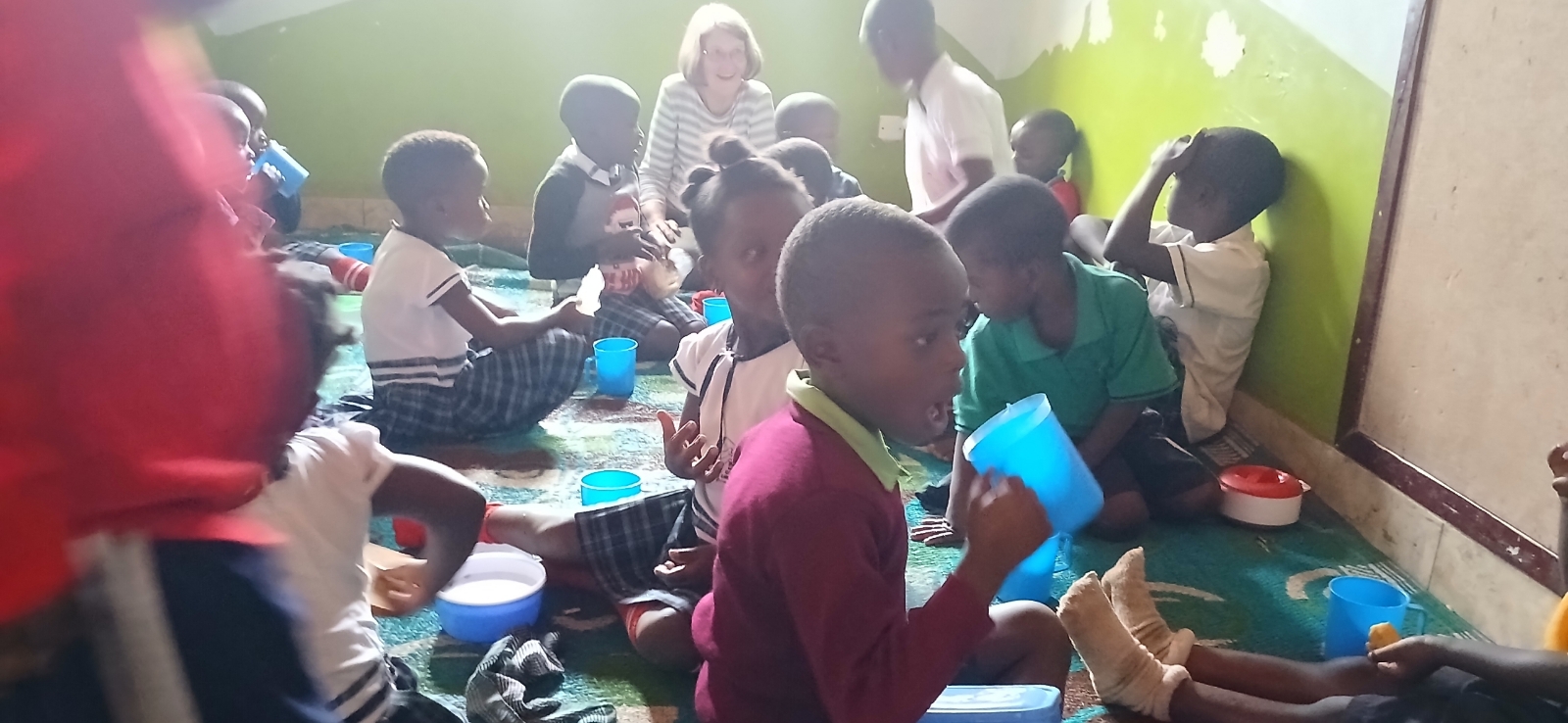
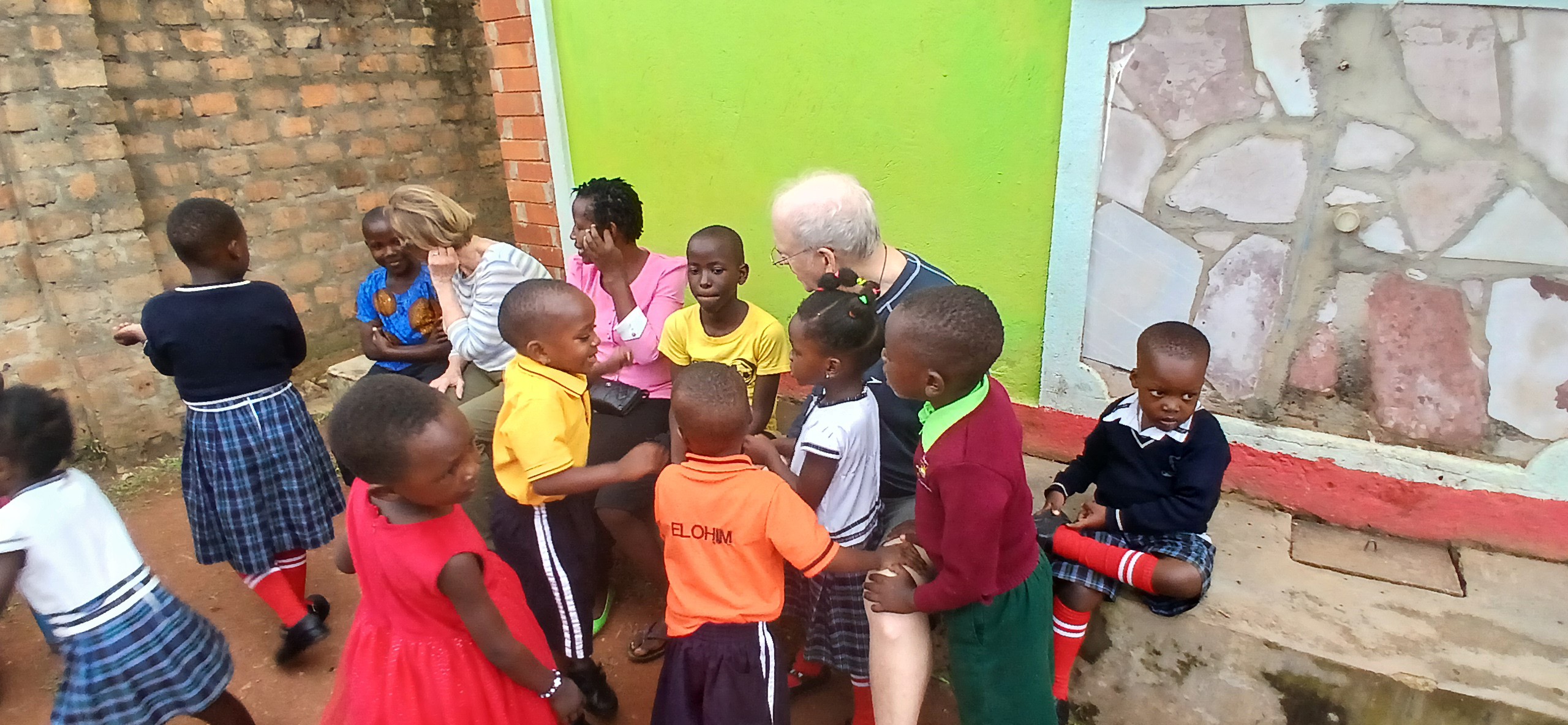
Two muzungu came to help when our school was being built and stayed on to help get the school going. Their names are Mama Sue and Papa Davis. Mama Sue is pretty. She has skin so white I think she could disappear in a cloud. And her hair is the color of our red clay. Mr. Brett is a big man, very taller than Mr. Godfrey and even Mutebi. Mama Sue reads us stories and teaches us letters and numbers. Papa Davis makes us laugh, especially when he dances with us in the courtyard. He tells us stories too about where in the world he has been. They live in America Washington and like to travel. They come to Africa and then go to Italy too. They work with our real teachers, Teacher Sarah and Teacher Kisakye.
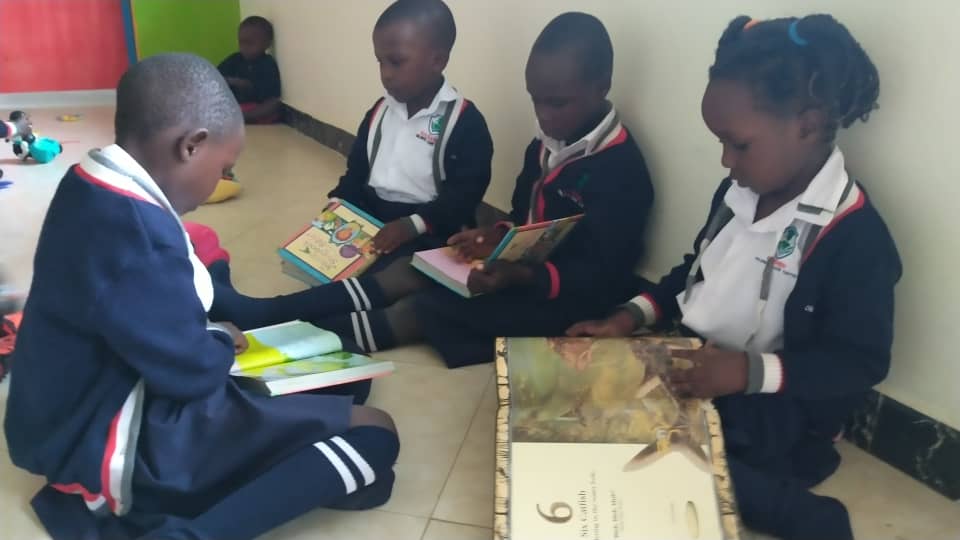
They told us they won’t be here long time. They are nice, and I hope they come back again. They brought us books. Big ones and little ones with lots of pictures. My favorite one is Uncle Ram’s Farm, about a man in India who takes his nephew to visit his farm with all kinds of animals like giraffes and rhinos and snakes and alligators. The pictures are big and bright colored.
Mama Sue and Papa Davis left in July. They gave Jonathan a book with no pictures at all, just words, because he told them he wanted to read like a bigger. Papa Davis said it was his favorite book, The Adventures of Tom Sawyer. I will read it someday too. They said maybe they’d come back. Jjaajja says muzungu always say maybe. Just so.
The End
Author’s Note: Although this is a fiction story, it is based on real people, and their circumstances in Uganda are true. Goshen Children’s Care Centre is a dream come true for Godfrey and his wife, Esther. They have worked for a long time to help children in their community who do not have access to education and nutrition. I did not have the ability to interview them myself and relied on stories and descriptions from others to bring this story to life. Brett and Suzanne Davis are my brother and sister-in-law. They have close ties to Godfrey and Esther. Miriam, the young girl in this story, spoke to me in dreams and provided details from her point of view.
If you are interested in finding out more about Goshen Children’s Care Centre, this is their website: https://share.google/Edn2orxPGhc9B4ZIX
They will gladly accept books, even used books for the library. Also, charitable donations to keep the school going. The books should be appropriate for young readers.
I received an email from Suzanne with more news from Uganda:
“Here’s exciting news. Godfrey knows somebody who sets up community libraries. He’s wanted to have a library there at the school for some time. He’s finally got all the ducks in a row and starts training a young gal who we know to be the librarian next week. So he’s been building out one of the rooms to be a library for the community. The timing is perfect! “
As of June 4, 2026, the U.S. Department of State has issued a Level 4 “Do Not Travel” advisory for Uganda due to widespread violent crime, Ebola-related health risks, terrorism threats, civil unrest, and laws targeting LGBTQ+ individuals.