A writer can find inspiration in anything. As I was taking my walk this morning, I noticed a small piece of paper lying at the edge of the street. I picked it up. Litter, you know. I’ll throw it away when I get home. Then I looked at it. WISH. It looked like it was from a student’s vocabulary worksheet. Inspiration! Why did I happen to find the paper? What did that word say to me? There are messages even in trash. What is a WISH?
Will Intent Spontaneity Health
I continued to walk and these words came to mind. Will, Intent, Spontaneity, Health. To make a wish come true you need Will. Intent is a reason, a goal, to keep the dream alive. To be able to fulfill the wish you need to be Spontaneous as options appear before you. And of course, you need Health to enjoy the WISH when it is achieved. I’m sure I’ll discover a story in there at some point. Stay tuned.
You may think of other words that speak to you about WISH. I’d love to know some of them.
There was a little girl Who had a little curl Right in the middle of her forehead And when she was good, she was very very Good And when she was bad, she was Horrid.
That was a rhyme my mother told me many, many times when I was a child. I believe she meant it to describe me. Of course, I think of myself as a totally sweet, big blue-eyed, curly-headed little girl with a streak of adventure. I’d do almost anything on a dare. But I was also kind to animals and did mostly what I was supposed to do. I think the operative word there is “mostly”. I strayed occasionally although not really on purpose. I didn’t INTEND to be naughty. It just sneaked up on me.
I remember very clearly a time when I caused some chaos – unintentionally of course. I was in first grade, six years old. I walked to school each day with my friend Billy Baird who lived next door. He would come to my door, or I would go to his in the morning and we’d set off together for the three blocks to Woodland Elementary School. One day, I stopped by his house and his mom told me Billy was ill. He had a cold. She asked me to tell our teacher that he would not be at school for a day or two. I was a bit miffed because I had something really important to talk to Billy about. I went to school and when I arrived, a funny thing happened.
My teacher asked why Billy wasn’t with me.
“Well,” says I. “Billy had a terrible accident. He is very sick, has a bad high fever and broke his bones and wouldn’t be coming back to school maybe for the WHOLE year.”
Our teacher was very worried, a reaction I expected. At recess, I repeated the story to other classmates expressing great emotion and concern. They too were curious about what happened. I declined to give any other details, telling them I’d let them know more later. I think I believed I could get some mileage out of that attention if I continued to add to it daily.
After school, I walked home. My nanny gave me my snack and I played outside and all was well until my mother arrived home from work.
“What exactly happened at school today?” her voice was stern and accusatory. “Ummmm.” I couldn’t think for the life of me why she was mad. “We played skip rope at recess. I got to do double dutch,” I offered. “What about Billy?” “He didn’t go to school today. He was sick.” I still wasn’t catching on. “How sick was he?”
Now a light was dawning.
“Aaaaaa.” “Did you tell your teacher he was in an accident? Did you tell her he’d be out of school for the rest of the year?” “Aaaaaa.”
Now remember – this was in olden days before instant communication and cell phones. How in the world did SHE know what I said at school?
“You told a lie, Diana. A whopper. You have to apologize to Billy’s mom, the teacher, and the whole class.”
My knees turned to jelly. My insides churned. “It was just a story.” I stammered.
“It was a lie and many people were concerned”, she repeated. “Your teacher was very upset and after school called Billy’s mom to find out what happened to Billy. Mrs. Baird, called me at work and let me know what you did. Now you have to face up to it and let everyone know you are a liar.”
She marched me next door to tell Billy’s mom I was sorry. Billy stood behind her with a big smirk on his silly face. I stuck my tongue out at him as my mom turned to leave after a brief conversation with Mrs. Baird. I went to bed that night hoping the angels would take me to heaven.
Now I lay me down to sleep I pray the Lord my soul to keep If I should die (please, please) before I wake I pray to God my soul to take.
I survived the night and, with extreme reluctance and a very dry throat, walked to school with my mother to tell the class that I told a story. No, Mom insisted, I lied.
It seemed an injustice to me that my story was more interesting than Billy’s, but I was being punished. After all, I didn’t hurt Billy. He was fine. No harm, no foul. He went back to school the following Monday (I didn’t walk to school with him) and everyone crowded around HIM telling HIM I had lied about his cold. HE was the big deal, not me. It took a few days for the storm to pass. I was shunned by all except my best friend Lois who forgave me instantly. Finally, everyone seemed to forget about it and life continued in its pleasant middle-class suburban way. But the storyteller in me grew and grew. And now I can write stories, and no one can stop me. Did I learn a lesson? Guess not.
Writers are always in search of the right word, le mot juste. Words are two dimensional objects, flat symbols on a page, that writers use to express thought. A writer selects words that make a scene leap up from the page and come alive, three-dimensionally, in the mind of a reader or listener; words that create a character the reader can relate to; words that elicit an emotional response to make a reader think more deeply, laugh or cry. Words convey meaning and ultimately tell a story. It is the job of the writer to carefully choose words that activate imagination. Whether written or spoken, words are vehicles of communication; the transportation of ideas from one mind to another.
I learned about words from my father. He may not have been a writer, but he was a reader and he loved language. He was witty and enjoyed telling stories. When I think of him, I always think of books. He had a dictionary, along with stacks of books on the table and on the floor beside his chair at all times. They weren’t necessarily books of profound thought or philosophy, although many were. Often they were the paperbacks current in the 50s – a Mickey Spillane mystery, an Ian Fleming thriller. He read like most people breathe, constantly. He wasn’t limited to any particular genre or author. He just read.
We got our first TV in 1957 but he rarely watched it. Some of my favorite memories of my dad, however, were centered around one TV show, Omnibus. It was a staple in our home every Sunday afternoon. I remember my father calling me into the living room and sitting beside me on the sofa to watch the live presentations devoted to the humanities. It was hosted by Alistair Cooke, a cultured, erudite British journalist. They recreated scenes from Shakespeare and other playwrights starring popular actors of the 50s such as Orson Wells, Helen Hayes, and Christopher Plummer. Cooke interviewed prominent public figures and historians. The shows provided analysis of opera with Brenda Lewis, a history of music with Leonard Bernstein, interpretations, and examples of dance by performers like Gene Kelly and Agnes de Mille. My dad made sure we watched that program together so he could explain to me, a six-year-old, the importance of the works highlighted. I don’t remember how many seasons the show ran but I know we watched it for several years.
I’m sure that was when my love of words was born. I know my love of Shakespeare’s plays came from those programs and my dad. He was a reader, so I was a reader; checking out books from our school library and devouring books my parents bought for me. I wrote my first novel at the age of seven on school lined paper with a #2 pencil. It was called the Girl Friends Mystery. I wish I still had it. It must have been a pip. From that time on I wrote in diaries, journals, and on odd bits of paper, notes with story ideas or comments on life.
When we moved to Tucson in 1997, I took a writing class and joined a group that wrote stories and poems that we shared with each other. Two years ago, I started writing a blog to share my reflections, stories, and poems, with a larger community. It has been so much fun. I love getting feedback. The comments of others always spark new thought and new ideas for writing – a continuum of word exchanges and the search for le mot juste.
It has been said to me several times in the last year, “Wow, publishing your first book at the age of seventy-seven. That’s a big deal.” I beg to differ. My age has nothing to do with writing other than I hope I have improved over the years. It’s as if my life culminated in this book. No, it hasn’t. If truth be told I have written enough over the years to compile as many volumes as the Encyclopedia Britannica. Publishing was never a priority or even a thought. I have written for seventy-eight years, no actually seventy-one years because my first novel was at the age of seven.
When we moved from Bellevue, Washington to Tucson in 1993, I jettisoned my journals, notebooks, and pages of writing to lighten the load. Boy, how I wish I had some of that back to fill in memories that are hazy now. Teen diaries with social events prominent, newlywed adventures, then pages of notes on my children as they grew up. Some pages were complaints, some were gratitude, some were hopes, some were sorrows – most were filled with the joy I felt watching my kids grow.
Of course, as writers do, I accumulated more journals, notebooks, and loose pages of writing in the intervening twenty-six years. They are not systematic or categorizable. I grab a notebook or journal when the spirit urges and start writing not caring what came before. I have journals with entries from 1997, 2005 and 2020. They are not in order because I start writing on whatever blank page I open to, so a 2017 entry may be before a 2005 one and heaven forbid if there is any theme articulated. This unstructured whimsy pattern is my life. My brain cannot do linear for more than a few minutes at a time.
Is there a right and wrong to writing? Absolutely not. Writers have to write. It is like breathing. It is an imperative to living. Age is not a factor in writing. There is nothing that says you can’t write after you are fifty or seventy or one-hundred. You don’t need an MFA or be on the best-seller list to write. Until I moved to Tucson the only writing class I had was a Freshman 102 class at WSU. A young professor tried to introduce newbie English majors to the idea of creative writing.
After we were settled in Tucson, I saw an ad for a writing class that sounded interesting and I thought it would also be a way of meeting people in my new town. I had no idea that class would introduce me to many other adults who loved to write “just because”. Indeed, I thought I’d be the only one there who wrote just for myself because “writer” meant a higher level of achievement than what I felt I had. Thankfully, I was wrong.
I met several people who love words and love putting them in some kind of order to tell stories. Our writers’ critique group was formed from a few people in that class and four of us stayed together for over twenty-five years. The book we wrote is to encourage other writers to create and maintain critique groups as a way of expanding and enhancing their writing experience. Creativity stays with you throughout your life.
Getting back to the age issue, I once knew a woman who dressed “inappropriately” for her age. She was in her late sixties, then early seventies when I knew her. She wore medium-heeled shoes with lacey bobby socks, fancy dresses that barely touched her knees and her long grey hair was done in braids, ponytail, or pigtails with ribbons and delicate butterfly clips depending on her whim and the time she took to get ready in the morning. She was petite, with a trim figure and her clothes looked good on her body, but they would have been more “appropriate” on her granddaughter. She was the hostess at a high-end restaurant in the town where we lived. She was courteous, on the ball, and did her job with confidence. She was NOT a nutcase. She was an individual. She loved people and it showed in her manner, her care with customers. I’m sure the first time people saw her, they were taken aback. I know I was. But after observing her over several years I knew she was authentic, not an act. I moved from that town so I’m not sure how long she remained in her job. I do know she had plenty of energy and enthusiasm for it and did it better than women who were in their twenties.
My point is people age differently, some are old at forty while others maintain their lust for life well into their eighties, even nineties. My grandmother was an example of someone who never let age determine her life trajectory. She was widowed at fifty-eight. She had no pension and social security was minimal. She went to live with and care for her elderly parents who lived into their nineties. When her parents passed away, two of her sisters (a widow and a divorcee) and a brother (a widower) moved in to share the family home and expenses. Four siblings in their seventies and eighties acted like four siblings in their teens. They teased, argued, hassled each other, and laughed in equal amounts. It was hilarious to visit them. If you overheard their conversations, you would never believe they were senior citizens. They all sounded like fourteen-year-olds.
Grandma developed congestive heart failure later in life, but it didn’t hold her back. She was a woman of boundless faith. The day she died she had been out helping her “old people”, those friends in their sixties and seventies (ten to twenty years younger than she) who relied on her to drive them to appointments and shopping. She went home after a busy day and said she didn’t feel well enough for dinner. She was taken to the hospital later and died of heart failure that night. Not once in my life did I ever hear her say anything about her age or infirmities. They were just not significant factors in her life. She created the best of each day she was given without excuses. I adored her for many reasons, her kindness, her generosity, her “get on with it” spirit, and aspire to be like her. She embraced the gift of each day. Age is a number not a state of being. A spirit cannot be defined by age.
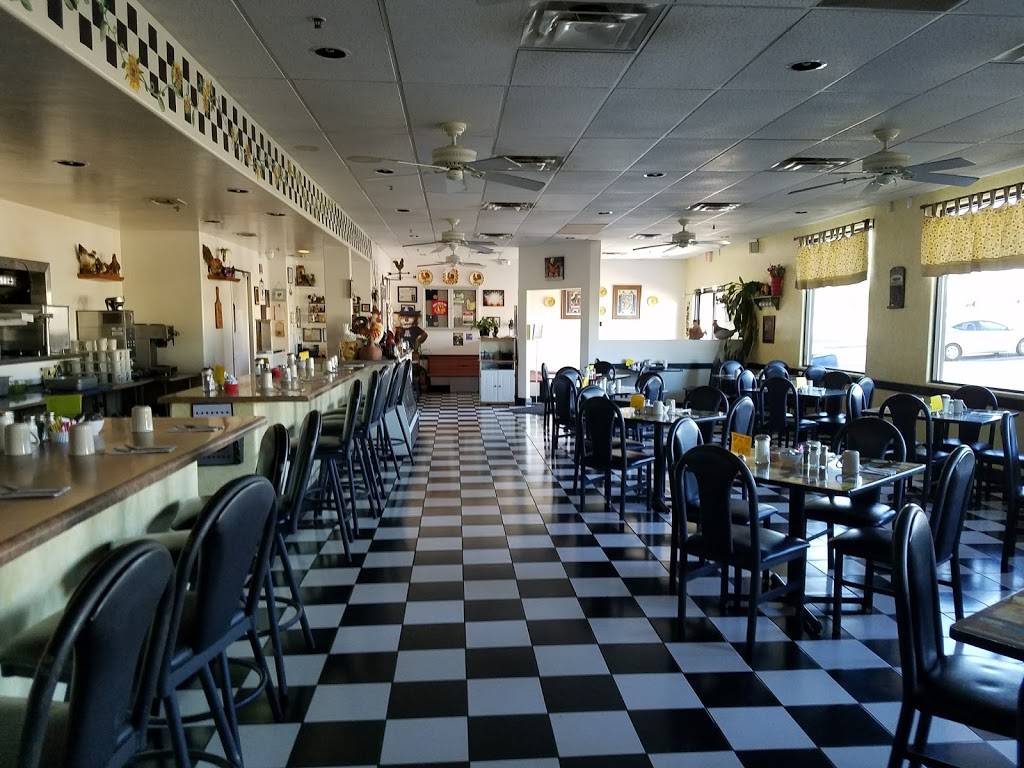
We had lunch at a local diner, one sunny February afternoon. We frequent that diner because it is nearby, has very friendly staff, homestyle cooking, generous portions, and reasonable prices. The diner is open daily for breakfast and lunch. The décor is Midwest farm kitchen. There are pictures and photographs throughout of farm life, fields, and animals. There is a plethora of chicken and rooster statuettes everywhere. The main room has two dozen tables and a lunch counter with another dozen stools. There are two extra rooms for overflow, used mostly on Sunday mornings or when clubs have meetings. We are so grateful that the diner was able to stay open for the two years of the covid panic. So many mom-and-pop businesses had to close.
Just after we were seated at a table by the window, I observed a woman, 60ish, cross the parking lot and come into the diner alone. She was short, pear shaped and wore a dress with a leafy green on green print and brown “sensible” shoes. She carried a pink purse, a blue hardbound book, and a plastic grocery bag that looked packed with something. It could have been clothes or trash, I don’t know, but it was tied up. She placed her book and purse on the counter and went to the bathroom with the grocery bag. I assumed by her casual leaving of her belongings that she was a regular. I often see solo diners eat at the counter, but I’ve never seen a lone woman there. She returned without the plastic bag and assumed her tall chair, ordered iced tea and lunch, and opened her book. I saw from my table across the room that it was a Patricia Cornwell mystery – big letters on the cover.
My husband and I talked about our niece who was visiting from Montana as we waited for our food.
A tall man, over six feet, also in his 60s, possibly 70 entered the diner. He had on a blue plaid wool long-sleeve work shirt, blue jeans, boots and wore a camo ballcap that he didn’t remove. Lanky would adequately describe him, loose limbed and thin. He passed by the woman. Neither acknowledged the other. He threw his leg over a counter chair, two seats away from the woman. He looked very much at home at the counter. The waitress took his drink and lunch order. Both the man and woman faced straight ahead. The woman reading her book. It looked like she had just started it – only a few pages in. When their waitress brought their lunches, they began to eat, still not looking at one another.
I glanced over to them as I ate my lunch. After a couple of bites of sandwich, the man looked at the woman and made a comment. Since I was across the room, I have no idea what was said. The woman acknowledged his question or comment and continued eating her sandwich and reading her book without turning to look at him. Again, he said something and again she answered without looking his way. He continued to eat and talk looking in her direction. After about five minutes she looked up and smiled at him. She said something in return. Encouraged, he turned his swivel chair so he directly faced the woman. His talking became more animated. He used his hands, then his arms with broad gestures, to illustrate what he said. She looked up at him more often and the conversation became mutual – a back and forth dialogue. Finally, she closed her book and gave her full attention to the man.
I watched this human interchange from across the room as it slowly unwound. It was enjoyable to see the two people, who I assumed were strangers, find something in common to talk about as they ate their lunches.
“What’s going on?” my husband queried when he saw me chuckling quietly while I watched the couple at the counter. “I am watching two people getting acquainted.”
He looked up for a moment then, uninterested, returned to his sandwich.
The waitress gave each of them their bill as they finished their meals. They continued to talk for a minute or two then the man got up, paid, and left the restaurant. The woman followed a few minutes later after buying a sweet from the pastry display cabinet to take with her. My husband and I left also.
I felt I had watched an entertaining play unfold before me during lunch. I suppose I could make up the dialogue but the scene, even without words, was enough. It was like watching a silent movie.
That’s what writers do. We observe. Stories, scenes, and characters come from everyday incidents. Imagination fills in the blanks, the dialogue, the prologue and the epilogue. I’m sure the two people I saw that day will join the many other characters who live in my mind’s village and have a story of their own one day. What was in that plastic bag?? Could their story be a mystery? a little romance? a fantasy? a political thriller?
What have you observed either at a restaurant, in line at a grocery store, or walking in the park? Stories are born from these scenes. You don’t have to know the dialogue, that’s what your fertile imagination will create.
February is National Haiku Month. There is a month for everything, I guess. I’ve never been much for writing haikus. I was intimidated by the 5—7 – 5 restriction: three lines – the first with five syllables then seven and finally five in the last line. I didn’t tackle them. Our Writers’ Forum has a haiku contest each year. We have some natural haiku artists. Haikus spill from their brains seemingly without effort.
I decided to try it this year. Now I’m writing haikus in my head as I walk each day. I walk in the natural environment of a nature preserve or a town park, sometimes just around the neighborhood, as I practice the 5 – 7 – 5 mantra. Traditionally haikus are written about nature. I found myself composing more about human nature. These are a few I came up with. I didn’t submit any of these for the contest, saving that until February 22.
Soft lips spoke lies as Crystal drops rained from her eyes In thorny goodbye.
His side undisturbed Grief o’er flows her hollowed heart Their bed as witness
Bodies in congress Rhythmic movements of urgent Longing and loving
Sunrise unwraps bright Spires dressed in layered colors Grand Canyon morning
I’m still wrestling with one that I cannot make fit the haiku scheme. Any ideas?
A nun’s story 4 Nineteen to thirty 5 Lost in hopeless addiction 7 Found change of habit 5
This is a writing exercise based on a scene.Prompt scene: A busy small neighborhood café in the 5th arrondissement of Paris. Two old men each alone at his own table ate peacefully by themselves. One picked up fries with delicate fingers as the other spooned an ice cream sundae into his mouth, both protected and seemingly immune from the surge and retreat of customers around them. How long had they been coming here, months or years? Did they know each other, even a little bit? What are their stories?
Gerard walked with purpose past several couples already sipping coffee and nibbling croissants at square tables on the terrace in front of Café Couronne. Gerard was rarely this late to brunch. The café was a short brisk walk from his flat on Rue de Rennes at the intersection of Rue de la Couronne. It opened at 10:00 each weekday. It was nearly 10:20. His table was always inside even during the glorious summer months. Today was one of those soft spring days, with filtered sun, and a cool dampness from the night’s rain. While Gerard loved the Paris sunshine when it appeared, he hated the traffic along Rue de la Couronne. It frustrated his need for quiet as he ate brunch each day. The peace inside the tiny café, only 16 tables, was perfect for contemplation. Martin saw Gerard coming in his gray wool topcoat, with a grey scarf and fedora. He had short gray hair and a conservative mustache. Martin waved to him, pulling out his chair.
Every weekday Gerard occupied the table near the back wall of the café so he could observe without hindrance those who came and went. Martin faithfully served the regular patrons each morning.
and knew his order, plain yogurt, strawberries, or blueberries, depending on the chef’s choice, frites, and strong coffee. He immediately went to collect it from the kitchen. In his seventy-three years, Gerard found routine to be the cornerstone of his existence.
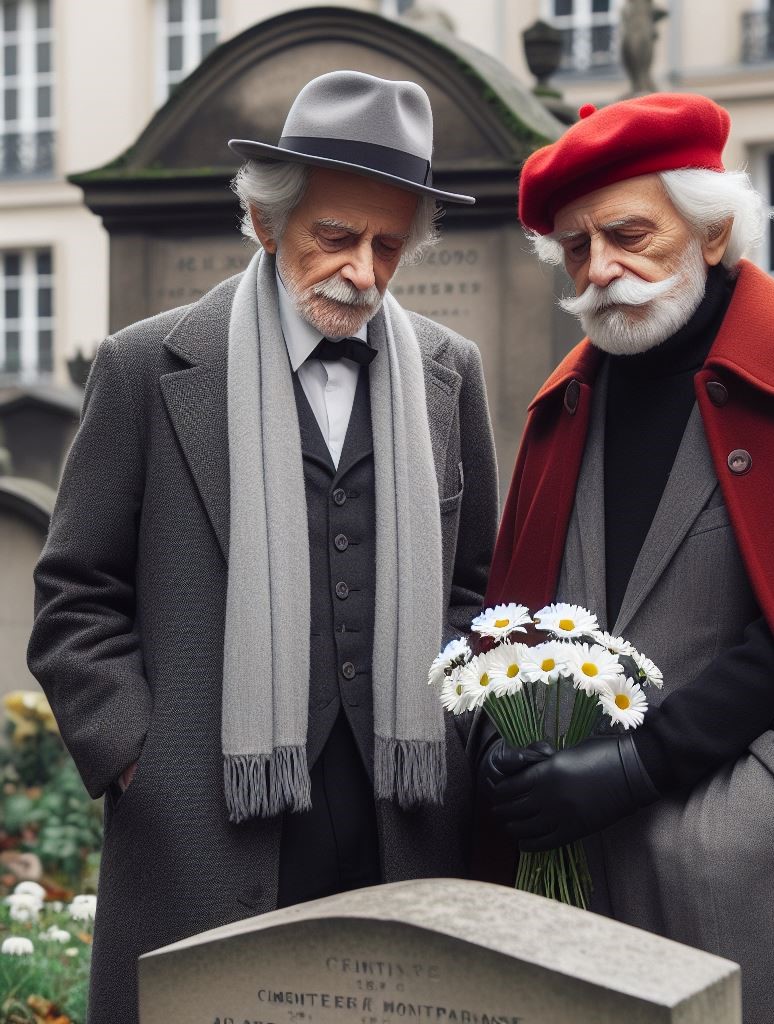
Gerard acknowledged, with a nod, Phillipe as he entered the café. Phillipe always sat at a table smack in the center of the room. In his red cape and beret, he preferred to be the obvious but unapproachable sun around which the other diners and staff revolved throughout the morning. His thick white handlebar mustache accented a face with twinkling eyes. Although they frequented the same café for ten years nearly every day, neither man spoke to the other.
When each man had his order, they settled in to enjoy their respective breakfasts. Gerard finished his yogurt with fruit and picked with delicate fingers at his fries while Phillipe spooned his sundae into his mouth slowly, delicious bite by delicious bite as the world spun inevitably around them.
Martin hurried to Phillipe’s table after delivering Gerard’s breakfast. He placed a steaming pot of green tea along with a large mug on the table and asked after Phillipe’s health. Phillipe was a habitual diner at Café Couronne but not daily. His apartment on the sixth floor of the old Art Nouveau building was a bit further down Le Rue de Rennes from Gerard. Phillipe’s attitude was com ci, com ça. He abhorred routine. At age seventy-six, he was sometimes absent of a morning due to a variety of ailments, heart, back, liver, eye, shoulder, or hips, but he never missed Thursdays. He had come on thirteen consecutive mornings so Martin felt sure he might be due to have a breakdown soon. Phillipe said he was sound this day and looking forward to meeting a friend for a stroll through the Jardin du Luxembourg after his petit dejeuner. “I’ll have a strawberry parfait sundae this morning,” he told Martin.
The two men left the café within ten minutes of each other, Phillipe being the first, stopped at the flower shop down the street from the café and purchased two dozen white daisies. At precisely 12:00 pm the two gentlemen of Paris met at the Rue Guynemer entrance on the northwest side of the Jardin du Luxembourg (6th arrondissement). From there they silently strolled the path past L’Orangerie with its intoxicating citrus smells, then around the green grassy oval in front of the Palais toward their favorite statue. The statue reminded them of her. They took two side-by-side chairs at the edge of the path and quietly spoke of her. After thirty minutes they strolled together to the Cimetière du Montparnasse to stand at her gravesite, privately mourning the woman they both loved.’The two men left the café within ten minutes of each other, Phillipe being the first, stopped at the flower shop down the street from the café and purchased two dozen white daisies. At precisely 12:00 pm the two gentlemen of Paris met at the Rue Guynemer entrance on the northwest side of the Jardin du Luxembourg (6th arrondissement). From there they silently strolled the path past L’Orangerie with its intoxicating citrus smells, then around the green grassy oval in front of the Palais toward their favorite statue. The statue reminded them of her. They took two side-by-side chairs at the edge of the path and quietly spoke of her. After thirty minutes they strolled together to the Cimetière du Montparnasse to stand at her gravesite, privately mourning the woman they both loved.
Gerard loved her first when she was seventeen. A muscular athletic man, he was ten years older than she. She had been an aerialist in the circus where he trained lions, tigers, and bears. She only performed there for two years, but they remained lovers even after she left to study magical arts at Arcane University in Paris. He would take the train from wherever the circus was temporarily situated in Europe to see her when he had a few days off. His hope was to persuade her to marry him and start a farm retreat for old circus animals in the Loire Valley. She finally tired of their long-distance affair. She asked him to stay away. Heartbroken, Gerard married the circus horse trainer on the rebound, and they had thirty-one quarrelsome, combative, marital years. After his wife died, he retired to spend his days in Paris researching butterfly habits and habitats with his true love still very much on his mind.
Phillipe met her when she was twenty-six. He was a professor of alchemy and enchantment at Arcane University. She was his most creative student, inventing unique ideas for magical entertainments. They became lovers within two weeks of her matriculation. She told him of Gerard, her first love, and the dozen or so that followed, but vowed he would be her last. They had happy times writing and producing magic shows for children. Sadly, she died of pneumonia after a mere five years together.
Twenty years went by, Phillipe and Gerard met one day at her grave in the Cimetière du Montparnasse. They eyed each other but didn’t speak. After several chance meetings, a coincidence neither of them questioned, they began a conversation about her. They assumed she intentionally brought them together. As time went by their meetings were formalized every Thursday at 12:00. When they met, they shared stories about how she enriched their lives. Each revealed a different side of her. To Gerard, she was a daring acrobat, lithe and supple, a physical wonder. To Phillipe, she was a cerebral partner with ideas flowing from her inventive mind. It made them feel that she was still with them. They alternated taking flowers to her grave. Occasionally both took flowers when a specific memory was observed by one or the other. After a while, they began eating breakfast at the same café, but never spoke except on Thursday. Their only subject was of her.
This story is from a prompt. Write about a conversation with a stranger who turns out to not be a stranger. Include five different “clicks” that happen as your character begins to remember the person.
It was one of those lines that went nearly around the perimeter of Whole Foods when COVID embraced our town. Everyone stood their respectful distance from the stranger ahead and the stranger behind waiting as the line inched toward the three clerks at the front of the store. I was halted next to the deli section. Not a good thing since all I needed to buy was a bag of organic lettuce and one of organic arugula. My weakness is stinky French cheese. I eyed all the goodies, especially the creamy raclette and camembert that always enticed my taste buds into a dance of ecstasy. I averted my eyes and caught the smile of the man standing behind me. With raised eyebrows, he nodded toward the cheeses acknowledging the temptation. He looked oddly familiar but not. Click.
The five-day stubble beard was interrupted by a ragged trail of a scar scoring the left side of his face from temple to chin, nicking the side of his mouth. The scar pulled his mouth to the left with a little pucker so his smile was lopsided but never-the-less friendly. His left eye drooped.
“A reminder of Paris, eh?” he asked. “Oh, yes,” I replied inhaling the memories. Click
I turned to move my cart forward.
A low laugh, full and rich, rumbled smoothly from his belly to throat and made me look back again. His eyes, a deep brown, looked me over from tête to toe. Click.
“Imagine seeing you at a grocery store in Tucson after all these years and all those miles.” I stared hard at him again. “Do I know you?” “Does Les Deux Magots one midnight in July 2003 ring a bell?”
A warm melting quiver involuntarily coursed through my body. Click. Again, I moved my cart forward, my mind racing through a dense forest of memories of those balmy July evenings.
“Sorry, did I disturb you?” he asked quietly. “I can’t believe, it is you, Anthony. What happened?” I looked directly at his scar. He had easily been one of the most attractive men I’d ever met, let alone bedded. The magnetism had been more than skin deep but his handsome face had instant appeal.
“One of those crazy challenges I couldn’t resist.”
I pulled my cart out of the line and circled back to him. Standing well within the prohibited six-foot radius of personal space I could smell his signature Jaguar Black Classic cologne. The musk, cedar, and bitter orange combination was the clincher. Click.
The disruption in the orderly line was noted by the other patrons who dithered their carts attempting to reestablish regulation.
“A race?” “Of course. And I won. But the ending was,” he paused, “explosive – one might say.”
Again, the low laugh that sent me back in time. He pulled his cart out of line and a collective sigh ruffled through the systemized cart-pushers.
“Do you have someplace to be or could we grab a cup of coffee? I’m in town for just a few days. I was going to look you up and I’m amazed at our serendipitous meeting. Meant to be, I guess.”
We left our carts at the end of the deli section and walked over to the coffee bar.
“Two French press Carte Noir, s’il vous plait.” Anthony told the barista.
I smiled. Ah, the memories that order brought back and it wasn’t just one midnight.
Writers obtain inspiration from a variety of sources. Mine usually come in dreams, or as I’m waking in the morning. Sometimes a character talks to me while I’m walking or driving asking to have his/her story told. It can be said to be divine, or mystical, or even crazy but it is magical. This is the true story of a spirit who guided me to write a poem.
At the tender age of sixty-two I suddenly realized that I would never be a grandmother. It had been my highest ambition, having grown up with wonderful grandparents and great-grandparents. As Polonius said, “and it must follow as the night, the day….” (totally out of context) I believed it was the natural culmination of a life well lived. I made the bold statement to my three progeny at various times that my aim in having children was so I could eventually be a grandma. I think that may have been a step too far. In hindsight, probably not a great tactic in the parent/child relationship.
By April, 2008 none of them exhibited any interest in procreation. NONE. They were happily living the lives they designed without one thought to my hopes and desires. Oh me, oh my. For several years, I had pinned baby pictures of my friends’ grandchildren and even the children of my childrens’ friends on a wall in my office cubicle. Someday, I believed, the wall would contain a load of pictures of MY grandchildren. But now all my children had exceeded their fortieth birthday and no grandchildren on the horizon. Not even a hint, a whiff, a whisper, a sign.
That evening I sat with my journal and began to jot down a poem mourning the conscious loss of something I would never have. I wrote about the little granddaughter I wished for – all the things I envisioned doing with her.
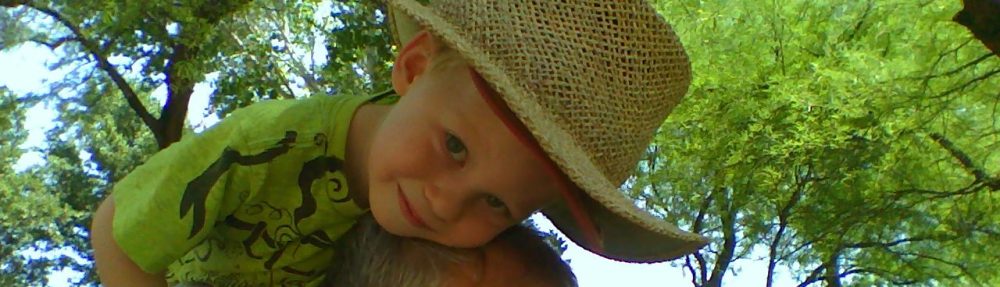
The next day I went to my computer to transcribe that story to submit to my writers’ group. As I sat at my desk, I felt the strong presence of a little boy hovering over my left shoulder. I could hear his voice. He wanted me to bake a cake for his third birthday. His spirit was so vivid, that the story of my granddaughter morphed into a poem about my grandson. I read it to my writer’s group the next week with an air of sad resignation, a kind of mourning.
My Grandson at Three A memoir of loss
A chubby bundle of verve Dirty knees, killer smile A charming packet of cuddles, Blue eyes spark with wonder That is my grandson
Innocence and childish wisdom Life – a fish bowl of dashing delights A bright idea swishes past A clever observation The world full of marvels
At three his every thought Becomes action Or question to be explored Energy and curiosity Cascade thru our day
From awakening Til he is tucked away Too tired to dream My grandson to me is Joy, delight, a miracle
Sweet arms surround my neck “Read it again, gramma” Good Night Moon redux Snuggles in my lap Affection, a two-way road, no tolls
I know it can’t last This rapture of childhood If love holds when he is grown He’ll read to me In the afterglow of remembrance
I wished a granddaughter Tea parties and dress up I wanted a granddaughter To primp and pamper I dreamed a grandson, the light of my life
I am the mother of three None plan children of their own Their choice, their path Expectation denied A loss I mourn
He will never be born to the world In consolation of loss My grandson is born to my heart A luminous vibration of life Forever tenderly just mine.
On Mother’s Day, May 11, 2008, I received a call from our eldest daughter who was living in Hawaii. “Hi Mom,” she said, “Happy Mother’s Day. You are going to be a grandma.” I was stunned. Excited, stunned, excited, over-the-moon, amazed. It was several days before I remembered the little boy who asked me to bake his birthday cake. My daughter declared that she was not going to find out the sex of her child until it was born. I had a hard time keeping the secret – I knew a little boy was on his way. He told me so about a month earlier.
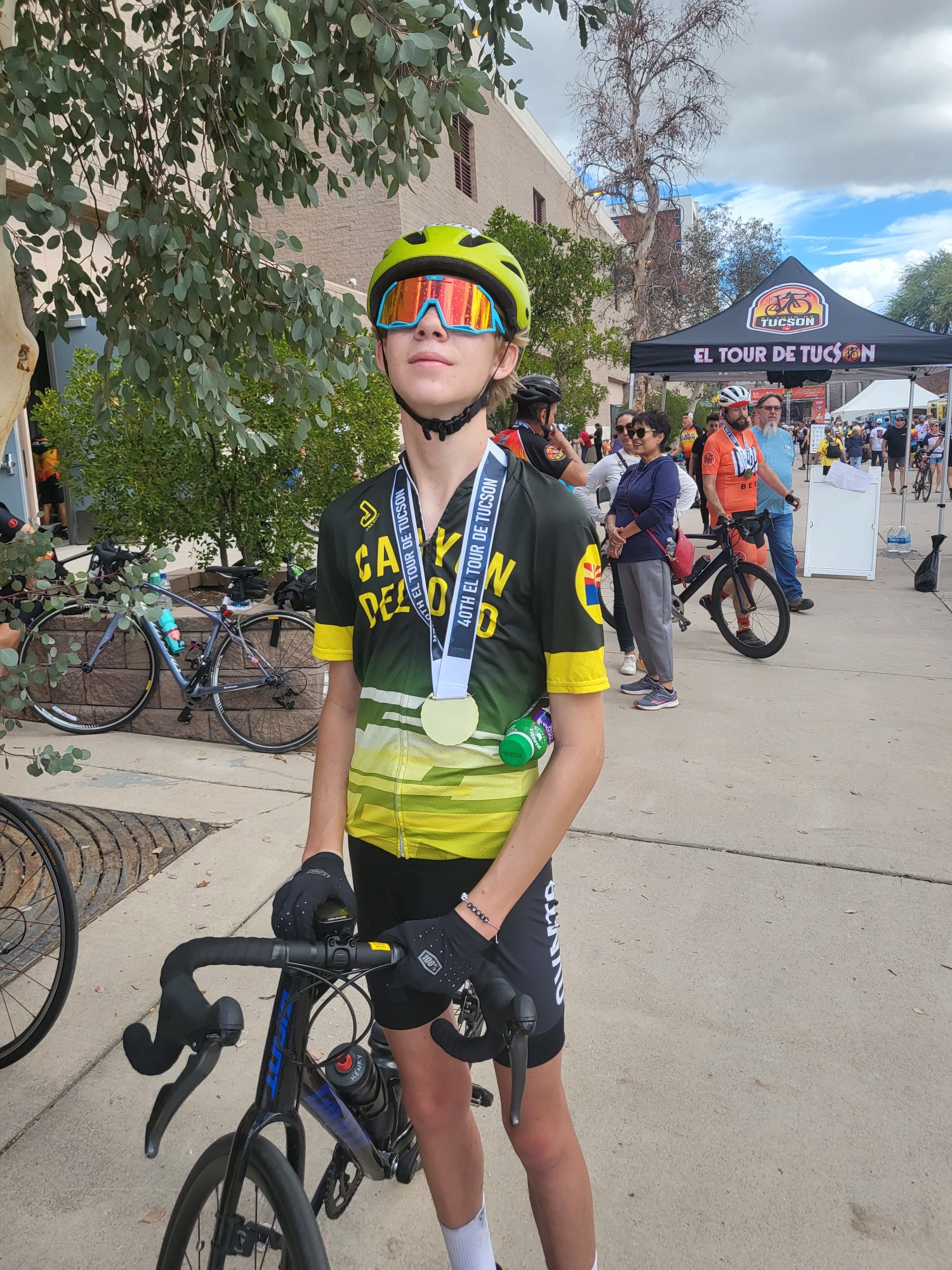
Our daughter was divorced and moved to Tucson just before her baby was born. Ken and I were privileged to be part of his childhood. I did bake his birthday cake for his third birthday, white cake with chocolate frosting and M&M’s. He is all that I dreamed. He does have blue eyes and a killer smile. He is a bundle of energy and light. He is a blessing beyond my imagining. He taught himself to play the piano by ear at age three. He learned to play the guitar from his mama. He played little league with his grandpa as a coach. He’s a scholar at school taking honors and AP courses. He is now over six feet tall, nearly as tall as grandpa, and very much his own person. He belongs to his high school mountain biking team. He has participated in El Tour de Tucson Bike Race every year since he was four starting with the fun run, then the five mile and so on. This year he challenged himself to ride the longest run – 105 miles that he completed in five hours. Oh, the bragging can go on and on for pages.
This past weekend we celebrated his 15th birthday. I baked a German Chocolate birthday cake for him.
And at nap time when he was little, we did read Goodnight Moon – many times.
This is a story I submitted to our Oro Valley Writers’ Forum. The story had to be 300 words or less. This is based on a real “character” in our family. Names were changed even though Lila is totally recognizable by those who know her. This story would make her smile with a wink.
The Coquette
Lila knew how to get attention. First, she always wore a hat. She liked to make a statement even when she went to the grocery store. Her closet was full of hat boxes. Lila also loved men. She was expert at catching the eye of a male. She was petite and moved like a dancer on tiny feet. Her large blue eyes cast about for prey when she entered a room. Then her lashes would lower like a butterfly folding its wings as soon as she secured the attention of a particular fellow.
One day my husband and I picked Lila up to go meet my in-laws at a favorite local restaurant. Lila wore a yellow straw hat with red cherries decorating the brim. My father-in-law set his baseball cap on the ledge at the end of the row of tables where several others had placed their hats. We ordered lunch. I watched Lila, out of the corner of my eye, scouting the room. A tall lanky man in his mid-forties came in and was seated at a table nearby. He placed his ballcap on the ledge also. His eyes drifted to our table and Lila gave him a nod. He smiled and went about his lunch. When it was time to leave, Lila quickly got up and went to the ledge where the hats lay and, snatching up the stranger’s ballcap, announced in a loud voice, “Oh Walt, don’t forget your hat.”
“That’s not mine,” my father-in-law replied picking up his own hat.
The stranger looked up and stood. “a – that’s my hat, Miss,” he said.
“Oh I’m sorry. I could have sworn it was my friend’s,” she said, smiling sweetly. Objective met. Lila was 92 and had buried three husbands.