A Dilly of a Dilemma

I love to write to prompts. Quick stories, handwritten in a limited amount of time, jump-start the right side of my brain. The windows to my imagination are flung open and words fly freely onto the page. They are untethered to logic, only conforming to the guidelines of the prompt. Often, I am taken by surprise at the words that leave my pencil and show up on the page. Most of the time, they are zany musings, sometimes the beginning of a story to develop later, and sometimes a dark force compels a tragedy. Occasionally, nonsense dribbles out, and I find it hard to follow the labyrinth of thoughts. I am always in awe of the process and its revelations. The following story popped up when given ten minutes to write a scene from three different points of view.

The Scene: A female hitchhiker is dropped off at an emergency room with a problem. Tell the scene from the POV of the nurse, the patient, and a hospital administrator.

Nurse POV:

A young miss came into the ER early this morning with a problem. One I haven’t seen in my twenty-four years of nursing. She had been hitchhiking along Highway I-10 from Mobile on her way to Jacksonville, Florida. Her thumb was the size and color of a pickle, not dill, more like a large sweet. She didn’t appear to be in pain, and the rest of her hand looked quite normal and pink, but she complained that since the weather had turned cold, it had been impossible to put on her gloves. I took her vitals, then sent for Dr. Shambala, who was on call. He came in and examined the majestic, inflated digit with no discernible dismay.

His only question to her was, “Is it easy to get rides with that thing?”

To which she replied, “Actually, it comes in handy.”

“Well then, no surgery,” he said. “I think the answer is to buy larger stretchy gloves. I wouldn’t want to inhibit your travels or your gardening.”

I discreetly took a photo of her thumb. I wanted to show it to Hiram, our hospital admin. We had a meeting just last week about the anomalies of the human body and how to address those issues.

Patient POV:

My thumb had been bothering me for several days. Snow and sleet had become an everyday occurrence, even though I had consciously chosen a southern route for my winter journeys. My gloves just didn’t fit anymore. My thumb was getting larger and was really, really cold. I hitched a ride on a pig wagon to the nearest ER. It was a twenty-mile ride, but the farmer was swell. He asked me about my thumb, and I told him it was the reason I needed to see a doctor.

“Going to have it cut off?” he asked.

“Heavens no,” I replied, “just wonder if it could be made a little smaller for my gloves.”

In the emergency room, the doctor asked the obvious question. “How did it happen?”

It’s not the first time that question has come up. I get tired of the same old answer, “I was born this way”, so I told him I was picking crops in Mexico and got a cut, and the juice from the pickles I was picking dripped in, and lo and behold, I woke up with a pickle-sized green thumb.

The nurse at the ER looked a little disconcerted, but kept her cool, and the doctor suggested I get larger gloves for my travels.

“We wouldn’t want to impede your traveling abilities. It clearly is a significant benefit to your lifestyle.

As I was leaving, a sour-looking gentleman, round as a wine keg, came up and asked that I go with him to his office. I did, thinking he might have a suggestion for my thumb. I found out he was a pervert with a title and a fancy office. He wanted to suck my pickle. I left without “goodbye.”

Hospital Administrator POV:

Nurse Nancy came to my office this morning with a photo she took of one of our ER patients. That’s strictly forbidden, but when I saw the photo, I understood her motivation. The girl had a thumb the size of a juicy green pickle. I had given a mini-seminar to the staff about physical anomalies and injuries they could encounter in a rural hospital; everything from nails in the head or hand, to animal parts embedded in human parts – enough said. The thumb picture triggered something in me, and I had to go down to see it in person. The young lady was just leaving the ER.  I asked her to come up to my office for a chat. She obliged, but when the door closed, a powerful urge overcame me. I just had to taste that thumb. I had been a thumb sucker up to the age of fifteen when the shame heaped upon me by my peers finally inhibited the craving, and I quit cold turkey. The girl was offended by my request to suck her thumb and left in a huff. I wished her well on her journey and hope she has a dilly of a life.

AI generated picture

Writing – It is Never Finished

Writing IS rewriting and rewriting and rewriting…ad nauseum.  When I have put a story on paper, I put it away for a day or two, even a year or two, then go back to reread it to see if it makes sense.   I inevitably find a different word or phrase I think works better in a sentence, a description that can be sharpened. It is a never-ending process. I have spoken to real authors, writers of dozens of books, and they say the same thing.  At some point you have to STOP writing. It is hard to say it is finished because you know there is something that could be illustrated better or you change your mind on the purpose of the story, even the plot. A new character pops up and works their way into the story. On and on it goes.

I recently read a book, Writing with the Master, by Anthony Vanderwarker, in which he described how he wrote his novel under the gentle and not-so-gentle guidance of his friend John Grisham. He worked for years writing his novel, Sleeping Dogs. During that time, John Grisham pointed out the weaknesses and gave him tips to make the story better. It took a full year for him just to get his outline right. Then he outlined each chapter and finally started the novel. The process was arduous, and he never gave up. After writing five or six novels over a period of time and shoving them into the back drawers of file folders, he finally had a novel that was worthy of publication.

Not since I was thirty have I thought of writing a novel. I just don’t have the patience for a long storyline. I love writing short stories and poems. They may be shorter, but it does take the same kind of effort to make a story coherent and interesting – just not the same amount of time. I have too many stories to tell to spend that much time on just one.

Characters develop from people I know or hear about. Sometimes a character in my head wants to have their story told. Often, from observation, I see or hear something that catches my attention and wants to become a story. Inspiration is all around. I live in an inspiration stew.

Finding time to write is always the challenge. I can go to my writing room, sit in a chair with pencil and paper, or at my computer, and be lost in a different world, consumed by a character, for hours on end. At least until my husband comes in to see if I’m still breathing. The cats, Sadie and Oliver, find me to remind me when it is dinnertime. Thank heaven I have them. Without my family, I can imagine I’d be a shrunken mummy sitting in a chair, poised with pencil in hand after leaving this earth without notice. Time totally disappears. Ahhh – I just thought of a story. A woman starts to write and disappears into her story, never to be found again. Well, I’ll work on it. 

Have a nice day.

My Secret Life


Standing on the brink of eighty, I have so much past and a diminished amount of future. I must keep reminding myself of that because I don’t feel a day over thirty-five, and my tomorrows still seem endless. I’m listening to friends and colleagues about all they are doing to prepare for their inevitable end. Things like clearing out closets and storage so their heirs are not overwhelmed with the detritus of their lives.


That’s a good idea even if you are not anticipating the Grim Reaper. It cleanses the mind to get rid of stuff instead of stuffing it in nooks and crannies. The same can be said of ideas and memories. They can be aired out, shared with the world, or discarded entirely.


I have so many wonderful remembrances to look back on, I don’t dwell on woes. Among my very happiest memories, besides my relationships, are my stories. I have written countless stories, character sketches, and poems over the years. Only in the last twenty years have I shared any of them. I wrote for myself. As a matter of fact, no one in my family even knew I was a writer. Of course, I didn’t call myself a writer then because to me that was an exalted status far above my humble reach. You know Hemingway, Huxley, du Maurier, Woolf, Rowling, Fitzgerald, Austin, Dickens, and so many more I admire. When I took my first writing class, I was told that if I write, even in secret, I AM a writer. Hallelujah! Now I can say it out loud.


When we moved from the Pacific Northwest to Southern Arizona, I tossed out volumes of diaries, journals, and notebooks of my writing. I figured I’d never have any reason to revisit them. It was my secret life. By chance, some were overlooked, so I have dribs and drabs of my early reflections on life, including my senior year of high school. I would love to look through all those old notebooks again to see how my perspective may have changed.


I started blogging as a marketing tool for a book I co-authored three years ago. It was fun. I was hooked. I started asking my husband to read stories I write for my critique group and blog. He was surprised that I wrote. Fortunately, he likes my writing. At least he says he does. He is not a literary critic, only a reader. He has never liked reading books, so my short essays or reminiscences are just the ticket. Longer projects I have written require an editorial type of review. For now, I’m enjoying the interaction I receive from readers at the Oro Valley Writers’ Forum, my critique group, and my online blog.


I encourage EVERYONE who likes to put pen to paper or tap away on a computer to consider themselves A WRITER. Find a writers’ group that agrees to read and critique your stories. It is a way of strengthening your skills and receiving feedback for your ideas. Writer groups are formed in writing classes given through Pima or the U. of A. The Oro Valley Writers’ Forum at the Oro Valley Library is another place to meet writers and share ideas. It is never too late to share your perspectives with the world. Everyone has a story. Every day is a story. Don’t live in a secret world. Clear out your closet of ideas and reveal your insights through fiction stories, non-fiction, memoir, or poetry. Your voice is an important thread in the fabric of humanity. We have so much more in common than in opposition.

I apologize to anyone who was misled by the title of this piece, thinking there might be some delicious salacious tidbits in the offing. Eighty years have been filled with a myriad of highs and lows, disappointments, and missteps. My deepest, darkest secrets are still locked away in my journals. Some are delicious in retrospect. They may see the light of day at some point.

What Is Happiness?

I had a discussion recently with friends at the Oro Valley Writers’ Forum (OVWF) about happiness. Then I read a blog post by Anthony Robert (tonysbalogna).  Do You Suffer From The Curse of Comfort – tonysbologna : Honest. Satirical. Observations

The discussion and blog post seemed to be synchronized. What is happiness? What brings comfort? Does it come with achieving your goals? Is it when you have acquired everything you ever wanted? Is it a daily ritual or habit?  How do we keep that carrot dangling before us, so we continue to reach for our future, our happiness, and contentment?

I believe Anthony has a good hold on it.

I believe that happiness is all in the pursuit of…

Happiness cannot be the end game. No matter what you think, you will find that happiness is just beyond what you thought it was. Comfort is also an elusive concept. What is comfort? There are levels that can only be defined by the individual. Can too much comfort lead to laziness, slack thought, unhappiness? It is the striving that brings satisfaction.

This of course is, as they say, a first- world-problem. People in depressed, exploited, or poverty-ridden areas of the planet have a totally different view of happiness and comfort. Their comfort is taken in small bits, as is happiness. Having a full belly brings comfort and leads to happiness if a full belly is a rare thing not taken for granted.  Food has always been in the immediate reach for me, so comfort is easily achieved. Sometimes food is happiness when an exceptional meal is planned and served.

I was blessed with a happy disposition, not something I work at, just a gift. My husband says it is because I have a very poor memory. I admit I do live without regret or longing for the past. I’m incapable of worrying about the future. That leads to an inability to plan ahead which can be very annoying to a spouse. I’m pretty much a today kind of girl.

Once when our marriage hit a bad patch, we were swirling down the drain headed for divorce after thirteen years. We went to my mother to tell her the news and prepare her for a different relationship with our family. We weren’t mad at each other – it was the times, the circumstances, and the expectations that caused a wedge. It was a matter of having achieved goals – a nice house in a beautiful neighborhood, two cars, three kids, two dogs, a great career – then looking around and saying, “Why am I not satisfied?”  My mother in her misguided effort at support declared, “Ken, I know she is hard to live with, but you’ll never meet a happier person.” A backhanded endorsement of me if I’ve ever heard one. The divorce failed, we reconciled, and the rest is history. My happy disposition must have helped win the day. I’m certainly not any easier to live with.

The things that bring joy in my life are my relationships with my family and friends and even strangers. I love to meet people and hear their stories. Lives lived in many different ways, yet with so much in common as human beings. I never tire of learning about other people, other cultures, other places. My life is enriched by those discoveries. That is the carrot that keeps me moving forward.

Writing is another joy in my life. There are infinite ideas to explore, infinite memories to share, infinite stories to conjure.  Words paint pictures. Words spark conversations. Words are a never-ending source of revelation.

What about you? What does happiness mean to you? What brings comfort?

This Old House

My family moved into our home on Burns Avenue in the Riverside District of Wichita Kansas when I was three years old. It was an area between two rivers, the Little Arkansas and the Big Arkansas. The rivers were just a few blocks from us, one to the East and one to the West of our house. To the south, in the fork of the two rivers, is Riverside Park, less than two miles from our house. Our neighborhood was built prior to WWII.  Our house, built in 1940, had grey asbestos shakes and white trim. It was about 900 sq. ft. with two bedrooms, one bathroom, and an unfinished basement.  The detached garage was a few feet behind and to the side of the house. The entire neighborhood of homes had a tree-lined street with sidewalks.  Behind our house was an alley and across the alley was a church.  Sunday morning delivered raucous music, loud singing, and righteous preaching that we could hear from our backyard. Around the corner and down the block on another corner was an IGA grocery store. Across 18th Street from the IGA was a drugstore with a lunch counter where we could get ice cream sodas, a rare but delightful treat. In the other direction around the corner in the middle of the block was a tiny mom-and-pop grocery. The old man would soak toothpicks in cinnamon oil and keep them near the cash register. He gave them to neighborhood kids who stopped by on the way to or from school. We chewed on them as we walked. He also stocked the best penny candy.

One of my best friends moved into the house next door within a few months of our arrival. His name was Billy. He was my age and we hit it off, playing cowboys, hide and seek, and climbing my big backyard tree.  My very best friend, Lois, lived two blocks away on Woodland Avenue. When we were five we all attended Woodland Elementary which was two blocks in the other direction from my house on Salina Avenue. John Marshall Jr. High was three blocks further south. I left after sixth grade and didn’t get to attend John Marshall.

My room was at the back of the house and had two windows. The wallpaper on my wall was white with bouquets of lavender posies and yellow ribbons. My bed resided between the windows and I could see the backyard and my tree. It was an enormous maple tree. I sometimes made a tent over my bed with the open side toward the window and would pretend I was camping.

As soon as I was big enough, I climbed into Old Maple’s comforting branches to spend hours daydreaming or reading. It was well over thirty feet tall and, for a couple of years, I needed help to get up to the fork in the trunk that enabled me to climb higher. I could go far out on the limber bottom branch where I straddled it and bounced, pretending I was riding a horse. Dad built a swing attached to the side of the garage – another place to think and dream.

Our house had arched doorways between rooms except the two bedrooms and the bathroom. In the hall that led to the bedrooms and bathroom was a niche in the wall for the telephone. The living room had a fireplace with a floor-to-ceiling bookcase notched in beside it. The dining room had French doors out to the back porch. The kitchen was long and narrow, and my mother painted it Chinese Red. A window over the sink looked out to the backyard. At the end of the kitchen was an alcove where stairs led to the basement. It also had a side door leading out to the driveway where a honeysuckle vine grew on a tall white trellis.

A story I remember about the phone in the hallway was when I was four, I went swimming with the fishes. My mother ran my bath with nice warm water and bubbles and, before I got in, the phone rang. She went into the hall to answer it and began a conversation with someone. I was buck naked, running around the house. I decided to have company in the tub so I climbed on my little red chair, I got my goldfish bowl from the top of my dresser and dumped the fish with their castle, green ceramic mermaid and algae figures, and shiny rocks into the tub and climbed in. I began chasing the fish around in the tub and Mom heard the commotion. She was not amused. The fish were removed along with their paraphernalia to their bowl with clean water. The tub was emptied and washed out. Then I was tubbed, and scrubbed, and put to bed. I don’t believe the fish lasted through the night.

Another story that involved the phone was when I was six. I refused to clean my room. I put up a tantrum about something that was important to me at the time. My mother was at her wit’s end to get me to comply or at least calm down. She tried threatening and yelling at the same level I did with no positive result. Finally, she became very very quiet. She went to the phone in the hall. She dialed a number. I watched from around the corner to see who she was calling – the police? my Dad?  No, she called the Indians. She put her hand over the receiver and told me she was going to send me back to them since I was acting like them and wouldn’t mind her. I begged her to let me stay and promised to try to be a better girl. She relented and told them over the phone I wouldn’t be going to live with them, at least not that day.

The basement was where Mom’s washing machine resided. We had clotheslines in the backyard to hang clothes to dry.  The brown and white hide of my Dad’s horse Knobby was slung over the top of a folding roll-away bed. I sometimes climbed atop it and with a broom stuck in the crevice for a horse head, I pretended to ride the range on my paint pony. To this day I don’t know why my dad had his old horse pelt at our house. I do remember Mom did not appreciate its sentimental value and when we moved from that house it was left behind – who knows where?

I remember a year when the waters of the rivers rose above flood stage. All the neighbors went to the riverbanks to put sandbags along the edges. Even with that precaution, our basement held a few feet of water. The heartbreaking loss for my mom was the letters she received from my dad when he was overseas in the war. He wrote daily and she saved them in bundles with ribbons around them stored in the basement – until the flood when all were lost.

I loved my house, my neighborhood, and my school. The kids played kick the can, hide and seek, cowboys and Indians, a form of baseball across the front yards and into the street all through the year. In summer we’d roller skate from one end of our block to the other. Of course, in the winter we had snowball fights. The neighbor across the street raised chickens and when he decided to make one or two into their dinner he would let us know. The kids would line up to watch him catch a chicken from the coop, lay its head on an old stump in his backyard, and chop its head off with one mighty blow of a sharp axe. Then he let it go and the body would run around the yard and eventually flop over. A bloodthirsty gang we were.

I was eleven when Dad announced he received a promotion, and we were packing up and moving to Seattle Washington. It meant that when fall rolled around I wouldn’t be able to go to John Marshall Jr. High with all my cronies. The promotion I ached for – to be in Junior High. I was devastated. Mom was elated. She did not like living in Wichita. She was from Denver, a big fashionable city. To her eyes, Wichita was a cow town in the midst of the prairie. She yearned for the more cosmopolitan environs of Seattle. I remember trying to strike a deal with them to stay with my great-grandparents on High Street instead of going to Seattle. They reminded me that even if I did stay behind, I wouldn’t be able to go to school with my friends because my great-grandparents lived across the river about two and a half miles away in a different district. I went with them and met my destiny in Seattle.

Age Appropriate

It has been said to me several times in the last year, “Wow, publishing your first book at the age of seventy-seven. That’s a big deal.”  I beg to differ. My age has nothing to do with writing other than I hope I have improved over the years. It’s as if my life culminated in this book. No, it hasn’t. If truth be told I have written enough over the years to compile as many volumes as the Encyclopedia Britannica. Publishing was never a priority or even a thought. I have written for seventy-eight years, no actually seventy-one years because my first novel was at the age of seven.

When we moved from Bellevue, Washington to Tucson in 1993, I jettisoned my journals, notebooks, and pages of writing to lighten the load. Boy, how I wish I had some of that back to fill in memories that are hazy now. Teen diaries with social events prominent, newlywed adventures, then pages of notes on my children as they grew up. Some pages were complaints, some were gratitude, some were hopes, some were sorrows – most were filled with the joy I felt watching my kids grow.

Of course, as writers do, I accumulated more journals, notebooks, and loose pages of writing in the intervening twenty-six years. They are not systematic or categorizable. I grab a notebook or journal when the spirit urges and start writing not caring what came before. I have journals with entries from 1997, 2005 and 2020. They are not in order because I start writing on whatever blank page I open to, so a 2017 entry may be before a 2005 one and heaven forbid if there is any theme articulated. This unstructured whimsy pattern is my life. My brain cannot do linear for more than a few minutes at a time.

Is there a right and wrong to writing? Absolutely not. Writers have to write. It is like breathing. It is an imperative to living. Age is not a factor in writing. There is nothing that says you can’t write after you are fifty or seventy or one-hundred. You don’t need an MFA or be on the best-seller list to write. Until I moved to Tucson the only writing class I had was a Freshman 102 class at WSU. A young professor tried to introduce newbie English majors to the idea of creative writing.

After we were settled in Tucson, I saw an ad for a writing class that sounded interesting and I thought it would also be a way of meeting people in my new town. I had no idea that class would introduce me to many other adults who loved to write “just because”. Indeed, I thought I’d be the only one there who wrote just for myself because “writer” meant a higher level of achievement than what I felt I had. Thankfully, I was wrong.

I met several people who love words and love putting them in some kind of order to tell stories. Our writers’ critique group was formed from a few people in that class and four of us stayed together for over twenty-five years. The book we wrote is to encourage other writers to create and maintain critique groups as a way of expanding and enhancing their writing experience. Creativity stays with you throughout your life.

Getting back to the age issue, I once knew a woman who dressed “inappropriately” for her age. She was in her late sixties, then early seventies when I knew her. She wore medium-heeled shoes with lacey bobby socks, fancy dresses that barely touched her knees and her long grey hair was done in braids, ponytail, or pigtails with ribbons and delicate butterfly clips depending on her whim and the time she took to get ready in the morning. She was petite, with a trim figure and her clothes looked good on her body, but they would have been more “appropriate” on her granddaughter. She was the hostess at a high-end restaurant in the town where we lived. She was courteous, on the ball, and did her job with confidence. She was NOT a nutcase. She was an individual. She loved people and it showed in her manner, her care with customers. I’m sure the first time people saw her, they were taken aback. I know I was. But after observing her over several years I knew she was authentic, not an act. I moved from that town so I’m not sure how long she remained in her job. I do know she had plenty of energy and enthusiasm for it and did it better than women who were in their twenties.

My point is people age differently, some are old at forty while others maintain their lust for life well into their eighties, even nineties. My grandmother was an example of someone who never let age determine her life trajectory. She was widowed at fifty-eight. She had no pension and social security was minimal. She went to live with and care for her elderly parents who lived into their nineties. When her parents passed away, two of her sisters (a widow and a divorcee) and a brother (a widower) moved in to share the family home and expenses. Four siblings in their seventies and eighties acted like four siblings in their teens. They teased, argued, hassled each other, and laughed in equal amounts. It was hilarious to visit them. If you overheard their conversations, you would never believe they were senior citizens. They all sounded like fourteen-year-olds.

Grandma developed congestive heart failure later in life, but it didn’t hold her back. She was a woman of boundless faith. The day she died she had been out helping her “old people”, those friends in their sixties and seventies (ten to twenty years younger than she) who relied on her to drive them to appointments and shopping. She went home after a busy day and said she didn’t feel well enough for dinner. She was taken to the hospital later and died of heart failure that night. Not once in my life did I ever hear her say anything about her age or infirmities. They were just not significant factors in her life. She created the best of each day she was given without excuses. I adored her for many reasons, her kindness, her generosity, her “get on with it” spirit, and aspire to be like her. She embraced the gift of each day. Age is a number not a state of being. A spirit cannot be defined by age.

The Night I Saw Santa

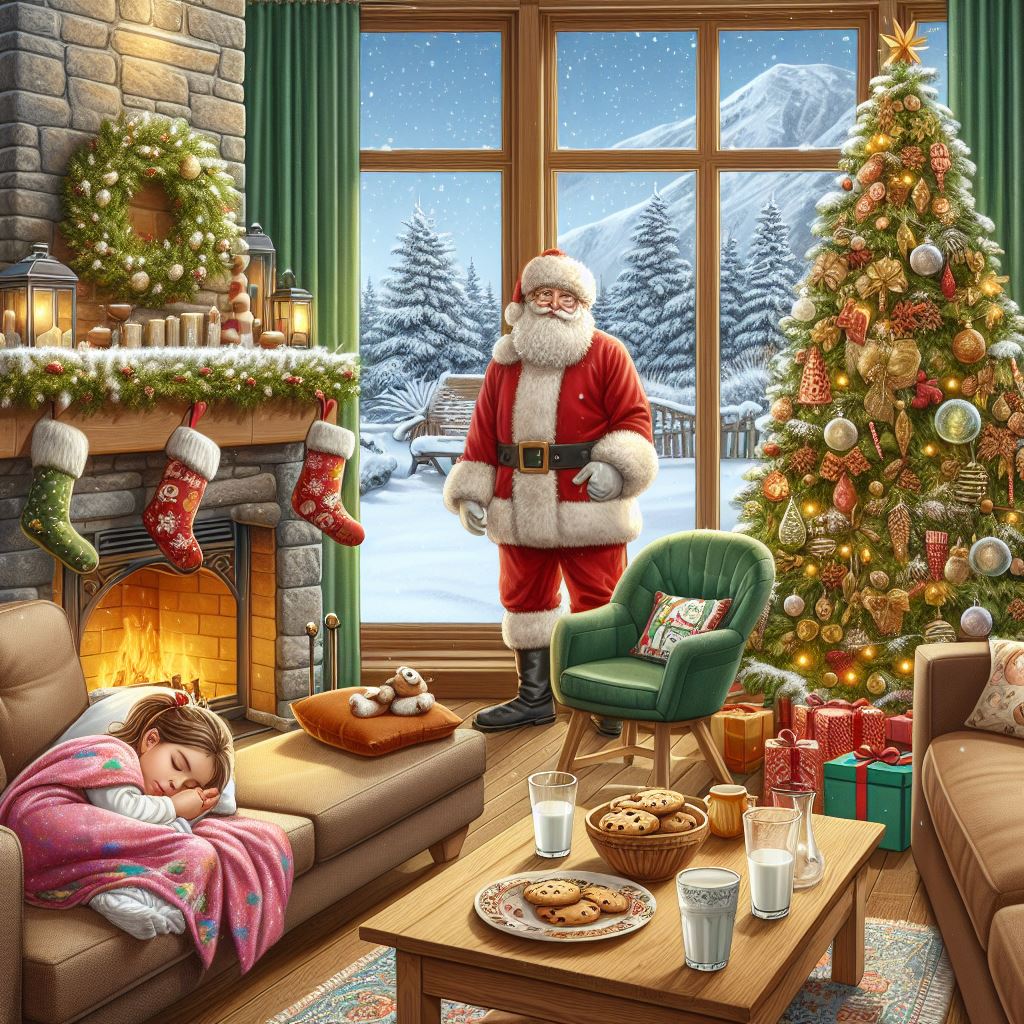
One Christmastime, my parents drove from Wichita to Longmont Colorado so we could spend Christmas with my mom’s family. We stayed at Grandma and Grandpa’s house. We were there a few days before Christmas. My grandparents’ home on Carolina Avenue was small. The routine during our stay was that I went to bed in grandma’s bed. Then when the adults went to bed, I was transferred to the living room sofa. My parents slept in the guest bedroom. I always went sound asleep, never sensing the move from bed to sofa.

On Christmas Eve my aunt, uncle, and cousins came to visit with us. My cousins were much younger than me, so we didn’t play together. We had dinner then everyone helped decorate the tree. The bright lights cast a colorful glow around the room. There was a fire in the fireplace making the night cozy. The big picture window in the front room framed the snowy scene outside. Grandma had paper and crayons for me to draw pictures. I drew a picture of Santa and his reindeer to leave for Santa along with cookies and milk.

When my aunt and uncle left with my cousins it was time for me to go to bed. I worried that Santa would get burned by the fire when he came down the chimney. Grandpa assured me he would stay up to make sure the fire was out and the fireplace cool so Santa would be fine.  I told them I would stay awake until he got there just in case. And then, lights out.

In the morning I awoke when Grandma came into the living room to take the cover off of Mr. Thorndike’s cage. He was their blue and green parakeet. He started to jabber, jabber, jabber as soon as he saw daylight. Slowly I recognized where I was and looked first at the fireplace to check on the fire. It was out. Then I looked at the tree and saw presents all around it. Santa had come. The milk and cookies and my drawing were gone. I missed him – I slept through it all. Oh, how disappointing. But I couldn’t let anyone know I had not fulfilled my mission.

Grandma and Mom went into the kitchen to start breakfast. Grandpa came into the living room followed by my dad. They looked amazed at the tree and all the presents. Dad picked me up and Grandpa took the blankets and pillow off of the sofa so they could sit down.  I walked around the presents; everything was wrapped, and I didn’t know what was mine but I tried to guess. Grandpa said we’d open gifts after breakfast. Oooo, I didn’t know if I could wait so long. Grandma took me to the bathroom and helped me dress. I was so anxious. Grandpa picked one present from under the tree and told me I could open just one before breakfast. It was a china tea set with roses on the four small cups and saucers, and a teapot, sugar bowl, and creamer.

Then the question. Did you see Santa? Did you talk to him?

My four-year-old brain lit up. “Yes,” I said emphatically. “Santa came down the chimney and got his pants a little dirty. He saw me lying on the sofa and put a finger to his lips and told me not to talk. He ate the cookies and rubbed his tummy, mmm good. Then he laid out all the presents from his big red bag and blew me a kiss, took my drawing, and disappeared back up the chimney and I fell asleep really quick and didn’t look at the presents.”

“Oh, you’ll have to tell Grandma what you saw,” Grandpa said and called Grandma and my mom in from the kitchen.

I repeated my revelation and added that I heard the reindeer on the roof and their bells.

“You are one lucky girl,” said Grandma. “Not many get to see Santa.”

I did not notice the exchange of looks and winks that I’m sure darted around the room from adult to adult as I told my story. They accepted every word and repeated what a lucky girl I was.

Four years later, when my third-grade teacher told the class just before we left for the day and Christmas break, that although Santa wasn’t real, it was the spirit of giving that made Christmas special. A knot formed in my stomach. Santa, not real? How could that be? My throat went dry, a lump obstructed my swallowing. I couldn’t talk. I was devastated. I went home after school and asked my mom. She grumbled about the teacher telling the class about the myth of Santa but admitted that the teacher was right. Santa was the spirit of giving not a real man. The magic trickled out of the holiday like syrup slowly dripping off my Christmas waffles. It took me the whole Christmas vacation to accept that Santa was not a person, just the essence of giving. I couldn’t even talk about it to my best friend. The day before school began in the new year, I asked her if she knew about Santa before Mrs. Singer told us. She said yes, she was not surprised. Her parents never believed in Santa and told her and her brother not to talk about it to other kids who might believe. That really put the exclamation point on the lesson. I had no choice but to believe them.

Then I remembered my Santa sighting. Another whole dimension developed in my troubled brain. Now I knew, they knew I was telling a whopper of a tale when I described my visit from Santa. By then, I’d convinced myself that it was true. Not once did any of those grownups bring it up. Toward the end of my mother’s life, I asked her about it and she said my imaginative, impromptu story was the highlight of that Colorado trip.  I’ve told stories real and imagined since I was four.

Effie’s Trinket

When writing, to clear your mind, it is sometimes fun to find a prompt that stretches your imagination, gets you out of a rut, and lets your brain breathe. This story is what came to me instantly from a prompt to write a one-page story, poem, or essay about a trinket, a twenty-minute write. Now there are endless possibilities in that direction. What is a trinket? Is it a treasured bobble given you by your grandmother? Is it a fun reminder of a trip to the fair? or to Italy? Sometimes I need to be flexible about the one-page directive. Many stories are handwritten so the “one-page” doesn’t count because I transcribe them to computer. Then one–page can be fiddled by changing margins and font size unless otherwise restricted. The idea though is to be free, unloose your imagination. Let yourself go.

Effie’s Trinket

“Euphemia.  Euphemia. Come in for supper,” her mother called from the screen door into the backyard.

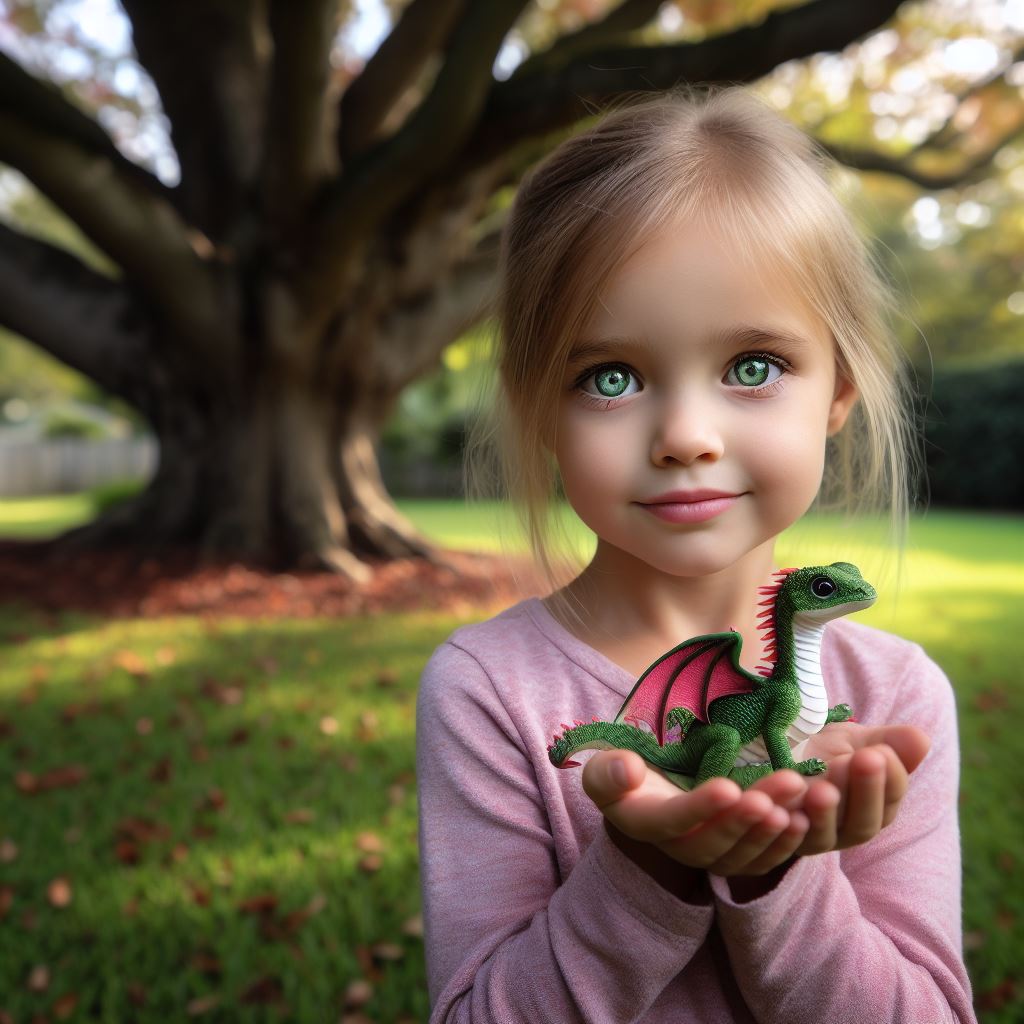
Effie scrunched down so she couldn’t be seen from the back porch. Old Elmer’s giant arms embraced her, fanning his huge green-gold and orange leaves to conceal the girl’s hideaway. Effie’s stomach gurgled. It had been hours since she ran away from home and maybe she was a bit hungry. She held Trinket in her two hands, cooing to him. “We don’t need food, Trinkie. We’ll live on moonlight and magic.” Trinket nuzzled his spikey head under her chin, his grey-blue eyes blinking as he stared up at her.

Effie’s mom went back into the kitchen, the screen door slamming behind her. “Go ahead, sit down. I’ll give her another five minutes and then we’ll eat,” she said to her husband Eustis and son Micah. The round oak kitchen table was set for four. Food waited on the stove top to be served. Glasses of honey mead, diluted by water for the children, were in place.

“Ma, I’ll go find her,” said Micah.

“You’ll stay just where you are,” Eustis proclaimed. “You’re the reason she walked out this afternoon. Why did you have to tease her again about her dragon?”

“Aww, Dad. She’s nine and too old to be carrying around a baby dragon. I’m embarrassed when my friends see her.”

“Well, son, you may be a mature fourteen-year-old now but it wasn’t all that long ago you rode your unicorn, Cool Whip, up and down the county road. I think you were about Effie’s age when you told us he took you over the moon one cloudless full-moon night.”

“Euphemia Jane. It’s time to eat. I made chicken pizza and mashed potatoes with butter and bacon bits.” Dorothy called again from the back door.

She scanned the yard for a sign of her daughter. Effie had a habit of running away when she was mad. She had never wandered beyond the boundaries of their two-acre property but there was always a first time. Dorothy looked at the shed, a common retreat. Blackberry vines that covered the building didn’t look disturbed. In summer, Effie would come in with scratches on her arms and legs from reaching for the ripest fattest berries. Her fingers, her mouth and tongue would be stained royal purple. But it was autumn, not the season for blackberries. She glanced up at Old Elmer. The tree sat halfway between the shed and the vegetable garden. There, about a quarter of the way up the seventy-foot colossus, she saw a glimmer of pink. Effie’s pale gold hair glowed pink in red rays of sunset.

“Euphemia Jane Charles, come down this instant. Bring Trinket with you. Your brother will leave him alone.”

The empty feeling in Effie’s tummy and her aching legs from being crouched for so long as well as her mother’s promise that Micah would leave Trinket alone persuaded her to shimmy down the tree with the baby dragon secured under her arm. “Thanks Elmer,” she said as her toes touched the soft cushion of fallen leaves beneath the tree and she set Trinket on the ground. She started to walk toward the house but the golden cord that tethered Trinket to her ankle became taut. Trinket cocked his head, lavender wings folded tightly against his body, refusing to follow her.

“Com’on, Trinkie, let’s give Micah one more chance. He didn’t really mean it when he said he would take you away and drop you at the end of the earth. I won’t let that happen even if I have to carry you always. You’ll be getting bigger and pretty soon he won’t be able to bully you. Your wings are almost strong enough to carry you where he can’t reach you. One of these days your fire starter will work and it will serve him right if you give him a little scorch. She bent down and picked Trinket up cuddling him close to her chest. He gave a little snort, a happy snort, waggled his pink and purple scales, and settled in her arms.

They went in for supper.

The End

I gave this story to a friend for comment, not about grammer but about the flow of the story. He is a serious writer/researcher.
His comment was, “So, is Trinket a stuffed animal? Or a cat?”
“What do you mean? Trinket is a dragon,” I replied. “It says it pretty clearly.”
“Oh,” says he, and that was the end of his comments.
It is useful to remember that a reader filters your stories through their experience. They may have a completely different interpretation of it than was your intent.

The whole idea of writing from a quick prompt is to exercise a separate part of your brain and give yourself the freedom to explore topics from different, hopefully, fresh angles. You may find a nugget of something useful to your main project in those musings.

I am blessed with dozens of people who live in my head. They are generally unobtrusive unless called upon to inhabit a story. I also don’t know where their names come from. I don’t recall ever hearing the name Euphemia or Effie before. Once these people have been let out, they become a part of my mind-family. I’m never lonely. I know them all so well. For instance, Eustis, in this story is a very real character to me. He has tomato-soup-red, short, curly hair, black-framed glasses, and is a scientist who works for a small chemical company in the mid-west. He always has a slight grin on his face as though he is observing life through bubble glass. He hums a little song frequently with part of the chorus “I got Memphis blues, right down to my shoes.” I don’t know if that is a real song or not. It just popped into his head. Although he is a minor character in this story, he may reappear in a different story at a different time with his unusual family. That is unless they all expire from his wife’s cooking. I cannot imagine serving such a meal to my family.

Another person I wrote a story about is Hannah, a black woman born in the late 1890s who is a baker in Wickenberg Arizona in the 1920s – 30s. I know all about her childhood and her family who were sharecroppers in Mississippi, and slaves, a generation before that. I know her journey to independence as a businesswoman. I’ve seen (in my imagination) the headstones of the family in the county cemetery. She has an amazing story to tell. One day I may put it on the blog. These people are very real to me but they are all born from my imagination. Sometimes I think I should put a disclaimer on my stories like the old TV shows that says, “Any resemblance to persons living or dead is purely coincidental”.

Change * My Last Post on A Way with Words blog

As my dear husband reminds me whenever I am flummoxed by events that modify my circumstances, “The only constant is change”. The world is always in flux. Change is life. We are not the same, day in and day out, because our lives are not static. We live in an ever-modifying world, shifting conditions and changing views. As we get older our bodies transform as do our wants and needs. Change brings growth even when we don’t immediately realize it. Change is a catalyst for learning about ourselves, others, and our world.

What I’m getting at is there is a change on the horizon with me and the A Way with Words blog. This is my last post as a regular blogger. With the permission of Sally and Jackie, I will occasionally be a contributor. Our friendship remains intact. I will always be grateful for their generous friendship and their mentorship. We spent many years learning to write together and now we are going separate ways as writers.

I established my own blog site Wonkagranny, a grandmother’s perceptions of the universe through stories, poems, and life observations. I will write posts on that site beginning September 1st.  I do not feel that I can maintain an effective presence on two blogging sites at the same time. I am writing short stories and essays that may or may not ever be published. Publication has never been a goal for me, but some of those stories and poems will be linked on my Wonkagranny site. My past posts from A Way with Words are archived on Wonkagranny.

I deeply appreciate all those who read and comment on our mutual website and I hope you will join me on my personal journey with words.

What I’m getting at is there is a change on the horizon with me and the A Way with Words blog. This is my last post as a regular blogger. With the permission of Sally and Jackie, I will occasionally be a contributor. Our friendship remains intact. I will always be grateful for their generous friendship and their mentorship. We spent many years learning to write together and now we are going separate ways as writers.

I established my own blog site Wonkagranny, a grandmother’s perceptions of the universe through stories, poems, and life observations. I will write posts on that site beginning September 1st.  I do not feel that I can maintain an effective presence on two blogging sites at the same time. I am writing short stories and essays that may or may not ever be published. Publication has never been a goal for me, but some of those stories and poems will be linked on my Wonkagranny site. My past posts from A Way with Words are archived on Wonkagranny.

I deeply appreciate all those who read and comment on our mutual website and I hope you will join me on my personal journey with words.

Truth and Facts

Originally posted on A Way with Words blog

Today I read a moving blog post about a friendship. The author wrote about her friend with the truth of memory, not necessarily the facts.  Raising the Dead ‹ BREVITY’s Nonfiction Blog ‹ Reader — WordPress.com.  I read another insightful blog post about current political turmoil in France. Out My Window ‹ Reader — WordPress.com. Somehow those two posts melded, although completely different in intent, and made me think about my reality and my memories.

To me facts are incontrovertible, they may be proven false later, but they are the concrete reality that can be proven at this point in time. Facts are objective, the absolute of what we know now through all our senses. Truth is subjective. It is the reality of facts filtered through our experience. We are all human and, as humans, subject to our own prejudices and emotional knowledge. Truth is facts of the heart, our day-to-day understanding of what is going on around us. As memoir writers it is important, on your journey to the truth, not to let facts be stumbling stones. While facts may be important they are not the sum total of the experience or the lessons you learn along the way.

I have a friend, a brilliant sculptor, who exhibits regularly at art shows around the country. I’ve watched her, in an hour or two, turn big lumps of clay into miniature animals – wolves, horses – so realistic that you expect them to move toward you at any moment. A magical experience. Many years ago, I traveled with her to an art exhibition in Montana that included her work. During our time there meeting artists and enjoying the art world, we had an on-and-off weeklong discussion on religion. What is the soul, what is spirit, can God be proven, etc? The discussion continued as we packed up and left Great Falls. I was driving her van. Somewhere along the highway, we passed a gas station where a large dog was sitting close to the edge of the road. We are both dog lovers.

I interrupted our discussion with “What kind of dog was that?” as we zoomed by.

“Dog?” she replied, “What dog?”

“The one we just passed,” I answered.

“We didn’t pass a dog, we just went by a Circle K,” she said.

“Ah, you didn’t see the dog, but it was there.”

“You’re making it up to change the subject.”

At the next turnable place, I maneuvered the van across lanes of the lightly traveled highway in a most illegal U-turn and headed to the gas station possibly five miles back, hoping the dog hadn’t been run over or run away. Sure enough, the dog was still sitting by the road.

“There,” says I, “that dog.”

“Oh, I guess I didn’t see it. It looks like a shepherd mix to me.”

“And that was my point,” I said returning to our discussion about belief. “Your reality is that the dog didn’t exist because you didn’t experience it.  Your truth is different from my truth. My truth could be based on an illusion or on my five senses, but it is my truth. It is what I know to be true and the same goes for you. Had I not turned the van around, we would have totally different memories of the same experience.”

What would my essay be today if the dog left, disappearing around the side of the building or into its owner’s car? It would be of a dog I swear I saw but then disappeared and her story would be of a crazy friend who made a U-turn in the middle of a highway to show her a phantom dog. Both would be true.

I write fiction primarily. Fiction contains elements of a writer’s truth. To my many memoir writing friends I want to say, write YOUR truth. There are no video or audio recordings of your day-to-day activities or relationships and the memories they engender. Your memory IS the recording and it IS filtered through your experience. Write what is in your heart because that is the truth and that is more important and much more interesting than all the facts listed in order as years evolve. Don’t let the fears of others block your truth. They cannot convey your story and should not arbitrate it. They are bit players, you are the star. What you learned is of value to those who are not able to express their story in words. Your truth may inspire or may help someone, even in your family, understand their world better. Write your story as it is for you. Don’t wait to let someone else tell it because it will then only be your story filtered through their experience, their story of you. Be Brave.

Our book Telling Tales and Sharing Secrets includes essays from each author’s truth as well as fiction short stories and poetry.